
Managing humidity in a grow tent is easier when your dehumidifier fits the tent, has controls suited to your setup, and can handle the moisture your plants release. These five options range from tent-focused compressor models to compact units for tight spaces. Compare their stated capacity, controls, drainage, and installation needs before choosing—especially if you plan to keep the unit inside your tent.
Table of Contents
Quick Comparison
| Dehumidifier | Stated capacity or fit | Notable feature | Best suited for |
|---|---|---|---|
| VIVOSUN AeroDrain D12 | Up to 12 L/day; recommended for tents up to 5 × 5 ft | App control and two drainage options | Growers who want connected monitoring |
| AC Infinity HYDRONE 7 | Designed for tents with 4–6 plants | Ten drying levels and humidity/VPD controls | Precise climate adjustment |
| LAVTAIOA Grow Tent Dehumidifier Kit | Capacity not stated | External temperature and humidity probe | Compact setups where space is tight |
| MARS HYDRO 38-Pint Plant Dehumidifier | Up to 18 L/day; listed for several tent sizes | Ducted design can sit outside the tent | Growers who want to keep extra heat outside |
| LAVTAIOA Small Grow Tent Dehumidifier | Capacity not stated | External humidity sensor and hose drainage | Small enclosures and cabinets |
Our Picks: Best Dehumidifiers For Indoor Grow Tents reviews
1. VIVOSUN AeroDrain D12: Best for App-Based Grow Room Control
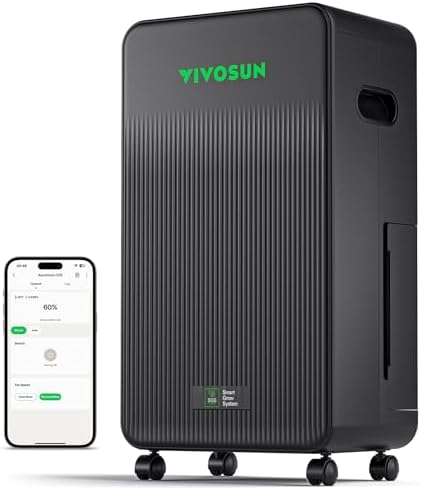
The AeroDrain D12 is a compressor dehumidifier designed for grow spaces. VIVOSUN lists moisture removal of up to 12 liters per day and recommends it for tents up to 5 × 5 feet. Its built-in sensors monitor temperature and humidity, while app connectivity lets you check and adjust the unit remotely.
It can connect with the VIVOSUN Smart Grow System, which may suit a setup where several compatible devices are managed together. The unit offers both tank and hose drainage, and it shuts off when the tank is full. It is also designed to restart after a power outage. Handles and caster wheels make it easier to reposition than a fixed, tent-mounted device.
This is a strong fit if you want a tent-specific compressor unit with app controls and a clearly stated capacity. Keep in mind that the “up to” moisture-removal figure depends on conditions, including temperature, humidity, and tent size. Check the unit’s placement and drainage route before buying, and remember that a compressor model may add heat to the surrounding space.
Pros:
- Stated capacity of up to 12 L per day
- App control and compatibility with the VIVOSUN Smart Grow System
- Tank and hose drainage options
- Recommended for grow tents up to 5 × 5 feet
Cons:
- Actual moisture removal varies with operating conditions
- May be more equipment than needed for a very small enclosure
Verdict: Choose the AeroDrain D12 if you want a connected, movable compressor dehumidifier for a tent within its recommended size range.
2. AC Infinity HYDRONE 7: Best for Fine-Tuned Humidity and VPD Control

The HYDRONE 7 is built around adjustable output rather than a published daily capacity figure. Its rotary motor has ten drying levels, and the product description says it is designed for tents with four to six plants. Humidity and vapor pressure deficit (VPD) controls are intended to help you manage more than a single humidity target.
The unit can send dry air into a tent through an exhaust port. An optional intake port supports a closed-loop arrangement, giving you more flexibility in how you route air. AC Infinity also describes it as suitable for hot and very cold environments and says it can reach low relative-humidity levels, though the supplied details do not give a specific removal rate or temperature range.
This model may suit growers who want adjustable output and climate controls integrated into a more deliberate setup. Its lack of a stated liters-per-day rating makes direct capacity comparisons difficult. Before choosing it, check how the ports, ducting, and controls fit with your tent and existing equipment.
Pros:
- Ten drying levels for adjustable output
- Humidity and VPD controls with automatic adjustment
- Exhaust port can direct dry air into a tent
- Designed for tents with four to six plants
Cons:
- No daily moisture-removal capacity is stated
- Getting the most from its ports and controls may take more setup planning
Verdict: Pick the HYDRONE 7 if precise adjustment and VPD-focused control matter more to you than comparing units by a published capacity rating.
3. LAVTAIOA Grow Tent Dehumidifier Kit: Best for a Compact, Sensor-Based Setup
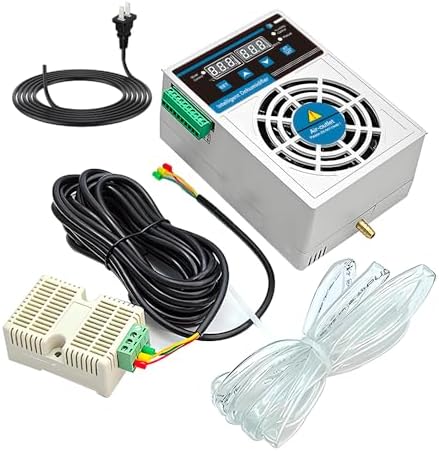
This LAVTAIOA kit is described as a compact active dehumidifier for tight spaces. Rather than using a refillable moisture absorber, it condenses water vapor from the air. The package description lists an external temperature and humidity probe, an LED display, controls, a hose, and a five-foot power cord.
The external probe gives you a way to monitor conditions separately from the main unit, which may be useful when the device itself has to sit in a cramped spot. The listing says it supports AC and DC power, but does not state its moisture-removal capacity, the tent size it can handle, or the exact power requirements for each mode. Those missing details make it harder to judge whether it can keep up with a plant-filled tent.
The supplied product data marks this listing as unavailable, so confirm its status before planning your setup around it. If it becomes available, compare the specifications and included power arrangements with your needs before treating it as a substitute for a higher-capacity compressor model.
Pros:
- Compact design intended for tight spaces
- External temperature and humidity probe
- Includes a hose, power cord, and installation tools
- Described as an active condensation-based unit
Cons:
- No moisture-removal capacity or tent-size recommendation is stated
- Supplied listing data marks the product as unavailable
Verdict: Consider this kit only if its compact form and external probe suit your layout and you can confirm availability and capacity before purchase.
4. MARS HYDRO 38-Pint Plant Dehumidifier: Best for Keeping the Unit Outside the Tent

The MARS HYDRO model is a compressor dehumidifier with an air duct, allowing the main unit to sit outside the tent while channeling moisture out. That layout can help you avoid placing the appliance itself inside the grow space. The product description lists removal of up to 18 liters per day and identifies 2 × 4, 3 × 3, and 4 × 4-foot tents as suitable sizes.
Its digital controls let you set a target humidity from 30% to 90%, and auto mode switches the unit on and off to maintain that setting. For maintenance, it has a washable dust filter, a tank that stops the unit when full, and caster wheels for moving it. The listing describes the design as using less energy, but does not provide a specific energy-use figure for comparison.
The ducted arrangement is its main point of difference from the VIVOSUN. It may be a better match when you want the machine outside the tent, while the VIVOSUN offers app connectivity and a stated recommendation for a larger tent. Check that the duct route works with your setup, and treat the maximum capacity as a product claim rather than a guaranteed output in every room.
Pros:
- Ducted design lets the main unit sit outside the tent
- Stated removal capacity of up to 18 L per day
- Adjustable humidity target and automatic operation
- Washable filter, full-tank shutoff, and caster wheels
Cons:
- Requires a workable route for the air duct
- Actual capacity depends on operating conditions
Verdict: Choose the MARS HYDRO if you want a higher stated capacity and a ducted layout that keeps the main appliance outside your tent.
5. LAVTAIOA Small Grow Tent Dehumidifier: Best for Small Enclosures and Cabinets

This compact LAVTAIOA unit is aimed at enclosed spaces such as grow tents, storage cabinets, closets, and other small areas. It actively condenses airborne water vapor rather than relying on refillable moisture-absorbing material. The listing describes an external humidity sensor, an LED display, automatic and manual modes, and hose drainage.
The sensor is intended to measure humidity away from the dehumidifier itself, and the automatic mode stops the unit once the humidity falls below a preset level. That can be useful in a small enclosure where you want the device to respond to a set range. However, the product details do not state a daily capacity or recommend a tent size, so it is difficult to assess whether it can handle a larger grow tent.
The supplied product data marks this model as unavailable. If you are considering it, confirm that the listing is active and check the detailed power and capacity specifications before relying on it. For a larger tent or a space with substantial moisture, a model with a stated capacity may be easier to size.
Pros:
- Compact design for enclosures and tight spaces
- External humidity sensor and clear display
- Automatic and manual operating modes
- Hose drainage is included in the described setup
Cons:
- No daily capacity or tent-size guidance is provided
- Supplied listing data marks the product as unavailable
Verdict: This may suit a small enclosure if you can verify its availability and performance details, but it is not the easiest option to size for a full grow tent.
How to Choose a Dehumidifier for an Indoor Grow Tent
Match capacity to tent size and moisture load
Start with the size of your tent and the amount of moisture your setup adds to the air. A product’s maximum daily capacity is useful for comparison, but it is not a promise of the same output in every environment. Temperature, humidity, and tent size can all affect performance. When a listing gives a tent-size recommendation, use it as a starting point rather than assuming a small unit will suit a larger space.
Decide where the unit will sit
Some dehumidifiers are designed to sit in or near the grow area, while a ducted model can keep its main body outside the tent and route air through a duct. Consider how much room you have, where the intake and exhaust will go, and whether the duct or hose can be installed without blocking access. A unit with wheels or handles can also be easier to reposition when your layout changes.
Choose controls that fit your routine
Basic automatic humidity control can reduce the need to switch a unit on and off by hand. More advanced options may offer app access, multiple drying levels, or VPD controls. Decide which features you will actually use: remote monitoring can help when you are away from the tent, while adjustable output may be useful if you want to fine-tune conditions. Check the product details for the specific controls rather than assuming all smart features work the same way.
Plan for drainage and maintenance
A water tank needs to be emptied, and a full-tank shutoff can prevent the unit from continuing to run when the tank is full. Hose drainage may reduce how often you need to empty a tank, but it requires a suitable route and place for water to drain. Also check whether the model has a washable filter and how it is cleaned. Regular maintenance helps keep the unit ready for use.
Consider heat, airflow, and the environment
A compressor dehumidifier can affect the temperature around it, so placement matters in a grow tent. A ducted design may help keep the main unit outside the tent, though you will need to plan the airflow path. For a closed-loop setup, confirm that the product supports the intake and exhaust arrangement you want. Review any stated operating-range details before using a unit in unusually hot or cold conditions.
Check the specifications before buying a compact model
Compact units can be appealing when space is limited, but some listings provide little information about moisture-removal capacity or recommended tent size. Look for the stated capacity, power requirements, sensor placement, and drainage method. If a listing does not provide enough detail to judge whether it can handle your space, consider a model with clearer sizing guidance.
Frequently Asked Questions
What size dehumidifier do I need for a grow tent?
Choose based on tent size, moisture load, and the product’s stated capacity or tent recommendation. The VIVOSUN is recommended for tents up to 5 × 5 feet, while the MARS HYDRO listing names several smaller tent sizes. Conditions can affect actual performance, so allow room for variation.
Is it better to place a dehumidifier inside or outside the tent?
It depends on the unit’s design and the space available. A ducted model such as the MARS HYDRO can sit outside the tent and route air through a duct. Other units may need to be positioned near the grow area. Follow the product’s setup instructions and plan for heat, airflow, and drainage.
What is the benefit of hose drainage?
A hose can carry condensed water away from the unit, which may mean less frequent tank emptying. You need a suitable route and a place for the water to drain. If you use a tank instead, check whether the unit shuts off when full.
Do I need app control or VPD settings?
Not necessarily. App control can help you monitor or adjust a compatible unit remotely. VPD controls may be useful if you want to manage that climate measure along with humidity. If you only need basic humidity management, a straightforward automatic mode may be enough.
Can a small dehumidifier handle a large grow tent?
Not always. Compact models may be intended for cabinets or tight enclosures, and some do not state a capacity or tent-size recommendation. Check the specifications before using one in a larger tent rather than assuming its small size will be sufficient.
Will a dehumidifier remove the same amount of moisture in every setup?
No. The product descriptions note that performance can vary with conditions such as ambient temperature, humidity, and tent size. Treat maximum capacity as a stated limit under suitable conditions, not a guaranteed result in every grow room.
Final Recommendation
For most growers comparing clearly specified tent-focused options, the VIVOSUN AeroDrain D12 offers a useful mix of stated capacity, app control, and two drainage choices. The MARS HYDRO is a compelling alternative if you prefer a ducted setup that keeps the main unit outside the tent. Choose the AC Infinity HYDRONE 7 if adjustable drying levels and humidity/VPD controls are priorities. For either compact LAVTAIOA option, confirm current availability and missing capacity details before making it the core of your humidity plan.
