
Choosing a door lock for a person with dementia is a balance between reducing the risk of wandering and keeping the home safe in an emergency. The options below include knob covers, combination lockouts, a chain latch, and a door reinforcement lock. They work in different ways, so check the fit and consider how a caregiver can release each device quickly. No lock can replace supervision or a personal safety plan.
| Product | Lock type | Best for | Key fit note |
|---|---|---|---|
| PKLIYH Knob Cover Lock | Tool-free knob cover | Simple lockout on a round knob | Check the stated knob-size limits carefully |
| HoneSecur Combination Knob Lock | Metal cover with code lock | Key-free access for a caregiver | For round, tulip, or oval knobs—not levers |
| yingranlock Combination Knob Lock | Metal cover with code lock | Covering a knob and its keyhole | For circular knobs up to 2-7/16 inches |
| Fosaseua Adjustable Chain Latch | Adjustable chain latch | Limiting how far a door opens | Adhesive or screw installation |
| MOSECYOU Door Reinforcement Lock | Frame-mounted reinforcement lock | Added resistance on an inward-swinging door | Keyed mode can prevent exit from inside |
Table of Contents
Our Picks: Best Dementia Proof Door Locks reviews
1. PKLIYH Child-Proof Knob Cover for a Simple Lockout

The PKLIYH is a plastic cover that fits over a round door knob. Its snap-on design needs no tools or adhesive, and the product description says it has a self-locking mechanism and anti-skid grooves. It is intended to make the covered knob harder to turn while allowing a caregiver to access it.
The compact design may suit a home where you want a straightforward barrier without installing hardware. The cover is also described for use with some cabinet knobs, faucets, and other round handles. Its ABS plastic construction is reusable and can be wiped clean.
Fit is the main concern. The listed dimensions include a maximum knob diameter of 2.95 inches, but the description also says the round knob diameter should be less than 1.29 inches. Those measurements are unclear together. Measure your knob and confirm the product’s fit details before ordering. It is not suitable for lever handles.
Pros:
- Installs over a round knob without tools or adhesive.
- Reusable plastic design is easy to wipe clean.
- Self-locking mechanism and grip grooves are described as part of the design.
Cons:
- The stated knob-size limits are confusing, so fit needs careful checking.
- It is designed for round knobs, not lever handles.
Verdict: Consider this option if you want a simple, tool-free cover and have confirmed that your knob fits its specifications.
2. HoneSecur Combination Lock for a Key-Free Caregiver Option

This metal lockout cover goes over a door knob and uses a combination instead of a separate key. The supplied description lists an initial code of 000. It also covers the keyhole, which can help prevent someone with a key from unlocking the covered knob.
The powder-coated metal construction is intended for longer-term use, including outdoors. The cover is listed for round, tulip-shaped, and oval handles up to 2-7/16 inches in diameter. Installation does not require tools, but it is not designed for lever handles.
A combination can be convenient when caregivers need access without carrying a key. However, the listed starting code is simple, so check the product instructions for how to set or change the code before relying on it. As with any lockout, make sure an authorized caregiver can open it promptly and that it does not block a required exit.
Pros:
- Uses a code rather than requiring a key for everyday access.
- Covers the knob and keyhole.
- Fits several listed round-handle shapes.
- Powder-coated metal is designed for indoor or outdoor use.
Cons:
- Not compatible with lever handles.
- The description gives an initial code; confirm code-setting instructions before use.
Verdict: This is a practical choice if your door has a compatible round knob and you want a combination-based lockout rather than a basic plastic cover.
3. yingranlock Combination Cover That Blocks Keyhole Access
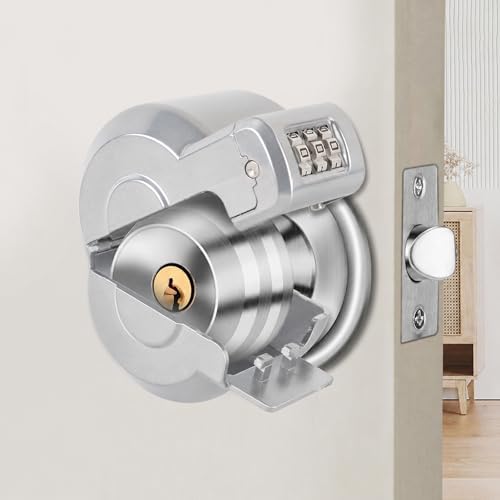
The yingranlock is a metal knob cover with a combination lock. It is designed to fit over a circular knob without tools and to cover the keyhole. The product description lists an initial password of 000 and says the device fits circular knobs up to 2-7/16 inches in diameter.
Like the HoneSecur, this model may suit a caregiver who wants code access instead of carrying a separate key. Its powder-coated metal body is described as suitable for outdoor use and for round, tulip, or oval handles. The stated applications also include some faucets, gas tanks, cabinets, and RV handles, but check the shape and fit of any non-door handle before use.
The main distinction from the HoneSecur is not a clearly stated fit or performance advantage: the listed limits and features are very similar. Choose between them by checking the dimensions, instructions, and setup details for the exact model. Neither product is intended for a lever handle.
Pros:
- Combination access avoids carrying a key for routine unlocking.
- Designed to cover both the knob and its keyhole.
- Metal body with a powder-coated finish.
- Listed for several common round-knob shapes.
Cons:
- Does not fit lever handles.
- Its listed features closely overlap with another combination option, so compare fit and setup instructions.
Verdict: Pick this model if its listed size matches your knob and its combination setup works for your caregiving routine.
4. Fosaseua Adjustable Chain Latch for Limiting Door Opening

This two-pack uses a chain between mounting points to limit how far a door, window, or other listed fixture can open. Its adjustable chain and rotating base let you set the opening range. That makes it different from a knob cover: it restricts movement of the door rather than preventing the knob from turning.
The latch is made with ABS plastic and stainless-steel chains. The description offers adhesive installation or screw mounting, with screws included for added reinforcement. It is listed for a range of uses, including sliding doors, windows, cabinets, refrigerators, and some other household fixtures.
This style may help when you want to limit an opening rather than fully cover a knob. But it is not a universal fit, and installation strength depends on the mounting surface and method. Check that the door can still be opened as needed for safe exit, and make sure the chain does not create a hazard or impede a caregiver.
Pros:
- Adjustable chain lets you limit the opening distance.
- Includes adhesive and screw installation options.
- Two-pack can cover more than one opening.
- Listed for several door, window, and household uses.
Cons:
- It limits how far a door opens rather than locking a knob.
- Fit and hold depend on the surface and installation method.
Verdict: Consider this latch when a controlled opening is more useful than a knob cover, but confirm that it does not interfere with safe exit.
5. MOSECYOU Reinforcement Lock for Added Door-Frame Resistance

The MOSECYOU is a heavy-duty lock that mounts to a door frame and is designed for inward-swinging doors. It offers two modes: a keyless slide mode and a keyed mode. The product description says keyed mode requires a key to unlock and is intended to prevent the door from being opened from inside as well as forced from outside.
Its cast zinc-alloy body is described as heavy duty, and the package includes different screw lengths and spacer buffers for installation. Longer screws are intended for a stronger hold in the frame, but installation requires tools and suitable mounting points.
This is a different kind of product from a knob cover and carries a more serious safety concern for dementia care. In keyed mode, it can prevent the person inside from exiting without a key. That may create a dangerous delay during a fire, medical emergency, or other urgent situation. Consider it only after checking local safety requirements and discussing the plan with appropriate care or safety professionals. Keep authorized access available and never use a lock in a way that traps someone.
Pros:
- Offers both keyless-slide and keyed locking modes.
- Heavy-duty metal construction.
- Includes multiple screw lengths and spacer buffers for installation.
- Designed for inward-swinging doors.
Cons:
- Keyed mode can prevent someone inside from leaving without a key.
- Requires installation on a compatible door frame and is not a tool-free option.
Verdict: This is best viewed as a door reinforcement device, not a routine dementia lock; avoid keyed mode unless emergency egress and local safety rules have been carefully addressed.
How to Choose a Dementia Door Lock
Start with the person’s needs and exit safety
Think about why you need a device and what the person can still do independently. A barrier that is too difficult to release may delay a caregiver or block an exit. Before installing a lock, consider a broader safety plan with the person’s care team. Do not use a lock in a way that could trap someone, and check local fire and building-safety requirements.
Match the lock to the door and handle
Knob covers are made for specific handle shapes and sizes. Measure the knob rather than assuming a “universal” cover will fit. The PKLIYH description gives conflicting size guidance, so confirm its fit carefully. The HoneSecur and yingranlock list round, tulip-shaped, and oval knobs up to 2-7/16 inches, but exclude lever handles. The MOSECYOU requires an inward-swinging door frame. The chain latch needs suitable mounting points.
Choose between a cover, combination, chain, or frame lock
A basic cover may be the simplest option when the main goal is to make a knob harder to turn. A combination cover adds code-based access and may also block the keyhole. A chain latch limits how far an opening can move instead of covering the knob. A frame-mounted reinforcement lock works differently and can create significant egress concerns in keyed mode. Choose the least restrictive device that meets your needs.
Plan who can release it and how
Caregivers should know how to open the device before relying on it. For a combination lock, check the setup instructions and keep the code accessible to authorized caregivers. For a key-required lock, plan where the key will be kept so it is available during an emergency. Practice the release procedure and check the device regularly.
Consider installation and maintenance
Tool-free covers can be easier to move or remove, while screw-mounted products may need more setup. Adhesive mounting depends on the surface and should be installed as directed. Check the fit, hardware, and release action after installation, and repeat those checks as part of your home safety routine.
Use locks as one part of a safety plan
A door lockout is only one possible safety measure. Consider whether changes to routines, supervision, or other home-safety steps may help. A clinician, occupational therapist, or local aging-services professional can help you weigh risks and choose an approach suited to the person and home.
Frequently Asked Questions
Are dementia-proof door locks completely safe?
No lock is completely safe or guaranteed to prevent wandering. Any device can create a risk if it delays exit or prevents a caregiver from reaching someone. Think through emergency access before installing one and use it as part of a wider safety plan.
Can I use a child-proof knob cover on a lever handle?
The PKLIYH, HoneSecur, and yingranlock products in this guide are described for round or other listed knob shapes, not lever handles. Check the product details and measure your hardware before buying.
Which option does not require a key?
The PKLIYH cover is described as a tool-free cover, while the HoneSecur and yingranlock models use combinations. The MOSECYOU has a keyless-slide mode as well as a keyed mode. Check the exact instructions and make sure caregivers can release the chosen device quickly.
Do combination locks need a code change?
The HoneSecur and yingranlock descriptions list an initial code of 000. Check the instructions for whether and how the code can be changed, and make sure authorized caregivers know the current code.
Will the chain latch work on any door?
Not necessarily. It uses mounting points and is listed for several types of doors and household fixtures, but suitability depends on the door, surface, and installation. Check the product instructions and confirm that the chain will not block safe exit.
Is a keyed door reinforcement lock a good choice for dementia care?
Use caution. The MOSECYOU description says keyed mode can prevent the door from opening from inside without a key. That could delay an exit in an emergency. Check safety requirements and consult an appropriate professional before considering this type of use.
What is the first step before buying a door lock?
Identify the door or handle you want to secure, measure it, and decide how the person and caregivers will get out or release the lock in an emergency. If you are unsure, ask a care or home-safety professional for guidance.
Final Recommendation
For a straightforward, tool-free option, the PKLIYH may suit a compatible round knob, but its conflicting size guidance makes checking fit especially important. If you prefer code access, compare the HoneSecur and yingranlock models against your handle dimensions and their setup instructions. The Fosaseua chain latch is worth considering when limiting the opening range is the goal. Treat the MOSECYOU as a reinforcement lock—not a default dementia safety solution—because keyed mode can restrict exit from inside. Whichever device you choose, keep emergency access and the person’s dignity and safety at the center of your plan.
