
Choosing an electric tankless water heater for a three-bathroom home means looking beyond the number of bathrooms. The key question is how many hot-water fixtures may run at once, along with how cold your incoming water is and what your electrical panel can support. Of these five options, the 18kW models are the only ones presented for multiple household hot-water needs; the smaller 110V and 120V units are point-of-use heaters for sinks, not whole-home or shower solutions.
Before buying, compare each unit’s power requirements with your home’s available circuits and have a qualified electrician assess the installation. A product’s advertised maximum flow rate does not guarantee that it will supply three bathrooms at your desired temperature at the same time.
Table of Contents
Quick Comparison
| Product | Power and voltage | Stated use or capacity | Best fit |
|---|---|---|---|
| xwdzswgs 3,000W Under-Sink Heater | 3,000W, 110V | Raises water temperature at low flow; not suitable for showers | A small sink or point-of-use spot |
| CAMPLUX 4.5kW Point-of-Use Heater | 4.5kW, 120V | Designed for one sink | A sink where you want hot water close to the tap |
| xwdzswgs 3,000W Digital Under-Sink Heater | 3,000W, 110V | Low-flow point-of-use heating; not suitable for showers | A compact sink application |
| NOVIEEX 18kW Whole-Home Tankless Heater | 18kW, 240V | Advertised for 2–3 simultaneous water needs; up to 4.9 GPM | A small-to-medium home with suitable electrical capacity |
| Ranein 18kW Whole-House Heater | 18kW, 240V | Advertised for 2–3 outlets at once; up to 4.3 GPM | A household with moderate, planned hot-water demand |
Our Picks: Best Electric Tankless Water Heaters For 3 Bathrooms reviews
1. xwdzswgs 3,000W: Compact Heater for a Small Sink
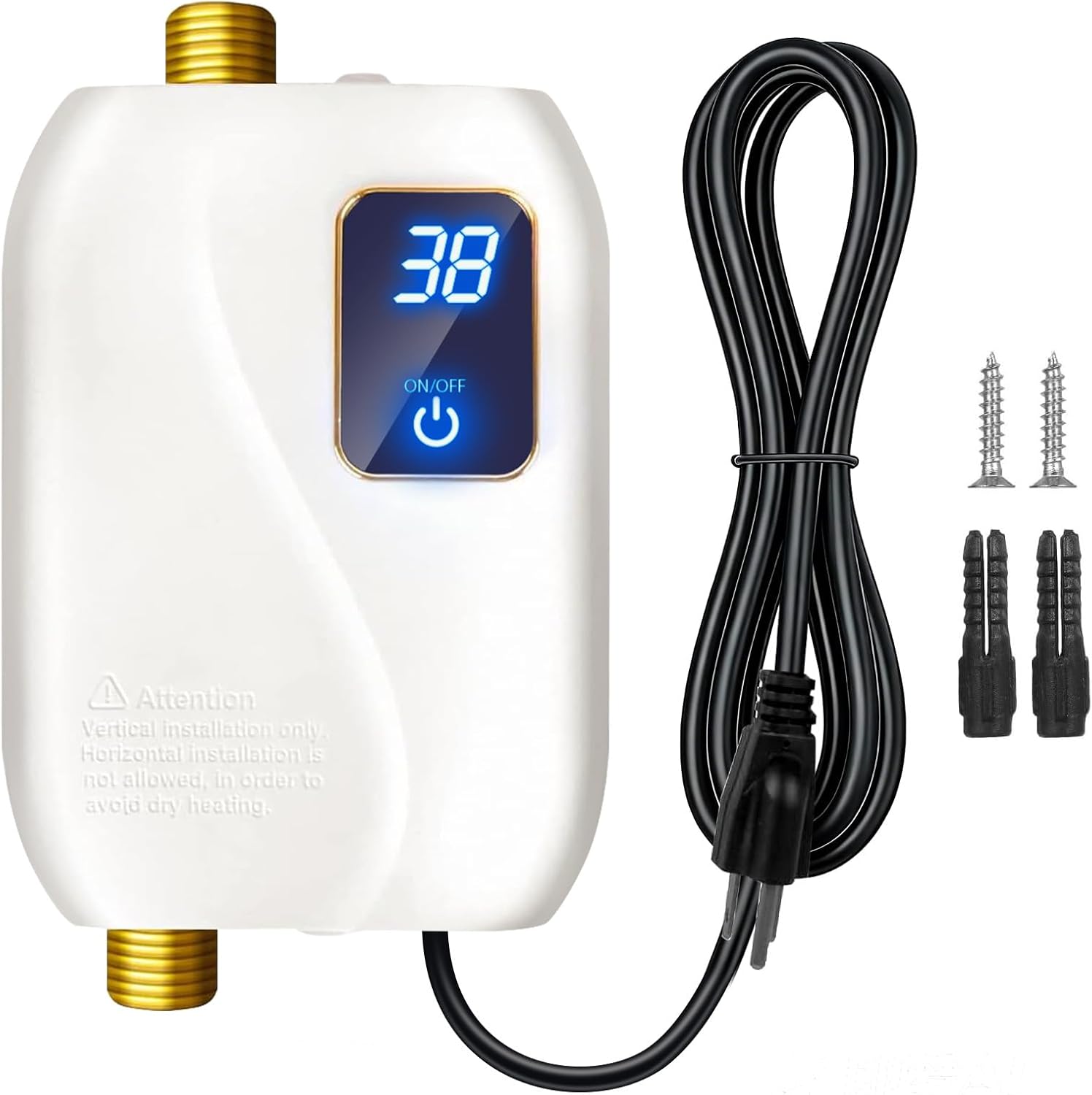
This 3,000W, 110V unit is a compact point-of-use heater for a sink, rather than a solution for supplying a three-bathroom home. Its listing states a temperature rise of 82°F at 0.3 GPM and 131°F at 0.5 GPM. The same listing warns that it is not suitable for showers, which normally require at least 1.8 GPM.
The small wall-mounted design, LED display, and 1/2-inch NPT connections may suit a limited under-sink installation. It is described as having protections that include dry-boil and overheating protection, and its instructions call for vertical installation. Check the wiring and plumbing requirements before you buy, and do not treat its compact size as evidence of whole-home capacity.
Reported use is mixed: some owners value the space-saving design, while others describe inconsistent heating. For a three-bathroom home, consider it only as a supplemental heater for a low-flow sink—not as the main water heater.
Pros:
- Compact wall-mounted design for tight spaces
- LED temperature display
- Standard 1/2-inch NPT connections
Cons:
- Not suitable for showers or whole-home service
- Reported heating performance is mixed
Verdict: Choose this only for a small, low-flow sink application; it is not a practical primary heater for three bathrooms.
2. CAMPLUX 4.5kW: Point-of-Use Heating for One Sink

The CAMPLUX is a 4.5kW, 120V point-of-use heater intended for one sink. Its listing gives a 50°F temperature rise at 1.0 GPM and a minimum activation flow of 0.26 GPM. That makes it a more clearly specified sink option than the smaller 3,000W models, but it is still not presented as a whole-house heater for three bathrooms.
The unit has a compact wall-mount design, a touch control panel, and a digital temperature display. It must be hardwired; it is not a plug-in appliance. The listed electrical requirements are a 40A circuit breaker and 10 AWG wire, along with a 1/2-inch NPT water connection. The manufacturer also lists a two-year limited warranty.
Owners describe using this model for sink tasks in places such as workshops and bathrooms, with some reporting convenient, quiet operation. Experiences with service life vary, so it is wise to consider the warranty and installation requirements as part of the purchase. It can supplement a larger system, but its single-sink design makes it a poor match for serving three bathrooms by itself.
Pros:
- Designed for a single sink with a stated activation flow of 0.26 GPM
- Compact body and digital temperature display
- Self-modulating operation adjusts power based on flow and temperature settings
- Two-year limited warranty listed
Cons:
- Hardwiring and a dedicated 40A circuit are required
- Not a whole-home or three-bathroom heater
Verdict: This is a sensible point-of-use candidate for one sink if your electrical setup meets its requirements, but it cannot replace a properly sized whole-home unit.
3. xwdzswgs 3,000W Digital Heater: Another Low-Flow Sink Option

This 3,000W, 110V model is another small under-sink heater, with a digital display and a slim profile. The listing states that it can raise water temperature by 82°F at 0.3 GPM or 131°F at 0.5 GPM. It also notes that a larger flow lowers the outlet temperature and says the heater is not suitable for showers.
Its listed protections include leakage, dry-boil, and overheat protection. The product is described as having 1/2-inch NPT connections and being suitable for compact spaces such as kitchens, bathrooms, and RVs. The installation directions call for vertical mounting and mention using Teflon tape on pipe connectors. Follow the complete manual and confirm the electrical requirements rather than relying on a short product description alone.
There is no owner-use information supplied for this particular model, so its practical track record is harder to assess. Its stated low-flow output is the main limitation: it may serve a small sink, but the specifications do not support using it for showers or multiple bathrooms.
Pros:
- Compact design intended for point-of-use installation
- Digital display with Fahrenheit and Celsius settings
- Listed safety protections include dry-boil and overheat protection
Cons:
- Not suitable for showers or whole-house demand
- Limited owner-use information is available in the supplied product data
Verdict: Consider it for a low-flow sink only if its installation requirements match your setup; look to a higher-capacity system for bathroom showers.
4. NOVIEEX 18kW: Higher Flow for a Small-to-Medium Home

The NOVIEEX is an 18kW, 240V wall-mounted unit marketed for small-to-medium homes with two to three simultaneous water needs. Its listing gives a maximum flow rate of up to 4.9 GPM and an adjustable temperature range of 77°F to 140°F. Those figures make it more relevant to a multi-bathroom home than the sink-only heaters, but they do not guarantee adequate hot water for every combination of three-bathroom fixtures.
Electrical capacity deserves close attention. The listed requirements are a maximum current of 75A, two 40A double-pole breakers, and two sets of 8 AWG wire with a ground wire. The unit has 3/4-inch NPT water connections. Have a qualified electrician confirm your panel capacity, wiring, and installation plan before purchase.
Some owners describe the unit as compact and say installation instructions were clear, while others value its use in a small guest house. These reports are useful context, but they do not establish that it will meet your home’s flow needs. Incoming water temperature and the number of fixtures operating together will affect performance. Compared with the Ranein below, the NOVIEEX has the higher advertised maximum flow, though actual suitability still depends on a professional sizing check.
Pros:
- Advertised for two to three simultaneous water needs
- Listed maximum flow rate of up to 4.9 GPM
- Adjustable temperature with a digital display
- Compact wall-mounted design
Cons:
- Requires substantial dedicated electrical capacity
- Maximum flow is not a guarantee of comfortable hot water at every fixture combination
Verdict: Of these choices, this is one of the more plausible candidates for a smaller three-bathroom home, but buy only after an electrician and installer confirm the electrical and hot-water sizing.
5. Ranein 18kW: A Whole-House Option for Moderate Demand
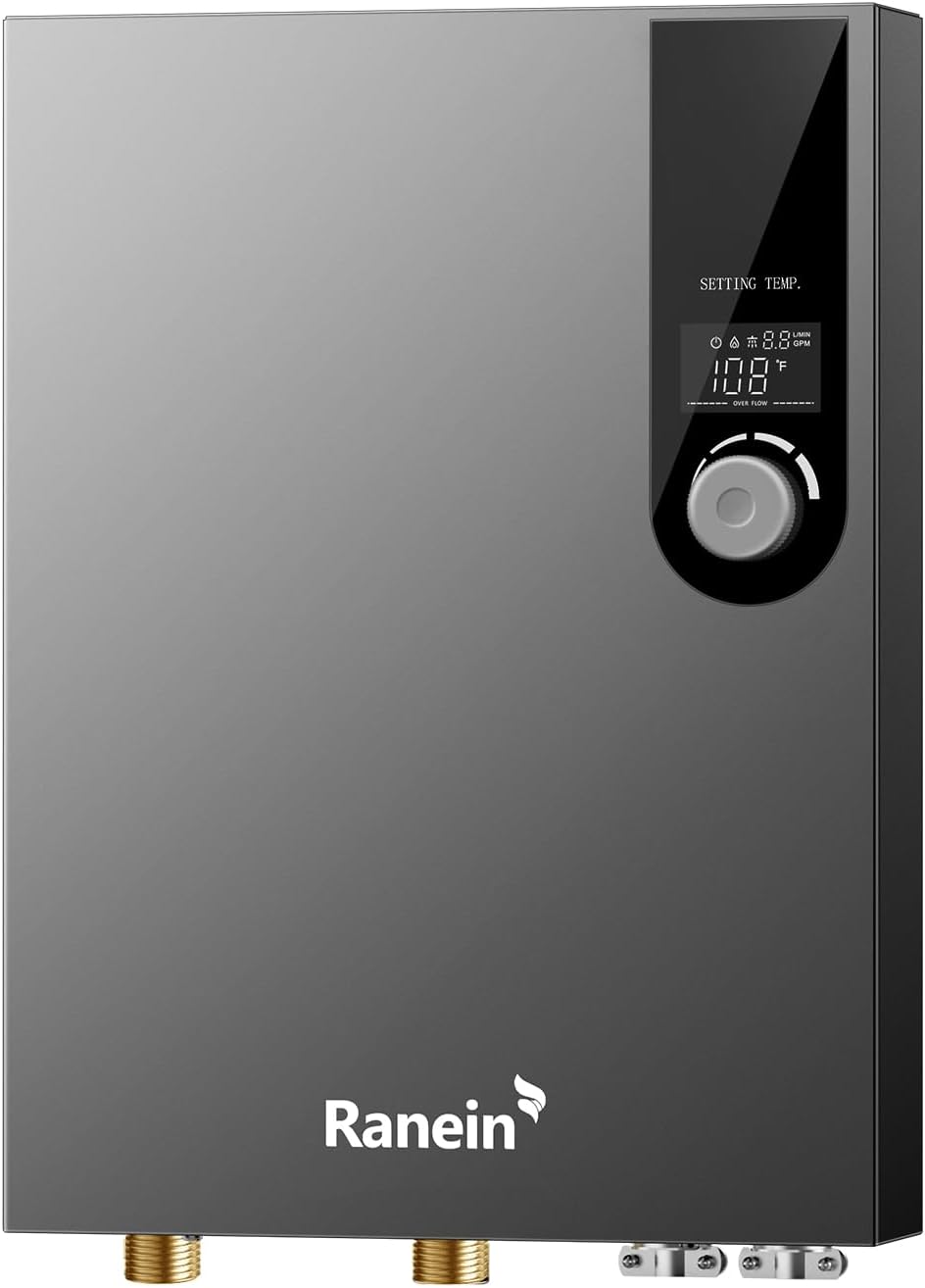
Ranein’s 18kW, 240V heater is described as a whole-house model for two to three outlets running at once. The listed maximum flow rate is 4.3 GPM, and the temperature setting can be adjusted from 86°F to 131°F in 1°F increments. It has a wall-mounted design, a control knob, and an LED display.
The installation requirements are significant: the listing calls for two dedicated 240V circuits, each with a 40A double-pole breaker and 8 AWG cable. It uses 3/4-inch NPT water connections. The manufacturer describes the unit as CSA certified and lists leakage and overheat protections. Confirm the certification details and installation instructions for your location before purchase.
Its stated capacity makes it more appropriate for a multi-bathroom household than the 110V and 120V point-of-use options. Still, 4.3 GPM is a maximum listed flow, not a promise that several showers and other hot-water fixtures can run at once at your preferred temperature. Compared with the NOVIEEX, the Ranein has a lower advertised maximum flow, so it may suit homes with more moderate simultaneous demand.
Pros:
- Marketed for two to three outlets running at once
- Temperature adjusts in 1°F increments
- Compact wall-mounted format
- CSA certification is stated in the product listing
Cons:
- Requires two dedicated 240V circuits
- Listed maximum flow is lower than the NOVIEEX 18kW model
Verdict: Consider the Ranein if your home has moderate simultaneous demand and the electrical system can support its two circuits; confirm the flow calculation before relying on it for three bathrooms.
How to Choose an Electric Tankless Water Heater for Three Bathrooms
Count the fixtures you may use at the same time
Bathroom count alone does not tell you the heater size you need. List the fixtures that could run together, such as showers, bathroom sinks, a kitchen tap, or a dishwasher. Then estimate their combined hot-water flow. A unit advertised for two or three outlets may not keep up with three high-flow showers, especially if other hot-water fixtures are running too.
Account for incoming water temperature
Tankless heaters raise water temperature as it passes through the unit. Colder incoming water requires a larger temperature rise, which can reduce the flow available at a comfortable outlet temperature. Ask an installer to assess your incoming water temperature and calculate the needed temperature rise for your location and household use.
Check electrical service before comparing features
Whole-home electric tankless heaters can require multiple dedicated circuits and substantial amperage. The two 18kW models here list two 40A double-pole breakers and 8 AWG wiring; the NOVIEEX also lists a maximum current of 75A. Have a qualified electrician inspect your panel and verify the required breakers, wiring, and available capacity. Do not assume a heater will work with your existing setup.
Separate point-of-use heaters from whole-home models
The 3,000W and 4.5kW products in this list are intended for limited point-of-use needs. The 3,000W listings explicitly warn against shower use, and the CAMPLUX is specified for one sink. These units may help deliver hot water near a particular tap, but they are not substitutes for a heater sized to serve multiple bathrooms.
Read flow claims in context
Maximum GPM figures are useful for comparing products, but they do not guarantee that the unit will deliver the same flow at every temperature rise. Ask how the model performs at your expected incoming water temperature and target outlet temperature. For a three-bathroom home, have the installer compare the calculated demand with the manufacturer’s performance information.
Confirm plumbing connections and mounting needs
Check whether the unit’s water connection size matches your plumbing plan. The point-of-use models list 1/2-inch NPT connections, while the 18kW models list 3/4-inch NPT connections. Also confirm mounting orientation, clearances, and the installation instructions. One 110V model specifically requires vertical mounting.
Weigh whole-home and supplemental approaches
A single whole-home heater is not the only possible layout. In some homes, a point-of-use unit may help with a distant sink, while a central heater serves the main demand. Any combined setup should be planned by a qualified professional so that electrical capacity, plumbing, and temperature controls work together safely.
Frequently Asked Questions
Can an 18kW electric tankless heater serve a three-bathroom home?
It may suit a small home with moderate, planned hot-water demand, but bathroom count alone is not enough to determine that. The two 18kW models are marketed for two to three simultaneous water needs or outlets, yet incoming water temperature, fixture flow, and the combination of fixtures in use all matter. Get a professional sizing calculation before choosing one.
Can the 3,000W or 4.5kW models heat water for a shower?
The 3,000W product listings state that those models are not suitable for showers. The CAMPLUX is described as a point-of-use heater for one sink. None of these three smaller units is presented as a whole-house shower heater.
Does a higher maximum GPM mean more hot water in every situation?
No. A maximum flow figure does not show how much water the unit can heat to your preferred temperature under your home’s conditions. The temperature rise needed and the number of fixtures running at once affect usable flow.
Will an 18kW model work with a standard household circuit?
Do not assume so. Both 18kW listings specify two dedicated 240V circuits with 40A double-pole breakers and 8 AWG wiring. Have an electrician check your panel and confirm all electrical requirements before buying.
What is the main difference between the two 18kW options?
The NOVIEEX lists a maximum flow of up to 4.9 GPM and an adjustable range of 77°F to 140°F. The Ranein lists up to 4.3 GPM and temperature adjustment from 86°F to 131°F. Both require substantial electrical capacity, and neither maximum flow figure should be treated as a guarantee for three simultaneous bathrooms.
Are point-of-use heaters useful in a three-bathroom home?
They can be useful for a specific sink or other limited application, especially when you want a heater near the tap. They are supplemental options, not a replacement for a properly sized central heater when the goal is to serve multiple bathrooms.
Final Recommendation
For a three-bathroom home, focus first on the two 18kW models and have a qualified professional confirm both the electrical installation and the hot-water flow calculation. The NOVIEEX has the higher advertised maximum flow, while the Ranein is listed for two to three outlets at once and offers temperature adjustment in 1°F steps. Neither should be selected on bathroom count or maximum GPM alone. The smaller xwdzswgs and CAMPLUX units are better considered for individual sinks, not as primary heaters for showers throughout the home.






