Choosing an electric tankless water heater for one bathroom starts with a key question: do you need hot water at a sink, or for a shower? Those jobs require very different amounts of heating power. Several compact 110-volt models below are designed for a single faucet and are specifically not suitable for showers. The 14 kW, 240-volt model is the strongest option here for a bathroom that needs shower water, but your home’s incoming water temperature, shower flow, and electrical service still matter.
Compare each unit’s intended use and electrical requirements before buying. A licensed electrician can help confirm whether your circuit and wiring are suitable.
Table of Contents
Quick Comparison
| Product | Best for | Power and voltage | Key fit note |
|---|---|---|---|
| SIVUATEK 14 kW Electric Tankless Water Heater | A bathroom sink and potentially a shower | 14 kW, 240 V | Requires one 60-amp circuit breaker; listed flow rate is up to 3.3 GPM |
| thermomate 3,500 W Small Tankless Water Heater | One sink or another light-use faucet | 3,500 W, 120 V | Hardwired; requires a 32-amp double-pole breaker, according to the listing |
| 110 V 3,000 W Digital Under-Sink Heater | Compact point-of-use sink installation | 3,000 W, 110 V | Not suitable for showers, according to the listing |
| xwdzswgs 3,000 W 110 V Under-Sink Heater | Handwashing at a bathroom or utility sink | 3,000 W, 110 V | Not suitable for showers; vertical installation only |
| xwdzswgs 3,000 W 110 V Tankless Heater | A small sink or point-of-use setup | 3,000 W, 110 V | Not suitable for showers; check wiring and breaker needs before purchase |
Our Picks: Best Electric Tankless Water Heaters For One Bathroom reviews
1. SIVUATEK 14 kW: Best Fit for a Bathroom That Needs Shower Water

This is the most powerful model in this guide and the only one whose product details specifically mention both sink and shower use. It runs on 240 volts and provides 14 kW of heating power. The listing gives a flow rate of up to 3.3 gallons per minute and says the unit can serve one or two usage points. Actual shower performance will depend on the water entering your home and the flow rate you choose.
The heater has an LED display and an adjustable temperature range of 86°F to 131°F in one-degree steps. Its compact wall-mount design and standard 1/2-inch NPT water connection may suit a bathroom installation, but the high electrical demand is a major planning point: the listing calls for one 60-amp circuit breaker. Have an electrician confirm that your panel, wiring, and installation location can support it before ordering.
Compared with the 110-volt models below, this unit is much better suited to a shower. It also costs more in electrical capacity and installation planning. The listing does not provide enough information to guarantee a specific shower experience in every home, so don’t treat the maximum flow figure as a promise of a particular temperature under all conditions.
- Pros: More heating power than the other listed models
- Pros: Product details identify sink and shower use
- Pros: Adjustable temperature control with a clear LED display
- Cons: Requires a 240-volt connection and a 60-amp circuit breaker
- Cons: Shower performance can vary with inlet temperature and water flow
Verdict: Choose this model first if your goal is hot water for a bathroom shower, but only after an electrician confirms your home can support its electrical requirements.
2. thermomate 3,500 W: Best Hardwired Pick for a Bathroom Sink

This compact thermomate unit is built for a single faucet rather than a shower. Its listed flow range is 0.4 to 0.66 GPM, and its temperature setting range is 86°F to 131°F. A digital display and touch controls make it easier to set a target temperature, while self-modulating power is intended to adjust output as water flow and inlet temperature change.
At about 7.9 by 6.4 by 2.5 inches, it can fit in a tight cabinet or similar space. The unit is hardwired, not plug-in, and the listing calls for a 32-amp double-pole breaker and minimum 10 AWG wire. Those requirements make professional electrical installation a sensible choice. Its listed ETL certification and separated heating element design may also appeal to shoppers looking for a compact, purpose-built sink heater.
Owners describe it as useful for quick hot water at a sink, including bathroom setups where the main water heater takes a long time to reach the faucet. But its limited flow makes it a poor choice for a shower or for multiple fixtures running together. It offers more specified sink flow than the 3,000-watt units, while still remaining a point-of-use product.
- Pros: Compact size for under-sink or cabinet installation
- Pros: Adjustable temperature and digital display
- Pros: Hardwired design and ETL certification are specified in the listing
- Cons: Not designed to supply a shower
- Cons: Requires dedicated electrical work rather than a standard plug-in setup
Verdict: This is a strong option for one bathroom sink when you want on-demand handwashing water and have the required circuit installed.
3. 110 V 3,000 W Digital Heater: Best for a Compact Point-of-Use Setup

This 3,000-watt, 110-volt model is a small point-of-use heater with a digital display. The product description says it can raise water temperature by about 82°F at 0.3 GPM and 131°F at 0.5 GPM. Those figures show why flow matters: the heater can produce a larger temperature increase at a lower flow, so it is better suited to modest sink use than to a high-flow fixture.
Its compact body, 1/2-inch NPT connections, and vertical-mount requirement may make it useful under a sink or in another small space. The listing describes several protective features, including overheat and dry-boil protection. It also says the unit is not suitable for showers, which is an important limit for anyone shopping for a full bathroom water heater.
Some owners find this style convenient for small spaces and quick access to hot water. However, other reported use has included breaker trips and inconsistent operation. That makes careful attention to installation and electrical compatibility especially important. The product information does not provide a complete, clear wiring specification, so confirm requirements with the manufacturer and a qualified installer before purchase.
- Pros: Small wall-mounted design with a digital display
- Pros: Temperature can be displayed in Fahrenheit or Celsius
- Pros: Standard 1/2-inch NPT water connections are listed
- Cons: Explicitly not suitable for showers
- Cons: Electrical installation details should be verified before buying
Verdict: Consider it for one low-flow sink, but look elsewhere for shower use and confirm the electrical setup before installation.
4. xwdzswgs 3,000 W Vertical Heater: Best for Simple Handwashing Use
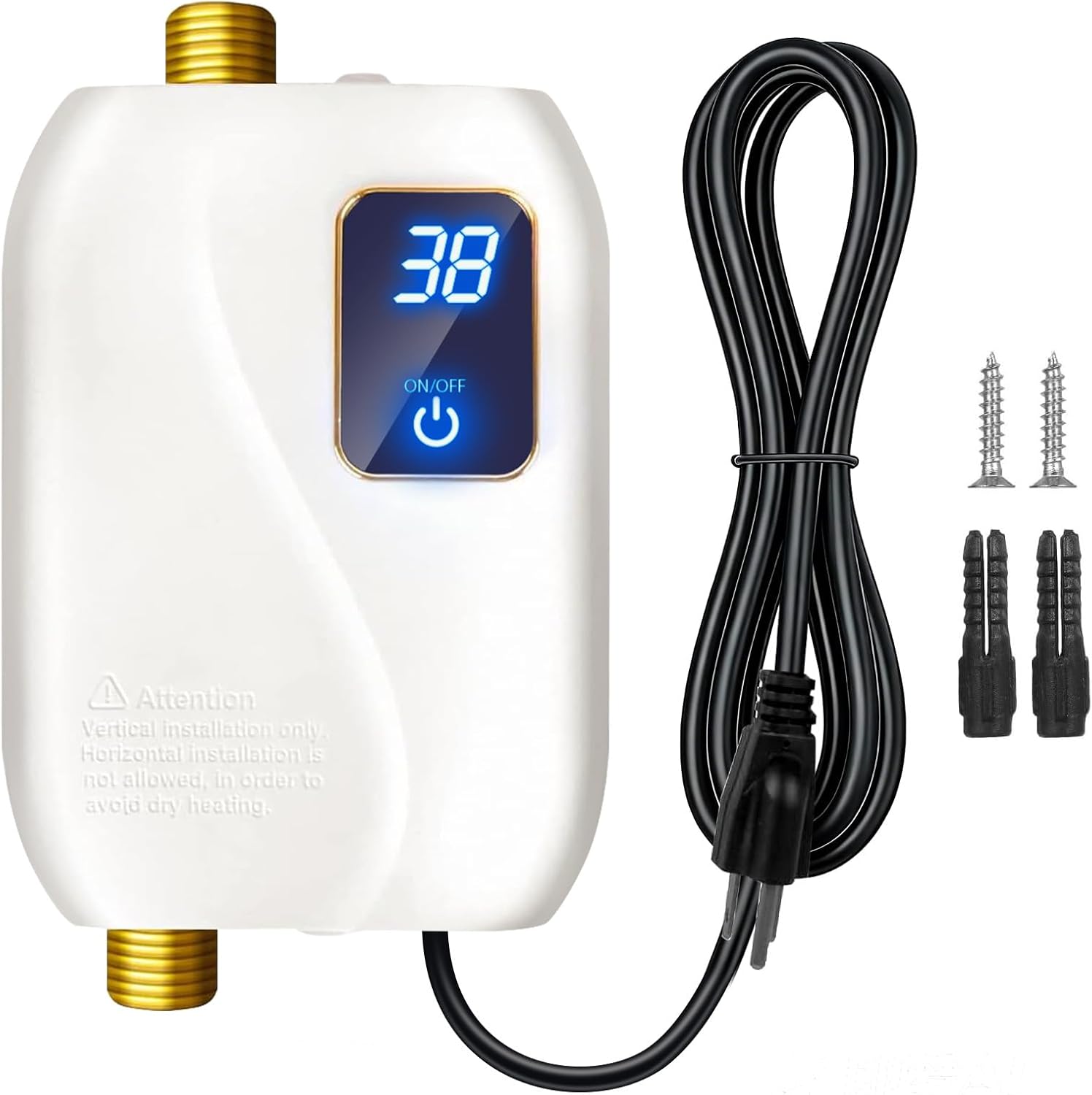
This small 110-volt heater is intended for point-of-use water, such as a bathroom or kitchen sink. Its 3,000-watt rating and listed output figures are similar to the other 3,000-watt models: the description states a temperature rise of 82°F at 0.3 GPM and 131°F at 0.5 GPM. It has an LED display and lets you switch between Fahrenheit and Celsius.
The compact wall-mounted design can save space under a sink, and the listing describes IPX4 water resistance along with several electrical and temperature protections. Installation must be vertical; the product information warns against horizontal placement. The included 1/2-inch NPT connections may help with a standard plumbing setup, but they do not remove the need to verify the electrical requirements.
The key drawback is clear: the listing says this unit is not suitable for showers, which typically need more flow than this heater is designed to provide. Some people value its size and display for small-space use, while at least one reported experience describes very brief or inadequate warmth. Set expectations accordingly: this is a small sink heater, not a whole-bathroom replacement.
- Pros: Compact design intended for under-sink or wall mounting
- Pros: LED display with Fahrenheit and Celsius options
- Pros: Standard 1/2-inch NPT connections are listed
- Cons: Not suitable for showers
- Cons: Must be installed vertically, and reported heating results vary
Verdict: Choose this only for a small sink application where modest flow is acceptable and vertical installation is possible.
5. xwdzswgs 3,000 W Compact Heater: Another Small-Sink Option

This model is another compact 110-volt, 3,000-watt heater meant for point-of-use applications. Its stated temperature-rise figures match the other small units in this group, with a higher listed rise at a lower flow. It includes an LCD display, and the product description lists protections for leaks, dry operation, overheating, and inactivity.
For a bathroom sink, the small wall-mounted form may be appealing where storage space is tight. But the listing specifically says it is not suitable for showers. It also gives a wiring recommendation of 2.5 mm² (13 AWG) conductors and a circuit breaker of at least 32 amps. Because those requirements are important to safety and installation, have an electrician confirm the exact circuit and wiring guidance for the unit before you buy or connect it.
Some owners find the compact size and display convenient for small spaces. Others describe problems such as leakage or trouble maintaining warmth at the faucet. These reports make it wise to check the installation instructions closely and not assume that a small 110-volt heater will provide steady hot water at every flow rate.
- Pros: Compact, wall-mounted design for limited spaces
- Pros: LCD display and multiple listed safety protections
- Pros: Standard 1/2-inch NPT connections are specified
- Cons: Not intended for shower use
- Cons: Electrical and plumbing installation details need careful verification
Verdict: This may suit a low-flow bathroom sink, but choose it only if its electrical requirements and expected output match your setup.
How to Choose an Electric Tankless Water Heater for One Bathroom
Decide Whether You Need Sink or Shower Hot Water
This is the most important choice. A small point-of-use heater can be useful for handwashing, but the 3,000-watt and 3,500-watt models in this guide are not listed for shower use. The SIVUATEK 14 kW model is the only product here specifically described for a sink and shower. If you need hot water at both the sink and shower, check whether the unit’s stated capacity matches how you plan to use the fixtures.
Match Flow Rate to Your Fixture
Tankless heaters warm water as it passes through, so a higher flow rate generally leaves less time for the heating element to raise its temperature. A sink running gently needs less output than a shower. Compare the heater’s flow information with the flow your faucet or shower actually uses, and remember that a listed maximum does not guarantee the same temperature in every home.
Check the Incoming Water Temperature
The temperature rise needed depends on how cold the water is before it reaches the heater. Colder incoming water requires more heating to reach the same outlet temperature, especially at higher flow. Product temperature-rise figures are useful for comparison, but they are not a guarantee of performance in every climate or plumbing setup.
Confirm Electrical Service Before Buying
Voltage, wattage, breaker size, and wire requirements can vary greatly between these products. The 14 kW model calls for 240 volts and a 60-amp breaker. The thermomate is a 120-volt hardwired unit with a listed 32-amp double-pole breaker requirement, while one 3,000-watt model also lists a breaker requirement of at least 32 amps. Have an electrician review the product instructions and your home’s electrical service before installation; do not assume that a standard outlet is suitable.
Measure the Installation Space and Check Orientation
Compact heaters can fit under a sink or in another small area, but measure the location and make sure there is room for the plumbing connections and required access. Follow the mounting instructions. One of the 110-volt models specifically requires vertical installation, so it should not be mounted horizontally.
Look Beyond the Display and Safety Claims
A digital display and temperature controls can make a heater easier to use, but they do not make an undersized unit suitable for a shower. Compare the intended use, listed flow, connection size, installation position, and electrical requirements first. Also review the manufacturer’s instructions for protection features and any maintenance or installation limits that apply to your setup.
Frequently Asked Questions
Can a 3,000-watt tankless heater supply a shower?
The 3,000-watt models in this guide are listed as unsuitable for showers. They are better treated as low-flow, point-of-use heaters for sinks. For shower use, consider a model specifically rated for that purpose and check that its capacity fits your water temperature and flow needs.
Which product in this guide is most suitable for a shower?
The SIVUATEK 14 kW, 240-volt heater is the only one here whose product details specifically mention shower use. It lists a flow rate up to 3.3 GPM and requires a 60-amp circuit breaker. Confirm your home’s electrical capacity and expected shower flow before choosing it.
Can I install one of these heaters myself?
Installation depends on the model and your home’s plumbing and electrical setup. Some units require hardwiring or a high-capacity circuit. Follow the product instructions and use a qualified electrician or plumber when needed, especially if you are unsure about wiring, breaker sizing, water connections, or mounting requirements.
Will a point-of-use heater provide hot water at more than one fixture?
Small sink models are designed for limited flow and are not a good match for multiple fixtures running at once. The 14 kW model is described as suitable for one or two usage points, but actual output depends on the combined flow and incoming water temperature.
Why does the water temperature change when the flow changes?
A tankless heater has a set amount of heating power. When more water flows through it, each portion of water has less time to warm. That can lower the outlet temperature. Lower flow can allow a larger temperature rise, which is why faucet flow and shower flow should be considered separately.
Is a 110-volt heater automatically plug-in?
No. Voltage alone does not tell you whether a heater uses a plug or must be hardwired. The thermomate model in this guide is explicitly listed as hardwired, and the other products have their own installation instructions. Check the exact product requirements before purchasing.
Final Recommendation
For a bathroom that needs shower hot water, the SIVUATEK 14 kW is the most relevant option in this group because it is the only one specifically described for shower use. Its 240-volt connection and 60-amp breaker requirement make an electrical check essential. For a single bathroom sink, the thermomate 3,500-watt model offers clearly stated flow and installation requirements, while the smaller 3,000-watt units may suit low-flow handwashing if their electrical needs and performance limits fit your setup. Match the heater to the fixture first, then confirm the installation with a qualified professional.