
Well water can contain sediment, iron, hardness minerals, or other dissolved solids that affect a water heater over time. The right choice depends on your water quality, how much hot water you need, and whether you want a small under-sink unit or a whole-fixture heater. The options below are mostly point-of-use models, so they are best suited to a nearby sink or limited demand—not necessarily as a replacement for a home’s main water heater. Before installing any model, check your well water and the heater’s electrical and plumbing requirements.
Table of Contents
Quick Comparison
| Product | Type and capacity | Power | Best for |
|---|---|---|---|
| UTank 1.7-Gallon Under-Sink Heater | Mini tank, 1.7 gallons | 120V, 1500W, plug-in | A nearby sink needing a small reserve of hot water |
| 110V 3000W Tankless Under-Sink Heater | Tankless, on demand | 110V, 3000W | Low-flow sink use in a compact space |
| VEVOR 18-Gallon Electric Water Heater | Storage tank, 18 gallons | 1600W | More stored hot water for a kitchen or other limited-use setting |
| Rheem 8kW Multi-Fixture Tankless Heater | Tankless, multi-fixture | 240V, 8kW | Demand across multiple fixtures when the home’s electrical system supports it |
| ThermoMate 3500W 120V Tankless Heater | Tankless, on demand | 120V, 3500W, hardwired | A dedicated, low-flow sink installation |
Our Picks: Best Electric Water Heater For Well Water reviews
1. UTank 1.7-Gallon Under-Sink Heater: Best Plug-In Mini Tank
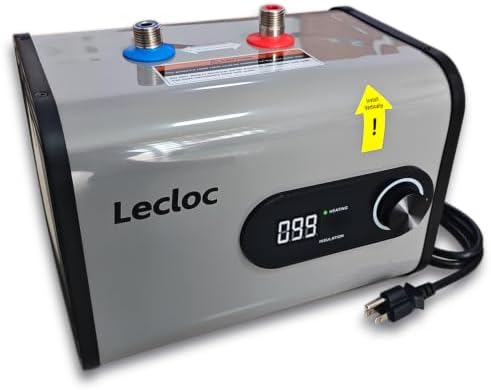
The UTank is a compact storage heater designed to sit near a sink. Its 1.7-gallon tank keeps a small supply of hot water ready, which can reduce the wait for hot water at a distant faucet. The unit uses a 120V plug-in connection and a 1500W heating element, making it a simpler electrical option than the hardwired or 240V models in this list.
The tank is made from 304 stainless steel and has a flame-retardant PUF insulation layer. A large knob and LED temperature display make adjustments straightforward. It can be shelf- or floor-mounted, and its 53-inch cord provides some flexibility when choosing a location. Measure carefully: the listed dimensions are 12 inches wide, 8.5 inches deep, and 9.5 inches high.
For a well-water home, the main question is not just tank material but what is in the water. Sediment and mineral deposits can affect any water heater. This small tank makes the most sense when you have filtered water and need hot water at one sink, rather than continuous hot water for several fixtures. It is not a whole-house heater.
Pros:
- Small stored supply of hot water close to the faucet
- 120V plug-in design with a long power cord
- 304 stainless steel tank and insulated casing
Cons:
- Limited 1.7-gallon capacity is not suited to sustained or multi-fixture demand
- Requires enough clearance for its listed dimensions
Verdict: Choose the UTank if you want a compact, plug-in heater for one sink and your water treatment setup keeps sediment and mineral buildup in check.
2. 110V 3000W Tankless Heater: Best for Low-Flow Sink Use

This compact tankless unit heats water as it flows instead of storing it in a tank. It has a 3000W heating element, an LED display, and temperature controls that can show Fahrenheit or Celsius. The listed temperature rise varies with flow: the product description states an increase of 82°F at 0.3 gallons per minute and 131°F at 0.5 gallons per minute.
Those flow figures matter. The manufacturer says the heater is not suitable for a shower, which normally requires at least 1.8 gallons per minute. It is better viewed as a low-flow option for a sink or similar point-of-use task. The unit is designed for vertical wall mounting, uses standard 1/2-inch NPT connections, and includes protections such as dry-boil and overheat safeguards, according to the product information.
Tankless heating does not remove minerals or sediment from well water. If your water is hard or carries visible particles, use appropriate treatment and follow the heater’s maintenance instructions. Also confirm the required circuit and installation details before buying; compact size does not mean every existing outlet or plumbing setup will be suitable.
Pros:
- Heats water on demand without a storage tank
- Compact wall-mounted design for tight spaces
- Temperature display and multiple listed safety protections
Cons:
- Low flow limits it to small, point-of-use jobs rather than showers
- Must be installed vertically, according to the product instructions
Verdict: Consider this model for a low-flow sink where space is tight, but skip it if you need shower-level flow or hot water at several fixtures.
3. VEVOR 18-Gallon Electric Heater: Best for a Larger Stored Supply

Unlike the small under-sink and tankless options, this VEVOR is described as an 18-gallon storage heater. It uses a 1600W immersion element and has an adjustable temperature range from 86°F to 167°F. The product information also lists an LED heating display and rotary temperature control.
The larger tank can provide more stored hot water than the 1.7-gallon UTank, but the 1600W element is modest for a tank of this size. That means you should think of it as stored capacity, not instant recovery. Plan for the time it may take to bring water back up to temperature after significant use, and check the unit’s installation requirements and dimensions before assigning it a location.
The inner tank is described as corrosion-resistant with an enamel glass coating, and the heater has a foam insulation layer. These features may help protect the tank and retain heat, but they do not make it immune to well-water sediment or mineral deposits. Water testing and suitable pretreatment are especially worth considering when choosing a storage heater.
Pros:
- 18-gallon capacity offers more stored water than a mini-tank model
- Adjustable temperature control and LED heating display
- Insulation and a described corrosion-resistant tank construction
Cons:
- 1600W heating power may mean slower recovery after heavy use
- Its larger capacity needs more installation space than compact point-of-use units
Verdict: Choose the VEVOR if stored capacity matters more than compact size or fast recovery, and verify that its installation requirements suit your home.
4. Rheem 8kW Multi-Fixture Heater: Best for Higher-Demand Tankless Use

The Rheem is the most powerful tankless model in this group. It is a 240V, 8kW unit intended for multi-fixture use, with a listed output of up to 1.95 gallons per minute. Its digital thermostat adjusts in one-degree increments from 80°F to 140°F. As with any tankless heater, actual performance depends on incoming water temperature and how much water is flowing.
This model has a much more demanding electrical setup than the plug-in options. The listed requirements include a 40-amp double-pole breaker, #8 AWG copper conductors with ground, and a recommended minimum 100-amp household service panel. Have an electrician confirm that your panel and wiring can support it before purchase. Professional sizing and installation are important, particularly if you plan to supply more than one fixture.
For a well-water home, the higher output does not solve water-quality problems. Sediment and hardness can still affect the heating system, so consider the results of a water test and any treatment needed for your supply. The supplied product information marks this model as unavailable; check the listing for current availability before making it your first choice.
Pros:
- Designed for multiple fixtures, with listed output up to 1.95 GPM
- Digital temperature controls from 80°F to 140°F
- Compact tankless format saves floor space
Cons:
- Requires 240V wiring and substantial electrical capacity
- Availability should be confirmed before purchase
Verdict: This is the strongest fit in the list for multi-fixture tankless demand, but only if your electrical system is properly sized and the unit is available.
5. ThermoMate 3500W 120V Heater: Best Hardwired Option for One Sink

The ThermoMate is a compact tankless heater for an under- or over-sink installation. It is rated at 3500W and 120V, with a stated flow range of 0.4 to 0.66 gallons per minute and a temperature setting range of 86°F to 131°F. The product description says its self-modulating power adjusts with changes in inlet flow and temperature.
This heater is not a plug-in model. It must be hardwired, and the stated electrical requirements are a 32-amp double-pole circuit breaker and minimum 10 AWG wire. That is a significant installation detail: have a qualified electrician confirm the circuit and local requirements before you buy. The listed dimensions are 7.9 by 6.4 by 2.5 inches, which can make it easier to fit in a small cabinet than a storage tank.
The manufacturer describes a cast aluminum heating element separated from the water line and a 304 stainless steel water tube, with the design intended to reduce scale, corrosion, and mineral buildup. That is a useful design consideration for well water, but it should not replace water testing or needed filtration and treatment. Its modest flow range also makes it a sink heater, not a whole-home solution.
Pros:
- Very compact design for a tight under-sink space
- Self-modulating operation and adjustable digital temperature control
- Heating element is described as separated from the water line
Cons:
- Must be hardwired and requires a dedicated electrical setup
- Low listed flow is not suited to shower or whole-house use
Verdict: The ThermoMate is worth considering for one sink if you want a compact tankless unit and can meet its hardwired electrical requirements.
How to Choose an Electric Water Heater for Well Water
Start with a water test
Well water varies from one property to another. A water test can help identify hardness, sediment, iron, and other issues that may affect plumbing and water-heating equipment. Use those results to decide whether you need a sediment filter, softener, or other treatment, and follow the heater maker’s care instructions. A heater’s material or coating does not guarantee that it will resist every water-quality problem.
Match the heater type to your hot-water needs
A mini-tank stores a limited amount of hot water near one faucet. A tankless point-of-use model heats water as it flows, but its output depends on its power, inlet temperature, and flow rate. A higher-capacity tankless heater may serve more than one fixture, but only when correctly sized and installed. Decide whether you need hot water at a single sink, several fixtures, or throughout the home before comparing models.
Check flow rate and incoming water temperature
Tankless performance changes with flow and with the temperature of the incoming water. A model that can provide a substantial temperature rise at a low flow may not keep water as warm when the faucet is opened farther. Compare the stated flow and temperature-rise information with the job you expect the heater to do. Do not assume that a small under-sink unit can supply a shower or multiple faucets.
Confirm electrical requirements before you buy
These products range from 120V plug-in heaters to hardwired 120V and 240V units. Check the voltage, breaker, wire size, and service-panel requirements against your home’s electrical setup. If the product calls for a dedicated circuit or professional installation, account for that before choosing a model. Ask a qualified electrician when you are unsure.
Measure the installation area and check connections
Measure the available space, including room for plumbing connections, the power cord or wiring, and future service access. Compare your measurements with the product’s stated dimensions. Also check the pipe connection size and whether the heater must be mounted in a specific position, such as vertically.
Plan for maintenance and water treatment
Sediment and mineral scale can build up in water-heating equipment. Follow the manufacturer’s instructions for inspection, flushing, and other maintenance, and use filtration or treatment suited to your well-water test results. A whole-house treatment system may help protect multiple appliances, but the right approach depends on the water and the equipment requirements.
Think about storage, recovery, and temperature control
A tank heater can supply water from its stored reserve, but it needs time to reheat after use. A tankless model avoids stored-water recovery but is limited by its heating power and flow. Consider how many people and fixtures will use hot water, whether demand is occasional or steady, and whether you need an easy-to-read display or simple temperature control.
Frequently Asked Questions
Can I use an electric water heater with well water?
Yes, but suitability depends on your water quality and the heater’s requirements. Test your well water and address sediment, hardness, or other identified issues with appropriate treatment. Follow the heater manufacturer’s maintenance instructions.
Does well water damage electric water heaters?
Not all well water is the same. Sediment and mineral content can contribute to buildup or corrosion, but the risk depends on the water and the equipment. Testing the water and using suitable treatment can help you make a more informed choice.
Which model is best for a single sink?
The UTank is a plug-in mini-tank option with a small stored reserve. The 110V 3000W heater and ThermoMate are tankless alternatives for low-flow sink use. Compare the electrical setup, available space, and desired flow before choosing.
Can a small under-sink heater supply a shower?
The two small tankless models listed here are not suited to shower flow. The 110V 3000W model’s product information specifically says it is not suitable for showers. The other compact point-of-use heaters are also designed for limited use, so check their specifications rather than treating them as whole-home units.
Is tankless always a better choice for well water?
No. Tankless models can save space and heat water on demand, but they still need water that meets the manufacturer’s requirements and may require maintenance for sediment or scale. A storage heater may be a better fit when you want a reserve of hot water. Your water test, demand, and electrical setup should guide the choice.
Can I install one of these heaters myself?
Some models are described as plug-in, while others require hardwiring or 240V electrical work. Plumbing and electrical rules vary by location. Follow the installation instructions and use a qualified professional when required or when you are uncertain about the circuit, wiring, or connections.
Final Recommendation
For most well-water homes that need hot water at one sink, the UTank is the most straightforward option in this group because it combines a small storage tank with a 120V plug-in design. Choose the ThermoMate or 110V tankless model only if their low-flow output and electrical requirements fit your installation. If you need more capacity or multi-fixture service, compare the VEVOR storage heater and Rheem tankless model carefully, including recovery needs, electrical capacity, and availability. In every case, test your well water and plan treatment and maintenance before installation.
