
The best energy-saving roof coating depends on your roof material and the kind of protection you need. A reflective coating may help limit heat absorption, but it has to be compatible with your roof and applied as directed. The picks below include acrylic coatings, a ceramic elastomeric coating, silicone for roofs where ponding water is a concern, and a silver aluminum coating. Check each product’s surface requirements and coverage before you buy.
| Product | Type | Best fit | Key detail |
|---|---|---|---|
| Kool Seal Premium 10 Year Elastomeric Roof Coating | White acrylic elastomeric | General roof renewal | Reflective finish; 10-year warranty stated in product description |
| Kool Seal Gray Base Roof Coating | Gray acrylic basecoat | Projects using a Kool Seal finish coat | Designed to improve adhesion and provide a surface for finish coats |
| Nationwide Coatings Mobile Home Roof Coating | White elastomeric ceramic | Mobile and manufactured home roofs | Five-gallon size; product description recommends two coats |
| Countryman 100% Silicone Roof Coating | White silicone | RV and flat roofs | Designed to resist ponding water; single coat at the recommended rate |
| PERMAKOTE Silver Seal Aluminum Roof Coating | Water-based acrylic aluminum coating | Pitched roofs needing a reflective silver finish | Five-gallon size; two coats recommended |
Table of Contents
Our Picks: Best Energy Saving Roof Coating reviews
1. Kool Seal Premium 10 Year Elastomeric Roof Coating: Best All-Purpose White Acrylic Pick

This white acrylic elastomeric coating is the most straightforward option in this group for someone seeking a reflective finish and general roof renewal. Its product description says it reflects heat, protects against the elements, and can renew most roofing substrates. It is sold in a one-gallon container, which may suit a smaller job or a project where you want to calculate the amount needed before buying in bulk.
The product description also states a 10-year warranty. Treat that as a product claim, not a guarantee that applies to every roof or installation: check the warranty terms and confirm your roof surface is eligible. The listing does not provide a coverage rate here, so check the container or manufacturer’s directions before estimating how much coating your roof needs.
Compared with the other picks, this is a simpler choice than the Kool Seal gray basecoat, which is intended to sit beneath a finish coat. It is also an acrylic option rather than the silicone coating designed to resist ponding water. That makes surface compatibility and roof drainage important factors when deciding whether this coating is right for your project.
Pros:
- White finish is designed to reflect heat.
- Elastomeric acrylic formula is intended to protect and renew roofing substrates.
- Product description states a 10-year warranty.
- One-gallon size can be practical for smaller projects.
Cons:
- Coverage per gallon is not specified in the supplied product details.
- Confirm compatibility with your roof and review warranty conditions before application.
Verdict: Choose this as a versatile white acrylic option if your roof is compatible and you want a reflective coating in a smaller container.
2. Kool Seal Gray Base Roof Coating: A Prep Coat for a Matching Finish System

This 100% acrylic gray coating is a basecoat, not the same kind of finished reflective surface as the white Kool Seal product above. Its stated purpose is to provide adhesion to most roof surfaces and create a surface for Kool Seal elastomeric finish coats. That makes it a system component to consider when your project calls for a compatible topcoat.
The main practical point is to plan for the full coating system. A basecoat alone may not provide the finished appearance or reflective benefits you want from a roof coating. Check the directions for the finish coat you plan to use, including which roof materials it accepts and how the two products should be applied.
Unlike the white coating, this gray product is not presented as a stand-alone heat-reflective finish. It is also a different choice from silicone or aluminum coatings, which are described as finished roof coatings. Buy it when you have a specific reason to use a base layer, rather than treating it as a one-step solution.
Pros:
- 100% acrylic formula.
- Designed to adhere to most roof surfaces.
- Provides a base for Kool Seal elastomeric finish coats.
Cons:
- Not described as a complete finish coat on its own.
- Requires planning around a compatible finish coat for a completed system.
Verdict: Choose this basecoat when your roof project calls for a Kool Seal finish system; skip it if you need a single finished reflective coating.
3. Nationwide Coatings Mobile Home Roof Coating: Ceramic Formula for Manufactured Homes
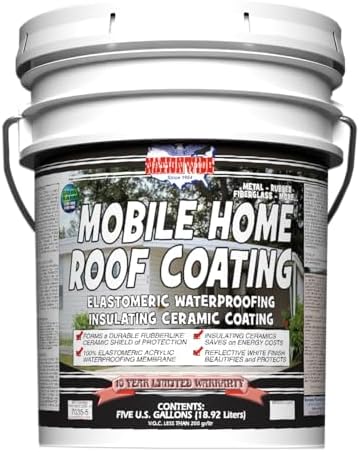
This five-gallon coating is specifically described as an elastomeric ceramic product for mobile home roofs. The manufacturer’s listing says its bright white finish reflects UV rays and uses ceramic pigments to dissipate heat. It also describes the coating as a waterproofing product intended to extend the life of aging roofs. These are product claims, so compare them with the coating directions and the needs of your particular roof.
The application guidance is more specific than for several options here: the listing recommends two coats at 100–150 square feet per gallon, applied by brush, roller, or industrial airless sprayer. It says to apply above 45°F to a clean, dry, sound roof surface. Use those directions to estimate material needs, and confirm them on the product label before starting.
The listing also claims 100+ mph wind-lift and wind-driven-rain protection, a Class A fire rating per NFPA 101, and that it meets or exceeds Energy Star energy-efficiency guidelines. Verify the applicable documentation for your roof and project rather than relying on a short product description alone. Compared with the one-gallon acrylic option, this is a larger, more specialized purchase aimed at mobile and manufactured homes.
Pros:
- Designed specifically for mobile home roofs.
- Bright white ceramic elastomeric finish is intended to reflect heat.
- Listing provides a coverage range and application guidance.
- Five-gallon container may suit a larger roof project.
Cons:
- Two coats and the stated coverage rate can require substantial material.
- Its specific focus on mobile home roofs makes surface compatibility essential.
Verdict: Consider this coating for a compatible mobile or manufactured home roof when you want a larger ceramic-based system and can follow its two-coat directions.
4. Countryman 100% Silicone Roof Coating: Best Match for Ponding-Water Concerns

This white, 4.75-gallon coating uses 100% silicone and is marketed for RV and flat roofs. Its product description highlights resistance to ponding water, UV exposure, and extreme weather. That makes it a relevant option when water tends to remain on parts of a roof, though no coating should be used to ignore drainage problems or roof damage.
Countryman describes the formula as high-solids and says it forms a thicker protective membrane after curing. It also describes a single-coat application at the recommended coverage rate and says primer is not required for most applications on listed surfaces, including metal, EPDM rubber, fiberglass, SPF, modified bitumen, and existing silicone coatings. “Most” is important: confirm the exact surface and preparation requirements before proceeding.
Compared with the acrylic coatings in this list, silicone’s stated advantage is its resistance to standing water. The trade-off is that surface compatibility and application conditions still matter, and the supplied details do not give a coverage rate. Use the label to work out how much product you need instead of assuming one container will cover a particular roof area.
Pros:
- Designed for RV and flat roofs.
- Product description emphasizes resistance to ponding water and UV exposure.
- Single-coat application is specified at the recommended rate.
- Primer is not required for most listed applications, according to the product description.
Cons:
- Coverage rate is not included in the supplied product details.
- Surface preparation and compatibility must be checked for your specific roof.
Verdict: This is the strongest match in the group for a compatible RV or flat roof where ponding-water resistance is a priority.
5. PERMAKOTE Silver Seal Aluminum Roof Coating: Reflective Silver Finish for Pitched Roofs

PERMAKOTE Silver Seal is a water-based acrylic roof coating with an aluminum-colored metallic finish. The product description says it is designed for pitched roofs and forms an elastomeric waterproofing membrane. Its silver surface is intended to reflect the sun’s rays, making it an option for shoppers who want a reflective coating but prefer a metallic look to a white finish.
The five-gallon listing recommends two coats and gives coverage of up to 150 square feet per gallon. It says to apply by brush, roller, or industrial airless sprayer above 45°F on a clean, dry roof surface. Treat “up to” as a maximum estimate, not a promise: roof texture and application can affect actual coverage. The product also describes ceramic insulating and soundproofing properties, but the supplied details do not quantify those effects.
Compared with the white acrylic and ceramic products, this coating offers a silver appearance. It is not the same as the Countryman silicone option, which is specifically marketed for resistance to ponding water. Confirm that the pitched-roof application guidance and surface requirements match your project before buying.
Pros:
- Silver metallic finish offers an alternative to white coatings.
- Designed to reflect the sun’s rays and waterproof the roof.
- Listing gives a maximum coverage estimate and recommends two coats.
- Water-based formula cleans up with soap and water, according to the product description.
Cons:
- Two coats can increase the amount of material required.
- Product is described for pitched roofs, so check before using it on a flat roof.
Verdict: Choose PERMAKOTE if you want a silver reflective finish for a compatible pitched roof and are prepared to apply two coats.
How to Choose an Energy-Saving Roof Coating
Match the coating to your roof material
Start with your roof’s existing material and coating. Products can be designed for different surfaces, and compatibility varies even within the same coating type. Check the product label for approved substrates and preparation steps. For example, Countryman lists several compatible surfaces but still advises checking the requirements for each application. Do not assume that a coating described as suitable for “most” roofs will work on yours.
Choose the right coating type
Acrylic coatings, silicone coatings, and aluminum-finish coatings have different stated uses. The Kool Seal white product is an acrylic elastomeric coating described as reflective, while its gray product is a basecoat for a finish coat. Countryman’s silicone formula is marketed for RV and flat roofs and resistance to ponding water. PERMAKOTE offers a water-based acrylic coating with a silver finish. Pick by roof needs and directions, not by coating type alone.
Consider color and reflectivity
White and silver finishes are marketed as reflective in the product information here, but color alone does not tell you whether a coating is suitable for your roof. Compare the manufacturer’s claims, the intended use, and any required application system. A reflective coating may help reduce heat absorption, but results depend on the roof, the building, the weather, and correct application. Avoid assuming it will produce a specific change in indoor temperature or energy bills.
Check whether your roof has ponding water
If water remains on your roof after rain, pay close attention to the product’s stated resistance to ponding water. Countryman specifically markets its silicone coating for that concern. Other options in this list are not described in the supplied information as ponding-water solutions. A coating is not a substitute for fixing drainage or repairing a roof with active damage.
Work out coverage and number of coats
Read the coverage rate and required coats before calculating how many containers to buy. Nationwide Coatings recommends two coats at 100–150 square feet per gallon, while PERMAKOTE recommends two coats and gives coverage of up to 150 square feet per gallon. Coverage is not provided in the supplied details for some other products, so check the label or manufacturer’s instructions. Roof texture and application method can affect how much material you use.
Plan for preparation and application conditions
Many coating directions require a clean, dry, sound roof. This is especially clear in the application guidance for Nationwide Coatings and PERMAKOTE. Follow the product’s instructions for temperature, application tools, drying time, and any primer or basecoat. If the roof needs repairs or its existing finish is uncertain, resolve those questions before coating it.
Compare the full project, not just the container size
A larger container is not automatically the better value. Include the roof area, the number of coats, the stated coverage, any primer or basecoat, and the tools needed. A basecoat such as Kool Seal Gray may require a compatible finish coat, while some products are described as single-coat applications when used at their recommended rate. Use the manufacturer’s directions to compare the total materials needed for your project.
Frequently Asked Questions
Can a roof coating lower energy use?
A reflective coating is designed to reduce the amount of sun absorbed by a roof, which may help limit heat gain. The actual effect depends on your roof, building, climate, and application. The product details do not support a guaranteed reduction in energy use or utility bills.
Is a white roof coating always the best choice?
Not always. White finishes are marketed as reflective, but the right coating also depends on roof material, drainage, and intended use. A silver finish may suit someone who prefers a metallic look, while a silicone product may be a better match for a roof where ponding water is a concern.
Can I apply roof coating over any existing roof?
No. Check the product’s approved surfaces and preparation instructions. Some coatings list several compatible materials, but that does not mean every roof or existing coating is suitable. When in doubt, confirm compatibility with the manufacturer before applying the product.
What is the difference between a basecoat and a finish coat?
A basecoat is an underlayer intended to prepare or improve the surface for a topcoat. The Kool Seal gray product is described as a basecoat that provides adhesion and a surface for Kool Seal elastomeric finish coats. It should not be treated as the same product type as a finished reflective coating.
Can silicone coating be used where water collects?
Countryman describes its 100% silicone coating as resistant to ponding water. Check its directions and confirm that your roof material is compatible. If water collects because of a drainage issue, address that problem as well rather than relying on coating alone.
How many coats of roof coating should I apply?
Follow the directions for the specific product. Nationwide Coatings and PERMAKOTE recommend two coats, while Countryman describes a single-coat application at its recommended rate. Do not use one product’s directions to estimate coverage or coats for another.
Do I need to repair my roof before coating it?
Coating directions commonly call for a clean, dry, sound surface. Repair roof damage and address active leaks or drainage problems before application. A coating should not be treated as a replacement for needed roof repairs.
Final Recommendation
For a general-purpose white acrylic option, Kool Seal Premium 10 Year Elastomeric Roof Coating is the easiest place to start, provided it matches your roof and the warranty terms fit your project. For a compatible mobile home roof, consider Nationwide Coatings’ ceramic formula and its stated two-coat directions. If ponding-water resistance is the main concern, Countryman’s silicone coating is the most directly targeted choice in this group. Always verify surface compatibility, coverage, and application instructions before ordering.
