
Choosing the best exterior concrete wall waterproofing depends on where water is getting in and what kind of finish you want. A paint-like coating can cover masonry and resist water pressure, while a flexible liquid membrane or clear sealer may suit other projects. The options below range from broad wall coatings to products better suited to small repairs, so match the product to the surface and the source of moisture before you buy.
Table of Contents
Quick Comparison
| Product | Type | Best suited for | Key consideration |
|---|---|---|---|
| KILZ Basement and Masonry Waterproofing Paint | White waterproofing paint | Concrete, brick, and block walls | Not for active leaks or floors |
| AMES Blue Max White Liquid Rubber Waterproofer | Flexible liquid rubber membrane | Foundations and below-grade concrete | Allow 24 hours between coats |
| SENVEN Transparent Waterproof Sealant | Clear water-based coating | Small cracks and visible repair areas | Not for gaps wider than 2 mm |
| DWIL Transparent Waterproof Sealant | Clear protective coating | Localized moisture protection | Clean and dry the surface first |
| GOODTAKE Silicon-Based Concrete & Masonry Sealer | Penetrating water-based sealer | Concrete and masonry surfaces | Check the label for your exact project |
Our Picks: Best Exterior Concrete Wall Waterproofing reviews
1. KILZ Basement and Masonry Waterproofing Paint: Best for an Opaque Wall Finish

KILZ is a white masonry coating made for interior and exterior concrete, brick, cinder block, stucco, and other listed masonry surfaces. Its painted finish can cover uneven-looking walls while adding a water barrier. The product description says it blocks up to 12 PSI of water pressure, a useful feature to consider for walls exposed to moisture pressure.
For below-grade use, the product information calls for filling holes and cracks with hydraulic cement before painting. It is not intended for floors or walls with active water leaks, so it should not be treated as a fix for ongoing water entry. The coating dries to the touch in about an hour, is ready for a recoat in about four hours, and fully cures in seven to 14 days, according to the supplied product details.
This is the most straightforward choice here if you want a white, paint-like finish across a masonry wall. Its main trade-off is that it changes the surface appearance and needs suitable surface preparation. It is less suited to someone seeking an invisible sealer or a flexible membrane.
Pros:
- Made for interior and exterior masonry surfaces, including concrete and block
- Provides an opaque white finish
- Product information states it blocks up to 12 PSI of water pressure
- Touch-dry and recoat times are specified
Cons:
- Not for active leaks or floor surfaces
- Below-grade holes and cracks need repair before application
Verdict: Choose KILZ if you want a white coating for a properly prepared concrete or masonry wall, not a patch for active water leaks.
2. AMES Blue Max White Liquid Rubber: Best for a Flexible Membrane

AMES Blue Max is a white liquid rubber waterproofer described as an elastomeric membrane. It is intended for projects such as below-grade and insulated concrete foundations, basements, and underlayment. The product information says it can also be used on wood and metal, and applied to vertical or horizontal surfaces by brush, roller, or sprayer.
Its standout feature is flexibility: the description states that the membrane has 900% elongation and is designed to expand and contract with the surface to resist cracking and peeling. That makes it a different kind of option from KILZ’s harder, painted finish. The trade-off is the slower recoat schedule: the product information calls for 24 hours between coats.
This may suit a foundation project where a flexible membrane is preferred over a decorative wall coating. Check the product directions and your wall’s condition before applying it; a liquid membrane is not a substitute for addressing the source of serious water intrusion.
Pros:
- Flexible liquid rubber membrane for concrete and other listed surfaces
- Designed for below-grade and insulated concrete foundations
- Can be applied by brush, roller, or sprayer
- Product information states 900% elongation
Cons:
- Requires 24 hours between coats
- May not be the right choice if you want a conventional painted finish
Verdict: Pick Blue Max when flexibility is a priority for a foundation or masonry waterproofing project and you can allow time between coats.
3. SENVEN Transparent Waterproof Sealant: Best for Small, Visible Repairs

SENVEN is a clear, water-based coating intended to form a transparent waterproof membrane. It is designed to keep the original surface color and texture visible, which can be useful around decorative masonry, window sills, trim, or small repair areas where a white coating would stand out.
The product description says the liquid can penetrate small cracks and gaps, but it is not suitable for gaps wider than 2 mm. It calls for two or three thin, even coats, with 24 hours between coats, and recommends clean, dry surfaces and dry weather above 50°F, including overnight temperatures. The listed coverage is about 7 square feet per 17.64-ounce amount, so check the container size and coverage before planning a large wall project.
This is better viewed as a localized repair product than as the default coating for an entire exterior concrete wall. Its clear finish is an advantage when appearance matters, but it may take multiple coats and is not intended for long-term immersion.
Pros:
- Clear finish helps preserve the visible surface appearance
- Can be applied by brush, roller, or pouring
- Product information specifies limits for gaps and application conditions
- Suitable for several listed materials, including concrete and brick
Cons:
- Not intended for gaps wider than 2 mm or long-term water immersion
- Several coats and a full day between coats are specified
Verdict: Consider SENVEN for small, visible masonry repairs where a clear finish matters, rather than for broad foundation waterproofing.
4. DWIL Transparent Waterproof Sealant: Best for Preserving Masonry Appearance
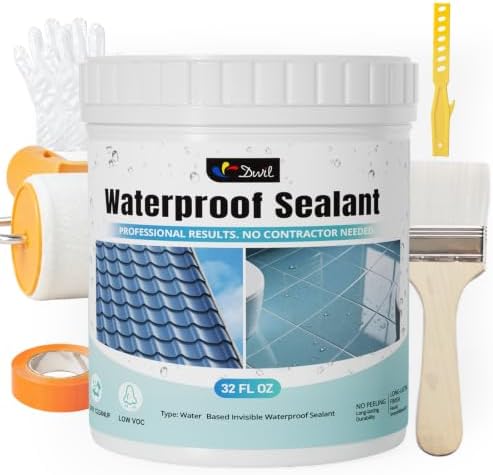
DWIL is a clear protective coating for surfaces such as concrete, red brick, wood, and ceramic tile. Like SENVEN, it is intended to help reduce moisture penetration while leaving the underlying color and texture visible. That makes it worth considering for a small exterior repair where a visible paint patch would be undesirable.
The application instructions in the product information are simple: clean and dry the surface, then apply the coating evenly with a brush or roller and allow sufficient curing time. The supplied details do not specify a coverage rate, a number of coats, or a precise curing period, so consult the product label before estimating materials or scheduling the work.
Compared with KILZ or Blue Max, DWIL offers less detail about pressure resistance and application timing. It may be a convenient option for localized moisture protection, but the available information is not enough to make it the strongest choice for a large wall or a wall under significant water pressure.
Pros:
- Clear finish helps retain the original surface appearance
- Suitable for concrete and brick, among other listed materials
- Can be applied with a brush or roller
Cons:
- Product information does not specify coverage or a precise curing time
- Less detail is provided about performance under water pressure
Verdict: DWIL is a reasonable clear-coating option for a small masonry repair, but compare its label directions with your project needs before using it across a large wall.
5. GOODTAKE Silicon-Based Sealer: Best for a Penetrating, Low-Visibility Finish

GOODTAKE is a silicon-based, water-based sealer described as penetrating concrete and masonry pores to create an invisible protective layer. It is listed for interior and exterior use on surfaces such as foundations, retaining walls, and stone facades. Unlike a painted coating, it is intended to leave no colored finish.
The product information says it can be applied by spray, roller, or brush and describes the formula as ready to use and VOC-free. It also makes broad claims about use on surfaces including bathroom walls, water tanks, and swimming pools. Because project conditions differ, check the product label carefully to confirm that the intended concrete wall and exposure are covered before application.
GOODTAKE may suit someone who wants a low-visibility treatment rather than a white surface coating or a rubber membrane. The supplied description does not give a coverage rate or a detailed preparation and curing schedule, so those details should be confirmed on the container. It is not the most transparent choice for a wall where you need clear, project-specific performance instructions.
Pros:
- Penetrating sealer is intended to leave an invisible finish
- Listed for interior and exterior concrete and masonry use
- Can be applied by spray, roller, or brush
- Product information describes the formula as VOC-free
Cons:
- Coverage and detailed curing instructions are not provided in the supplied information
- Broad application claims make it important to confirm the label suits your specific project
Verdict: Choose GOODTAKE if you want a penetrating sealer with a low-visibility finish, after confirming its label directions for your wall and exposure.
How to Choose Exterior Concrete Wall Waterproofing
Identify Where the Water Is Coming From
A coating can help protect a suitable surface, but it may not solve the cause of water entry. Look for whether moisture appears across the wall, at a crack, or around a joint. If water is actively leaking, do not assume a surface coating alone will stop it. KILZ, for example, is specifically listed as unsuitable for walls with active water leaks.
Match the Product Type to the Wall
Paint-like coatings, flexible membranes, clear surface films, and penetrating sealers work differently and leave different finishes. KILZ offers an opaque white coating; AMES Blue Max is a flexible liquid rubber membrane; SENVEN and DWIL are clear coatings; and GOODTAKE is described as a penetrating sealer. Choose based on the surface, the project, and whether you want to preserve the wall’s appearance.
Check Whether the Product Is Made for Your Surface and Location
Confirm that the label lists your wall material and the conditions where you plan to use it. Exterior, below-grade, and above-grade surfaces can face different moisture conditions. Product descriptions may list several uses, but that does not mean every formula is suitable for every wall or exposure.
Prepare Cracks and the Surface Before Coating
Preparation is part of the waterproofing job. Clean and dry the wall as the label directs, and repair holes or cracks with a compatible material. For below-grade use, KILZ’s product information calls for filling holes and cracks with hydraulic cement before painting. Small clear sealants also have limits; SENVEN, for example, is not intended for gaps wider than 2 mm.
Plan for Coats, Weather, and Curing
Application times vary. AMES Blue Max calls for 24 hours between coats, and SENVEN also specifies a 24-hour wait between coats along with dry conditions above 50°F, including overnight. KILZ lists a four-hour recoat time and a seven-to-14-day full cure. Follow the specific product label rather than assuming one schedule works for all coatings.
Estimate Coverage and Finish Needs
Measure the wall area and compare it with the product’s stated coverage, if available. SENVEN provides an approximate coverage figure, while the supplied information for several other products does not. Also decide whether you want a colored coating or a clear finish; clear products may preserve appearance, but they are not interchangeable with opaque coatings or flexible membranes.
Frequently Asked Questions
What is the best waterproofing product for an exterior concrete wall?
There is no single best choice for every wall. KILZ is a strong fit for a white coating on properly prepared masonry, while AMES Blue Max is a flexible membrane option. Clear sealants and penetrating products are better considered when preserving the surface appearance is important.
Can I apply waterproofing paint over an active leak?
Do not rely on paint to stop an active leak. KILZ’s product information says it is not for walls with active water leaks. Identify and address the water source, and follow the instructions for the product you choose.
Should I use a clear sealer or a white coating?
Choose a clear sealer if keeping the wall’s visible color and texture matters and the product suits the repair. Choose a white coating if you want an opaque finish. They differ in finish and application, so check the intended use and label directions.
Can these products be used below grade?
Some options are described for below-grade use. KILZ lists below-grade applications with required crack and hole preparation, and AMES Blue Max is described for below-grade concrete foundations. Confirm the product label and prepare the wall as directed.
How many coats should I apply?
It depends on the product. SENVEN calls for two or three coats, while the supplied details for other options may not specify the same schedule. Follow the product label for coat count, coverage, and drying time.
Can a clear sealant repair wide cracks in concrete?
Do not assume so. SENVEN is not intended for gaps wider than 2 mm, and clear coatings are not a replacement for repairing larger structural cracks. Check each product’s limits and use a suitable repair method for the crack.
Final Recommendation
For a straightforward white finish on a properly prepared exterior concrete or masonry wall, KILZ is the clearest all-around match in this group. Choose AMES Blue Max when a flexible membrane is the priority, and consider a clear sealer for smaller repairs where preserving the wall’s appearance matters. Before applying any option, confirm the label covers your wall, exposure, and moisture conditions.
