
Fake wood flooring can refresh a room without the cost or installation work of hardwood, but the most convincing options rely on more than a wood-print pattern. Texture, color variation, plank layout, and careful installation all affect how natural the finished floor looks. These peel-and-stick picks offer different formats and coverage areas, so compare the details—and make sure your floor is clean, dry, and level before you begin.
Table of Contents
Quick Comparison
| Product | Format | Coverage | Notable detail |
|---|---|---|---|
| SULSUMIC Peel and Stick Vinyl Flooring | 36 planks, 6 × 36 in. | 54 sq. ft. | 1.5 mm thick; wood-grain pattern |
| ZRJT Peel and Stick Floor Tile Roll | 11.8 × 590 in. roll | About 48.4 sq. ft. | Wide, continuous format |
| Art3d Peel and Stick Vinyl Floor Tiles | 36 tiles, 6 × 36 in. | 54 sq. ft. | Rigid surface; two-year warranty listed |
| auxua Woodgrain Vinyl Floor Roll | 11.8 × 590 in. roll | About 49 sq. ft. | Roll-up format; 0.02 in. thick |
| Lareko Peel and Stick Floor Tile Roll | 36 planks, 6 × 36 in. | 54 sq. ft. | Gray finish; repositionable during installation |
Our Picks: Best Fake Wood Floors That Look Real reviews
1. SULSUMIC Peel and Stick Vinyl Flooring: Traditional Planks with Wood Grain

SULSUMIC uses individual 6-by-36-inch planks, a familiar format that can make a floor look more like separate wood boards than a continuous sheet. The product description highlights natural hues and a wood-grain pattern. Each pack contains 36 planks and covers 54 square feet.
The planks have a listed thickness of 1.5 mm, and the backing is self-adhesive. The brand describes the flooring as waterproof, heat-resistant, and wear-resistant, with use on clean, dry, level surfaces such as tile, wood flooring, marble, terrazzo, and concrete. Its thin profile makes careful surface preparation especially important: bumps or uneven seams underneath may show through the finished floor.
This option makes sense if you prefer plank-by-plank placement and want to create a staggered layout. It is less suited to a floor that needs substantial cushioning or to an uneven subfloor. Measure the room carefully and allow for extra material for trimming and mistakes.
Pros:
- Individual planks offer control over the layout.
- One pack covers 54 square feet.
- Self-adhesive backing avoids the need for separate glue.
- Described as suitable for several smooth subfloor types.
Cons:
- The 1.5 mm thickness leaves little room to hide flaws below it.
- Adhesion depends on a clean, dry, level surface.
Verdict: Choose SULSUMIC if you want standard wood-look planks and have a well-prepared floor beneath them.
2. ZRJT Peel and Stick Roll: A Wide Format for Fewer Seams

ZRJT takes a different approach from plank packs: it comes as an 11.8-inch-wide roll measuring 590 inches long, with about 48.4 square feet of coverage. Its listing describes a gray wood-grain appearance and a scratch-resistant top layer. The longer format can reduce the number of seams compared with laying many small pieces.
The roll is listed as 0.025 inches thick and has a self-adhesive backing. The product description says it can be cut to fit and used on smooth, dust-free surfaces such as marble, wood, and terrazzo. It also describes the surface as water-resistant and suitable for areas such as kitchens, bathrooms, basements, and laundry rooms. Follow the product instructions and clean spills rather than assuming the installed floor makes the subfloor waterproof.
A wide roll may be easier to lay across a simple room, but it can be less convenient around corners, doorways, and other detailed cuts. Its wood pattern is also gray, so check that the tone suits your room before choosing it. Compared with individual planks, this format offers fewer seams but less freedom to arrange each board separately.
Pros:
- Wide roll format can reduce visible seams.
- About 48.4 square feet of listed coverage.
- Can be cut to fit and applied without separate glue.
- Gray wood-grain look suits cooler color schemes.
Cons:
- A long roll may be harder to handle around tight corners.
- The color and pattern are less adjustable than a plank layout.
Verdict: Consider ZRJT if you want a gray wood-look surface and prefer a broad roll that can limit seams across straightforward floor areas.
3. Art3d Peel and Stick Tiles: Rigid Planks with a Wood-Look Texture
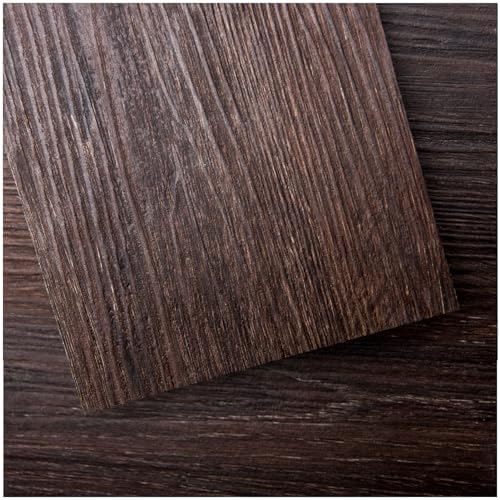
Art3d’s pack includes 36 self-adhesive pieces, each measuring 6 by 36 inches, for 54 square feet of coverage. Its description calls out an authentic wood look and grain texture, along with a rigid surface and hard core. The product title includes “Brown Stone,” while the description emphasizes wood styling, so check the current product images and color details before ordering.
The brand describes the tiles as waterproof, wear-resistant, and scratch- and abrasion-resistant. They are intended to be installed on a flat floor by peeling and sticking, without power tools or separate glue. The listing also says they can be used on walls, ceilings, or cabinets with extra adhesive, but those projects require a different application method from floor installation.
Compared with the roll options, individual tiles make it easier to plan a staggered plank pattern. The trade-off is that every piece needs to be aligned, and the thin flooring will not correct an uneven base. Product information lists a two-year warranty, though the exact terms should be confirmed with the seller. Availability can also change, so check the listing before making plans around this product.
Pros:
- Plank-style pieces allow flexible placement.
- One pack is listed to cover 54 square feet.
- The description highlights a textured wood-look surface.
- Warranty information is listed by the brand.
Cons:
- The “Brown Stone” title and wood-look description make the finish worth verifying.
- Each tile needs careful alignment on a flat, prepared surface.
Verdict: Art3d may suit you if you want individual rigid planks, but confirm the finish and current availability before choosing it.
4. auxua Woodgrain Vinyl Roll: Simple Coverage in a Roll-Up Format

The auxua flooring is a self-adhesive vinyl roll, 11.8 inches wide and 590 inches long, with about 49 square feet of listed coverage. Its roll-up format is designed for storage and handling, and the listing describes a soft wood-grain finish. Like the other roll choices, it gives you a broad surface rather than separate planks to position one at a time.
The product is listed at 0.02 inches thick and is described as waterproof, with a self-adhesive backing. That slim profile can be useful where you want to keep added floor height low, but it also means the floor beneath should be smooth and even. The brand says no special tools are needed for installation; you will still need to measure, cut carefully, and press the adhesive down as directed.
Compared with ZRJT, auxua has a similar roll width and length but slightly less stated coverage. Neither format gives the same freedom to stagger individual planks as a tile pack. Consider this option for a simple surface where a continuous roll is easier to lay than many separate pieces.
Pros:
- Roll format is designed for convenient handling and storage.
- About 49 square feet of listed coverage.
- Self-adhesive installation does not require separate glue.
- Thin profile adds little height over a prepared surface.
Cons:
- At 0.02 inches thick, it will not hide floor imperfections.
- A roll gives you less control over individual plank placement.
Verdict: Choose auxua if you prefer a wood-grain roll that is easy to store and want broad coverage on a smooth, level floor.
5. Lareko Peel and Stick Flooring: Gray Wood-Look Planks with Repositioning

Lareko’s gray flooring comes as 36 pieces measuring 6 by 36 inches, with 54 square feet of coverage per listed roll. The description highlights an embossed wood texture and subtle color shifts, details that can give a printed surface more depth than a flat, uniform pattern. Each piece is listed at 0.02 inches thick.
The self-adhesive planks are described as repositionable during installation, which may help when you are aligning a row or correcting a cut. The listing calls the surface waterproof and non-slip and describes it as suitable for rooms including bedrooms, bathrooms, laundry rooms, apartments, and dorms. It also claims the product can be peeled up for removal; check the installation instructions and test a small area first, since the result can depend on the existing floor and how it is prepared.
Compared with the roll-format choices, Lareko offers more control over plank placement and a more obvious board-by-board layout. Its gray color may work well with cool-toned decor, but it may not be the right match if you want warm oak or brown tones. The thin construction also makes subfloor preparation important.
Pros:
- Embossed texture and subtle color variation are intended to add depth.
- Individual planks allow a staggered layout.
- The description says pieces can be repositioned during installation.
- One pack is listed to cover 54 square feet.
Cons:
- The gray finish may not suit warm wood palettes.
- The 0.02-inch profile requires a smooth, even floor beneath it.
Verdict: Lareko is a strong fit if you want a gray, textured plank look and value being able to adjust placement as you install.
How to Choose Fake Wood Floors That Look Real
Choose a plank or roll format
Individual planks let you stagger seams and control the direction of the pattern, which can create a more board-like effect. Rolls can mean fewer seams and may be simpler across open, regular spaces, but they can take more care around corners and doorways. Match the format to the shape of your room and the kind of finish you want.
Look closely at the pattern and color
Wood tones vary from gray to warm brown, and a pattern that looks subtle in a product photo may feel different across a whole room. Check the listing images and description for the shade, grain, and texture. If the title and description seem inconsistent, as with a listing that mentions both stone and wood styling, confirm the exact finish before buying.
Measure coverage and plan for waste
Calculate your room’s floor area before ordering, then compare it with the stated coverage. The products here list coverage ranging from about 48.4 to 54 square feet per package. Add extra material for cuts, layout adjustments, and possible mistakes, especially if the room has alcoves or an unusual shape.
Prepare the subfloor carefully
Peel-and-stick flooring depends on contact with a clean, dry, level surface. Dust, grease, moisture, loose material, and uneven seams can interfere with adhesion or show through thin flooring. Check the product instructions for approved surfaces, and do not assume every existing floor is suitable just because it is listed as a possible subfloor type.
Think about thickness and the floor underneath
These products are thin compared with many permanent flooring systems. A slim surface may help limit added height, but it will not provide a way to level an uneven floor or cover raised edges. Look at the listed thickness and inspect the area carefully before installing.
Understand what waterproof claims mean
Several listings describe their vinyl surface as waterproof or water-resistant. That claim applies to the flooring material as described; it does not necessarily mean water cannot reach seams, edges, or the subfloor. Use the product as directed, clean spills promptly, and verify that the installation is appropriate for areas with frequent moisture.
Check installation and removal expectations
Self-adhesive backing avoids separate glue, but accurate measuring and careful placement still matter. If you rent or may want to remove the flooring later, look for specific removal instructions and test a small area first. Adhesive results can depend on the floor below, the preparation, and how long the material has been installed.
Frequently Asked Questions
Can peel-and-stick vinyl really look like wood?
It can create a wood-inspired look, especially when the grain, color, and texture are convincing and the planks are laid neatly. It is still printed vinyl, not hardwood, and the final effect depends on the product pattern, room lighting, and installation.
Are peel-and-stick wood-look floors waterproof?
Some listings describe the vinyl surface as waterproof, while another describes its flooring as water-resistant. These claims do not necessarily protect the seams or the subfloor from water. Follow the manufacturer’s care and installation instructions for the specific product.
Can I install peel-and-stick flooring over existing tile?
Some products list tile as a suitable surface, but the tile should meet the product’s requirements for cleanliness, dryness, and levelness. Raised grout lines or uneven areas may affect how the finished floor looks and how well the adhesive holds.
How much flooring should I buy?
Measure the room’s length and width and multiply them to find its area. Compare that figure with the package coverage, then allow extra for trimming and mistakes. A room with many corners or cutouts may need more extra material than a simple rectangle.
Which format is easier to install: planks or a roll?
That depends on the room. A roll can reduce the number of seams in an open area, while planks can be easier to arrange around a staggered layout. Both require accurate measuring, careful cutting, and a well-prepared surface.
Can peel-and-stick flooring be removed later?
Some listings describe their flooring as removable, but the result can vary with the adhesive, the existing floor, and installation conditions. If preserving the original surface matters, test a small area and follow the removal guidance before covering a larger space.
Which option is best for a gray wood look?
ZRJT and Lareko both list gray finishes. ZRJT comes in a wide roll format, while Lareko uses individual planks with an embossed texture. Choose based on whether you prefer fewer seams or more control over the plank layout.
Final Recommendation
For a traditional plank layout and 54 square feet of coverage, SULSUMIC is a straightforward option to consider. Choose Lareko if you prefer gray planks and want the flexibility to reposition pieces during installation. If reducing seams matters more, compare the wide-roll formats from ZRJT and auxua. Whichever you choose, check the finish, measure carefully, and prepare the subfloor before you peel off the backing.
