
Choosing a fall protection harness for roof work means looking beyond the harness itself. Fit, connection points, lanyard type, anchor setup, and the rest of your fall arrest plan all matter. The five options below range from basic harness-and-lanyard kits to a more complete bucket kit with a lifeline and roof anchor. Check each product’s fit range and included components, then confirm they work with your equipment and jobsite requirements before use.
Table of Contents
Quick Comparison
| Product | What Stands Out | Best Fit For |
|---|---|---|
| TRSMIMA Padded Roofing Harness Kit | Four adjustment points, waist padding, side D-rings, and a 2-meter shock-absorbing lanyard | Roofers looking for padding and a basic harness-and-lanyard kit |
| Malta Dynamics 50-Foot Roofer’s Bucket Kit | Harness, 50-foot lifeline assembly, rope grab, and reusable roof anchor | Shoppers who want several fall protection components in one kit |
| TRSMIMA Harness with 6-Foot Lanyard | Tongue buckles, steel D-rings, and an elasticated shock-absorbing lanyard | Workers who want a compact lanyard with two hooks |
| TRSMIMA Quick-Release Padded Harness Kit | Four quick-release buckles, five adjustment points, and padded contact areas | Workers who prioritize adjustable fit and faster donning |
| TRSMIMA Four-Point Padded Harness Kit | Four adjustment points, waist padding, side D-rings, and a 2-meter lanyard | Roofers looking for a padded harness with basic fall-arrest gear |
Our Picks: Best Fall Protection Harnesses For Roof Work reviews
TRSMIMA Padded Roofing Harness Kit: A Comfortable Basic Set

This full-body kit combines a harness with a 2-meter shock-absorbing lanyard. The listing gives a fit range of 30.7 to 51 inches at the waist, 31.5 to 47.3 inches at the chest, and 19.6 to 39 inches at the legs. Its stated weight range is 130 to 310 pounds, including the product’s sizing guidance.
The harness has four adjustment points, side D-rings, and a wide padded waist section with breathable mesh. Those features may make it more comfortable for longer periods of wear than a simple unpadded design. The side rings are intended for work positioning; they are not a substitute for the dorsal fall-arrest connection.
The included lanyard makes this a convenient starting kit, but the 2-meter length may not suit every roof layout or anchor location. Confirm the required connection, fall clearance, and compatibility with your complete system before working at height. The listing also states that the harness meets an ANSI/ASSE harness standard; check the product’s labels and instructions to confirm the requirements for your job.
Pros:
- Includes a 2-meter shock-absorbing lanyard
- Padded waist section with breathable mesh
- Four adjustment points and side D-rings
- Fit measurements and weight range are provided
Cons:
- The listed fit range may not work for smaller or larger users
- The included lanyard length may not suit every roof or anchor setup
Verdict: Choose this kit if its stated fit range works for you and you want padding plus a basic lanyard in the package; check the lanyard length against your jobsite plan first.
Malta Dynamics 50-Foot Roofer’s Bucket Kit: A More Complete Setup

Unlike the harness-only-style options here, this Malta Dynamics package includes several parts of a personal fall arrest system in a reusable five-gallon bucket. The kit lists a universal-sized full-body harness, a 50-foot vertical lifeline assembly, a rope grab with a shock pack, steel snap hooks, and a reusable roof anchor with nails.
The longer lifeline gives you more reach than the shorter lanyards in the other kits, which may be useful on jobs where a vertical lifeline is part of the planned setup. The listed user weight capacity is 130 to 310 pounds. The manufacturer also lists ANSI and OSHA requirements for the components, but you should check the product markings and documentation for the exact equipment and work conditions you have.
This package is not a ready-to-use solution for every roof. The anchor must be installed as directed into a suitable structure, and the lifeline setup needs to match the work area and fall-clearance needs. A rope-grab system also requires users to understand how to connect, position, inspect, and use it correctly. Compared with the TRSMIMA kits, it offers more included equipment but may be more than you need if your work plan calls for a different system.
Pros:
- Includes a harness, lifeline assembly, rope grab, and roof anchor
- 50-foot rope provides more line length than the other listed kits
- Supplied in a reusable five-gallon bucket
- Lists a 130-to-310-pound user capacity
Cons:
- Anchor installation and system compatibility still need careful planning
- The kit’s lifeline setup may not suit every roof or work method
Verdict: This is the strongest choice for shoppers who need a bundled harness, lifeline, rope grab, and anchor, provided those components fit their documented fall protection plan.
TRSMIMA Harness with 6-Foot Lanyard: A Compact Connection Option

This TRSMIMA kit pairs a full-body harness with a 6-foot lanyard that combines fall-arrest and shock-absorbing functions. The listing describes the lanyard as elasticated, with two hooks, and gives a maximum capacity of 310 pounds including clothing and tools. Its stated tensile strength and hook ratings are product specifications, not a reason to skip inspection or follow the equipment instructions.
The harness uses tongue-buckle adjustments and steel dorsal and side D-rings. Its listed fit range is 30.7 to 55.3 inches at the waist and 21.2 to 38 inches at the legs, with a stated capacity of 130 to 310 pounds. The side rings are intended for work positioning, while the dorsal ring is the fall-arrest attachment point described in the listing.
Compared with the two padded TRSMIMA options, this kit puts more emphasis on its 6-foot lanyard and buckle design than on a padded waist. It may suit workers who prefer a shorter, elasticated connection, but lanyard length alone does not determine whether a system is suitable. Check clearance, anchor location, and whether the lanyard’s hooks connect properly to your anchor and harness.
Pros:
- Includes a 6-foot elasticated lanyard with two hooks
- Steel dorsal and side D-rings
- Broad listed waist adjustment range
- Lanyard combines shock absorption and fall-arrest functions
Cons:
- Does not list the padded waist feature found on some other picks
- The lanyard and hook setup may not match every anchor system
Verdict: Consider this kit if you want the included 6-foot elasticated lanyard and its fit range suits you, but verify that the complete setup is appropriate for your roof and anchor.
TRSMIMA Quick-Release Padded Harness Kit: Adjustable with Fast Buckles
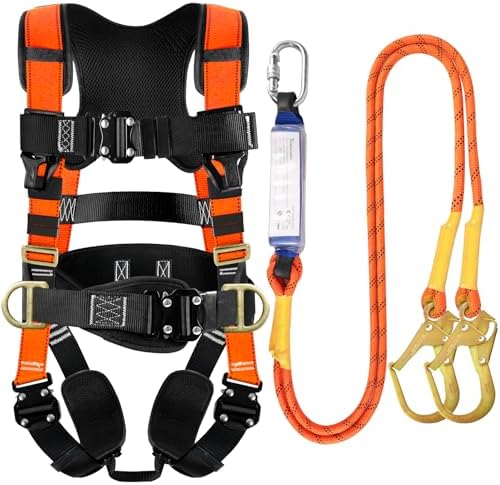
This full-body TRSMIMA harness is distinguished by four quick-release buckles and five adjustment points across the padded legs, shoulders, and chest. Quick-release buckles may make it easier to put on and remove the harness, especially when you are wearing gloves, but you still need to adjust and inspect every connection before use.
The listing gives a waist range of 30.7 to 55.3 inches and a leg range of 21.2 to 38 inches, with a stated capacity of 130 to 310 pounds. It also describes a padded, breathable waist section and steel D-rings. The included lanyard is described as abrasion- and heat-resistant, but the supplied information does not give its length, so compare the product documentation with your fall-clearance plan.
This pick may be a better fit than the other TRSMIMA options if fast-release buckles are important to you. It is less clear from the listing exactly how the lanyard’s length and configuration compare with the 2-meter and 6-foot options elsewhere in this roundup. Confirm the components and fit before relying on the kit for a particular job.
Pros:
- Four quick-release buckles and five adjustment points
- Padded areas at the waist, shoulders, and legs
- Wide listed waist adjustment range
- Side D-rings are provided for work positioning
Cons:
- The listing does not specify the lanyard length in the supplied product details
- Its fit range may not suit users outside the stated measurements
Verdict: Choose this model if quick-release buckles and multiple fit adjustments are priorities, after confirming the included lanyard details and complete system compatibility.
TRSMIMA Four-Point Padded Harness Kit: A Familiar Roofing Setup

This kit shares many of its listed features with the first TRSMIMA pick: four adjustment points, a padded waist section, side D-rings, and a 2-meter shock-absorbing lanyard. The stated fit measurements are 30.7 to 51 inches at the waist, 31.5 to 47.3 inches at the chest, and 19.6 to 39 inches at the legs. The listed weight range is 130 to 310 pounds.
The extra waist padding and breathable mesh may be useful when you wear the harness for extended work periods. The side D-rings are described for work positioning and storage, while the fall-arrest connection should follow the harness instructions and your system plan. The listing says the harness meets an ANSI/ASSE harness standard, but you should inspect the labels and documentation rather than relying on a product-page claim alone.
Its listed measurements and included lanyard make it similar to the first TRSMIMA option, so the choice may come down to availability and the exact product configuration. Neither kit replaces a suitable anchor, a compatible connecting system, training, or a rescue plan. Check that the 2-meter lanyard is appropriate for the work area before choosing it.
Pros:
- Includes a 2-meter shock-absorbing lanyard
- Four adjustment points and side D-rings
- Breathable padded waist section
- Provides waist, chest, and leg fit measurements
Cons:
- Listed fit range is aimed at medium-to-large users
- Included lanyard length may not fit every roof layout
Verdict: This is a practical option if you want the stated padded four-point design and 2-meter lanyard, as long as the fit and connection length suit your fall protection plan.
How to Choose a Fall Protection Harness for Roof Work
Start with the Full Fall Protection System
A harness is only one part of a fall arrest system. You also need compatible connectors and a suitable anchorage, plus a plan for the work area and a way to respond if a fall occurs. A harness-and-lanyard kit may not include an anchor or lifeline, so check the package contents carefully. Follow the equipment instructions and applicable jobsite rules, and get qualified guidance if you are unsure about the setup.
Check Fit and Capacity Before Buying
Compare your measurements with the product’s stated waist, chest, and leg ranges—not just a general size label. The five options here list different adjustment ranges, and the Malta Dynamics kit describes its harness as universal-sized. Check the stated capacity and account for clothing, tools, and other carried weight as directed by the manufacturer. A harness should fit snugly and correctly according to its instructions; do not use a model that cannot be adjusted properly.
Choose Buckles and Padding for Your Workday
Adjustment style affects how you put on the harness and fine-tune its fit. The TRSMIMA quick-release model has four quick-release buckles and five adjustment points, while other models use tongue-buckle or four-point adjustment designs. Padding can add comfort at contact areas, but comfort does not prove that a harness fits or is adjusted safely. Prioritize proper fit, clear labels, and secure connections.
Match the Lanyard or Lifeline to the Roof
The kits include different connection options: two products list a 2-meter shock-absorbing lanyard, one lists a 6-foot elasticated lanyard, and the Malta Dynamics kit includes a 50-foot vertical lifeline assembly. The quick-release model’s supplied details do not state the lanyard length. These lengths and designs are not interchangeable by default. Consider anchor location, potential fall distance, clearance below the work surface, and the equipment maker’s instructions when selecting a system.
Understand Each D-Ring’s Purpose
The dorsal D-ring on a full-body harness is generally the fall-arrest connection described for these kits. Side D-rings are commonly intended for work positioning when the harness and system are designed for that use. Do not assume that every D-ring can be used for every connection. Follow the product instructions and use only the connection points specified for the task.
Inspect Labels, Components, and Condition
Read the harness and lanyard labels, instructions, and applicable standard markings before use. The product listings make claims about standards and compliance, but the listing alone cannot confirm whether a particular setup meets your work requirements. Before each use, inspect the equipment for damage, wear, missing parts, or signs of a fall, and follow the manufacturer’s rules for removal from service. Make sure the anchor and connectors are also suitable and compatible.
Plan for Training and Rescue
Fall protection equipment must be used correctly, not just worn. Anyone using it should understand how to fit and inspect the harness, connect it to the planned system, avoid hazards, and follow the site’s rescue plan. A fall arrest can leave a worker suspended, so plan for a prompt response before work begins. If you lack the training or information needed to set up the equipment, seek qualified help rather than guessing.
Frequently Asked Questions
Does a roofing harness kit include everything needed for fall protection?
Not always. Several kits here include a harness and lanyard, but not an anchor. The Malta Dynamics kit lists a harness, lifeline assembly, rope grab, and roof anchor. Even a more complete kit must be installed and used as directed, and it may not suit every roof or work plan.
What is the difference between a lanyard and a lifeline?
A lanyard connects a worker’s harness to an anchorage or other system component. A lifeline is a longer line used as part of a fall protection setup, often with a rope grab or other compatible connector. Select the type and length based on the equipment instructions, anchor arrangement, fall clearance, and work method.
Can I use the side D-rings to arrest a fall?
Do not assume so. The product descriptions identify side D-rings for work positioning, while the dorsal D-ring is described as the fall-arrest connection. Use each attachment point only for the purpose allowed by the harness instructions and your fall protection plan.
How do I know whether a harness will fit?
Measure your waist, chest, and legs as needed, then compare those measurements with the specific product’s listed ranges. Also check the stated weight capacity and account for clothing and tools. If you cannot adjust the harness to fit securely as instructed, choose another size or model.
Is a shock-absorbing lanyard suitable for every roof?
No single lanyard type or length fits every job. The anchor position, possible fall distance, clearance below the work surface, and system instructions all matter. Have the complete setup checked against the work conditions before use.
How often should I inspect fall protection equipment?
Follow the manufacturer’s inspection instructions and your employer’s procedures. Inspect equipment before use and remove it from service if it is damaged, worn, missing parts, or has been involved in a fall, following the maker’s guidance. Check the connectors and anchorage as well as the harness.
Final Recommendation
For a bundle with the most listed components, the Malta Dynamics bucket kit stands out because it includes a harness, lifeline assembly, rope grab, and roof anchor. For a simpler harness-and-lanyard option with padding, the TRSMIMA kits may be worth comparing by fit range, buckle style, and lanyard length. Whichever you choose, base your decision on the full system, product instructions, proper fit, and the demands of your roof—not on the harness alone.
