
A floor-standing window AC is usually a portable air conditioner that sits on the floor and vents warm air through a window hose. That makes it easier to move than a traditional window unit, but it still needs a suitable window for exhaust. The right choice depends on your room size, humidity, noise needs, and whether you want heat as well as cooling. Below, we compare five options, from compact room cooling to higher-capacity units for larger spaces.
Table of Contents
Quick Comparison
| Product | Listed cooling capacity | Room size | Standout features |
|---|---|---|---|
| DOMANKI 14,000 BTU Portable AC | 14,000 BTU ASHRAE / 10,000 BTU SACC | Up to 700 sq. ft. | Cooling, dehumidifying, fan; sleep mode |
| SereneLife 16,000 BTU Dual Hose Inverter AC | 16,000 BTU cooling; 11,000 BTU heating | Up to 850 sq. ft. | Dual hose, inverter technology, heating |
| AGTANA 14,000 BTU Portable AC | 14,000 BTU ASHRAE / 10,000 BTU SACC | Up to 700 sq. ft. | Wide-angle auto-swing, sleep mode, dehumidifier |
| COSTWAY 8,200 BTU Portable AC | 8,200 BTU | Up to 350 sq. ft. | Four modes, washable filter, window kit |
| HUMHOLD 14,000 BTU Portable AC | 14,000 BTU ASHRAE / 10,000 BTU CEC | 500–700 sq. ft. | Auto-swing, 3-in-1 modes, caster wheels |
Our Picks: Best Floor Window Ac Unit reviews
DOMANKI 14,000 BTU Portable AC: Best for Large Rooms

The DOMANKI is a floor-standing portable unit designed for larger rooms. Its listed capacity is 14,000 BTU under the ASHRAE rating and 10,000 BTU under SACC, with a stated coverage area of up to 700 square feet. The two rating figures use different testing methods, so it is useful to compare them on the same basis when considering other models.
It combines cooling, fan, and dehumidifier modes, with a stated moisture-removal capacity of 96 pints per day. A three-speed fan and auto-swing louvers help spread air through the room. The self-evaporating design sends most collected moisture out through the exhaust hose during normal use, though the product description recommends continuous drainage in very humid conditions.
Sleep mode is listed at 48 dB, and the display can dim or turn off. A 24-hour timer and remote add convenient controls. This model is a good fit if you want substantial cooling and humidity control in a large bedroom, living room, or office. It is less suited to a room without a window that can accept the exhaust setup, and its room-size claim should not replace checking your layout, sunlight, and insulation.
Pros:
- Listed for rooms up to 700 square feet
- Cooling, fan, and dehumidifier functions
- Sleep mode, timer, and remote control
- Self-evaporating operation under normal conditions
Cons:
- Continuous drainage may be needed in very humid conditions
- Remote requires two AAA batteries, which are not included
Verdict: Choose the DOMANKI if you need a high-capacity portable AC with dehumidifying features and a sleep mode for a larger room.
SereneLife 16,000 BTU Dual Hose Inverter AC: Best for Year-Round Use
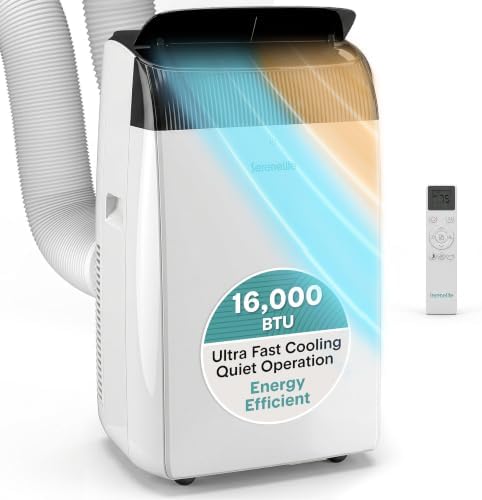
The SereneLife stands out for its combination of cooling and heating. It is listed at 16,000 BTU for cooling and 11,000 BTU for heating, with a stated coverage area of up to 850 square feet. Its dual-hose design and inverter technology are notable features for shoppers comparing it with simpler single-hose portable models.
Four modes—cool, heat, fan, and dehumidifier—make it a flexible option for changing seasons. It includes rolling wheels, a window vent kit, a remote, and a timer that can be set for up to 24 hours. The stated noise range is 42–49 dBA, though actual sound can depend on the selected mode and room conditions.
This model could suit a larger room or a household that wants one floor-standing appliance for both warm and cool periods. The provided listing data marks it unavailable, so check the current product page before making plans to buy. Its larger stated coverage is appealing, but buyers should also confirm the window kit fits their window and that the unit’s footprint works in the room.
Pros:
- Provides both cooling and heating
- Dual-hose design and inverter technology
- Four operating modes and a 24-hour timer
- Listed for spaces up to 850 square feet
Cons:
- Availability may be limited
- Two fan speeds are listed, fewer than some competing models
Verdict: If you want cooling and heating in one portable unit, the SereneLife has the broadest feature range here, but confirm availability and window fit first.
AGTANA 14,000 BTU Portable AC: Best for Airflow Coverage

The AGTANA is another higher-capacity portable AC, rated at 14,000 BTU ASHRAE and 10,000 BTU SACC. Its listed coverage reaches up to 700 square feet. The standout airflow feature is a wide-angle auto-swing function, which is described as moving through a 25–89-degree range to distribute air across more of the room.
Like the DOMANKI, it offers cooling, fan, and dehumidifier modes, with a stated dehumidifying capacity of up to 96 pints per day. The self-evaporating system is intended to reduce routine draining, while a continuous drainage port and auto-stop sensor are included for high-humidity use. A 24-hour timer, sleep mode, front display, and remote round out the controls.
The AGTANA may be a strong match for open rooms where adjustable airflow matters. The window kit is described as fitting most horizontal and vertical windows, but “most” does not mean every window, so check your opening dimensions before ordering. As with other portable ACs, plan for the exhaust hose and access to a suitable outlet.
Pros:
- Wide-angle auto-swing airflow
- Cooling, fan, and dehumidifier modes
- Self-evaporating design with a drain option for humid spaces
- Remote, front display, and 24-hour timer
Cons:
- Continuous drainage may be needed in high humidity
- Remote requires two AAA batteries, which are not included
Verdict: Pick the AGTANA if you want a large-room portable AC with a wide auto-swing range and flexible drainage options.
COSTWAY 8,200 BTU Portable AC: Best for Smaller Rooms

The COSTWAY is the smaller-capacity choice in this group. Its listing gives an 8,200 BTU rating and recommends it for rooms up to 350 square feet, such as a bedroom, study, or home office. That lower stated coverage makes it a more practical option for a modest room than the larger 14,000 BTU models.
It has four modes: cool, dry, fan, and auto, with three fan-speed settings. The unit includes a remote, digital touch controls, a 24-hour timer, and sleep mode. A washable filter and two drain outlets with an included drain hose are useful details for routine care and drainage.
The listing describes the unit as compatible with vertical or horizontal sliding windows and includes a window installation kit. Its stated noise level is 50 dB. Compared with the higher-capacity picks, it is less suited to large or open-plan spaces, but its smaller coverage claim may make it easier to match to a bedroom or office without paying for capacity you do not need.
Pros:
- Listed for rooms up to 350 square feet
- Four modes and three fan speeds
- Washable filter and included drain hose
- Window kit, remote, and 24-hour timer included
Cons:
- Lower listed cooling capacity than the other models here
- Not the best fit for large rooms or open floor plans
Verdict: The COSTWAY is the sensible option for a smaller room if you want portable cooling with several modes and straightforward maintenance features.
HUMHOLD 14,000 BTU Portable AC: Best for Easy Room-to-Room Moves

The HUMHOLD is a 14,000 BTU ASHRAE portable AC, with a listed 10,000 BTU CEC rating and a stated room range of 500 to 700 square feet. It offers cool, fan, and dry modes, including a dehumidifier rated to remove up to 96 pints of moisture per day. Temperature settings are listed from 61 to 90°F.
For airflow, the unit has a three-speed fan and auto-swing louvers that move through a 30–85-degree range. The self-evaporating system is designed to exhaust most condensation through the hose, but continuous draining is recommended for dry mode or very humid conditions. The product description also lists a 24-hour timer, sleep mode, remote, and four caster wheels.
The listed dimensions are 13 x 27 x 16 inches, and the unit weighs 65.9 pounds. The wheels and side handles can make it easier to roll between rooms, though moving a portable AC also means relocating or setting up its exhaust hose and window seal. It is a useful choice if you want larger-room cooling and expect to move the unit occasionally.
Pros:
- Cooling, fan, and dehumidifier modes
- Auto-swing airflow and three fan speeds
- Four caster wheels and hidden side handles
- Window kit and exhaust hose are included
Cons:
- Continuous drainage may be needed in dry mode or high humidity
- Remote requires two AAA batteries, which are not included
Verdict: Choose the HUMHOLD if you want a large-room portable AC with wheels, adjustable airflow, and a full set of cooling and dehumidifying modes.
How to Choose a Floor-Standing Window AC
Match the capacity to your room
Start with the room’s square footage and compare it with the coverage stated for the unit. In this group, the COSTWAY is listed for up to 350 square feet, while several 14,000 BTU models are listed for larger rooms. These are product claims, not guarantees: ceiling height, direct sun, insulation, and room layout can affect how well an AC cools a space.
Compare cooling ratings carefully
Some portable AC listings show more than one BTU figure, such as ASHRAE and SACC or CEC ratings. Those figures come from different rating methods, so avoid comparing one model’s ASHRAE number directly with another model’s SACC or CEC number. Check which rating is being used and compare like with like.
Check the window and exhaust setup
A floor-standing portable AC still needs to send hot air outside. Before buying, confirm that the included window kit can fit your window type and opening dimensions, and make sure there is enough room for the exhaust hose without sharp bends. Also consider whether you can keep the window sealed around the kit to limit warm air entering the room.
Think about humidity and drainage
Self-evaporating systems can reduce the need to empty water during typical cooling use, but they do not mean every mode or climate is maintenance-free. High humidity and dehumidifier or dry modes may require continuous drainage. If your room is often damp, look for a drain connection and consider where a hose can safely send the water.
Decide whether you need heat or extra modes
Most options here focus on cooling, fan, and dehumidifying. The SereneLife also includes a heating mode, which may be useful if you want one appliance for multiple seasons. If you expect to use the unit mainly for cooling, you may prefer to prioritize room coverage, controls, and window compatibility instead.
Consider sound and nighttime controls
If the AC will run in a bedroom, look for a sleep mode, timer, and display dimming. Listed noise figures can help with comparison, but they may reflect specific operating modes and conditions. Keep in mind that the compressor and airflow can still be noticeable while the unit is running.
Plan for movement and upkeep
Portable models have wheels or handles, but they still need a nearby window and exhaust connection when operating. Check the unit’s dimensions and weight if you expect to move it often. A removable, washable filter can also make routine care simpler; follow the product instructions for cleaning and drainage.
Frequently Asked Questions
Does a floor-standing portable AC need a window?
Yes. These models use an exhaust hose to send warm air outside, usually through a window kit. They sit on the floor, but they are not vent-free air conditioners.
Can I use one of these units without installing the window kit?
The listed portable ACs are designed to vent through a window kit and hose. Running one without venting the warm air outdoors will not provide the intended cooling setup. Check the product instructions for installation details.
Is a 14,000 BTU model always better than an 8,200 BTU model?
No. Higher capacity may be appropriate for a larger space, but the best choice depends on room size and conditions. The COSTWAY is listed for up to 350 square feet, while several 14,000 BTU options claim coverage up to 700 square feet.
Do portable ACs need to be drained?
Some models use self-evaporating systems that send most moisture out through the exhaust hose during normal cooling. However, continuous drainage may be needed in high humidity or when using a dry or dehumidifier mode. Check the specific product instructions.
Which option also provides heat?
The SereneLife is the only model in this comparison that lists a heating mode. Its product description gives a heating capacity of 11,000 BTU.
Can I move a portable AC between rooms?
Wheels can make repositioning easier, but the AC needs an appropriate window and exhaust setup whenever it is operating. If you plan to move it often, consider the unit’s weight, handles, hose, and the time needed to fit the window kit in each room.
Final Recommendation
For a large room with a focus on cooling and dehumidifying, the DOMANKI, AGTANA, and HUMHOLD all offer 14,000 BTU ASHRAE ratings and similar stated coverage, with different airflow and mobility details. The COSTWAY is a better match for a smaller room, while the SereneLife is the most versatile pick if you also want heating. Before choosing, measure your room and window, confirm the exhaust setup, and consider how much drainage and maintenance your climate may require.
