
Choosing the best exterior basement waterproofing products starts with matching the coating to your foundation material and the kind of moisture you need to manage. The options below range from masonry paints to flexible liquid membranes, but a coating is only one part of a waterproofing plan. If water is actively leaking or collecting around your foundation, address the source and drainage conditions first, then confirm that the product is suitable for your wall and below-grade use.
Table of Contents
Quick Comparison
| Product | Type | What Stands Out |
|---|---|---|
| KILZ Basement and Masonry Waterproofing Paint | Masonry waterproofing paint | Interior/exterior use; rated to block up to 12 PSI |
| AMES Blue Max White Liquid Rubber Waterproofer | Liquid rubber membrane | Flexible coating with 900% elongation |
| MasterSeal 583 Formerly Super Thoroseal | Waterproof coating | Brief product listing; check current label for application details |
| Basement Sealer Waterproofing Wall Coating | Elastomeric ceramic sealer | Designed for concrete and masonry; available in a five-gallon size |
| SHENGWEI Waterproof Coating | Water-based waterproof coating | Claims coverage up to 120 square feet per gallon |
Our Picks: Best Exterior Basement Waterproofing Products reviews
1. KILZ Basement and Masonry Waterproofing Paint: Best for Versatile Masonry Protection

KILZ is a masonry coating for concrete, brick, cinder block, stucco, and retaining walls. It is listed for both interior and exterior use, making it a flexible option when you want one product for different masonry areas around the home.
The product description says its coating can block up to 12 PSI of water pressure and resist alkali buildup. It dries to the touch in about an hour, is ready for another coat in four hours, and needs seven to 14 days to fully cure. For below-grade use, the manufacturer calls for filling holes and cracks with hydraulic cement before painting.
That preparation requirement matters: this is a coating, not a fix for an active leak. KILZ also says not to use it on floors or walls with active water leaks. Compared with the more flexible AMES liquid rubber, KILZ is a paint-style choice for sound masonry surfaces rather than a product whose listed feature is high elongation.
Pros:
- Listed for indoor and outdoor masonry use
- Blocks up to 12 PSI, according to the product description
- Resists alkali buildup
- Clear guidance for patching cracks before below-grade application
Cons:
- Not intended for active leaks or floors
- Requires a full cure period before the coating reaches its stated finished condition
Verdict: Choose KILZ for a paint-style coating on prepared concrete or masonry when you need an interior/exterior option and do not have an active leak.
2. AMES Blue Max White Liquid Rubber: Best for a Flexible Membrane

AMES Blue Max is a liquid rubber waterproofer designed to form an elastic membrane. The listing says it can be used on below-grade and insulated concrete foundations, basements, wood, metal, and other surfaces. It can be brushed, rolled, or sprayed on vertical or horizontal areas.
Its standout specification is 900% elongation, which the manufacturer says helps the membrane expand and contract with a surface to resist cracking and peeling. That flexibility makes it a different kind of option from KILZ’s paint-style finish. The product is described as non-toxic, eco-friendly, and VOC-compliant in all 50 states.
Plan for time between coats: the product information calls for 24 hours between applications. The listing does not provide coverage per gallon, so estimate the amount you need only after checking the current package directions and the condition of your surface. As with any coating, confirm the label’s preparation and application requirements for your specific foundation material.
Pros:
- Flexible membrane with 900% elongation listed
- Suitable for several surface types, including concrete, wood, and metal
- Can be brushed, rolled, or sprayed
- Listed for below-grade foundation use
Cons:
- Requires 24 hours between coats
- Coverage per gallon is not stated in the supplied product details
Verdict: AMES Blue Max is a strong candidate if flexibility is your priority and you can allow the required time between coats.
3. MasterSeal 583: A Familiar Name with Sparse Product Details

MasterSeal 583, formerly called Super Thoroseal, is presented as a waterproof coating. The supplied product information also describes it as harder than the wall itself and says it is manufactured in the United States. Those details make it worth considering as a masonry waterproofing option, but they do not explain the product’s full application requirements.
Unlike the KILZ and AMES listings, the available description does not specify surface preparation, application tools, coverage, coat count, or drying time. It also does not clearly identify the types of surfaces or conditions for which it is intended. For exterior basement work, those missing details are important, especially if the foundation is below grade.
Before choosing this coating, check the current product label or manufacturer instructions for compatibility with your wall, below-grade use, and any required preparation. This is the least fully documented option in this roundup, so it is not the easiest pick for shoppers who want to plan a project from the listing alone.
Pros:
- Identified as a waterproof coating
- Listed as manufactured in the United States
- Recognized by its former Super Thoroseal name
Cons:
- Product details do not state coverage, drying time, or application method
- Confirm surface and below-grade suitability before buying
Verdict: Consider MasterSeal 583 only if you can verify its current instructions and confirm it fits your foundation and project conditions.
4. Basement Sealer Waterproofing Wall Coating: Best for Larger Masonry Projects
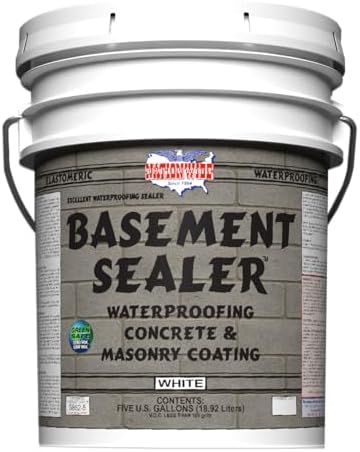
Nationwide Coatings’ Basement Sealer is an elastomeric ceramic coating for concrete and masonry. The listing highlights penetration on porous surfaces and adhesion to concrete and masonry, and the product is offered in bright white or other colors. The listed package is five gallons, which may suit a larger wall project better than a small repair.
The product description calls it an eco-friendly coating with easy application and water cleanup. It does not provide a coverage figure, cure time, coat count, or detailed application steps in the supplied information. Because color appearance can vary by screen, the listing recommends checking a color fan deck or comparable match if the shade matters to your project.
This option is most relevant when you are coating a broad masonry area and want a particular finish color. It is less straightforward for a small job or for a buyer who needs exact coverage calculations before ordering. Confirm the current instructions for exterior and below-grade use before applying it to a foundation.
Pros:
- Designed for concrete and masonry surfaces
- Elastomeric ceramic coating
- Available in bright white or other colors
- Five-gallon size may fit larger projects
Cons:
- Coverage and cure time are not stated in the supplied details
- Displayed colors may not match the finished shade exactly
Verdict: Consider this sealer for a larger masonry project when its color and current application instructions suit your needs.
5. SHENGWEI Waterproof Coating: Best for Flexible, Multi-Surface Use

SHENGWEI is a water-based coating listed for basement walls, roofs, bathrooms, concrete, wood, masonry, and previously coated surfaces. The product description says one gallon covers up to 120 square feet and forms a flexible membrane intended to expand and contract with structural movement.
It can be applied with a brush, roller, or sprayer, and the listing says cleanup is with soap and water. The coating cures to a gray finish, which can refresh a surface but may not suit every project’s appearance. Its broad application claims are convenient, but you should still check the label for compatibility with your exact foundation material and for instructions on exterior below-grade use.
Compared with AMES Blue Max, SHENGWEI provides a stated coverage estimate but does not include a specific elongation figure in the supplied details. It may appeal to shoppers who want a water-based, multi-surface product, provided the intended use and preparation instructions match the job.
Pros:
- Claims coverage up to 120 square feet per gallon
- Water-based formula with soap-and-water cleanup
- Can be applied by brush, roller, or sprayer
- Listed for several indoor and outdoor surfaces
Cons:
- Cures to a gray finish, which may not fit every project
- Verify below-grade foundation suitability and preparation details on the label
Verdict: SHENGWEI is worth considering for a multi-surface coating project if its gray finish and verified application instructions meet your needs.
How to Choose an Exterior Basement Waterproofing Product
Start with the Source of the Water
A coating may help protect a suitable surface, but it does not correct every cause of basement moisture. Check whether water is entering through a crack, collecting near the foundation, or coming from another source. If water is actively leaking, follow the product’s limitations and address the leak before applying a coating. For persistent or widespread water problems, a qualified waterproofing professional can help identify the cause.
Match the Product to Your Foundation Material
Confirm that the product is made for your wall material, such as poured concrete, concrete block, brick, or another masonry surface. Some products also list wood or metal, but broad material claims do not mean every coating works on every surface in every condition. Read the product label for compatibility and required surface preparation.
Check Exterior and Below-Grade Suitability
“Interior/exterior” does not automatically answer every question about use below ground. Confirm that the product is specifically appropriate for the side of the foundation and the conditions where you plan to apply it. Follow the label’s instructions for below-grade use, especially where it calls for patching cracks or preparing porous masonry.
Choose Between a Paint-Style Coating and a Flexible Membrane
Paint-style coatings offer a finished surface and may be a practical fit for prepared masonry. Liquid rubber products are marketed as flexible membranes, which can be useful when movement and flexibility are key considerations. Compare the product’s stated properties rather than assuming all waterproof coatings behave the same way.
Plan for Coverage, Coats, and Cure Time
Coverage estimates help you decide how much product to buy, but the amount needed can depend on the surface and its porosity. Check the stated coverage, number of coats, time between coats, and full cure period before starting. If a listing does not provide those details, consult the manufacturer’s current instructions rather than guessing.
Understand What a Coating Can and Cannot Do
These products are coatings, not a complete foundation drainage system. They should not be treated as a substitute for correcting active leaks or managing water around the home. Use the product within its stated limits and consider professional help if water intrusion continues after the underlying issue is addressed.
Frequently Asked Questions
Can I use waterproofing paint on an exterior basement wall?
Some products in this list are described for interior and exterior use, but you should confirm that the specific coating is suitable for your foundation material and below-grade conditions. Follow the manufacturer’s directions for preparation and application.
Will a basement coating stop an active leak?
Do not assume it will. KILZ specifically says not to use its coating on walls with active water leaks. Address the source of water and check each product’s label before applying any coating.
Do cracks need to be repaired before applying a coating?
Follow the product’s preparation instructions. KILZ calls for filling holes and cracks with hydraulic cement before below-grade application. Other products may have different requirements, so check their current labels.
Which product is the most flexible?
AMES Blue Max has the clearest flexibility specification in the supplied details: the listing states 900% elongation. SHENGWEI also describes a flexible membrane but does not provide an elongation figure.
How much waterproofing coating should I buy?
Use the coverage estimate on the product label and account for the size and condition of your surface. The supplied SHENGWEI details state up to 120 square feet per gallon, while the other product descriptions do not provide a coverage figure here.
Can I apply these products with a roller or sprayer?
Application methods vary. AMES Blue Max is listed for brush, roller, or spray application, and SHENGWEI lists the same options. Check the instructions for any product before choosing tools or starting work.
Final Recommendation
For a broadly useful masonry paint with stated interior and exterior use, KILZ is the clearest all-around choice, provided the wall is prepared and there is no active leak. If you want a flexible liquid membrane, AMES Blue Max stands out for its listed 900% elongation and below-grade foundation use. For any exterior basement project, verify the current product instructions and address the source of water rather than relying on a coating alone.
