Choosing a high-end tankless water heater for your whole home means matching hot-water flow to your household, not just picking the unit with the biggest number on the box. Gas models generally offer more capacity for multiple showers and appliances at once, while compact electric models can suit smaller homes or selected fixtures. These five options range from a high-output indoor/outdoor gas model to lower-capacity electric units, so check your home’s fuel, electrical service, climate, and installation needs before you buy.
Table of Contents
Quick Comparison
| Product | Fuel and installation | Listed flow rate | Best suited for |
|---|---|---|---|
| Rinnai RX199iN Condensing Smart Sense | Natural gas or propane; indoor or outdoor | Up to 11.1 GPM | Large households needing high flow and flexible placement |
| Rinnai REP199eN Smart-Circ | Natural gas; outdoor | Up to 7.6 GPM in the product description | Homes that value built-in recirculation |
| Rheem RTGH Series 9.0 GPM | Natural gas; indoor | 9.0 GPM at a 35°F rise | Multi-bathroom homes with indoor direct-vent installation |
| Mount Steel Pioneer Adjustable 12–18 kW | Electric; wall-mounted | Flow rate not specified | Smaller or point-of-use applications with suitable electrical service |
| Ranein 18 kW Electric | Electric; wall-mounted | Up to 4.3 GPM | Modest hot-water demand with the required dedicated circuits |
Flow capacity is not the same in every home: incoming water temperature and the temperature rise you need affect how much hot water a unit can deliver. Confirm sizing with a qualified installer.
Our Picks: Best High End Tankless Water Heaters For Whole Home Use reviews
1. Rinnai RX199iN: Best High-Capacity Choice for Flexible Installation

The RX199iN is the highest-capacity option in this group, with a listed output of up to 11.1 GPM and a 199,000 BTU rating. It runs on natural gas or propane, and its Smart Sense gas control is designed to work with either fuel. That flexibility can make it easier to consider for homes where fuel choice or future placement matters.
Rinnai describes this model as suitable for indoor or outdoor installation with its Versa Vent system. Outdoor installation requires the RX-OVC vent cap, so include that requirement in your planning rather than assuming the heater is ready to mount outside as-is. The unit is compact for its stated output, and features such as Quick Flush are intended to make routine flushing more convenient. Its listed UEF is .98.
This is a strong candidate for a larger household that may run several hot-water fixtures at once. The actual number of simultaneous showers or taps it can support depends on the temperature rise and your home’s demand, so use Rinnai’s sizing guidance and have a professional check the installation plan. Wi-Fi control requires a separate Controlr module, which is not included. Professional installation is recommended.
Pros:
- Up to 11.1 GPM listed, the highest flow figure among these picks
- Works with natural gas or propane
- Designed for indoor or outdoor installation, with the required outdoor vent cap
- Quick Flush feature and listed UEF of .98
Cons:
- Outdoor installation requires a separate RX-OVC vent cap
- Wi-Fi control requires an additional module
Verdict: Choose the RX199iN if you need high listed flow, flexible fuel options, and the possibility of indoor or outdoor placement, and you are prepared for professional sizing and installation.
2. Rinnai REP199eN: Best Outdoor Gas Option with Built-In Recirculation

The REP199eN is a non-condensing natural-gas model designed for outdoor installation. Its product description lists flow of up to 7.6 GPM, while its specifications give a different figure, so check the current manufacturer sizing information before treating either number as a guaranteed flow rate. It has a 199,000 BTU rating and a built-in recirculation pump.
Its Smart-Circ feature learns household water-use patterns and schedules recirculation around them. That may help reduce the wait for hot water at taps, though the result depends on your plumbing layout and how the system is set up. Because the pump is built in, it offers a recirculation feature without requiring you to choose a separate pump as part of the heater itself.
Compared with the RX199iN, this model gives up some placement flexibility and listed peak flow, but adds built-in recirculation and is intended for outdoor use. Its outdoor-only design may work well if you have an appropriate installation location. Check local requirements and have a qualified professional confirm the site, fuel supply, and setup. Wi-Fi control is optional and requires a separate module.
Pros:
- Built-in pump with Smart-Circ scheduling
- Natural-gas outdoor design can preserve indoor space
- Compact form for a high-output gas unit
- Rinnai provides sizing and installation guidance for its products
Cons:
- Outdoor installation only
- Listed flow figures vary across the supplied product information, so verify sizing before purchase
Verdict: Consider the REP199eN if you want an outdoor natural-gas heater with built-in recirculation and your home’s demand fits its verified capacity.
3. Rheem RTGH 9.0 GPM: Best Indoor Pick for Multi-Bathroom Homes

This Rheem is an indoor, natural-gas condensing tankless heater rated at 180,000 BTU per hour. Its listed capacity is 9.0 GPM at a 35°F temperature rise, and Rheem positions it for whole-house use, including homes with several simultaneous showers. That flow figure is tied to a specific rise; colder incoming water or a larger required rise can reduce available flow.
The unit uses direct venting and has a digital LED temperature control with stated temperature precision of ±1°F. It also includes freeze protection and a multi-point safety system. The manufacturer lists a UEF of .93 and describes the model as an option for homes seeking high-efficiency on-demand heating. Its wall-mounted design is more compact than a conventional storage tank, but it still needs a suitable indoor installation and venting plan.
Owners have described the unit as quiet and compact relative to traditional equipment, with straightforward setup when the installation is done correctly. Those experiences do not replace professional sizing or plumbing and venting checks. Compared with the Rinnai RX199iN, the Rheem has a lower listed flow rate and does not offer the same stated propane option, but it may be a practical fit if you want an indoor natural-gas unit and its capacity matches your household.
Pros:
- 9.0 GPM listed at a 35°F rise
- Indoor direct-vent design with digital temperature control
- Condensing technology with a listed UEF of .93
- Freeze protection and a multi-point safety system
Cons:
- Natural gas and indoor installation limit placement options
- Actual flow depends on the temperature rise and household demand
Verdict: The Rheem RTGH is worth considering for a multi-bathroom home with natural gas and a suitable indoor venting location, provided its output works for your cold-water conditions.
4. Mount Steel Pioneer 12–18 kW: Best Adjustable Option for Smaller Demand

The Mount Steel Pioneer is an electric, wall-mounted unit with an adjustable power range from 12 kW to 18 kW. Its self-modulating controls are designed to adapt output to demand, and the manufacturer describes it as suitable for point-of-use needs. The supplied product information does not give a flow rate, so it is difficult to compare its capacity directly with the gas models above.
The adjustable setting may be useful when an electrician needs to match the unit’s maximum power to the available electrical service. Some owners report choosing a lower setting for a smaller installation, but that does not mean every home can support the heater or that the same setting will provide enough hot water everywhere. Confirm the required wiring, breakers, and panel capacity before purchase.
At 18 kW, this unit is not a like-for-like replacement for a high-output whole-home gas heater. It may be more suitable for a small home, an added bathroom, or a limited-use application where the electrical system and hot-water demand align. Its compact dimensions can be helpful where installation space is tight, but professional electrical assessment is important.
Pros:
- Adjustable power from 12 kW to 18 kW
- Compact wall-mounted design
- Self-modulating controls and overheat protection
- Manufacturer lists an 8-year heat exchanger warranty and 3-year parts warranty
Cons:
- No flow rate is provided in the supplied product details
- May not meet the simultaneous hot-water demand of a large household
Verdict: Choose the Mount Steel Pioneer for a smaller or point-of-use installation only after an electrician confirms that its power needs and expected output suit your home.
5. Ranein 18 kW: Best Compact Electric Choice for Moderate Demand
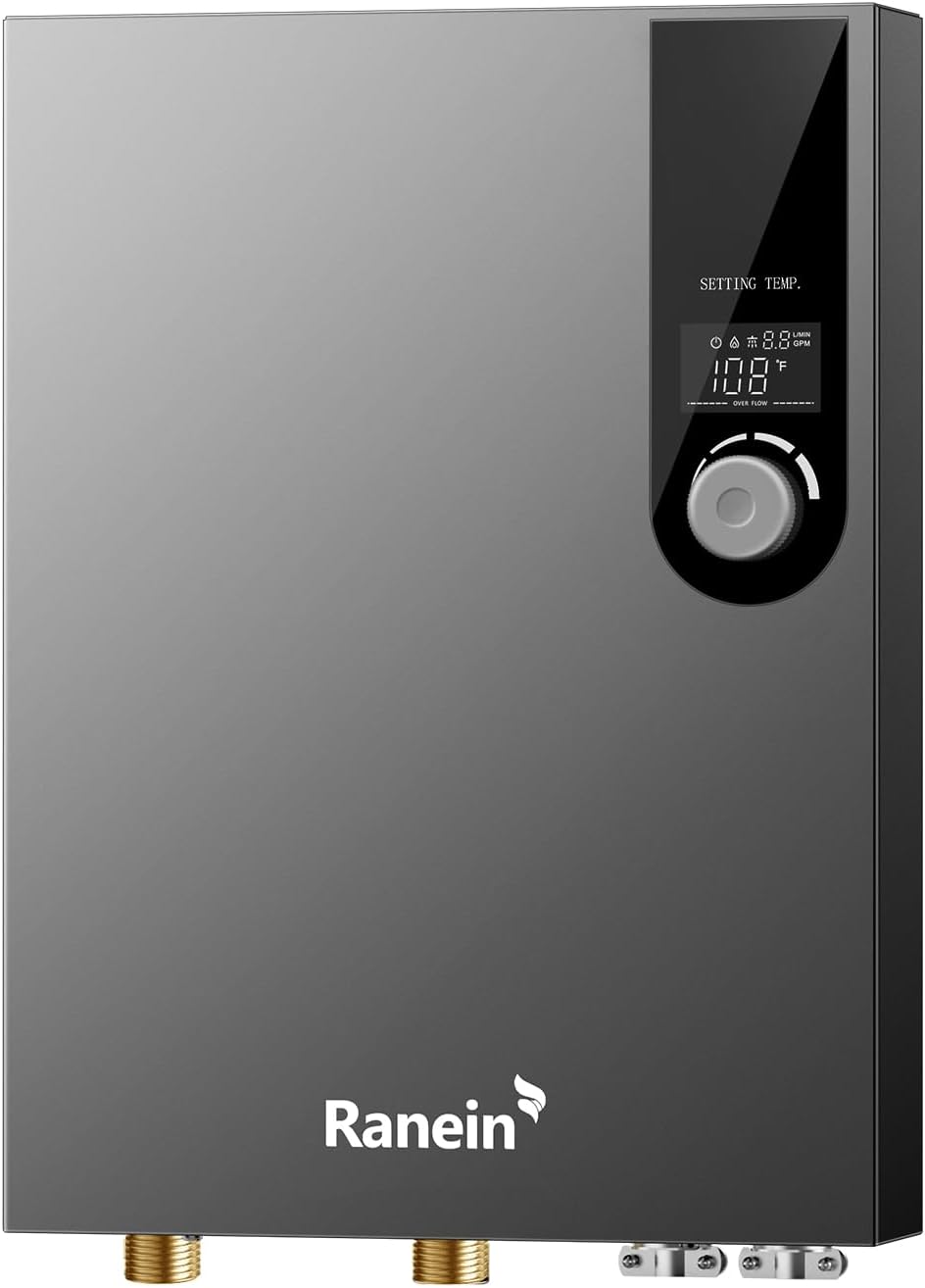
The Ranein is an 18 kW, 240-volt electric tankless heater with a stated maximum flow of 4.3 GPM. The manufacturer says it can support two to three household outlets at once, but that estimate depends on the incoming water temperature and how much hot water each fixture draws. Its stated capacity is well below the top gas models in this list, so it is better suited to moderate demand than a large home with many simultaneous uses.
This compact wall-mounted unit has a temperature control that adjusts in 1°F increments, an LED display, and stainless-steel heating elements. The manufacturer also lists leakage and overheat protection and CSA certification. It requires two dedicated 240-volt circuits, each with a 40-amp double-pole breaker and 8 AWG cable, according to the product details. Have an electrician verify the wiring and panel capacity before ordering.
At 4.3 GPM, the Ranein offers a more clearly stated flow figure than the Mount Steel electric option, but the number should not be treated as a guarantee for every climate or use pattern. Its installation requirements are a major part of the buying decision. It could suit a smaller home or a household with limited overlapping hot-water use, but the gas options are stronger candidates when whole-home peak demand is the priority.
Pros:
- Stated maximum flow of 4.3 GPM
- Compact wall-mounted design with LED temperature display
- Temperature adjustment in 1°F increments
- Product information lists CSA certification and safety protections
Cons:
- Requires two dedicated 240-volt circuits with specified breakers and wiring
- Lower listed capacity than the gas models for high-demand whole-home use
Verdict: Consider the Ranein if your household’s demand is moderate and your electrical system can support its dedicated circuits; for frequent simultaneous showers, compare its capacity carefully with the gas options.
How to Choose a Tankless Water Heater for Whole-Home Use
Estimate your peak hot-water demand
List the hot-water fixtures and appliances that may run at the same time, such as showers, sinks, and a dishwasher. Add their expected flow needs using manufacturer or fixture information, then compare that demand with the heater’s capacity. A single maximum GPM number is not enough by itself: the temperature rise required in your area affects how much hot water a unit can deliver.
Account for incoming water temperature
Tankless heaters raise water from its incoming temperature to your chosen setting. When incoming water is colder, the heater must create a larger temperature rise, which can reduce its available flow. Use the manufacturer’s sizing charts for your region and intended hot-water temperature rather than assuming the advertised maximum flow applies in winter or under every condition.
Choose fuel and installation location together
Gas models require a compatible fuel supply and a proper venting or outdoor installation plan. The RX199iN supports natural gas or propane and is designed for indoor or outdoor use, while the REP199eN is an outdoor natural-gas model and the Rheem is an indoor natural-gas model. Ask a qualified installer to check fuel availability, venting, clearances, and local requirements before choosing a unit.
Check electrical capacity before choosing an electric model
Electric tankless heaters can be compact, but their power needs can be demanding. The Ranein product details specify two dedicated 240-volt circuits with particular breaker and cable requirements. The Mount Steel model has adjustable power, but its setting still needs to match both your electrical system and hot-water needs. Have an electrician assess your panel and wiring before purchase.
Decide whether recirculation matters
A recirculation feature can help reduce the wait for hot water at distant fixtures, depending on your plumbing layout and system settings. The Rinnai REP199eN includes a pump with Smart-Circ scheduling. The RX199iN does not list a built-in recirculation pump, and its Wi-Fi control requires an optional module. Consider where you use hot water and how your plumbing is arranged before paying extra for convenience features.
Compare efficiency claims in context
Look for the unit’s efficiency rating and confirm how it was measured. The supplied product details list a UEF of .98 for the Rinnai RX199iN and .93 for the Rheem. A higher efficiency figure alone does not determine your total costs; fuel rates, water-use habits, installation, and maintenance all affect real-world operating expenses.
Plan for installation and maintenance
Tankless heaters are not always simple replacements for storage tanks. Installation may involve changes to fuel supply, venting, electrical service, plumbing, or condensate handling, depending on the model and home. Follow the manufacturer’s maintenance instructions, including flushing where required, and confirm who will perform the work. Rinnai recommends professional installation, and professional help is a sound choice for these high-output systems.
Read the warranty terms carefully
Warranty coverage can differ by component and may depend on registration or installation conditions. The supplied Rinnai information notes that registration within a stated period affects labor coverage for the RX199iN. Check the current warranty documents for the exact term, registration steps, installation rules, and exclusions before you buy.
Frequently Asked Questions
What is the best tankless water heater for a large whole-home setup?
The Rinnai RX199iN has the highest listed flow in this comparison, at up to 11.1 GPM, and supports natural gas or propane. It is a strong candidate for a high-demand home, but a professional should size it against your actual fixtures, incoming water temperature, and fuel supply.
Can an electric tankless heater serve an entire home?
It can in some homes, but capacity and electrical service matter. The Ranein lists up to 4.3 GPM, while the Mount Steel listing does not provide a flow rate and describes a point-of-use style application. Compare the heater’s output with your peak demand and have an electrician check the required circuits and panel capacity.
Does a higher GPM rating mean the same flow in every climate?
No. The temperature of incoming water affects the temperature rise the heater must produce. A larger rise can reduce the flow available at the target temperature. Check the manufacturer’s capacity information for your location and expected hot-water temperature.
What does built-in recirculation do?
A recirculation pump moves hot water through the plumbing system according to its controls, which can reduce the wait at some taps. The Rinnai REP199eN includes a pump and Smart-Circ scheduling. Results depend on your plumbing layout, settings, and how the system is installed.
Can the Rinnai RX199iN be installed outdoors?
Rinnai describes the RX199iN as suitable for indoor or outdoor installation with its Versa Vent system. The product information says the RX-OVC vent cap is required for an outdoor installation, so confirm the full setup with a qualified installer.
Do tankless water heaters need maintenance?
Follow the care and service instructions supplied by the manufacturer. The RX199iN includes a Quick Flush feature, but that does not remove the need to follow the recommended maintenance schedule. Ask your installer what maintenance your water conditions and model require.
Final Recommendation
For a high-demand whole-home installation, the Rinnai RX199iN stands out for its listed flow, natural-gas or propane compatibility, and indoor/outdoor flexibility. The Rinnai REP199eN is a better fit if built-in recirculation and outdoor natural-gas installation are priorities, while the Rheem RTGH is a compelling indoor option when its 9.0 GPM rating at a 35°F rise matches your needs. The electric models are more limited in the supplied capacity information and should be considered only after checking household demand and electrical requirements. Before purchasing any of these units, have a qualified professional confirm sizing and installation requirements for your home.