
Condensation on a metal roof happens when warm, moist air meets a cooler surface. The right coating can help in some situations, but roof paint is not a substitute for fixing excess humidity, poor ventilation, or missing insulation. For a coating specifically marketed to reduce condensation, Coovar is the closest match in this group; the other picks are roof sealants and reflective coatings that address different problems, such as water intrusion and weathering.
Before you buy, work out whether moisture is forming on the roof’s inside surface or entering from outside. That distinction matters: an interior anti-condensation paint and an exterior waterproof roof coating are not interchangeable.
Table of Contents
Quick Comparison
| Product | Best For | Key Detail |
|---|---|---|
| AMES Maximum-Stretch Roof Coating | Flexible coating for low-slope metal roofs | Elastomeric acrylic-rubber formula with 650% elongation |
| Coovar Anti-Condensation Paint | Interior metal surfaces where condensation is the issue | Indoor paint designed for metal and similar hard surfaces |
| Rust-Oleum 710 Elastomeric Roof Coating | Exterior roof protection on larger projects | Reflective white coating; plan for two coats |
| Liquid Rubber Color Roof Sealant | Flexible waterproofing for flat, low-slope, and metal roofs | Builds a seamless membrane with multiple heavy coats |
| Liquid Rubber Silicone Roof Coating | UV-reflective roof sealing | Silicone coating with stated coverage of about 50 sq. ft. per gallon |
Our Picks: Best Paint To Stop Condensation On Metal Roof reviews
1. AMES Maximum-Stretch: Flexible Protection for Low-Slope Metal Roofs

AMES Maximum-Stretch is a white, elastomeric acrylic-rubber roof coating and sealant. It is intended for low-slope roof maintenance and is listed as compatible with metal roofing, among other roof types. Its flexible formula is designed to stretch with roof movement instead of becoming a brittle film.
The stated 650% elongation and 88% light reflectivity are useful features for a roof coating exposed to temperature changes and sun. You can apply it by brush, roller, or sprayer. The bright finish may help reduce roof surface temperatures, but that is different from stopping condensation on the underside of a metal roof.
This is a better fit when your main need is a flexible exterior coating for a compatible low-slope roof. It is not the most direct choice for interior condensation control, and it should not be treated as a fix for poor ventilation or high indoor humidity. Check the product directions and roof condition before application.
Pros:
- Designed to adhere to metal roofing and other listed roof surfaces
- Flexible elastomeric formula with stated 650% elongation
- Reflective white finish
- Can be applied by brush, roller, or sprayer
Cons:
- Designed for low-slope roof maintenance, not all roof types
- Does not directly address moisture forming on the roof’s interior surface
Verdict: Choose AMES Maximum-Stretch for flexible exterior maintenance on a compatible low-slope metal roof, not as a stand-alone condensation remedy.
2. Coovar Anti-Condensation Paint: The Most Direct Match for Interior Metal

Coovar is the only product in this group specifically named and described as anti-condensation paint. Its listed use is indoors, with metal or similar hard surfaces as recommended surfaces. That makes it the closest match if you are trying to manage condensation forming on an accessible interior metal surface, such as the underside of a roof.
The product comes in a 500 ml can and has a white matte finish. Its listed full cure time is two hours, though you should follow the label for application conditions and drying between coats. The available product information is limited, so confirm that the exact roof surface and intended conditions are covered by the manufacturer’s directions before starting.
Unlike the exterior roof coatings below, Coovar is not presented as a roof membrane for sealing leaks or protecting the outside of a roof. Also, anti-condensation paint cannot remove the moisture source. If indoor air is very humid or the roof lacks adequate insulation or ventilation, those conditions may still need attention.
Pros:
- Specifically marketed as anti-condensation paint
- Listed for indoor use on metal or similar hard surfaces
- White matte finish
- Listed full cure time is two hours
Cons:
- Small 500 ml container may not cover a large roof area
- Not described as an exterior roof sealant or leak-repair coating
Verdict: If condensation forms on the inside of a metal roof and the label confirms your surface is suitable, Coovar is the most relevant option in this list.
3. Rust-Oleum 710: Reflective Coating for Exterior Roof Projects
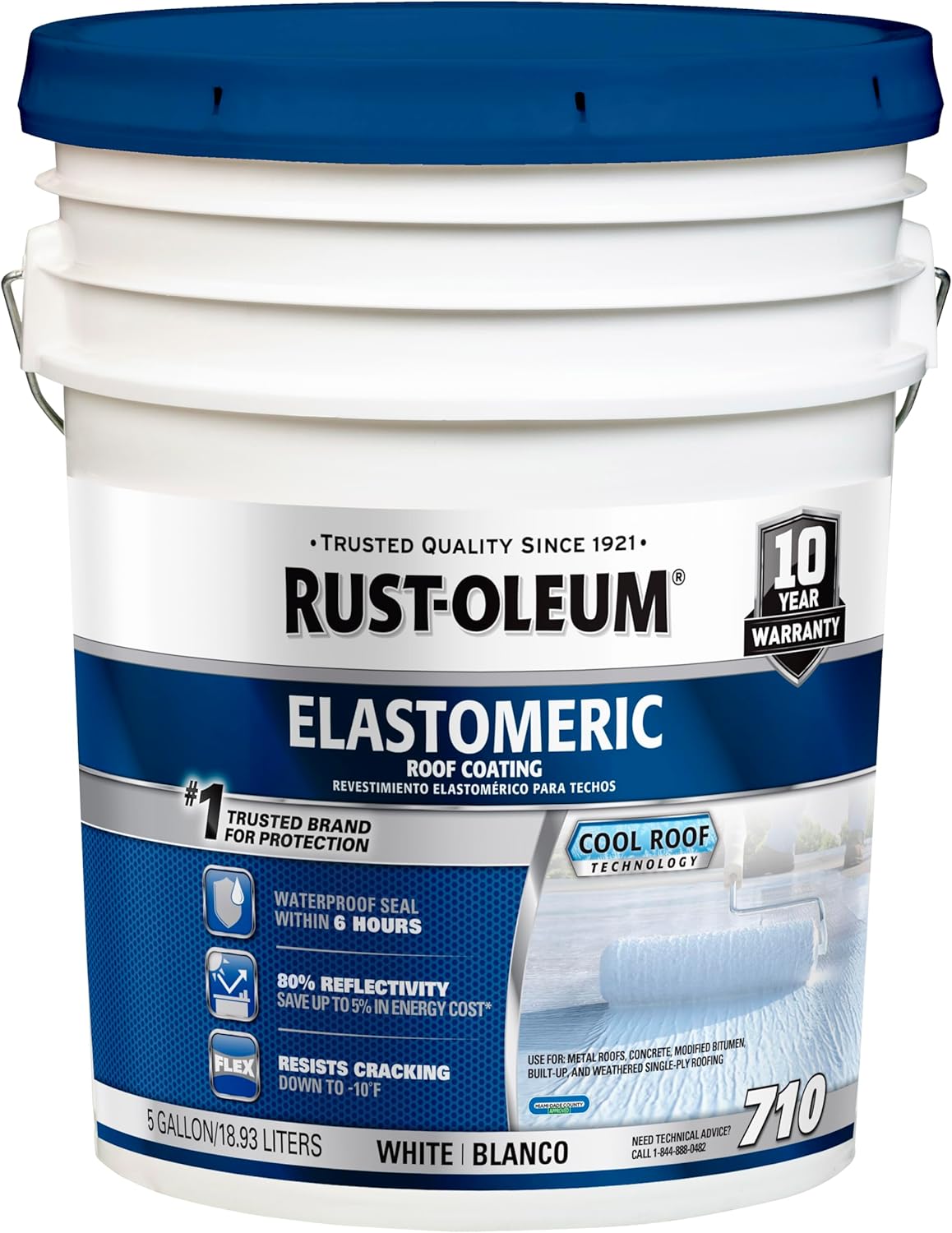
Rust-Oleum 710 is an acrylic elastomeric coating for exterior roofing. It is sold in a large pail and has a white reflective finish. Product information lists initial reflectivity at 84% and weathered reflectivity at 74%, along with resistance to weathering and flexibility in low temperatures.
The stated application rate is 1.5 gallons per 100 square feet for each coat, with two coats specified. That means it is important to calculate the needed quantity from the roof area and follow the label rather than treating it like ordinary thin paint. The product information also says it is rain resistant in six hours; check the directions for conditions that affect application and drying.
This coating is aimed at exterior roof protection, not condensation control on the underside of metal panels. Its larger package and two-coat application may suit a substantial project better than a small repair. Confirm that the coating is appropriate for your specific roof material and slope before buying.
Pros:
- Reflective white finish for exterior roofing
- Elastomeric formula with listed low-temperature flexibility
- Product information specifies rain resistance in six hours
- Large pail may suit broader roof work
Cons:
- Two coats require a substantial amount of material
- Does not directly solve interior condensation or humidity problems
Verdict: Consider Rust-Oleum 710 for an exterior roof-coating project where reflectivity and weather protection matter; look elsewhere for a coating specifically intended for interior condensation.
4. Liquid Rubber Color Roof Sealant: A Flexible Membrane for Metal Roofs

Liquid Rubber Color Roof Sealant is a water-based elastomeric coating intended for flat, low-slope, and metal roofs. Rather than acting like a thin decorative paint, it builds a flexible waterproof membrane when applied in multiple heavy coats. The manufacturer describes elongation of up to 900% to accommodate roof movement.
Apply it to a clean, dry roof by brush, roller, or airless sprayer. The product information emphasizes that coverage depends on the finished membrane thickness, and recommends reinforcing seams, joints, vents, and penetrations with seam tape or fabric. A primer may also be needed on challenging surfaces to improve adhesion.
This is a practical choice when the main concern is water intrusion or creating a flexible exterior barrier. It is not marketed as an anti-condensation paint, and the coating can remain tacky, so it is not intended for walking or other traffic. Plan for careful surface preparation and allow time for curing.
Pros:
- Listed for flat, low-slope, and metal roofs
- Flexible membrane designed to move with the roof
- Water-based, low-odor formula
- Can be applied by brush, roller, or airless sprayer
Cons:
- Requires multiple heavy coats to build the membrane
- Not intended as a walking or traffic-bearing surface
Verdict: Pick Liquid Rubber Color Roof Sealant when your priority is exterior waterproofing on a compatible metal roof, not when you need an interior anti-condensation coating.
5. Liquid Rubber Silicone Roof Coating: UV-Reflective Sealing for Multiple Roof Types

This white silicone coating is intended for roofs made from materials that include metal, wood, and concrete. The product information describes a UV-stable, waterproof coating with over 237% elongation. It is presented as a one-coat sealant, though the directions recommend one to two layers, depending on the job.
Coverage is listed at about one gallon per 50 square feet, so measure your roof carefully before estimating how much to buy. The formula is described as having ultra-low VOCs and no solvents. As with any roof coating, surface preparation and suitable weather conditions are important; the supplied product information does not give a specific cure time.
Some users report that the material can feel very sticky during application, so gloves and care around nearby surfaces are sensible precautions. This product is a roof sealant, not a paint specifically designed to manage condensation on the interior of metal panels. It may make sense if you need a UV-reflective exterior coating and the roof material is compatible.
Pros:
- Listed for metal and several other roof materials
- UV-stable, waterproof silicone coating
- Low-solvent formula with ultra-low VOCs, according to the product information
- Coverage guidance is provided for estimating material needs
Cons:
- Does not directly address interior roof condensation
- Sticky application can make careful handling important
Verdict: Choose this silicone coating for compatible exterior roof sealing and UV exposure; choose an interior anti-condensation product if moisture is forming beneath the roof panels.
How to Choose Paint or Coating for Condensation on a Metal Roof
Identify where the moisture is coming from
Condensation forms when moist air contacts a surface that is cool enough for water vapor to turn into liquid. If droplets appear on the underside of the metal, the issue is likely tied to indoor moisture and the temperature of the roof surface. If water is coming through the roof, inspect for leaks, failed seams, or damaged panels instead. A roof sealant may help with a leak, but it does not remove indoor humidity.
Match the product to the side of the roof you are treating
Check whether the product is intended for indoor or outdoor use. Coovar is listed for indoor use on metal or similar hard surfaces. The other choices are roof coatings or sealants intended for exterior roof applications. Do not assume an exterior coating is suitable for the underside of a roof; follow the label for the exact surface and application location.
Check compatibility with your roof and its slope
Metal roofs can have different finishes and panel designs, and coatings are not automatically compatible with every surface. Confirm that the product works with your roof material and slope. For example, AMES Maximum-Stretch is described for low-slope roof maintenance, while Liquid Rubber Color Roof Sealant is listed for flat, low-slope, and metal roofs.
Calculate coverage using the required coating thickness
Roof coatings may need to be applied more heavily than ordinary paint. Rust-Oleum 710 specifies 1.5 gallons per 100 square feet for each of two coats. Liquid Rubber Silicone lists about 50 square feet per gallon. Liquid Rubber Color Roof Sealant bases coverage on the final membrane thickness, so use its directions rather than estimating from a thin paint layer.
Prepare the surface and address problem areas
Clean and dry the surface as directed before applying any coating. For roof sealants, pay special attention to seams, joints, vents, and other penetrations. Liquid Rubber recommends reinforcing these areas with seam tape or fabric and notes that primer can help on challenging surfaces. If the metal is rusty, damaged, or already coated, confirm the preparation steps with the product instructions.
Consider ventilation, insulation, and indoor humidity
A coating alone may not stop condensation if warm, moist indoor air keeps reaching a cold roof surface. Better ventilation, suitable insulation, and reducing indoor moisture may be part of the solution. If condensation is widespread or recurring, inspect the full roof assembly or consult a qualified building professional before relying on paint.
Frequently Asked Questions
Can paint stop condensation on a metal roof?
An anti-condensation paint may help on a suitable interior surface, but paint alone may not solve the underlying cause. High indoor humidity, weak ventilation, or insufficient insulation can keep condensation coming back. Address those conditions as needed.
Which product in this list is specifically made for condensation?
Coovar is the only product here explicitly named Anti-Condensation Paint. Its supplied information lists indoor use and metal or similar hard surfaces. Check the label to confirm it is suitable for your exact roof surface and use.
Can I use a roof sealant on the inside of my metal roof?
Do not assume so. The sealants in this guide are described as roof coatings for exterior applications. Use a product on the interior only if its label specifically allows that use.
Will a white roof coating prevent condensation?
A white coating may reflect sunlight and can help reduce the temperature of the roof’s exterior surface, depending on the product and conditions. That is not the same as controlling moisture on the inside of the roof. It should not replace humidity control, insulation, or ventilation when those are needed.
How many coats should I apply?
Follow the instructions for the specific coating. Rust-Oleum 710 specifies two coats. Liquid Rubber Color Roof Sealant calls for multiple heavy coats, while Liquid Rubber Silicone describes one to two layers. Do not apply a thinner layer than directed just to stretch the product farther.
Should I paint a metal roof that is leaking or damaged?
First identify and repair the source of the leak or damage. A coating may help seal a compatible roof when applied as directed, but it is not a substitute for repairing loose panels, failed fasteners, or structural problems.
Final Recommendation
For condensation forming on the inside of a metal roof, Coovar is the clearest match in this group because it is specifically marketed as anti-condensation paint and is listed for indoor metal surfaces. Confirm compatibility and treat the cause of excess moisture as well. If your real problem is exterior water intrusion or weather exposure, choose a roof coating suited to your roof type instead; AMES Maximum-Stretch, Rust-Oleum 710, and the Liquid Rubber options are sealants or roof coatings, not direct substitutes for condensation control.






