
A point-of-use tankless water heater can bring hot water closer to a bathroom sink, reducing the wait when the main heater is far away. The key is choosing a unit that matches your faucet’s flow and your home’s electrical capacity. The compact 110–120V models below are intended for sink use—not showers—and several require hardwiring or a high-capacity circuit. Check the installation requirements and local electrical and plumbing codes before buying.
Table of Contents
Quick Comparison
| Product | Power | Best for | Important note |
|---|---|---|---|
| xwdzswgs 3000W 110V Tankless Water Heater | 3000W, 110V | Compact sink installations | Vertical installation; not for showers |
| xwdzswgs 3000W 110V Tankless Water Heater with LCD | 3000W, 110V | Small spaces needing a display | Vertical installation; not for showers |
| ThermoMate 3500W 120V Tankless Water Heater | 3500W, 120V | Hardwired sink installations | Requires a dedicated circuit; no plug |
| xwdzswgs 3000W 110V Tankless Water Heater with LED Display | 3000W, 110V | Wall-mounted point-of-use setups | Check the specified wiring and breaker requirements |
| ThermoMate 4.5kW Tankless Under Sink Water Heater | 4500W, 120V | Higher-demand sink use | Hardwired; requires a 40A double-pole breaker per listing |
Our Picks: Best Point Of Use Tankless Water Heaters For Bathrooms reviews
1. xwdzswgs 3000W 110V: Compact Option for a Bathroom Sink

This small electric unit is designed to heat water on demand at a nearby faucet. It has a digital display, standard 1/2-inch NPT connections, and a stated temperature increase of 82°F at 0.3 GPM or 131°F at 0.5 GPM. Those figures illustrate an important tradeoff: the more water flowing through the heater, the smaller the temperature rise is likely to be.
Its compact shape may suit a cramped vanity or another sink area where a tank would be difficult to fit. The listing describes multiple protections, including dry-boil and overheat protection, and calls for vertical mounting. It also says the unit is not suitable for showers, which typically need much higher flow than this heater is designed to provide.
Take the electrical instructions seriously before choosing it. Although the listing describes a 110V plug-in unit, 3000W at that voltage represents a substantial electrical load. Confirm the actual connection method and circuit requirements in the current product instructions with a qualified electrician; do not assume an ordinary bathroom outlet is suitable.
Pros:
- Compact design for a point-of-use sink installation
- Digital display and Fahrenheit/Celsius selection
- Stated protections include overheat and dry-boil safeguards
- Standard 1/2-inch NPT water connections
Cons:
- Not designed to supply a shower
- Electrical connection requirements need careful verification
Verdict: Consider this model for light sink use if its wiring requirements suit your bathroom and the installation can follow the vertical-mount instructions.
2. xwdzswgs 3000W with LCD: A Wall-Mount Sink Heater
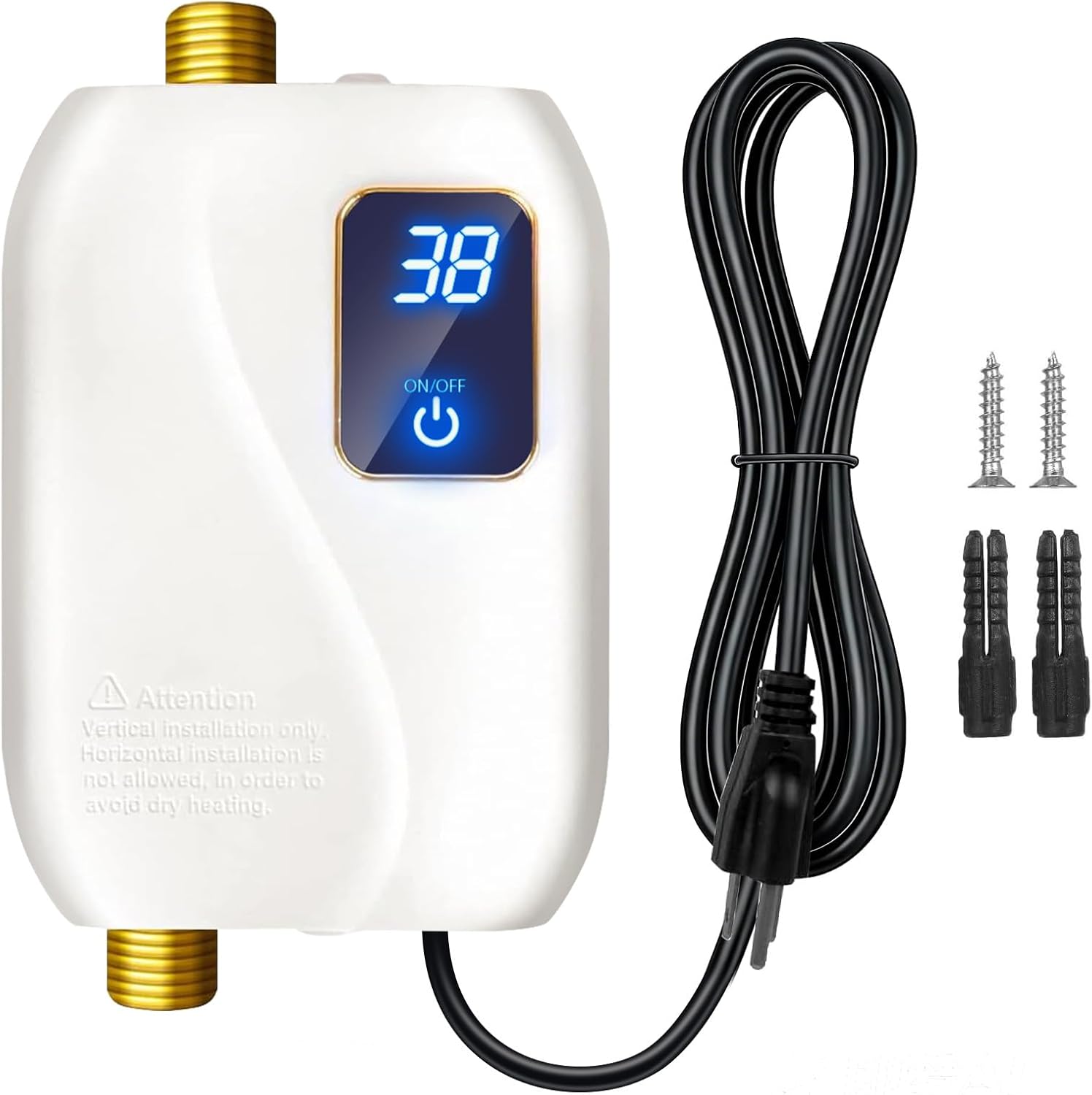
This 110V, 3000W heater is another compact option for bringing hot water closer to a sink. Its LCD display shows operating information, and the listing says you can switch between Fahrenheit and Celsius by holding the power button. It uses 1/2-inch NPT connections and is intended for wall mounting.
The stated heating performance is 82°F at 0.3 GPM and 131°F at 0.5 GPM. That makes it more appropriate for a low-flow faucet task than a high-flow fixture. The product description also says it is not suitable for showers and calls for vertical installation, so check the available mounting space and orientation before ordering.
The listing describes water-and-electricity isolation, leakage protection, dry-boil protection, and automatic shutoff for overheating or inactivity. It also claims ETL-standard qualification. Because the product draws significant power for a 110V appliance, confirm the electrical specifications, certification details, and circuit requirements for the exact unit before installation. A licensed electrician can help determine whether your bathroom circuit is appropriate.
Pros:
- Compact wall-mounted design for limited spaces
- LCD display with temperature-unit selection
- Multiple listed protective functions
- Standard 1/2-inch NPT connections
Cons:
- Not intended for shower flow
- Electrical requirements may call for a dedicated installation
Verdict: This is a reasonable sink-only candidate if you want a display and can confirm that its electrical and mounting requirements fit your bathroom.
3. ThermoMate 3500W: Hardwired Heater for a Small Sink

The ThermoMate ET035 is a 3500W, 120V point-of-use heater for an under- or over-sink faucet. Unlike the two 3000W options above, this model is explicitly hardwired and does not have a plug. The listing specifies a 32A double-pole circuit breaker and at least 10 AWG wire, so installation is a job to plan with a qualified electrician.
Its temperature setting range is 86°F to 131°F, with a stated flow range of 0.4 to 0.66 GPM. A touch control panel adjusts the set temperature in 1-degree steps, and the unit is compact enough to fit in a tight cabinet or nearby space. The listing also describes self-modulating power, a stainless-steel water tube, and a heating element separated from the water line.
Reported use cases for this small heater suggest it can be useful where a sink has a long wait for hot water, including an upstairs bathroom. That benefit depends on the installation location and the faucet’s flow. It remains a low-flow sink appliance, not a whole-bathroom heater, and the hardwired electrical setup makes it less convenient than a simple plug-in product.
Pros:
- Compact form for under- or over-sink mounting
- Temperature controls adjust in 1-degree increments
- Self-modulating power and stainless-steel water tube
- Clearly stated circuit and wiring requirements
Cons:
- Hardwired installation; no plug
- Limited flow makes it unsuitable for showers
Verdict: Choose the ThermoMate 3500W if you need a compact, hardwired heater for one sink and have the electrical capacity for its specified circuit.
4. xwdzswgs 3000W Wall-Mount Model with LED Display

This 3000W, 110V model is described as a compact wall-mounted heater for point-of-use hot water. It has an LED display, 1/2-inch NPT connections, and listed protection features that include leakage and dry-burning protection. The product description gives the same flow-dependent heating figures as the other 3000W models: a stated 82°F rise at 0.3 GPM and 131°F at 0.5 GPM.
For bathroom use, think of it as a possible solution for a sink that takes too long to receive hot water—not as a shower heater. The listing explicitly says it is not suitable for showers. It also specifies vertical installation, so you need a suitable wall or cabinet location that allows the correct orientation and access for maintenance.
One point to check before buying is electrical compatibility. The listing mentions wiring and a breaker requirement, but small differences in product instructions can matter. Verify the exact model’s required circuit, wire size, and connection method with the manufacturer’s instructions and a licensed electrician instead of relying on a generic wiring assumption.
Pros:
- Space-saving wall-mounted design
- LED display and temperature-unit selection
- Standard 1/2-inch NPT water connections
- Several listed electrical and water-safety protections
Cons:
- Not designed for shower use
- Wiring and breaker details should be verified before purchase
Verdict: This model may suit a compact sink installation, but buy only after confirming the exact electrical requirements and whether the listed certification applies to the model you receive.
5. ThermoMate 4.5kW: Higher-Power Under-Sink Option

This ThermoMate model is the highest-powered choice in this list. Its 4.5kW heating system is intended for point-of-use faucets, with a stated flow range of 0.26 to 1.0 GPM and a temperature range of 85°F to 131°F. It has a touch control panel, a digital temperature display, and self-modulating power that adjusts energy use as water conditions change.
The product is designed for under- or over-sink mounting and uses standard 1/2-inch NPT connections. Its listing specifies 120V hardwired installation, a 40A double-pole circuit breaker, and at least 8 AWG wire. That is a major electrical requirement compared with the lower-wattage models, so it is best suited to a bathroom where a qualified electrician confirms that the wiring and service can support it.
More power may help this model handle greater sink flow than the 3000W options, but it does not make it a whole-bathroom or shower heater. The stated flow and temperature performance still depend on incoming water temperature and faucet flow. For a simple hand-washing sink, its higher electrical demands may be more than you need.
Pros:
- Highest wattage among the five options
- Stated flow range extends up to 1.0 GPM
- Digital temperature display and touch controls
- Self-modulating power and corrosion-conscious materials described in the listing
Cons:
- Requires hardwiring and a substantial dedicated circuit
- Still intended for point-of-use faucets, not showers
Verdict: Pick this model only if you want more sink-flow capacity than a 3000W unit and an electrician confirms that its specified circuit is practical for your home.
How to Choose a Point-of-Use Tankless Water Heater for a Bathroom
Match the heater to the fixture
These compact electric models are designed for a nearby faucet, such as a bathroom sink. They are not substitutes for a whole-home heater, and the listings specifically say the 3000W units are not suitable for showers. If you want hot water for a shower, look for a system rated for that fixture’s flow and temperature needs rather than trying to use a small under-sink unit.
Check flow rate and temperature rise together
A heater’s temperature rise changes with water flow. The 3000W models list a larger temperature rise at 0.3 GPM than at 0.5 GPM. In practice, a higher-flow faucet can deliver water that is less warm, especially when the incoming water is cold. Compare the product’s flow and temperature figures with your faucet and the incoming water temperature before deciding.
Verify the electrical requirements
Do not choose a heater based only on its voltage or a description that says it is easy to install. The products here have different power levels and connection requirements. The ThermoMate 3500W and 4.5kW models are explicitly hardwired, and the 4.5kW listing specifies a 40A double-pole breaker and at least 8 AWG wire. Have a qualified electrician confirm the correct circuit, wiring, grounding, and any local code requirements for the exact model.
Measure the installation space and plan the plumbing
Measure the available area under or near the sink, including room for water connections and safe electrical access. Check each unit’s mounting orientation: the listed xwdzswgs models require vertical installation. Confirm that your plumbing connections match the unit’s 1/2-inch NPT fittings, and use the installation instructions for required sealing materials and clearances.
Consider bathroom location and water protection
A bathroom can expose equipment to moisture, so placement and installation matter. Check the product’s stated water-protection rating and follow its instructions for where it may be mounted. A rating in a product description is not a substitute for complying with electrical codes or choosing a location permitted by the manufacturer.
Choose the right level of control
Digital displays can make it easier to see or adjust a set temperature, while self-modulating models are described as adjusting power based on operating conditions. These features do not remove the need to check flow limits or circuit capacity. For a simple, low-flow sink, a more powerful model may not be worth the added electrical work if the lower-power option meets your needs.
Frequently Asked Questions
Can these point-of-use heaters supply a bathroom shower?
No. The listed 3000W models say they are not suitable for showers, and the ThermoMate products are described for sink applications. A shower needs a heater rated for its flow and required temperature rise.
Will a tankless unit make hot water arrive instantly at the sink?
It can heat water as it passes through the unit, but the final result depends on its location, the plumbing between the heater and faucet, the water flow, and incoming water temperature. A heater mounted close to the sink can reduce the wait, but it cannot guarantee the same result in every bathroom.
Can I plug a 3000W, 110V heater into a standard bathroom outlet?
Do not assume that you can. A 3000W appliance at 110V draws a substantial amount of current, and the product descriptions include installation requirements that should be checked for the exact model. Have a qualified electrician confirm whether the circuit and connection method are suitable.
Which model is best for a bathroom with limited cabinet space?
The 3000W xwdzswgs models and the compact ThermoMate 3500W are all described as space-saving options. Compare their dimensions, mounting orientation, water connections, and electrical requirements with your available space before choosing.
Is the ThermoMate 4.5kW model better because it has more power?
Not necessarily. Its listing gives a higher flow range than the lower-wattage models, which may help for a sink that needs more flow. But it also calls for a more demanding hardwired circuit. The best choice depends on the faucet, desired water temperature, incoming water, and your home’s electrical capacity.
Do I need a plumber or electrician to install one?
Installation involves both water connections and electrical requirements. These products have specific mounting and wiring instructions, and some explicitly require hardwiring and a dedicated circuit. Use qualified professionals where needed and follow local plumbing and electrical codes.
Final Recommendation
For a bathroom sink that takes too long to get hot water, a point-of-use tankless heater can be a practical option if its flow capacity and electrical requirements match your setup. The ThermoMate 3500W is a clearly specified hardwired choice for a single sink, while the ThermoMate 4.5kW may suit a higher-flow sink when its larger circuit requirement is manageable. The compact 3000W models may also fit a small installation, but verify their wiring details carefully. None of these picks should be treated as a shower heater.






