
Choosing the best ridge vent for an asphalt shingle roof means matching the vent to your roof’s cutout, shingle system, and intake ventilation. The options below include continuous ridge vents as well as a sectional roof vent, so check each product’s intended installation and net free area (NFA) before you buy. NFA measures the area available for airflow; it is one of the key figures to compare when planning balanced attic ventilation.
| Product | Type | Key details | Best for |
|---|---|---|---|
| Cor-A-Vent Revolution Rolled Ridge Vent | Shingle-over roll | 20-foot roll; 12 sq. in. NFA per linear foot | Those who want a recycled-plastic roll with a stated NFA |
| Quarrix 58785 Shingle Ridge Vent | Shingle ridge vent | 9-inch by 20-foot format; Storm Stop technology | Those prioritizing protection from wind-driven weather |
| Diversi-Plast 58786 Shingle Ridge Vent | Ridge vent roll | 7-inch by 20-foot format | Shoppers checking a compact-width option for a compatible roof |
| Lomanco Deck Air Shingle Roof Vent | Sectional shingle roof vent | Four-foot sections; 9 sq. in. NFA per foot | Installations calling for a sectional vent at an edge or on a pitch |
Table of Contents
Our Picks: Best Ridge Vent For Asphalt Shingle Roof reviews
Cor-A-Vent Revolution: A recycled-plastic roll with stated airflow capacity
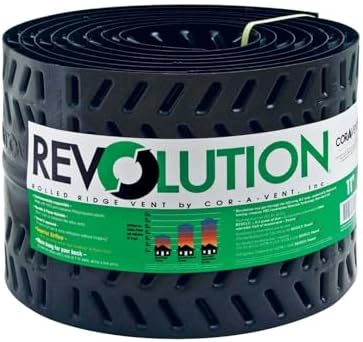
The Cor-A-Vent Revolution is a shingle-over ridge vent supplied in a 20-foot roll. Its 11-inch width and stated NFA of 12 square inches per linear foot give you useful planning details when comparing vent capacity with your attic’s needs. It is made from 100% pre-consumer recycled plastic, which may appeal if recycled material is a priority.
The product is designed to help keep out rain, snow, and insects. It is power nailable, and the package includes two coils of 1¾-inch galvanized roofing nails and two end plugs. Those included parts can simplify preparation, though you should still confirm that the supplied nail length and installation method work with your roof assembly.
Compared with the Quarrix roll, Cor-A-Vent provides a higher stated NFA per linear foot. That figure alone does not determine which vent is right for your roof: the ridge opening, intake ventilation, and installation instructions matter too. Confirm the product’s fit and current availability before planning a project around it.
Pros:
- States an NFA of 12 square inches per linear foot
- Made from 100% pre-consumer recycled plastic
- Includes roofing nails and end plugs
- Designed to help block rain, snow, and insects
Cons:
- Requires a compatible ridge cutout and correct shingle-over installation
- Availability and package contents should be confirmed before purchase
Verdict: Choose the Cor-A-Vent if its installation requirements suit your roof and you want a rolled vent with a clearly stated NFA and included installation accessories.
Quarrix 58785: Continuous ridge ventilation with Storm Stop protection

The Quarrix 58785 is a 9-inch-wide, 20-foot shingle ridge vent. Its listed purpose is to provide continuous ventilation: fresh air enters through soffit vents, while warm, moist air exits along the ridge. That approach depends on having suitable intake ventilation, so the ridge vent should be considered as part of a balanced system rather than a stand-alone fix.
Its Storm Stop technology is designed to keep wind-driven rain, snow, and dust out without a separate baffle. That weather-protection feature is a key point of difference from a basic ridge vent description. The supplied product details do not state its NFA, however, so you should check the packaging or manufacturer specifications before comparing airflow capacity with another model.
At 20 feet per roll, it can suit a long ridge, but measure the ridge and plan for the correct installation layout. Compared with the Cor-A-Vent, its supplied details emphasize weather protection rather than a stated airflow figure or included nails and end plugs.
Pros:
- Designed for continuous ridge ventilation
- Storm Stop technology is intended to resist wind-driven rain, snow, and dust
- Does not require a separate baffle, according to the product description
Cons:
- The supplied product details do not state its NFA
- Confirm compatibility with your ridge opening and shingle installation
Verdict: The Quarrix is worth considering when weather protection is a priority, provided you verify its airflow rating and installation fit for your roof.
Diversi-Plast 58786: A narrower ridge vent roll to verify for your roof

The Diversi-Plast 58786 is listed as a 7-inch-by-20-foot shingle ridge vent. Its narrower stated width may be useful for a roof system that calls for that size, but it is important to check the required ridge opening and the manufacturer’s installation directions before choosing it.
The supplied description also mentions several other vent uses, including gable, bathroom, RV, and metal-roof applications. Those broad claims do not establish that this specific item will fit every listed application. Since the title identifies it as a shingle ridge vent, treat it as a candidate for that use only after confirming the exact product specifications and compatibility with your asphalt-shingle roof.
Unlike the Cor-A-Vent and Lomanco options, the supplied details do not give this product an NFA figure or included installation hardware. That makes it harder to compare on airflow and setup based on the available information. Ask for those details if they are not shown on the current product listing.
Pros:
- Listed in a 20-foot length
- Its 7-inch width may suit a compatible installation
- The product description identifies it as a shingle ridge vent
Cons:
- The supplied details do not state its NFA
- The description lists varied uses, so exact application and fit need careful verification
Verdict: Consider the Diversi-Plast only if its current specifications confirm the right ridge-vent application, opening size, and airflow capacity for your roof.
Lomanco Deck Air: Sectional vent pieces for specific roof layouts

The Lomanco Deck Air is a shingle roof vent supplied as four-foot sections in a carton of ten. The listed NFA is 9 square inches per foot, and the product description says it can be installed at a roof edge or on a pitch. It is therefore a different style from the continuous roll ridge vents above, and it should not be treated as a direct substitute without confirming the intended roof location.
The vent has a tapered low-profile design intended to improve weather protection. Ring-shank nails are included, and the description lists an integrated end plug every two inches. It also identifies compatibility with the LOW4 Omni Wall Shingle Over Vent. Check the manufacturer’s instructions to confirm the right layout and connection details for your project.
This option may make sense when a sectional vent suits your roof design, but the supplied information does not describe it as a conventional continuous ridge roll. Its stated NFA is useful for calculations, though you will need to account for the number of sections and the specific installation location.
Pros:
- States an NFA of 9 square inches per foot
- Four-foot sections may suit installations that call for modular pieces
- Includes ring-shank nails and integrated end plugs
- Designed for installation at an edge or on a pitch
Cons:
- It is not described as a conventional continuous ridge vent roll
- Confirm that its intended location and compatible vent system match your project
Verdict: Pick the Lomanco Deck Air only when its sectional format and specified installation locations fit your roof plan; for a standard ridge-length installation, compare it carefully with a purpose-made ridge vent.
How to Choose a Ridge Vent for an Asphalt Shingle Roof
Confirm the vent is made for your roof location
A ridge vent is installed along a roof ridge and covered by shingles. Some roof vents are designed for an edge, a roof pitch, or another location instead. Check the product’s stated purpose and installation guide rather than relying on a broad “roof vent” label. If you are replacing an existing vent, compare its placement and opening with the new product’s requirements.
Compare net free area, not just vent length
NFA indicates how much open area a vent provides for airflow. In the supplied product details, Cor-A-Vent lists 12 square inches per linear foot, while Lomanco lists 9 square inches per foot. The Quarrix and Diversi-Plast details provided here do not state an NFA, so seek the manufacturer’s figure before comparing their capacity. A longer roll does not automatically mean greater airflow per foot.
Plan for balanced intake and exhaust ventilation
A ridge vent works as exhaust ventilation. It is typically paired with intake vents, such as soffit vents, to help air move through the attic. The Quarrix description specifically explains this airflow path. Before buying, check the existing intake vents and follow applicable building guidance or consult a roofing professional about the ventilation needs of your attic.
Check weather protection and roof exposure
Wind-driven rain, snow, and dust can be concerns at the ridge. The Cor-A-Vent description highlights protection from rain, snow, and insects, while Quarrix describes Storm Stop technology for wind-driven rain, snow, and dust. Compare the details with your local conditions and the product’s installation instructions; no vent should be assumed to prevent every type of water intrusion.
Measure the ridge and review installation details
Measure the ridge that needs ventilation and account for the product’s roll length or section length. Also check the required ridge cutout, end treatment, fasteners, and shingle coverage. Cor-A-Vent lists nails and end plugs in the package; Lomanco lists ring-shank nails and integrated end plugs. Confirm the current package contents before starting, and do not cut the roof opening until you have checked the exact instructions.
Choose a format that fits the job
Rolled vents are intended to run along a ridge, while the Lomanco product is supplied in four-foot sections and is described for installation at a roof edge or on a pitch. These formats are not interchangeable by default. For a typical asphalt-shingle ridge project, focus first on products explicitly intended for ridge installation and verify that the design works with your roof system.
Consider materials, upkeep, and warranty terms
Cor-A-Vent identifies its vent as made from recycled plastic, while Lomanco’s description mentions durable material and a limited lifetime warranty. Warranty terms and coverage can depend on installation and other conditions, so read the full details. Select a vent whose material and maintenance requirements suit your project, and use the manufacturer’s directions to help protect the roof assembly.
Frequently Asked Questions
What does a ridge vent do on an asphalt-shingle roof?
A ridge vent provides an exhaust path near the roof peak. When paired with suitable intake ventilation, it can help air move through the attic. The exact setup should follow the vent manufacturer’s instructions and applicable building guidance.
Does a ridge vent need soffit vents?
Ridge vents are generally part of a balanced ventilation system with intake vents, often located at the soffits. The Quarrix description specifically describes fresh air entering through soffit vents and exiting at the ridge. Check your attic’s existing ventilation before choosing a vent.
How much NFA should I look for?
The right amount depends on your attic, roof, and applicable ventilation requirements. Compare each product’s NFA with your project’s needs rather than choosing by length alone. The supplied details list NFA for Cor-A-Vent and Lomanco, but not for the Quarrix or Diversi-Plast products.
Can I install a ridge vent over an existing ridge opening?
Do not assume an existing opening will match a new vent. Check the opening size, vent instructions, and roof construction before installation. If the opening or roof condition is unclear, have a qualified roofing professional assess it.
Are all four products continuous ridge vents?
No. Cor-A-Vent, Quarrix, and Diversi-Plast are described as shingle ridge vent products. Lomanco Deck Air is supplied in four-foot sections and is described for installation at a roof edge or on a pitch, so confirm its intended location before considering it for a ridge.
Which option has the clearest stated airflow figure?
Cor-A-Vent lists 12 square inches of NFA per linear foot, while Lomanco lists 9 square inches per foot. The supplied details do not give an NFA for Quarrix or Diversi-Plast. Confirm missing specifications with the manufacturer before making a capacity comparison.
Can I install a ridge vent myself?
Installation involves working at the roof peak and may require cutting a ridge opening and handling shingles. Follow the exact product instructions and use appropriate fall protection. If you are unsure about roof access, ventilation sizing, or the cutout, hire a qualified roofer.
Final Recommendation
For a conventional asphalt-shingle ridge installation, the Cor-A-Vent Revolution is the strongest starting point in this group because its supplied details state an NFA of 12 square inches per linear foot and include nails and end plugs. The Quarrix is another option if its Storm Stop weather-protection design suits your priorities, but verify its NFA before buying. Treat the Diversi-Plast’s broader application claims with care, and choose Lomanco only when its sectional format and stated installation locations match your project. In every case, confirm fit, airflow needs, and installation instructions before cutting or fastening roofing materials.
