
Engineered hardwood needs a rug pad that helps prevent slipping and scratching without damaging the floor’s finish. The right choice depends on whether your rug needs extra grip, a softer feel, or both. Check your flooring maker’s care instructions before choosing a pad, since finishes can vary. The options below include felt-only and felt-and-grip designs, with different thicknesses and trade-offs.
Table of Contents
Quick Comparison
| Product | Material and thickness | Best for |
|---|---|---|
| RUGPADUSA Basics Felt Pad | 100% felt, 1/4 inch | Cushioning under rugs held in place by furniture |
| Mohawk Home Dual Surface Pad | Felt and latex rubber, 1/4 inch | Grip and cushioning with a reversible design |
| RUGPADUSA Dual Surface Pad | Felt and natural rubber, 1/4 inch | Anchoring area rugs with added cushioning |
| Songrey Non-Slip Rug Pad | Felt fabric and rubber backing, 3 mm | A thinner grip pad for busy areas |
| Acapet Non-Slip Rug Pad | Felt and textured silicone backing, 1/4 inch | Grip and a cushioned feel underfoot |
Our Picks: Best Rug Pad For Engineered Hardwood Floors reviews
1. RUGPADUSA Basics: A Felt-Only Pad for Furniture-Anchored Rugs

This 8-by-10-foot pad is made from 100% felt and measures about 1/4 inch thick. Its main job is to add cushioning and create a protective layer between a rug and the floor. The dense felt may also help soften footfall noise and add insulation beneath the rug.
The key limitation is in the name of the design: it is not non-slip. RUGPADUSA recommends it for heavy rugs or rugs held in place by furniture. On a lightweight rug in an open walkway, felt alone may not stop the rug from shifting. For that situation, a felt-and-grip option is a more suitable match.
The company says the pad contains no glue, PVC, or latex and will not mark or stain floor finishes. Those features may appeal if you want a simple felt layer, but it is still wise to follow your flooring maker’s care guidance and check the pad periodically.
Pros:
- 100% felt construction adds cushioning beneath a rug.
- May help with sound absorption and insulation.
- Contains no glue, PVC, or latex, according to the manufacturer.
- Suitable for rugs secured by furniture or their own weight.
Cons:
- Not designed to keep a lightweight rug from sliding.
- Less suitable for rugs in open, high-traffic areas without another way to anchor them.
Verdict: Choose this pad if cushioning and floor protection matter more than grip and your rug is already held securely in place.
2. Mohawk Home Dual Surface: Reversible Grip and Cushion
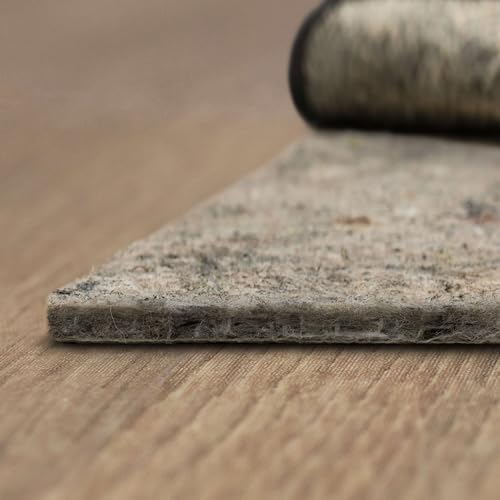
Mohawk Home’s 8-by-10-foot pad pairs recycled felt with a latex rubber backing. At 1/4 inch thick, it offers more cushioning than a thin grip liner. For hard floors, the product directions call for placing the felt side up; the rubber backing then faces the floor. The pad can also be turned over for use on carpet.
This dual-surface design makes it a versatile option if you want a rug pad that both adds padding and helps limit slipping. It can be trimmed with scissors for a closer fit. Because the backing is latex rubber, check your engineered hardwood manufacturer’s guidance about rubber-backed products before use, and inspect the floor beneath the pad now and then.
Compared with the RUGPADUSA felt-only pad, this one adds a grip layer but introduces a backing material that may not suit every floor finish. It is also thicker than the Songrey pad, so consider how much added height your rug can accommodate.
Pros:
- Combines felt cushioning with a latex rubber grip layer.
- Can be used on hard floors or carpet by changing its orientation.
- Trimmable for a custom fit.
- May help absorb sound and provide insulation under a rug.
Cons:
- Latex rubber may not be appropriate for every floor finish; verify compatibility.
- Its 1/4-inch thickness may add more height than a thin pad.
Verdict: This is a practical all-around option if you want grip and cushioning, provided your floor-care guidance allows a latex-backed pad.
3. RUGPADUSA Dual Surface: Natural Rubber Grip with Felt Padding

This 8-by-10-foot pad combines 1/4-inch felt with a natural rubber backing. The felt adds a cushioned layer, while the rubber is intended to help hold the rug in place and limit bunching or sliding. That makes it a more complete choice than a felt-only pad for a rug that sees regular foot traffic.
RUGPADUSA describes the felt as recycled and needle-punched, and says the pad is made without glue, PVC, or non-stick adhesives. The manufacturer also says its natural rubber backing is safe for hardwood and other hard surfaces. Since engineered hardwood finishes can differ, check your floor maker’s instructions before placing any rubber-backed pad on the surface.
Compared with the Mohawk Home option, this pad also uses a felt-and-rubber construction, but its listed backing is natural rubber. Both are 1/4 inch thick. Choose based on the materials your floor-care guidance permits, rather than assuming every rubber backing is compatible with every finish.
Pros:
- Felt and natural rubber combine cushioning with a grip surface.
- Designed to help reduce rug sliding, wrinkling, and bunching.
- Made without glue, PVC, or non-stick adhesives, according to the manufacturer.
- 1/4-inch thickness adds padding without being the thickest option listed.
Cons:
- As with any rubber-backed pad, floor-finish compatibility should be confirmed first.
- May be unnecessary for a heavy rug that already stays in place.
Verdict: Consider this pad for an area rug that needs both a softer base and a stronger hold, after confirming that natural rubber is suitable for your floor.
4. Songrey Non-Slip Pad: A Lower-Profile Option for Busy Areas

The Songrey pad pairs felt fabric with a rubber backing and measures 3 mm thick. Its thinner profile may suit a rug where you want some added softness but do not want a bulky edge. The grip backing is intended to help keep the rug flat and limit movement in frequently used spaces.
The pad can be cut with household scissors to fit rectangular, round, or unusual rug shapes. Songrey also says the material will not fray when trimmed. Its 3 mm cushioning is less substantial than the 1/4-inch pads in this lineup, so it may not be the best choice if a plush feel is your main goal.
The product description refers to a natural latex rubber backing and says the pad is designed to protect hardwood, tile, and laminate. Because a particular engineered floor’s finish may have its own care requirements, check those instructions before use. Compared with the thicker dual-surface pads, this option favors a lower profile over extra cushion.
Pros:
- 3 mm thickness keeps the pad relatively low-profile.
- Felt and rubber backing are intended to combine cushioning and grip.
- Can be trimmed for different rug shapes.
- Designed for use in busy areas where rugs may shift.
Cons:
- Provides less cushioning than the 1/4-inch options.
- Check compatibility with your engineered hardwood finish before use.
Verdict: Pick Songrey if you want a thinner grippy pad and do not need the deeper cushion offered by thicker felt designs.
5. Acapet Non-Slip Pad: Textured Silicone Backing and Firm Cushion

Acapet’s 9-by-12-foot pad has a 1/4-inch felt layer and a textured silicone backing. The felt is intended to add cushioning, help absorb sound, and provide insulation. The backing is designed to grip the floor and help prevent sliding, bunching, and wrinkles.
The product description says the silicone backing will not leave sticky residue or marks on hardwood, tile, or laminate. That is a useful claim to weigh, but it does not replace checking your engineered hardwood manufacturer’s care instructions. The pad can be cut with scissors to fit your rug; the maker recommends cutting it slightly smaller than the rug so the pad remains hidden.
Compared with the Songrey pad, Acapet is thicker and may provide a more cushioned feel. It is also the only listed option with a specified 9-by-12-foot size, which may suit a larger rug if that size is a match. The product description notes that creases from packaging may take time to disappear after the pad is laid flat.
Pros:
- 1/4-inch felt provides a cushioned layer underfoot.
- Textured silicone backing is designed to help hold the rug in place.
- Can be trimmed to fit a rug, runner, or doormat.
- Listed in a 9-by-12-foot size for larger rug layouts.
Cons:
- Confirm silicone-pad compatibility with your floor-care instructions.
- Packaging creases may need time to flatten after setup.
Verdict: Acapet is worth considering if you need a larger, cushioned pad with a grippy backing, as long as its materials are approved for your floor.
How to Choose a Rug Pad for Engineered Hardwood Floors
Check Your Floor Manufacturer’s Care Instructions
Engineered hardwood can have different surface finishes, and pad materials may not be suitable for every finish. Before buying, look for guidance about rubber, latex, silicone, and other materials that contact the floor. If the instructions are unclear, ask the flooring manufacturer or installer. Avoid assuming that a pad labeled for hardwood is automatically approved for your specific floor.
Decide Whether You Need Grip, Cushion, or Both
A felt-only pad adds cushioning and helps separate the rug from the floor, but it is not designed to stop a rug from sliding. That type works best when the rug is heavy or anchored by furniture. If a rug moves underfoot, consider a felt-and-backing design that is intended to grip. When choosing a grip pad, make sure its backing material is suitable for your floor finish.
Choose a Thickness That Suits the Rug
Thicker pads can create a plusher feel, but they can also raise the rug edge and make it harder for doors to clear. A 1/4-inch pad offers more cushion than the 3 mm Songrey option. Think about where the rug sits, how much padding you want, and whether the rug’s edges will lie flat against the floor.
Match the Pad to the Rug’s Size and Shape
Choose a pad that fits beneath the rug without showing around its edges. A pad that extends past the rug can be visible and may affect how the rug lies. Many of these pads can be trimmed with scissors, but follow the product’s directions and cut carefully. For an irregular rug, trace the shape before trimming.
Consider Moisture, Cleaning, and Routine Checks
Keep the floor and the pad clean and dry when you install the rug. Lift the rug occasionally to check for dust, trapped moisture, or changes to the floor’s finish. Follow the floor and pad makers’ care instructions for cleaning, and avoid leaving a damp rug or pad in place.
Frequently Asked Questions
What type of rug pad is best for engineered hardwood?
The best type depends on your flooring finish and whether your rug needs grip. Felt can add cushioning, while felt paired with a backing is intended to provide both cushioning and hold. Check your floor manufacturer’s instructions before choosing any pad material.
Is a felt-only rug pad non-slip?
No. The RUGPADUSA Basics pad is specifically described as not non-slip. It is intended for rugs held in place by furniture or their own weight. Choose a product with a grip backing if your rug tends to slide, after checking material compatibility.
Should the rug pad be the same size as the rug?
It is generally better for the pad to sit slightly inside the rug’s edges so it stays hidden. Follow the pad maker’s sizing guidance, and trim the pad carefully if needed.
Can I use a rubber-backed pad on engineered hardwood?
Do not assume every rubber-backed pad is suitable for every engineered hardwood floor. Finishes vary, and product claims do not replace your flooring maker’s care instructions. Check with the manufacturer or installer if you are unsure.
How thick should a rug pad be?
Choose thickness based on the feel you want and the rug’s location. A thicker pad may add more cushion, while a thinner pad can keep the rug closer to the floor. Also check that doors can clear the rug and pad together.
Can I cut a rug pad to fit a round or irregular rug?
Some of the options here are designed to be trimmed with scissors. Follow the product directions, trace the rug’s outline, and leave the pad slightly smaller than the rug so it does not show.
Final Recommendation
For a rug that needs both grip and cushioning, the RUGPADUSA Dual Surface pad is a well-rounded option to consider, subject to your floor manufacturer’s guidance on natural rubber. If you do not need slip resistance and your rug is already held in place, the RUGPADUSA Basics felt pad offers a simpler felt-only design. Whichever you choose, confirm material compatibility, keep the pad clean and dry, and size it so it stays hidden beneath the rug.
