
Engineered wood floors need a rug pad that helps limit slipping and abrasion without harming the floor’s finish. The right choice depends on your rug: a heavy rug anchored by furniture may only need cushioning, while a lightweight rug usually needs a pad with grip. Before buying, check your flooring maker’s care instructions, especially if they limit which pad materials can touch the floor.
Table of Contents
Quick Comparison
| Rug Pad | Type | Best For | Key Consideration |
|---|---|---|---|
| RUGPADUSA Basics 100% Felt Rug Pad | Felt, 1/4 inch | Cushioning under rugs held in place by furniture | Not designed to stop a rug from sliding |
| Veken Non-Slip Rug Pad Gripper | Open-grid gripper | Adding grip beneath area rugs | Check its floor-surface exclusions before use |
| RUGPADUSA Dual Surface Felt and Rubber Rug Pad | Felt and natural rubber, 1/4 inch | Grip and cushioning in one pad | Confirm compatibility with your floor’s finish |
| Mohawk Home Dual Surface Rug Pad | Recycled felt and latex rubber, 1/4 inch | Non-slip support with added cushion | Check whether latex is approved for your floor |
| Veken Felt and Silicone Rug Pad | Felt and silicone backing, 1/4 inch | Grip with a cushioned felt layer | Verify the floor maker permits silicone-backed pads |
Our Picks: Best Rug Pad For Engineered Wood Floors reviews
RUGPADUSA Basics: Felt Cushioning for Rugs That Stay Put

This 1/4-inch pad is made from dense, 100% felt. Its main job is to add a softer layer under a rug and help protect the floor from abrasion. The felt is made without glue, PVC, or latex, which may appeal to shoppers looking for a straightforward, single-material cushion.
Its key limitation is also important: it is not a non-slip pad. It is intended for heavier rugs or rugs held in place by furniture. If your rug is lightweight, sits in a busy walkway, or tends to shift, choose a gripping pad instead. Compared with the dual-surface options below, this model prioritizes cushioning and material simplicity over traction.
It may be a sensible choice for a larger living-room or bedroom rug that is already stable. The manufacturer says it will not mark or stain floor finishes, but it is still wise to check your engineered-floor care instructions and test a small area before covering a large section.
Pros:
- Dense felt adds cushioning under a rug
- Made without glue, PVC, or latex
- Designed to help protect floors from abrasion
- Can help with insulation and noise reduction
Cons:
- Does not keep a rug from sliding
- May be unsuitable for rugs that are not anchored by furniture
Verdict: Choose this pad when your rug is already secure and you want felt cushioning without a rubber or latex backing.
Veken Non-Slip Gripper: A Low-Profile Option for Rug Stability

This Veken pad uses an open-grid design to help hold an area rug in place. It can be trimmed with household scissors, making it easier to fit rugs that do not match standard pad dimensions. The grid construction also allows air to circulate beneath the pad.
Unlike the thick felt options, this is primarily a gripper rather than a plush cushion. It may suit a rug that moves underfoot, but its stated exclusions matter for engineered wood: the product should not be used on refinished surfaces, among other materials. Because engineered flooring finishes and manufacturer guidance vary, check both before placing it on your floor.
The manufacturer recommends airing the pad out in a well-ventilated area after unpacking if it has an initial odor. That simple step may be useful before installation. Compared with the RUGPADUSA felt pad, this model focuses more on grip and less on underfoot softness.
Pros:
- Open-grid design is intended to help limit rug movement
- Can be trimmed to fit a custom rug size
- Provides some added support beneath a rug
- Can also be used under some futons and seat cushions
Cons:
- Not intended for refinished surfaces or several other listed floor types
- Offers less cushioning than a thick felt pad
Verdict: Consider this gripper only if your flooring maker allows it and your engineered floor does not fall under the product’s surface exclusions.
RUGPADUSA Dual Surface: Felt Cushion with Natural Rubber Grip

This dual-surface pad combines a 1/4-inch felt layer with a natural rubber backing. The felt adds a little softness and insulation, while the rubber is designed to grip the floor and help reduce sliding, bunching, and wrinkling. That balance makes it a practical option for rugs that need both cushioning and more stability.
The felt is made from recycled fibers and is described as needle-punched, with no glues, PVC, or non-stick adhesives. The manufacturer lists several hard-surface floor types as suitable, including hardwood and laminate. Since engineered wood products and their finishes can differ, confirm that the flooring manufacturer approves natural rubber before use.
Compared with the felt-only RUGPADUSA pad, this one is a better fit for a rug that might move. Its trade-off is the added backing material: shoppers who prefer a pad made entirely of felt may prefer the Basics model, provided their rug is already anchored.
Pros:
- Combines a cushioned felt layer with a gripping backing
- Designed to help reduce sliding and rug wrinkles
- Made without glue or PVC, according to the product details
- Can add sound absorption and insulation beneath a rug
Cons:
- Floor-finish compatibility should be confirmed before use
- Its cushioning may not feel as plush as thicker felt options
Verdict: This is a strong all-around choice if you want both grip and modest cushioning, and your flooring maker approves natural rubber.
Mohawk Home Dual Surface: Recycled Felt and Latex Rubber
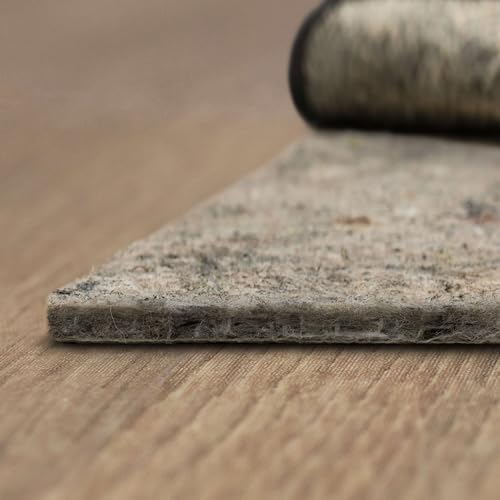
Mohawk Home’s 1/4-inch dual-surface pad pairs recycled felt with a latex rubber backing. On hard floors, the felt side is intended to face up beneath the rug, while the rubber side helps hold the pad in place. The felt can add cushion and help absorb sound, making this a more supportive option than a thin, grip-only liner.
The product details list hardwood and other surfaces as compatible, but engineered wood may have finish requirements that call for extra care. Check your floor’s instructions for latex or rubber-backed pads before buying. This pad is also described as trim-to-fit, so you can adjust it to sit inside the rug’s edges.
It stands out for its dual-surface design and stated one-year limited manufacturing-defect warranty. The main comparison point is backing material: unlike the RUGPADUSA Dual Surface model, this pad uses latex rubber, so floor compatibility should guide your choice between them.
Pros:
- Combines felt cushioning with a non-slip latex backing
- Designed to help reduce sliding, bunching, and wrinkles
- Can be trimmed to fit a rug
- Made with recycled materials and includes a limited manufacturing-defect warranty
Cons:
- Confirm latex compatibility with your engineered floor’s finish
- May add more cushion than you want beneath a low-clearance rug or door
Verdict: Choose this model if you want a cushioned, trim-to-fit pad and your flooring maker permits latex-backed rug pads.
Veken Felt and Silicone: Gripping Support with a Cushioned Layer

This Veken pad combines a felt surface with a silicone backing. The backing is designed to grip the floor, while the treated felt surface is intended to help keep the rug from shifting over the pad. Its 1/4-inch option offers a middle ground between a thin gripper and a thicker cushion.
The product is described as suitable for hardwood, tile, and laminate, and its needle-punched design can be cut with household scissors. These details make it flexible for different rug sizes. Still, engineered wood is not identical across brands and finishes, so confirm that silicone-backed pads are allowed for your floor before using it.
Compared with the RUGPADUSA felt-and-rubber pad, this option uses silicone backing and emphasizes grip on both sides of the pad. It may suit households looking for a pad that combines rug stability with some softness, but shoppers should not treat the product’s general floor-compatibility claims as a substitute for their flooring maker’s care instructions.
Pros:
- Felt and silicone construction is designed to grip both rug and floor
- Offers cushioning and a choice of thicknesses
- Can be trimmed to fit a rug
- Described as suitable for hardwood, tile, and laminate
Cons:
- Check whether silicone backing is approved for your floor finish
- A thicker pad may not suit every rug or doorway
Verdict: Consider this pad if you want a cushioned gripper and your engineered-floor manufacturer approves silicone-backed products.
How to Choose a Rug Pad for Engineered Wood Floors
Check Your Flooring Manufacturer’s Guidance
Engineered wood floors have a wood surface layer over a layered core, and the finish can vary by product. A pad that is acceptable for one floor may not be recommended for another. Look for the flooring maker’s instructions about rug pads and backing materials, and contact the manufacturer if the guidance is unclear. This matters most with rubber, latex, and silicone-backed pads.
Decide Whether Grip or Cushion Matters More
If your rug slides, bunches, or wrinkles, prioritize a pad made to grip both the floor and the rug. Felt-and-rubber and felt-and-silicone designs offer that combination along with some cushion. A felt-only pad can feel comfortable underfoot, but the RUGPADUSA Basics model is specifically not non-slip. Use it only when furniture or the rug’s weight helps keep the rug in place.
Choose a Suitable Thickness
A thicker pad can add softness, warmth, and sound reduction, but it can also make a rug sit higher. Check clearance under doors and consider whether the rug’s edges will still lie flat. The products in this guide include 1/4-inch options; the felt-only RUGPADUSA pad is also offered in thicker versions, according to its product description.
Match the Pad to the Rug’s Size
A pad should generally sit inside the rug’s perimeter rather than protrude beyond it. Measure the rug first, then trim the pad if needed. Several options here can be cut with household scissors. Keep the finished pad edges tucked beneath the rug so they do not catch your feet or become visible.
Consider the Backing Material
Felt, natural rubber, latex rubber, silicone, and open-grid grippers have different designs and floor restrictions. Do not assume that a pad described for hardwood is automatically approved for every engineered wood finish. If you cannot confirm material compatibility, choose a pad that follows your floor maker’s instructions rather than relying only on broad product claims.
Keep the Area Beneath the Rug Clean and Dry
Dust or grit trapped beneath a rug can contribute to surface abrasion over time. When you clean the floor, lift the rug and pad, remove debris, and let the floor dry before replacing them. Follow the floor and pad makers’ care directions, and check periodically that the pad has not shifted or changed condition.
Frequently Asked Questions
Can I use any rug pad on engineered wood floors?
No. Engineered wood finishes and flooring-care rules vary, and some pad materials may be excluded. Check your flooring manufacturer’s guidance before placing a pad on the floor.
Is felt alone enough to stop a rug from sliding?
Not necessarily. The RUGPADUSA Basics pad is explicitly not designed as a non-slip pad. Felt alone may work under a heavy rug or one held by furniture, but choose a gripping style if the rug moves.
Which type of pad is best for a rug that keeps bunching?
Look for a pad designed to grip both the rug and the floor. A dual-surface felt-and-rubber or felt-and-silicone model may help reduce sliding and bunching, as long as its backing is approved for your floor.
Should the rug pad be the same size as the rug?
It should fit beneath the rug without showing beyond its edges. Measure your rug and trim the pad as needed, following the product’s instructions.
Are rubber-backed rug pads safe for engineered wood?
There is no single answer for every engineered floor. Some products list hardwood or laminate compatibility, but your floor’s finish and care instructions still matter. Confirm that the specific backing material is permitted.
Can a rug pad damage an engineered wood finish?
An unsuitable pad, trapped debris, or moisture may create a risk for a floor’s surface. Follow the floor maker’s guidance, keep the area clean and dry, and test the pad in a small, discreet spot if the manufacturer recommends doing so.
Final Recommendation
For a rug that needs both cushioning and grip, the RUGPADUSA Dual Surface felt-and-natural-rubber pad is a well-balanced option, provided your flooring manufacturer approves natural rubber. If your rug is already secured by furniture and you prefer to avoid rubber or latex, the RUGPADUSA Basics felt pad is the simpler choice. For any engineered wood floor, check the finish requirements before choosing a backing material.
