
Farm repairs rarely happen beside a fully equipped shop. A portable stick welder can help you handle gates, brackets, equipment frames, and other steel repairs where they sit, but the right choice depends on your power supply, electrode needs, and how often you weld. These five machines range from compact 110V models to dual-voltage options, with features such as pulse control, Lift TIG, and built-in lighting.
Compare the listed output and features with the work you actually do. A welder’s advertised maximum amperage does not tell the whole story: check its input requirements, duty cycle, compatible rods, and whether you need to buy a TIG torch separately.
Table of Contents
Quick Comparison
| Welder | Power | Standout feature | Best fit |
|---|---|---|---|
| ARCCAPTAIN 200A Pulse Stick Welder | 110V/220V | Pulse MMA and synergic control | Versatile farm and shop repairs |
| HONE 110V Stick Welder | 110V | Built-in LED light and 25 rods | Portable, occasional repairs |
| haxiaoer 250A Stick Welder | 110V | Hot Start, Arc Force, and Anti-Stick | Basic home and farm welding |
| ARCPEX 200A Dual-Voltage Welder | 110V/220V | Listed 60% duty cycle at 200A | More demanding welding sessions |
| Aspok ARC-125A Stick Welder | 110V | Compact MMA and Lift TIG modes | Light-duty work and compact storage |
Our Picks: Best Stick Welders For Farm Repairs reviews
ARCCAPTAIN 200A Pulse Stick Welder: Most Versatile Feature Set

This ARCCAPTAIN is a portable inverter welder with Standard MMA, Pulse MMA, and Lift TIG modes. Its listed output range is 20–160A on 110V and 20–200A on 220V, so it can work with either supply when set up for the available input. The 7.2-pound weight is useful when a repair is away from the workbench.
Pulse mode is intended to give you more control over heat and help limit spatter, which may be useful on thinner material. Synergic control can match settings to electrode size or material thickness, while manual adjustments are available for users who want more control. The machine supports E6010, E6011, E6013, and E7018 rods. Lift TIG is an added option, but the TIG torch is sold separately.
The main trade-off is that its feature set may take more time to learn than a simple dial-controlled machine. Its maximum output also depends on using 220V; on 110V, the listed ceiling is lower. Check the input requirements and the machine’s duty-cycle information before planning long or heavy welds.
Pros:
- Works with 110V or 220V input, with different listed output limits
- Offers Standard MMA, Pulse MMA, and Lift TIG modes
- Synergic settings can simplify setup for common electrodes
- Lightweight design and listed overcurrent, overvoltage, overload, and overheating protection
Cons:
- Lift TIG torch is sold separately
- Full 200A output requires 220V input
Verdict: Choose the ARCCAPTAIN if you want a lightweight, dual-voltage machine with pulse and TIG options, and you are comfortable checking its settings and input requirements.
HONE 110V Stick Welder: Handy for Dim, Remote Work Areas

The HONE is a 110V stick welder designed for portable repair work. Its built-in LED strip is a distinctive feature for a dim garage or work area, and the listing says you activate it by holding the knob for three seconds. At 4.4 pounds, with a shoulder strap, it is the lightest machine in this group based on the supplied specifications.
It supports 1/16- to 1/8-inch rods, including E6013, E6011, E6010, E7018, and E308. The listing describes automatic and manual MMA modes, plus Lift TIG capability. It also includes 25 rods, a wire brush, chipping hammer, gloves, and a face shield. Confirm that the included protective gear is suitable for your work and meets your safety needs.
Its 110V input and compact size make it convenient for light, occasional work, but the supplied description does not give a specific amperage range or duty cycle. That makes it harder to judge how it will perform on thicker stock or during longer welding sessions. Plan around the limits of your power source, and check the complete specifications before taking on demanding repairs.
Pros:
- Built-in light can help in dim work areas
- Very light, with a shoulder strap for carrying
- Supports several common rod types and two MMA modes
- Includes rods and basic accessories in the listed kit
Cons:
- 110V-only input
- Supplied product details do not state an output range or duty cycle
Verdict: The HONE is a practical option when portability and a built-in work light matter more than documented high output or extended welding capacity.
haxiaoer 250A Stick Welder: Straightforward Controls for Basic Repairs

This compact 110V inverter welder is described as a simple machine for home projects, garage work, and light outdoor repairs. Its listed features include Hot Start to help strike an arc, adjustable Arc Force, and Anti-Stick to help reduce electrode sticking. The controls are described as a rotary current adjustment with a display.
The product listing advertises up to 250A and compatibility with 1/16- to 1/8-inch electrodes such as E6013, E6011, E7018, and E308. However, the supplied details do not explain the conditions for reaching maximum output or provide a duty cycle. Treat the maximum amperage as a claim to verify, rather than the only measure of what the machine can handle. For farm use, the rod type, metal thickness, input circuit, and expected welding time matter just as much.
Its small format may suit someone who needs a backup machine that is easy to store and carry. The description includes overvoltage, overcurrent, overload, and overheating protection, but it does not list a dual-voltage option or TIG mode. That makes it less flexible than the ARCCAPTAIN or ARCPEX for users who need 220V operation.
Pros:
- Hot Start, Arc Force, and Anti-Stick functions are listed
- Supports several common electrode types and sizes
- Compact design is suited to storage and occasional work
- Listing describes multiple electrical and thermal protections
Cons:
- 110V input only, according to the supplied product details
- Duty cycle and conditions for its advertised maximum output are not provided
Verdict: Consider this model for basic, occasional repairs if its verified output and duty cycle match your jobs; do not choose it on the advertised amperage alone.
ARCPEX 200A Dual-Voltage Welder: Best-Documented Duty Cycle
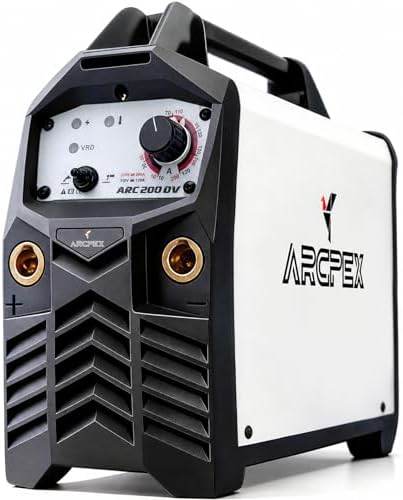
The ARCPEX is a dual-voltage inverter welder with MMA and Lift TIG modes. Its listing specifies a 60% duty cycle at 200A and 104°F, along with a stated ability to weld plates up to 5/32 inch. Those details give you more to compare against a repair schedule than listings that do not provide a duty cycle, although real performance still depends on the input supply and operating conditions.
At a listed 11.9 pounds, it is heavier than the ARCCAPTAIN and HONE but remains portable. Hot Start and Anti-Stick are intended to make stick welding easier to manage, while VRD protection and listed thermal, overload, and overcurrent protections add practical safety features. The manufacturer also describes dust-resistant cooling channels and a housing designed to resist water splashes; this is not a reason to weld in wet conditions or expose the machine to water.
The listing advertises MMA/Lift TIG, but the supplied details do not clarify whether a TIG torch is included. Ask or check the package contents before counting on TIG use. Also verify the input plug and output you can use on your farm; the 200A figure is tied to the stated 220V-capable design, not a promise of identical output on 110V.
Pros:
- Dual-voltage 110V/220V design
- Lists a 60% duty cycle at 200A under specified conditions
- Offers MMA and Lift TIG modes with Hot Start and Anti-Stick
- Includes a three-year warranty according to the product description
Cons:
- Heavier than the smallest portable choices here
- TIG torch inclusion is not clear in the supplied description
Verdict: The ARCPEX is a strong candidate if you want dual-voltage flexibility and a stated duty cycle, provided its input setup and included accessories suit your needs.
Aspok ARC-125A Stick Welder: Compact Choice for Lighter Work

The ARC-125A is a 110V stick welder with a listed maximum output of 125A. It includes Hot Start, Arc Force, and Anti-Stick, along with a built-in Lift TIG mode for use with a compatible torch. The torch is sold separately, so the TIG feature requires an additional purchase if you do not already have the right equipment.
The product description lists compatibility with 1/16- to 1/8-inch rods, including E6013, E6011, E6010, and E308. Its kit is described as including an electrode holder, earth clamp, wire brush, safety glasses, and shoulder strap. A compact format and included basics can make it convenient for occasional repairs, but the lower listed output makes it less suited than the dual-voltage 200A models when a job needs more current.
The supplied information does not state a duty cycle, so you should check the complete specifications before planning longer welds. As with any compact 110V welder, confirm that your outlet and circuit can support the machine under load. Its Lift TIG function adds flexibility, but it should not be mistaken for a complete TIG setup without the torch and other required supplies.
Pros:
- Compact 110V design with a listed 125A maximum output
- Hot Start, Arc Force, and Anti-Stick are included
- Supports several common electrode types
- Includes an electrode holder, ground clamp, brush, glasses, and strap
Cons:
- Lower listed maximum output than the 200A options
- Lift TIG torch is sold separately, and duty-cycle details are not supplied
Verdict: Pick the ARC-125A for compact storage and lighter repair work, not as a substitute for a higher-output machine for frequent or demanding farm welding.
How to Choose a Stick Welder for Farm Repairs
Match the Input Voltage to Your Work Area
Start by checking the outlets you can use in the shop and at the repair site. A 110V welder may be convenient for lighter work where a suitable household circuit is available. A dual-voltage machine gives you the option to use 220V where you have a compatible supply, and some models list higher output on that input. Confirm the plug, circuit needs, and output at each voltage before you buy. Avoid assuming that an ordinary extension cord or outlet can safely support welding loads.
Look Beyond the Maximum Amp Rating
Maximum amperage is only one part of a welder’s capability. Check the output range at the voltage you plan to use, and look for a duty-cycle rating that explains how long the machine can weld before it needs to cool. Of the models here, ARCPEX provides a specific duty-cycle figure in its supplied description; several others do not. If the seller cannot clarify the operating conditions or duty cycle, treat that as an important unknown for long or heavy jobs.
Choose Electrodes for the Metal and Repair
Check that the machine supports the rods you already use or plan to buy. The listed models include compatibility with common rod types such as E6011, E6013, or E7018, though compatibility varies by machine. Electrode diameter also matters: the welder must have enough usable output for the rod and the material. Follow the rod manufacturer’s instructions and prepare the metal properly. Rust, paint, dirt, and poor fit-up can make a repair harder regardless of the welder.
Consider Portability and the Repair Location
When you need to move between a shop, barn, and field, weight and carrying features matter. The HONE and ARCCAPTAIN are especially light according to their listed weights, while the ARCPEX provides dual voltage at a higher listed weight. A built-in light may help in a dim work area, but it does not replace proper lighting, a welding helmet, gloves, protective clothing, and a safe work setup.
Decide Whether Extra Modes Are Worth It
Pulse MMA, synergic controls, and Lift TIG can add flexibility, but they are useful only if they match your needs. Synergic settings may help narrow down starting parameters, while experienced welders may prefer manual control. Lift TIG requires a compatible torch, and the descriptions for these products do not consistently confirm that a torch is included. If stick welding is all you need, a simpler machine may be easier to set up and maintain.
Check Protection, Warranty, and Package Contents
Overheat and overload protections can help protect a machine, but they do not make unsafe work safe. Check the full manual for ventilation, cooling, input power, and operating limits. Compare the stated warranty and support terms, and confirm exactly what comes in the box. Starter rods and accessories can be convenient, but inspect the supplied gear and use appropriate certified personal protective equipment for the job.
Use the Right Welder for the Repair’s Importance
Farm equipment can carry heavy loads and work in hazardous conditions. Do not choose a welder based only on portability or advertised output when repairing a safety-critical part, such as a trailer, lifting point, steering component, or structural equipment member. Use the correct welding procedure and materials, and have critical repairs assessed or completed by a qualified professional. A portable machine is not a replacement for sound repair design.
Frequently Asked Questions
Is a 110V stick welder enough for farm repairs?
It can be useful for some lighter or occasional repairs, depending on the machine’s verified output, electrode, material thickness, and available circuit. A 110V rating alone does not tell you how long or heavily the welder can operate. Check the output range and duty cycle before choosing one for a specific job.
Should I choose a dual-voltage welder?
A dual-voltage model can give you more setup options if you have access to both suitable 110V and 220V circuits. The listed output may change with input voltage, so compare the specifications for each mode. Dual voltage is helpful only when the outlet, circuit, and plug are appropriate for the machine.
What is the benefit of Hot Start and Anti-Stick?
Hot Start is intended to help establish an arc when you begin welding. Anti-Stick is designed to reduce the chance of an electrode sticking to the workpiece. These features can make the process easier to manage, but they do not replace correct settings, rod selection, and technique.
Can I use these welders for TIG welding?
Some models list Lift TIG capability, including the ARCCAPTAIN, ARCPEX, HONE, and Aspok ARC-125A. The supplied details say the ARCCAPTAIN’s TIG torch is sold separately and the Aspok torch is sold separately; they do not clearly confirm torch inclusion for every other model. Check package contents and torch compatibility before buying.
Which welder is easiest to carry around a farm?
Based on the supplied weights, the HONE at 4.4 pounds and ARCCAPTAIN at 7.2 pounds are the lightest listed options. The HONE also includes a shoulder strap and built-in LED light. Consider the leads, protective gear, rods, and power source you will need to bring along, not just the machine’s weight.
Are the included rods and accessories enough to start welding?
Some kits include rods or basic accessories, but package contents differ. Check the listing for the exact items, and make sure you have suitable eye and face protection, gloves, protective clothing, and a safe work area. Use equipment that meets your needs rather than relying on a starter kit alone.
Final Recommendation
For a versatile farm-and-shop machine, the ARCCAPTAIN stands out for its dual-voltage operation, pulse mode, and synergic settings. The ARCPEX is worth considering if its stated duty cycle and dual-voltage design better match your expected workload. Choose the HONE for very light carrying weight and a built-in light, the haxiaoer for basic work after verifying its specifications, or the Aspok ARC-125A for compact, lighter-duty welding. In every case, match the machine to your power supply, electrode, and repair—and use a qualified professional for safety-critical parts.
