
Farm repairs often happen far from a welding shop, so a useful stick welder needs to match your available power, the kind of steel you work on, and how often you need to move it. The five machines below range from a very light 110V option to dual-voltage models with higher stated output. Compare their listed features carefully: a welder’s maximum amperage alone does not tell you how it will perform on your farm, and the right electrode, power source, and safe setup matter just as much.
Table of Contents
Quick Comparison: Best Stick Welders For Farm Use
| Welder | Input | Listed output | Notable features |
|---|---|---|---|
| ARCCAPTAIN 220A Stick Welder | 110V/220V | 20–220A | Large display, synergic control, stick and lift TIG |
| HONE 110V Stick Welder | 110V | Not stated in the supplied details | Built-in LED light, 4.4-pound body, accessory kit |
| Forney Easy Weld 280 160 ST-i | 120V/230V | Up to 160A | Stick and DC TIG, supports electrodes up to 5/32 inch |
| ARCPEX 200A Stick Welder | 110V/220V | Up to 200A | Claimed 60% duty cycle, dust-resistant design, three-year warranty |
| Rotvik 200A Stick Welder | 110V/220V | 20–200A | Large display, automatic voltage recognition, included accessories |
Our Picks: Best Stick Welders For Farm Use reviews
ARCCAPTAIN 220A: A Versatile Dual-Voltage Pick for Farm and Shop Repairs

The ARCCAPTAIN is a compact inverter welder with both stick and lift TIG modes. Its stated 20–220A range and 110V/220V input give it flexibility for a home shop or a work area with access to 220V power. The manufacturer lists compatibility with 6010, 6011, 6013, and 7018 rods, which covers several common choices for repair work.
A large LED display shows settings, while synergic control can match current and voltage after you select the rod diameter. More experienced welders can adjust current, hot start, and arc force themselves. The machine weighs 9.5 pounds and comes with a shoulder strap, a 10-foot electrode holder lead, a 10-foot ground clamp, ten rods, and a 110/220V adapter. Lift TIG is supported, but the torch is sold separately.
This model makes sense if you want a portable machine with more adjustment options than a basic 110V unit. Its stated 220A maximum is not a guarantee that every outlet or extension cord can support that output. Check the machine’s input requirements and the circuit you plan to use, especially when working away from your shop.
Pros:
- Dual-voltage input and a stated 20–220A adjustment range
- Stick and lift TIG modes, with the TIG torch sold separately
- Synergic settings plus manual hot-start and arc-force adjustments
- Lightweight body and useful included leads and accessories
Cons:
- A lift TIG torch is not included
- High output depends on having a suitable power source
Verdict: Choose the ARCCAPTAIN if you want a portable, adjustable dual-voltage machine and value having both stick and lift TIG capability.
HONE 110V Stick Welder: A Very Light Choice for Quick Touch-Ups

The HONE is designed for portability and work around a 110V outlet. At a listed 4.4 pounds, it is the lightest option in this group, and its shoulder strap makes it easier to carry between a garage, barn, or repair site. A built-in LED strip is intended to help illuminate a dim work area; it does not replace a welding helmet or proper task lighting.
The machine offers automatic and manual MMA modes, with automatic adjustment of hot start and arc force in its stated synergic mode. It also supports lift TIG, though the supplied details do not specify that a TIG torch is included. The listed rod range is 1.6–3.2 mm, including E6013, E6011, E6010, E7018, and E308. Its kit includes 25 rods, a wire brush, chipping hammer, gloves, and a face shield.
Its main trade-off is the 110V-only input. That can suit lighter repairs where a compatible outlet is available, but this model is less flexible than the dual-voltage choices if you need higher output or have 220V power on hand. The supplied product information does not state a maximum amperage, so compare its manual and output requirements with your intended jobs before buying.
Pros:
- Very light and easy to carry around a property
- Built-in light for dim work areas
- Automatic and manual stick settings, plus lift TIG support
- Includes rods and several basic welding accessories
Cons:
- 110V input only
- Maximum output is not stated in the supplied product details
Verdict: The HONE is a practical candidate for light, portable repair work if 110V power is enough for your needs and its verified output matches your electrodes and materials.
Forney Easy Weld 280 160 ST-i: A Dual-Voltage Machine from an Established Welding Brand

The Forney Easy Weld 280 160 ST-i is a 160A inverter machine that handles stick welding and DC TIG. It is listed for 120V and 230V input, offering a way to work from a standard household outlet or use a higher-voltage supply when available. The supplied description says it can use electrodes up to 5/32 inch.
At 15 pounds, it is not as light as the ARCCAPTAIN or HONE, but it is still designed to be carried between a shop and a job site. Forney describes its arc as easy to strike and steady, which may be helpful if you are learning stick welding as well as doing routine repairs. The product details do not list included rods, leads, or other accessories, so check the package contents and input connections before purchase.
Compared with the 200A and 220A models here, the Forney has a lower stated maximum output. That may be a reasonable trade if 160A and the listed electrode capacity cover your usual work, and you prefer its dual-voltage flexibility and two-process design. As with any welder, the available circuit and duty cycle affect how you can use it; confirm the manual’s requirements for your setup.
Pros:
- Listed 120V/230V input for different work locations
- Supports stick and DC TIG welding
- Up to 160A output and electrodes up to 5/32 inch, per product details
- Compact inverter design at a listed 15 pounds
Cons:
- Lower stated maximum amperage than the 200A and 220A options
- Included accessories are not detailed in the supplied information
Verdict: Pick the Forney if you want a dual-voltage stick-and-TIG machine and its 160A rating fits the repairs you expect to handle.
ARCPEX 200A Stick Welder: A Feature-Rich Option for Dusty Work Areas
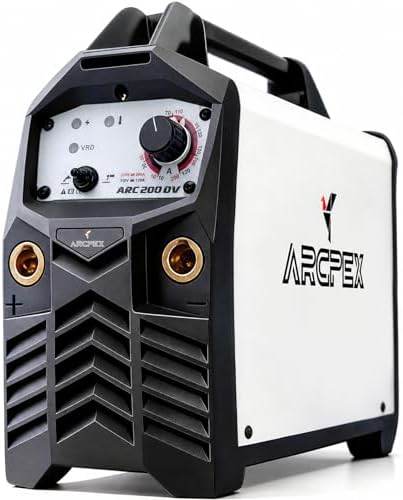
The ARCPEX combines stick welding and lift TIG in a 110V/220V inverter, with a stated maximum output of 200A. The product information claims a 60% duty cycle at 104°F and says the welder can penetrate plate up to 5/32 inch. Treat those figures as manufacturer specifications, and check the manual for the conditions and input power needed to reach them.
Its listed features include hot start, anti-stick, VRD protection, forced-air cooling, and dust-resistant channels. The body weighs 11.9 pounds, making it a manageable option to move between a workshop and repair site. The manufacturer also lists a three-year warranty. These details make it appealing for farm environments, but dust resistance and housing protection do not mean the welder is waterproof or safe to leave exposed to weather.
At a glance, ARCPEX offers a strong balance of portability, stated output, and features. The important limitation is that the product description does not identify a TIG torch as an included accessory. If you plan to use lift TIG, confirm what equipment is in the box and whether it suits your setup.
Pros:
- 110V/220V input and up to 200A stated output
- Manufacturer-stated 60% duty cycle at 104°F
- Dust-resistant channels and forced-air cooling are designed for demanding work areas
- Listed hot start, anti-stick, VRD protection, and three-year warranty
Cons:
- The stated duty cycle and maximum output depend on operating conditions
- The supplied details do not confirm that a TIG torch is included
Verdict: Consider the ARCPEX if you want a portable dual-voltage welder with a stated 200A output and features aimed at dusty work areas, after confirming its power and accessory requirements.
Rotvik 200A Stick Welder: A Display-Focused Kit with Automatic Voltage Recognition

The Rotvik is listed as a 110V/220V machine with a 20–200A adjustment range and automatic voltage recognition. Its large display is intended to make settings easier to read, and the manufacturer describes it as suitable for home maintenance, auto repair, and construction work. For farm use, the dual-voltage design may be useful if you have access to different power sources around the property.
The supplied description lists a welding helmet, gloves, electrode holder, ground clamp, shoulder strap, cleaning brush, 220V adapter, and 20 welding rods. It also mentions an argon welding gun and describes the machine as supporting multiple welding functions. However, the information provided does not clearly explain the exact process capabilities or the torch specifications. Confirm those details with the seller or manual before counting on TIG for a particular job.
The Rotvik’s accessory bundle could be convenient if you are assembling a basic setup, but included protective gear should fit properly and provide the protection required for your work. Its description does not provide a duty-cycle figure or a machine weight, so those are worth checking if you expect longer welds or frequent carrying. Compared with the ARCPEX, its supplied details are less specific about duty cycle and environmental protection.
Pros:
- Listed dual-voltage input with automatic voltage recognition
- 20–200A stated adjustment range and large LED display
- Includes a broad set of accessories and welding rods, according to the listing
- Manufacturer lists overvoltage, overcurrent, overheating, and anti-stick protections
Cons:
- Exact multi-process and TIG capabilities are unclear in the supplied details
- Weight and duty-cycle information are not provided
Verdict: The Rotvik may suit buyers who value a bundled kit and dual-voltage operation, but verify its process details, duty cycle, and included equipment before choosing it for regular farm repairs.
How to Choose a Stick Welder for Farm Use
Match the Input Voltage to Your Power Source
Start by checking the outlets where you expect to weld. A 110V-only machine, such as the HONE, can be convenient where a suitable household outlet is available. Dual-voltage models offer more flexibility, but using 220V may require the correct outlet, adapter, and circuit. An adapter does not change the capacity of the circuit supplying it. Follow the welder’s manual and have electrical work handled by a qualified person when needed.
Choose Output for the Work You Actually Do
Consider the steel thickness, electrode type, and size of the repairs you commonly make. The listed maximum amperage can help narrow choices, but it does not show how long a machine can weld at that output or what input power it needs. Check the machine’s operating range and the electrode manufacturer’s recommended settings. For important or safety-critical repairs, use a qualified welder rather than relying on a small machine’s maximum rating alone.
Check Duty Cycle Before Long Repair Sessions
Duty cycle describes how long a welder can operate within a set period at a stated output before it needs to cool. Among these listings, ARCPEX provides a specific claim of 60% at 104°F; the other supplied details do not give a comparable figure. Read the manual for the conditions behind any rating. A machine that suits occasional tack welds may be less convenient for long, continuous repair work.
Consider Portability and Where You Will Weld
Think about whether the welder will stay in a shop or travel around the farm. The HONE is listed at 4.4 pounds, the ARCCAPTAIN at 9.5 pounds, the ARCPEX at 11.9 pounds, and the Forney at 15 pounds. The supplied Rotvik details do not state its weight. Also consider the length of the leads, how the machine is carried, and whether your work area is protected from rain, sparks, dust, and other hazards.
Look at Controls and Starting Features
Hot start can help initiate an arc, while anti-stick features are intended to reduce the chance of an electrode sticking to the work. Some machines also offer automatic or synergic settings that adjust parameters based on rod selection. These features can make setup more approachable, but they do not replace correct electrode choice, clean metal, steady technique, or practice. If you want to control settings yourself, look for clear manual adjustments and an easy-to-read display.
Confirm the Included Accessories and Process
Compare what comes in the box with what you already own. Leads, clamps, rods, a helmet, gloves, and a chipping hammer can reduce the number of items you need to source separately, but check their specifications and fit. If you want TIG capability, confirm whether the machine supports the process you need and whether the torch and other required equipment are included. A listing’s use of “TIG” or “argon” does not by itself clarify every setup detail.
Make Safety and Repair Quality Part of the Decision
Welding creates intense light, heat, fumes, and fire risk. Use suitable eye and skin protection, keep flammable materials away, and work with proper ventilation. Protect the machine from moisture and keep its air openings clear. Farm equipment can be structurally important; repairs to load-bearing parts, pressure systems, or other critical components may require a qualified professional and an approved repair procedure.
Frequently Asked Questions
Is a 110V stick welder enough for farm repairs?
It can be suitable for lighter repairs if its output, electrode range, and duty cycle match the work. The HONE is listed as a 110V model, but its supplied product details do not state a maximum amperage. Check its manual and compare its capacity with the rods and materials you plan to use.
Should I choose a dual-voltage welder?
A dual-voltage model can offer more flexibility if both 110V and 220V power are available where you work. Before connecting it, confirm the required outlet, plug or adapter, and circuit capacity. The machine’s higher output may not be available from every power source.
Which of these welders is easiest to carry around a farm?
The HONE has the lowest listed weight at 4.4 pounds. The ARCCAPTAIN is listed at 9.5 pounds and the ARCPEX at 11.9 pounds, while the Forney is listed at 15 pounds. The supplied Rotvik details do not include a weight.
Do these machines all include a TIG torch?
No. The ARCCAPTAIN supports lift TIG, but its description says the torch is sold separately. The supplied details do not clearly confirm a torch for the other models, so check the package contents and process requirements before buying.
What does a welder’s duty cycle mean?
Duty cycle indicates how long a welder can operate at a stated output within a defined period before it needs to cool. It is important for longer jobs. ARCPEX lists a 60% duty cycle at 104°F; consult each machine’s manual for its rating and operating conditions.
Can I weld outdoors with a portable stick welder?
Portable equipment can be useful at outdoor repair sites, but the machine and electrical connections still need protection from rain and moisture. Keep the work area clear of flammable materials, use proper protective equipment, and follow the manufacturer’s directions for outdoor use.
Which welder is the best overall choice for farm use?
The ARCCAPTAIN is a well-rounded option on paper because it combines dual-voltage input, a stated 20–220A range, adjustable controls, and a portable 9.5-pound body. If you need equipment for longer welding sessions, compare duty-cycle specifications and choose the machine that best matches your power supply and repair needs.
Final Recommendation
For a flexible farm and shop setup, the ARCCAPTAIN is the strongest all-around candidate based on its listed dual-voltage operation, broad adjustment range, and portable design. The HONE is worth considering for light work where low weight and 110V operation are priorities. If you expect longer welds, look closely at duty-cycle information, and verify input requirements and included equipment before purchasing any model. Match the welder to your actual repairs, and leave critical structural work to a qualified professional.
