A 3,000-square-foot home does not automatically need a certain size of tankless water heater. The right choice depends more on how many showers and taps may run at once, your incoming water temperature, and whether you have gas or enough electrical capacity. In this comparison, three compact 110V units are meant for a single sink—not whole-home hot water. The larger electric and gas models are more relevant for household use, though their listed flow rates still need to be checked against your climate and peak demand.
Quick takeaway: The GASLAND gas model offers the highest listed flow rate here. The 18kW electric model may suit a smaller household with limited simultaneous demand, while the 3,000W units are best treated as point-of-use heaters for sinks.
| Product | Power and listed capacity | Best fit |
|---|---|---|
| xwdzswgs 3,000W 110V Tankless Water Heater | Electric, 110V; listing describes use at 0.3–0.5 GPM | A single sink or other low-flow point of use |
| lianfengymx 3,000W 110V Sink Water Heater | Electric, 110V; recommended flow of 1.0 GPM | A sink where you can control the water flow |
| xwdzswgs 3,000W 110V Electric Tankless Heater | Electric, 110V; listing describes use at 0.3–0.5 GPM | Low-flow sink use with a suitable electrical circuit |
| NOVIEEX 18kW 240V Electric Tankless Heater | Electric, 240V; maximum listed flow of 4.9 GPM | A smaller home or limited-demand setup with adequate electrical service |
| GASLAND Gasmart E 199,000 BTU Gas Tankless Heater | Natural gas; maximum listed flow of 7.6 GPM | A household needing more capacity, subject to a flow and temperature-rise check |
Table of Contents
Our Picks: Best Tankless Water Heaters For 3000 Sq Ft House reviews
1. xwdzswgs 3,000W 110V: Compact Heater for One Sink
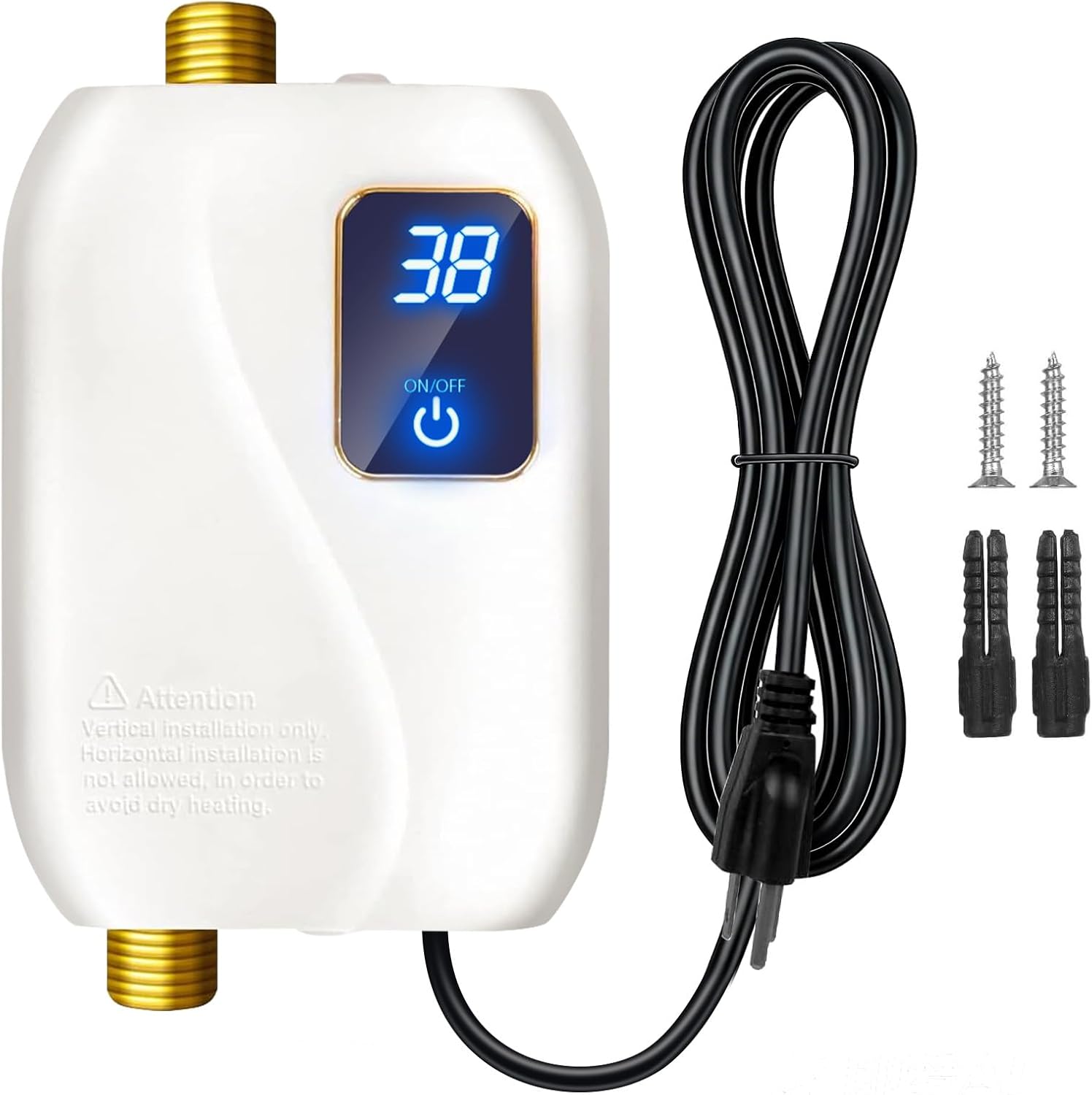
This compact 3,000W heater is a point-of-use appliance for a sink, not a whole-house water heater. It runs on 110V and has an LED display, wall-mounted design, and standard 1/2-inch NPT connections. The listing describes a temperature increase of 82°F at 0.3 GPM and 131°F at 0.5 GPM, but those figures depend on very low flow. The product description specifically says it is not suitable for a typical shower.
Its small format may work well beneath a kitchen or utility sink where you want hot water close to the tap. Some users report that the unit is convenient for low-volume tasks such as handwashing or a salon sink; others have found the hot-water output unreliable. That mixed experience is a reason to match it carefully to a low-flow use rather than expect steady hot water at higher flow.
Compared with the other options here, this unit is inexpensive in electrical demand but also far lower in capacity than the 18kW electric or gas models. Its description lists safety features such as dry-boil protection, overheat shutoff, and an IPX4 rating. It must be installed vertically, and you should confirm the circuit and installation requirements before buying.
Pros:
- Compact wall-mounted design for a sink area
- 110V power supply
- LED temperature display and selectable Fahrenheit or Celsius
- Listed safety features include dry-boil and overheat protection
Cons:
- Not designed for showers or whole-house service
- Output depends on very low water flow
Verdict: Choose this only for a low-flow sink application; it is not a solution for supplying hot water throughout a 3,000-square-foot home.
2. lianfengymx 3,000W 110V: Sink-Only Unit with Flow Guidance

The lianfengymx is another 3,000W, 110V point-of-use heater, and its listing is especially clear about its intended job: sink use only. It has a digital display, automatic shutoff, dry-fire protection, and an IPX4 rating. The unit is designed for vertical wall mounting and measures 7.8 by 4.3 by 2.6 inches.
The stated recommended flow is 1.0 GPM, with output temperature changing as flow changes. Lowering the flow can increase the water temperature, so the tap and heater need to work together. That may be practical for handwashing or light sink use, but it is not an appropriate way to meet shower demand or multiple hot-water needs across a large home.
Among the small 110V models in this list, this option provides a clear flow recommendation and compact dimensions. It still has the same basic limitation: 3,000W is not whole-house capacity. Treat its use as sink-specific, and verify plumbing and electrical details before installation.
Pros:
- Compact size with standard 1/2-inch NPT ports
- Digital display for status and temperature monitoring
- Automatic shutoff and dry-fire protection are listed
- Published recommended flow rate helps set expectations
Cons:
- Designed exclusively for sink applications
- Temperature depends on controlling the water flow
Verdict: This is a reasonable option to consider for a single sink, but skip it if you need a primary water heater for the house.
3. xwdzswgs 3,000W 110V: Another Low-Flow Under-Sink Choice

This xwdzswgs model shares many listed specifications with the first product: 3,000W power, 110V operation, an LED display, compact wall-mounted construction, and 1/2-inch NPT connections. Its description gives the same low-flow temperature-rise figures—82°F at 0.3 GPM and 131°F at 0.5 GPM—and says it is not suitable for a typical shower.
The listing also names IPX4 water resistance, leakage protection, dry-burning protection, and automatic shutoff for overheating or inactivity. It specifies vertical installation and says the wiring should use 2.5 mm² (13 AWG) wire with a circuit breaker rated at 32A or higher. Because electrical requirements must match the heater, wiring method, and local code, have a qualified electrician verify the setup rather than relying on a product listing alone.
This heater may suit a low-volume sink where compact size and on-demand operation matter. It does not offer a meaningful capacity advantage over the other 3,000W units, and the listed flow figures make its limits clear. For a 3,000-square-foot home’s main hot-water supply, compare the higher-capacity options and size by incoming water temperature and simultaneous use.
Pros:
- Compact, wall-mounted design
- LED display and temperature-unit adjustment
- Multiple listed protections, including dry-burning protection
- Standard 1/2-inch NPT connections
Cons:
- Not suitable for showers or whole-home demand
- Installation requires careful electrical verification
Verdict: Consider it for a dedicated low-flow sink, not as the main water heater for a large home.
4. NOVIEEX 18kW 240V: Higher-Power Electric Option for Modest Demand

The NOVIEEX is the higher-capacity electric choice in this group. It runs on 240V, is rated at 18kW, and has a maximum listed flow rate of 4.9 GPM. Its adjustable temperature range is listed as 77°F to 140°F, with a digital display. The manufacturer describes it as a fit for small-to-medium homes with two or three simultaneous hot-water needs, but the actual flow you can get depends on the temperature rise your incoming water requires.
Electrical planning is a major part of this purchase. The supplied specifications call for two 40A double-pole breakers and two sets of 8 AWG wires with a ground wire, and recommend consulting a qualified electrician. If your panel or wiring cannot support the required load, installation may require electrical work before the heater can be used.
Some owners describe the unit as compact and appreciate its steady output in their particular setups. That does not establish that it will handle the peak demand of every large home. Compared with the 3,000W sink heaters, it is a more plausible option for multiple fixtures; compared with the 199,000 BTU gas model, it has a lower listed maximum flow and demanding electrical requirements.
Pros:
- 18kW output and 240V operation
- Maximum listed flow of 4.9 GPM
- Adjustable temperature range with an LED display
- Compact wall-mounted design
Cons:
- Requires substantial dedicated electrical capacity
- Listed maximum flow may not be available when incoming water is cold
Verdict: Consider this electric model only if its real-world flow will meet your household’s peak demand and your electrical service can support the specified installation.
5. GASLAND Gasmart E: Highest Listed Flow for Whole-Home Potential

The GASLAND Gasmart E is a natural-gas indoor model rated at 199,000 BTU, with a maximum listed flow of 7.6 GPM and a maximum temperature of 140°F. That makes it the strongest candidate in this list for a home’s primary hot-water supply. Its actual useful flow will depend on the required temperature rise, so the maximum number should not be treated as a guaranteed output under every condition.
The manufacturer lists CSA certification, an efficiency rating (UEF) of 0.8, and safety features that include freeze, flame-out, and overheat protection. It is wall-mounted and intended for indoor installation. Since gas, venting, and installation details affect safe operation, check the full installation requirements and have a qualified professional confirm that the home is properly set up for this unit.
For a 3,000-square-foot house, this model is a more suitable starting point than any of the 3,000W sink heaters. It may still be undersized for a household with several high-flow fixtures running at once, especially where incoming water is cold. Compare the unit’s performance against your likely peak demand rather than choosing based on floor area alone.
Pros:
- 199,000 BTU natural-gas output
- Highest listed maximum flow in this comparison at 7.6 GPM
- CSA certification and several listed safety protections
- Indoor wall-mounted design
Cons:
- Requires a natural-gas setup and suitable indoor installation
- Maximum flow does not guarantee that capacity at every temperature rise
Verdict: This is the leading option in this group to investigate for whole-home service, provided a professional confirms that its gas, installation, and flow capacity match your household.
How to Choose a Tankless Water Heater for a 3,000-Square-Foot House
Size for simultaneous hot-water use, not square footage
Floor area alone does not tell you how much hot water a heater must supply. List the fixtures that might run together, such as showers, a dishwasher, a washing machine, and sinks. Add their hot-water flow needs to estimate peak demand. A heater that can serve one sink may be unsuitable when a shower and laundry are running at the same time.
Account for incoming water temperature
A tankless heater must raise cold water to your chosen output temperature while water flows through it. Colder incoming water requires a larger temperature rise, which can reduce the flow the heater can provide. Ask an installer to use your local incoming-water temperature and desired hot-water temperature when checking the unit’s capacity.
Choose gas or electric based on your home’s services
Gas and electric models have different installation needs. The GASLAND unit uses natural gas, while the NOVIEEX uses 240V electricity and lists a substantial breaker and wiring requirement. A 110V, 3,000W model is a different category altogether: it is meant for a low-flow point of use. Confirm that your home has the right fuel supply, electrical capacity, and approved installation location before choosing.
Check the flow rate at the temperature rise you need
A maximum GPM figure is not enough to size a heater by itself. Compare capacity at the temperature rise your home needs, not just the highest flow figure in a product description. If that performance information is unclear, ask the manufacturer or a qualified installer before purchase. This is especially important for homes with cold incoming water or several hot-water fixtures used at once.
Review installation and code requirements
Tankless water heaters need correct plumbing and power or fuel connections. The electric models may need dedicated circuits, and the gas model requires an appropriate gas and indoor installation setup. Follow the manufacturer’s complete instructions and local code. Use a qualified electrician or plumber when the work requires it, and do not assume that a compact unit is simple or safe to install without checking its specifications.
Match the heater to its intended use
Pay close attention to whether a product is a point-of-use or whole-home model. The first three products here are 110V sink heaters, and their listed flow figures are far below typical shower demand. The 18kW electric and 199,000 BTU gas units are more relevant to household hot-water service, but they still need a demand and temperature-rise check.
Frequently Asked Questions
Is a 3,000W 110V tankless heater enough for a 3,000-square-foot home?
No. The 3,000W models in this comparison are described as sink or low-flow units, and the listings warn against using them for showers. They are not suitable as the main hot-water supply for a large home.
Which product in this comparison has the highest listed flow rate?
The GASLAND natural-gas model has the highest listed maximum flow at 7.6 GPM. That maximum does not guarantee the same flow at every temperature rise, so size it for your actual incoming water temperature and peak demand.
Can the NOVIEEX 18kW heater serve a whole house?
It may suit a smaller home or a setup with modest simultaneous hot-water needs, according to the product description. Its listed maximum is 4.9 GPM, and its usable flow may be lower when it must raise colder incoming water by more degrees. Have an installer assess your household demand and electrical service.
How many GPM does a 3,000-square-foot house need?
There is no single GPM requirement based on square footage. Estimate the flow from the fixtures you expect to use at the same time, then account for the needed temperature rise. Your climate, incoming water temperature, and household routines all affect the result.
Are the compact electric models suitable for showers?
The first and third product descriptions say they are not suitable for showers, and the second is explicitly listed for sink applications only. Their low power and flow guidance make them point-of-use options, not shower heaters.
Should I install a tankless water heater myself?
Installation depends on the model and your home’s plumbing, electrical system, or gas setup. Some products list specific wiring and breaker requirements. Follow the manufacturer’s instructions and local code, and hire a qualified professional when the job requires electrical, gas, or plumbing work.
Final Recommendation
For a 3,000-square-foot home, do not choose a heater by floor area or assume that a small 110V unit can serve the whole house. The GASLAND Gasmart E is the strongest whole-home candidate in this group based on its listed 199,000 BTU output and maximum 7.6 GPM flow. The NOVIEEX 18kW model is worth considering if you prefer electric and your household’s peak demand is modest, but its electrical requirements need careful review. Choose one of the 3,000W models only for a low-flow sink. Before buying a primary heater, have a qualified installer confirm capacity using your simultaneous fixture demand and incoming water temperature.