
The best underlayment for floating hardwood floors depends on your flooring manufacturer’s requirements, the subfloor, and whether you need help with moisture, sound, or minor surface variation. A pad that works well under one floor may be unsuitable under another, so check the flooring instructions before you buy. These five options include recycled-fiber rolls, a natural wood-fiber board, and a rubber underlayment, with different strengths and trade-offs.
Table of Contents
Quick Comparison
| Product | Type | Coverage | Standout feature |
|---|---|---|---|
| QuietWalk Underlayment | Recycled-fiber roll | 360 sq. ft. | Moisture barrier and pre-attached-pad compatibility |
| QuietWalk Plus Underlayment | Recycled-fiber roll | 360 sq. ft. | Floating and glue-down installation options |
| FLOORLOT BlueStep Underlayment | Roll with moisture-blocking film | 200 sq. ft. | Includes seam tape |
| STEICO Natural Wood Fiber Underlayment | Rigid wood-fiber boards | 180 sq. ft. | Firm support and minor surface leveling |
| DURA-Son MB Premium Underlayment | Recycled-rubber roll | 100 sq. ft. | Built-in moisture barrier and impact-sound focus |
Our Picks: Best Underlayment For Floating Hardwood Floors reviews
QuietWalk Underlayment: A Versatile Roll for Floating Floors

QuietWalk is a recycled-fiber underlayment roll made for laminate and hardwood flooring, including floating installations. Its 3 mm thickness and 360-square-foot coverage make it a practical option for larger rooms. An integrated lip-and-tape system is designed to join sections as you lay them.
The built-in moisture barrier is intended to protect flooring from subfloor vapor, while the dense fiber core is designed to resist compression. The product is also approved for floors with a pre-attached pad, which can be useful when your flooring has an attached cushion and its instructions allow this combination. That approval does not mean every flooring system should use two layers; confirm the flooring maker’s guidance first.
This is a strong all-around choice if you want a roll-format underlayment with moisture protection and broad flooring compatibility. It is listed as safe for use over QuietWarmth radiant heating systems, but that specific statement should not be treated as approval for every radiant system. Check your floor and heating-system instructions for the full assembly requirements.
Pros:
- Large roll coverage can reduce the number of seams.
- Integrated moisture barrier and lip-and-tape installation system.
- Compatible with some flooring that has a pre-attached pad.
- Made with recycled materials and GREENGUARD Gold certified.
Cons:
- Not identified as a solution for leveling uneven or damaged subfloors.
- Radiant-heat compatibility is specified for QuietWarmth systems, not all systems.
Verdict: Choose QuietWalk if you want a broadly compatible, moisture-barrier roll for a floating hardwood installation and your flooring instructions approve its thickness and pad type.
QuietWalk Plus: A Flexible Option for Floating or Glue-Down Floors

QuietWalk Plus is a recycled-fiber underlayment for laminate, hardwood, and engineered wood flooring. Like the standard QuietWalk, it covers 360 square feet and is approved for floors with pre-attached pads, subject to the flooring manufacturer’s instructions.
Its stated installation flexibility is a key difference: the product is intended for both floating and glue-down methods. It also has a DriWick moisture barrier and a dense fiber core designed to reduce sound. Before using an underlayment with a glue-down floor, make sure the flooring adhesive and installation instructions specifically allow it; a product’s compatibility with glue-down methods does not automatically make it suitable for every adhesive or floor system.
Compared with standard QuietWalk, Plus may be worth considering if you need that broader installation-method range. If your project is a straightforward floating installation, compare both products’ instructions and choose the one that best matches your floor assembly rather than assuming the “Plus” label means it is right for every situation.
Pros:
- Listed for floating and glue-down installation methods.
- Moisture barrier helps manage subfloor vapor.
- Large roll covers 360 square feet.
- Approved for some floors with a pre-attached pad.
Cons:
- Flooring and adhesive instructions still determine whether it is suitable for your installation.
- Does not claim to level uneven subfloors.
Verdict: QuietWalk Plus is a sensible pick when you need a recycled-fiber underlayment that supports more than one installation method, provided your specific flooring system permits it.
FLOORLOT BlueStep: A Straightforward Roll with Seam Tape
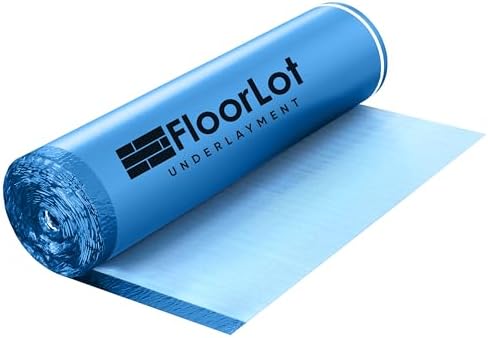
FLOORLOT BlueStep is a roll underlayment for laminate, engineered wood, and solid hardwood floor systems. It covers 200 square feet and includes tape for connecting the seams. Its built-in moisture-blocking film is intended to protect the floor from subfloor moisture, so the product description says no separate film is required.
The listed sound benefit is standard sound absorption, including help with foot traffic noise and the hollow sound associated with floating floors. This may suit a typical room where you want a simple roll-and-tape installation, but the product information does not provide a sound-test rating or claim that it can correct a poor subfloor.
Its smaller roll coverage may mean more seams than the 360-square-foot QuietWalk options, depending on your room layout. Also, the product’s stated flooring range is broad, but confirm that your particular hardwood is designed for a floating installation and that BlueStep meets its underlayment requirements. Availability can change, so check the current listing before planning around this option.
Pros:
- Built-in moisture-blocking film.
- Includes tape for joining seams.
- Listed for laminate, engineered wood, and solid hardwood floor systems.
- Designed to help reduce footstep noise and hollow sound.
Cons:
- 200-square-foot coverage may require more rolls for a large project.
- Does not specify a tested sound rating or subfloor-leveling ability.
Verdict: BlueStep is worth considering for a smaller project if you want a basic moisture-barrier roll with seam tape and your flooring maker approves it.
STEICO Wood Fiber Boards: Firm Support for Minor Surface Variation

STEICO uses rigid, 6 mm (1/4-inch) wood-fiber boards rather than a flexible roll. The listed package covers 180 square feet. Its firm format is designed to provide support beneath laminate, solid hardwood, engineered wood, and bamboo, with floating, nail-down, or staple-down installation methods listed.
The boards are described as compression-resistant, with a stated strength of 21.32 PSI. Their firm support may help limit flex beneath a floating floor, while the product also claims to even out minor imperfections and bulges. That is not a substitute for repairing a subfloor that is outside the floor manufacturer’s flatness limits. The boards are breathable and vapor-open, so unlike the roll products with built-in barriers, they are not described as a moisture-blocking layer.
STEICO also stands out for its natural wood-fiber construction and stated certifications and material testing. The trade-off is that boards require more handling and layout work than a roll, and their vapor-open design may not fit a project that needs a dedicated moisture barrier. Check subfloor moisture requirements before choosing it.
Pros:
- Rigid boards offer firm, compression-resistant support.
- Designed to help even out minor subfloor imperfections.
- Listed for floating, nail-down, and staple-down installations.
- Made from natural wood fiber with stated FSC and PEFC certification.
Cons:
- Vapor-open design does not provide the same built-in moisture barrier as the roll options.
- Board format can take more planning and cutting than a roll.
Verdict: Choose STEICO when firm support and minor surface correction matter more than having an integrated vapor barrier, and your flooring system allows a wood-fiber board underlayment.
DURA-Son MB: Recycled Rubber for Moisture and Impact-Sound Needs

DURA-Son MB is a rubber underlayment intended for floating laminate and engineered hardwood floors. The roll measures 48 inches by 25 feet and covers 100 square feet. It uses a built-in vapor barrier and is made with 95% recycled rubber bonded with synthetic rubber.
The product focuses on impact-sound reduction and lasting support, positioning rubber as an alternative to traditional foam underlays. Its rubber construction may be appealing when sound control is a main concern, but the provided product details do not include a specific sound-test result. It is also listed as suitable for radiant-heated floors; check the instructions for both your flooring and heating system before installation.
Compared with the larger recycled-fiber rolls, DURA-Son has much less coverage per roll, so it may require more rolls for a large room. Its stated flooring range is narrower too: it is listed for floating laminate and engineered hardwood, not solid hardwood. Make sure your floor type matches before choosing it.
Pros:
- Built-in vapor barrier.
- Rubber construction is designed for impact-sound reduction and durability.
- Made with 95% recycled rubber.
- Listed as suitable for radiant-heated floors.
Cons:
- 100-square-foot coverage is less than the larger roll options.
- Listed for floating laminate and engineered hardwood, not solid hardwood.
Verdict: DURA-Son MB is a focused option for floating engineered hardwood when you want a rubber underlayment with a moisture barrier, but its coverage and stated floor compatibility are more limited.
How to Choose Underlayment for Floating Hardwood Floors
Start with the Flooring Manufacturer’s Instructions
Check the installation guide for your exact flooring before comparing underlayments. It may specify the approved material, thickness, moisture protection, and installation method. Some floors have a pad already attached, and adding another layer can affect how the floor’s locking joints perform. Use an underlayment only when the flooring instructions allow it.
Match the Underlayment to Your Subfloor
Concrete and wood subfloors can have different moisture-control needs. A product with a built-in moisture barrier may help manage vapor from the subfloor, but it does not fix an active leak or remove excess moisture. Follow the flooring manufacturer’s moisture-testing and preparation instructions. A vapor-open product such as STEICO should not be treated as a moisture barrier.
Decide Whether Sound Control Is a Priority
Underlayments can help reduce some footstep or impact noise, but results depend on the entire floor assembly, including the subfloor and the room below. Look for published test information when sound control is a major concern. The products here differ in material and design, but only STEICO’s supplied details include a specific lab-tested sound result; do not assume that products without a stated rating perform the same way.
Choose a Roll or Board Format
Rolls are generally straightforward to lay out and can cover broad areas with fewer individual pieces. Their seams need to be joined as directed. Boards take more cutting and placement, but a firm board format may offer more support over minor surface variation. Neither format should be used to hide a subfloor that needs proper repair or leveling.
Check Thickness and Compression Support
An underlayment that is too thick or too soft may not be suitable for a floating floor’s locking system. The floor needs stable support so its joints are not exposed to excess movement. Compare the underlayment thickness and compression information with the flooring maker’s requirements rather than choosing the thickest or softest option by default.
Confirm Radiant-Heat Compatibility
If your floor has radiant heat, confirm that both the flooring and underlayment are approved for the specific heating system. QuietWalk’s description names QuietWarmth systems, while DURA-Son is described as suitable for radiant-heated floors. Those statements do not replace the instructions for your own system, including any limits on the full floor assembly.
Plan Coverage and Installation Details
Measure the room and compare the total area with each product’s listed coverage. Room shape, cuts, and waste can affect how much you need. Also check how seams are joined and whether extra tape or another approved material is required. Follow the product instructions for orientation and installation, and avoid overlapping or doubling layers unless the flooring system expressly permits it.
Frequently Asked Questions
Do floating hardwood floors always need underlayment?
Not always. Some flooring products have an attached pad, while others require or allow a separate underlayment. Follow the installation instructions for your exact floor; adding an unapproved layer can affect support and the locking joints.
Can I use a moisture-barrier underlayment over any subfloor?
Not automatically. The correct moisture-control approach depends on the subfloor, the flooring, and the installation instructions. A moisture barrier does not solve leaks or excessive moisture, so test and prepare the subfloor as directed.
Can underlayment level an uneven subfloor?
Underlayment is not a replacement for proper subfloor preparation. STEICO is described as helping even out minor imperfections, but larger high or low areas may need repair or leveling before the floor is installed. Follow the floor maker’s flatness limits.
Can I put underlayment beneath hardwood that already has an attached pad?
Only if the flooring manufacturer permits it. QuietWalk and QuietWalk Plus are described as approved for use with some pre-attached-pad floors, but you should still confirm that your particular floor allows that combination and thickness.
Which option is best for sound control?
The best choice depends on the floor assembly and what type of noise you want to reduce. STEICO’s supplied details include a specific lab-tested impact-noise result, while QuietWalk Plus and DURA-Son are described as focusing on sound reduction. Compare verified test information and installation requirements before deciding.
Is a vapor-open underlayment the same as a moisture barrier?
No. A vapor-open material allows moisture vapor to pass through rather than acting as a blocking film. STEICO is described as vapor-open, while QuietWalk, QuietWalk Plus, FLOORLOT BlueStep, and DURA-Son are described as having moisture barriers or blocking films.
Final Recommendation
For many floating hardwood projects, QuietWalk is a well-rounded place to start because it combines broad listed compatibility, a moisture barrier, and large roll coverage. Choose QuietWalk Plus if its floating-or-glue-down flexibility suits your project. Consider STEICO when you want firm board support and minor surface correction, and DURA-Son MB when a rubber underlayment is a better fit for your floating engineered hardwood. Before ordering, confirm that your flooring maker approves the underlayment, thickness, and moisture-control approach for your subfloor.
