Scratches on engineered hardwood can look worse than they are, especially when a mark exposes a lighter layer beneath a dark finish. The best cover-up depends on the damage: a color-matching liquid or marker may camouflage a discolored scratch, while a gouge may need filler or a flooring professional. Because engineered floors have a factory finish that can react differently to touch-up products, test any treatment in a hidden spot first and check your flooring care instructions.
These five options range from a dark-wood concealer to repair markers, wax sticks, and decorative tape. For engineered hardwood, pay close attention to the product’s stated surface compatibility, color match, and whether it leaves a coating or residue.
Table of Contents
Quick Comparison
| Product | Format | Best suited for | Key caution |
|---|---|---|---|
| Trade Secret Dark Wood Scratch Remover | Liquid | Discolored scratches on dark engineered surfaces | Dark shades only; test the color first |
| Tibet Almond Stick Scratch Remover | Applicator stick | Light surface scratches and marks | Not intended for deep scratches or gouges |
| Old English Scratch Cover for Dark Wood | Liquid polish | Dark wood furniture and other suitable wood surfaces | Floor use is not specified in the supplied product details |
| Besezx Wood Grain Repair Tape | Adhesive tape | Covering small areas with a wood-grain patch | May look or feel different from the floor finish |
| FlyBunny Wood Repair Markers and Wax Sticks | Markers and wax sticks | Color touch-ups and filling minor defects | Check the flooring maker’s guidance before using wax |
Our Picks: Best Way To Cover Scratches On Engineered Hardwood Floors reviews
1. Trade Secret Dark Wood Scratch Remover: Best for Discolored Dark Floors

Trade Secret is a liquid concealer made for dark wood furniture and floors, including engineered surfaces and veneers. Its purpose is to reduce the contrast of exposed, discolored areas—not to fill in a scratch or rebuild a damaged finish. That makes it a more targeted choice than a general-purpose furniture polish when a dark floor has a light-colored mark.
To apply it, clean the spot, put a few drops on a soft cloth, and rub gently along the grain. The formula is described as wax-free and residue-free. Start with a small amount, let the area settle, and check the result before applying more. Its dark shade is a real limitation: it may make a lighter or medium-toned floor look worse, so a hidden-area test is important.
Some users find that it makes minor scratches less noticeable, while deeper chips and notches still need a filler or a more substantial repair. It is best suited to dark engineered wood with a discolored scratch, rather than a surface-only mark that has not changed color.
Pros:
- Specifically lists dark engineered surfaces among its intended uses
- Designed to camouflage discoloration without acting as a filler
- Simple cloth application and no sanding required for minor touch-ups
- Wax-free formula is described as leaving no sticky residue
Cons:
- Dark shade is not suitable for light or medium wood tones
- Won’t fill deep scratches, chips, or gouges
Verdict: Choose Trade Secret if your engineered floor is dark and the scratch is a small, discolored mark; skip it if the damage needs filling or the color is not a close match.
2. Tibet Almond Stick: Best for Light Surface Marks

The Tibet Almond Stick is a compact applicator intended to help hide light surface scratches, watermarks, and water stains on wood surfaces, including wood flooring. Its colorless formula makes it different from a stain-based concealer: rather than adding a dark color to a scratch, you rub the stick over the mark and wipe away excess.
The small stick format is convenient for treating an isolated mark without pouring or measuring a liquid. The instructions say to rub it along the scratch and wipe off any excess with an absorbent tissue. Since engineered hardwood finishes vary, test a discreet spot before treating a visible area, and follow your floor maker’s care instructions.
This is not a filler for a gouge, deep scratch, or missing finish. It may be worth considering for a shallow surface mark, but it is less targeted than Trade Secret for dark scratches where the underlying surface is exposed and discolored.
Pros:
- Small applicator is easy to use on isolated marks
- Colorless formula avoids choosing between multiple stain shades
- Product details list flooring among its intended wood uses
- Application involves rubbing the stick over the mark and wiping away excess
Cons:
- Not designed to repair deep scratches or gouges
- May be less effective when a scratch has removed color or finish
Verdict: Consider the Tibet Almond Stick for light surface marks on wood flooring, but look elsewhere for exposed, discolored damage or a scratch that needs filling.
3. Old English Dark Wood Scratch Cover: Best for Furniture Touch-Ups
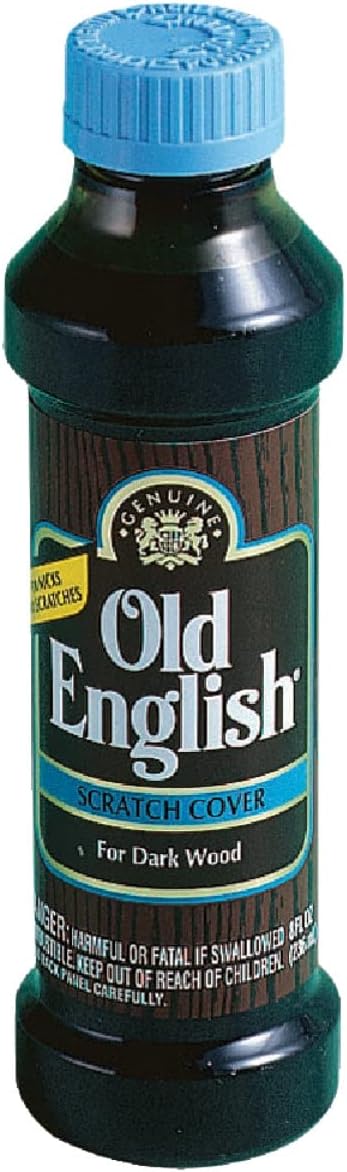
Old English Scratch Cover is a dark-wood polish designed to help hide scratches and nicks and restore the appearance of wood surfaces. The product details name kitchen cabinets, furniture, and wood paneling as uses, with dark woods such as walnut and cherry in mind. It may be useful around the home for coordinating furniture touch-ups, but the supplied details do not specifically list engineered flooring as an intended surface.
That distinction matters on a floor. A polish made for furniture may leave a different look or feel from the flooring’s original finish, and a treated patch can stand out under light or foot traffic. Check the floor manufacturer’s care instructions before applying it to engineered hardwood; if floor use is not approved, keep it for a suitable furniture surface instead.
Its main advantage is that it combines a dark scratch-covering treatment with a wood-polish purpose. It is a less direct fit for floors than Trade Secret, which explicitly lists engineered surfaces and flooring among its uses. As with any dark stain or polish, a discreet color test is prudent.
Pros:
- Made for dark wood tones such as walnut and cherry
- Designed to hide minor scratches and nicks on listed wood surfaces
- May suit furniture and cabinets that coordinate with a dark floor
- Available in formulas for light and dark wood
Cons:
- Supplied product details do not specify engineered floor use
- May not match a floor’s factory finish or sheen
Verdict: Pick Old English for appropriate dark wood furniture and cabinets; for an engineered floor, use it only if your flooring maker confirms that this type of polish is suitable.
4. Besezx Wood Grain Repair Tape: Best for a Small Patch Repair

Besezx is adhesive wood-grain tape that you cut to size and stick over a clean, dry surface. It is marketed for repairs to floors as well as cabinets, baseboards, doors, and furniture. Unlike a liquid concealer or marker, it covers the damaged area with a separate printed wood-grain layer.
The tape may make more sense on a small, low-visibility area or a vertical surface than in the middle of a busy floor. Even when the color and grain look close, a patch can differ in texture, sheen, or height from the surrounding factory finish. On a walking surface, the edge may also be noticeable or catch during cleaning, so consider how the repair will feel as well as how it looks.
Some users find the tape manageable to cut and apply, and its grain pattern can blend well on certain projects. However, matching a specific engineered hardwood plank is difficult without knowing the floor’s exact pattern. This is a cover-up option, not a way to restore the original finish.
Pros:
- Can be cut to cover a specific small area
- Wood-grain texture may blend better than a plain patch
- Product details list floor repair among its uses
- Does not require applying a liquid or wax filler
Cons:
- Grain and color may not match your flooring
- Raised or visible edges may be a concern on a high-traffic floor
Verdict: Consider the tape for a small, carefully matched patch where an overlay is acceptable, but avoid it if you need an invisible repair across a prominent walking area.
5. FlyBunny Markers and Wax Sticks: Best for Color Options and Minor Fills

This kit combines six touch-up markers with six wax sticks in colors including maple, oak, cherry, walnut, mahogany, and black. The markers are intended to add color to a scratch, while the wax sticks are meant to fill small defects such as scratches or gaps. Having both formats gives you more ways to address different kinds of marks than a single-color liquid does.
Color choice is useful, but a shade that looks right on the package may not match your floor’s grain or finish. Try the marker or wax on a hidden spot first, and use only a small amount. Wax can affect how a floor looks or how future maintenance products behave, so check the flooring manufacturer’s instructions before applying it to engineered hardwood.
The product is marketed for wood floors and furniture, but its details do not confirm compatibility with every engineered floor finish. It may suit someone looking for several color options for small touch-ups; it is not a substitute for repairing a large chip, a loose layer, or damage that extends through the finish.
Pros:
- Includes markers and wax sticks in several wood-tone colors
- Marker and stick formats address different types of minor marks
- Includes a sharpener for the wax sticks
- Product details list wood floors among its intended uses
Cons:
- Color matching may take trial and error
- Wax may not suit every engineered floor finish or care plan
Verdict: Choose this kit if you want multiple colors and both touch-up and minor-fill options, but check your floor’s care guidance before using the wax.
How to Choose a Scratch Cover for Engineered Hardwood
Start by identifying the kind of damage
A shallow mark in the finish is different from a scratch that exposes a lighter layer or a chip with missing material. Colorants and polish may reduce the contrast of a discolored scratch, but they do not replace missing wood or finish. For a deep gouge, consider a compatible filler or ask a flooring professional about repair options.
Check your floor’s color and grain
Match the product to the floor’s actual tone, not just its general color name. Dark stain products can make light or medium floors look blotchy, while markers and wax sticks may not reproduce the plank’s grain. Test a small amount in a hidden area and inspect it once it has dried or settled according to the product directions.
Confirm that the product suits the finish
Engineered hardwood can have different factory finishes, and a treatment that works on one surface may not work on another. Read the product label and your flooring manufacturer’s care guidance. Be especially cautious with furniture polish, wax, and adhesive tape if the product is not specifically approved for your floor.
Choose a format that fits the repair
A liquid concealer can cover discoloration over a small area, while a stick applicator can be convenient for light surface marks. Markers offer quick color touch-ups, and wax sticks can fill minor defects. Repair tape covers the surface with a separate layer, so it may be more noticeable than a color treatment.
Think about traffic and feel underfoot
A repair in the center of a frequently used walkway needs to look smooth and stay comfortable underfoot. A patch with a raised edge may be more noticeable than a small color variation. For a prominent or large damaged area, a professional repair may produce a better result than layering on a cover-up.
Use less product and build up slowly
Start with a clean, dry surface and follow the product’s directions. Apply a small amount, then check the color and finish before adding more. Wipe away excess when instructed. Avoid mixing products or applying another treatment over a spot until you know how the first one has affected the floor.
Frequently Asked Questions
What is the best way to cover a scratch on engineered hardwood?
For a small, discolored scratch, use a touch-up product that matches your floor and is approved for its finish. A color concealer may reduce contrast, while a deep scratch or gouge may need filling or professional repair. Always test in a hidden area first.
Can I use a dark scratch cover on a light engineered floor?
It is not a good match. A dark product can leave a visible stain on a light or medium floor. Choose a product in a close shade and test it somewhere discreet before treating the scratch.
Will a scratch remover fill a deep gouge?
Usually not. Products that conceal discoloration may make a mark less noticeable without replacing missing material. A deep gouge or chip may require a compatible filler or another repair method.
Can I use furniture polish on engineered hardwood floors?
Do not assume that a furniture polish is suitable for flooring. Check the product label and your floor manufacturer’s care instructions first. A polish may leave a different sheen or feel from the original finish.
Are wax sticks safe for every engineered hardwood floor?
No product can be assumed to suit every floor finish. Check the flooring maker’s guidance before using wax, and test the product in a hidden spot. Use only a small amount and follow the directions.
Does wood-grain repair tape make an invisible floor repair?
Not necessarily. The printed grain, color, texture, and sheen may differ from the plank, and the tape edge can be visible. It is best considered a surface cover rather than a restoration of the original finish.
Final Recommendation
For dark engineered hardwood with a small, discolored scratch, Trade Secret is the most directly matched option in this group because its product details specifically list dark engineered surfaces and floors. For light surface marks, the Tibet Almond Stick offers a simple applicator, while the FlyBunny kit provides several colors and a wax option for minor defects. Whichever you choose, confirm compatibility with your floor’s care instructions, test a hidden spot, and remember that a cover-up cannot replace material missing from a deep gouge.