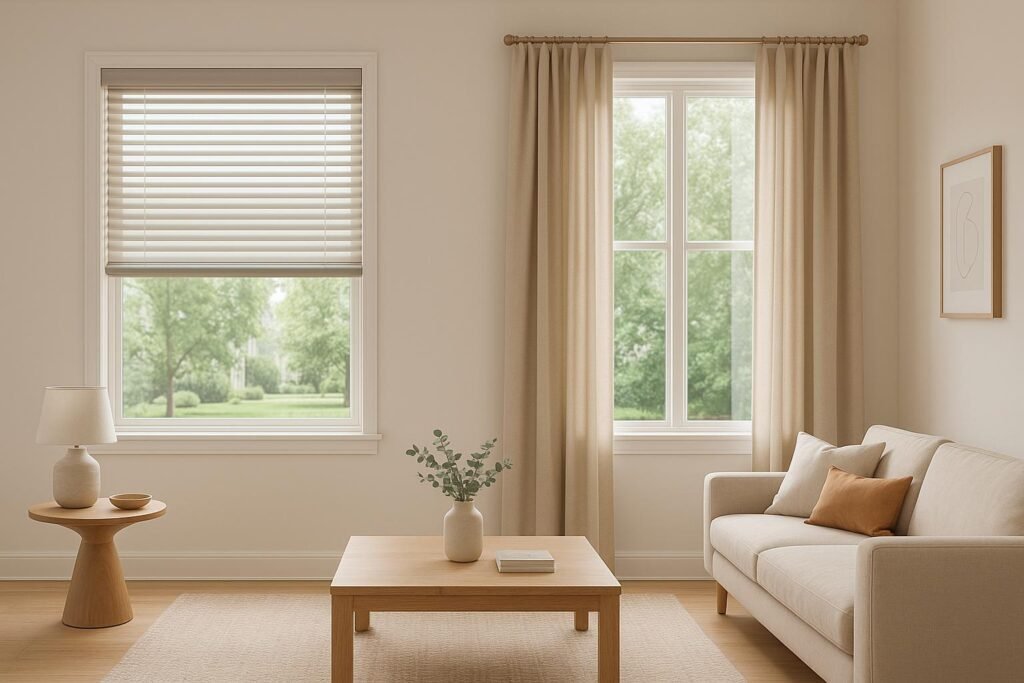
To keep daytime view out while letting daylight inside, hang semi-sheer linen or open-weave polyester curtains built to two times your window’s width. Choosing curtains that add privacy without blocking light is the best way to manage daytime glare and street visibility. You’ll learn how weave openness alters daytime visibility, how double rods give night protection, and the exact measurements needed for balanced coverage.
Table of Contents
Choosing curtains for privacy without blocking light
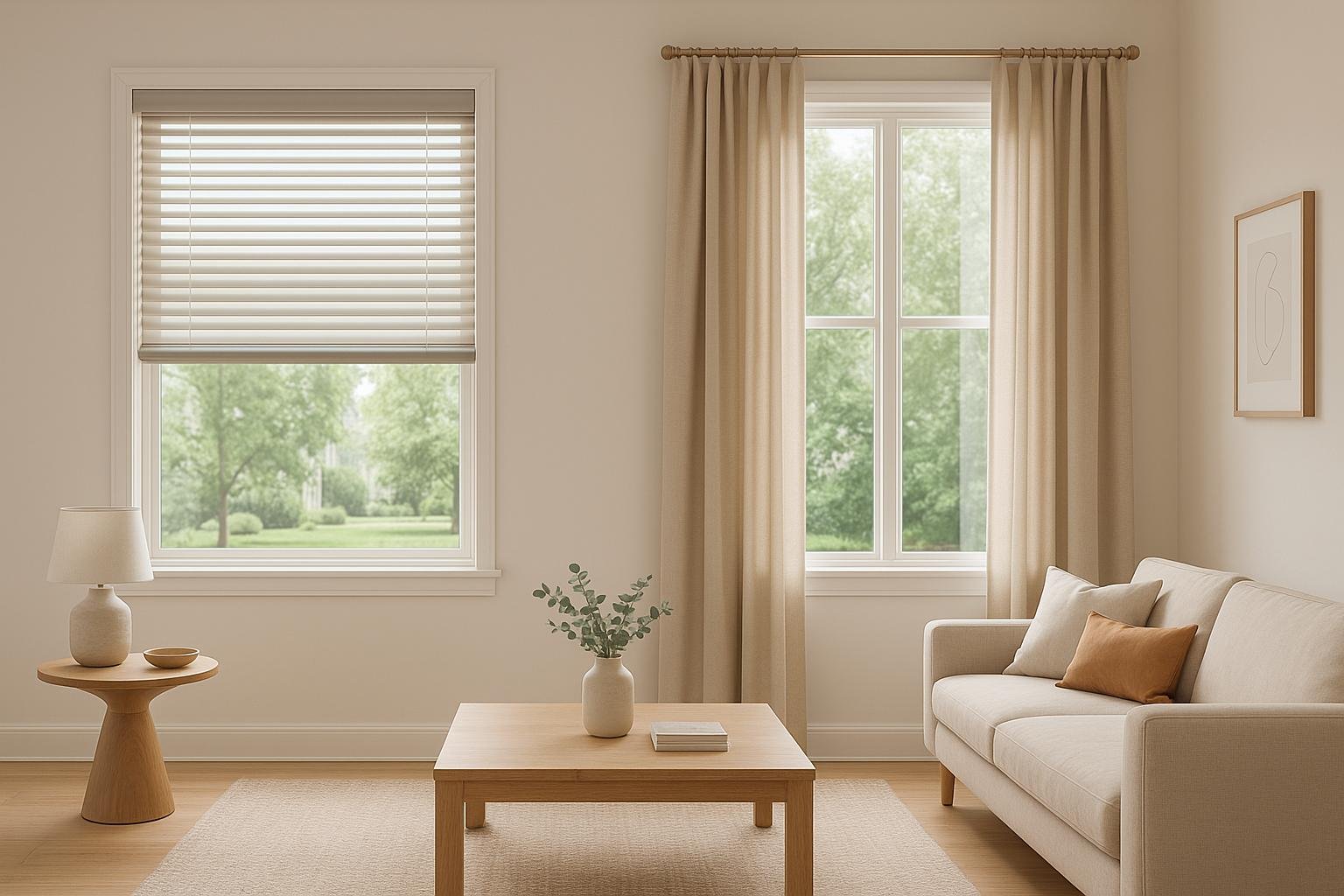
Semi-sheer curtains use open-weave fabric to blur shapes from the outside while allowing natural sunlight to pass through. People use them on street-facing windows, living rooms, and home offices where dark drapes make the room feel small. Many assume any white fabric stops people from seeing inside. That isn’t true.
Visibility depends entirely on light balance. The ability to see through a fabric depends on the ratio of light intensity on either side of the material. During the daytime, sunlight bounces off the outside of the weave, creating a visual barrier for people looking in. Once you turn on interior lights at dusk, the effect flips completely. People outside can see straight into your home if you don’t add a secondary layer.
The basic method
- Measure your window frame width with a steel tape, then multiply that number by 2 or 2.5 to calculate your total curtain panel width.
- Mount a double curtain rod 4 to 6 inches above the window trim, extending the brackets 3 to 5 inches past each side.
- Install an open-weave voile or lightweight linen drape on the inner rod closest to the glass pane.
- Hang an opaque, tightly woven drape on the outer rod to use when indoor lamps are turned on.
- Close the inner sheers fully during daylight hours, spreading the fabric evenly across the rod to keep folds uniform.
- Step outside your house at midday to check the interior visibility from the sidewalk.
- Pull the outer drapes shut at sunset before turning on bright ceiling fixtures.
The single judgement call that separates a good result from a bad one is matching fabric fullness to your street distance. If your window sits right on a busy sidewalk, use 2.5 times the fullness; if your window faces a private yard, 1.5 times is plenty. If your window trim contains old peeling paint in an older home, disturbing the trim may release lead dust. Stop work and consult a certified lead contractor rather than drilling dry holes into the frame.
Key numbers and settings at a glance
Selecting the right textile depends on your room orientation and daily sun exposure.
| Situation | What to use | How long | What to watch for |
|---|---|---|---|
| Street-level living room | Faux linen, 2.5x window width | Daytime only | Dark silhouettes if backlights stay on |
| South-facing home office | Textured batiste sheer | All day | Direct sun glare on computer screens |
| Ground-floor bedroom | Double rod: sheer plus blackout | Sheers day, blackout night | Nighttime visibility from exterior lamps |
What separates good results from bad ones
Hardware positioning and fabric fullness
Experienced decorators mount the rod high and wide. Placing brackets close to the glass frame restricts how much daylight enters the room. When you push panels open, the gathered cloth should rest against the wall, not over the glass.
Buying flat panels that only equal the window width leaves the material stretched tight. Flat fabric acts like a window screen, making indoor items easy to spot. Heavy gathers create shifting folds of shadow that block sightlines from the street. This varies by model — check the label to confirm whether the packaged width reflects a flat panel or a finished pleat.
Managing light sources across the room
Interior lighting ruins daytime privacy if it isn’t managed well. If you leave a bright hallway light on directly behind you, your silhouette becomes visible from the street even through dense sheers. Keep backlighting dim during the day. The trade-off with heavily textured fabrics is simple: you gain daytime seclusion, but you lose a fraction of your natural room brightness.
Common problems and quick fixes

When your fabric doesn’t perform as expected, quick adjustments usually solve the trouble.
| What you notice | What it usually means | What to do first |
|---|---|---|
| People see inside during the day | Fabric is pulled too flat | Add an extra panel to double the fabric folds |
| Room feels dark and gray | Weave is too tight or thread is dark | Switch to an unlined off-white open weave |
| Night shadows appear on the cloth | Interior lights sit between you and window | Turn off overhead lights; use low table lamps |
| Curtain edges curl inward | Hem weights are missing | Insert small lead-free drapery weights into bottom seams |
Window covering safety standards
Cords on window coverings pose severe strangulation hazards to young children. The Consumer Product Safety Commission window covering standard requires custom window coverings to be cordless or have inaccessible cords. If your curtain setup uses pull cords or tension loops, inspect them to confirm they meet federal safety guidelines.
Rental units and multi-family buildings often enforce specific guidelines regarding exterior aesthetics. Many homeowner associations mandate white or neutral backings on all street-facing textiles. Check your lease or association bylaws before purchasing patterned or dark sheers. If you must hardwire motorized drapery tracks, hire a licensed electrician to avoid fire risks.
Washing and fabric maintenance
Wash synthetic sheer curtains regularly to remove household dust that dulls the fabric. Machine-wash polyester voiles on a gentle cycle with cold water and mild detergent. Never toss them into a hot dryer, which melts delicate synthetic fibers. Hang them back on the rod while damp; gravity pulls the wrinkles out naturally without ironing.
Real linen sheers require dry cleaning or gentle hand-washing to prevent severe fabric shrinkage. Dust them regularly using your vacuum cleaner’s soft brush attachment on low suction. When you notice gray dust rings forming along the bottom hem, it’s time for a wash.
When to use a different approach
This curtain method isn’t for bathrooms with windows inside the shower stall. Damp fabric collects mildew fast; frosted glass or waterproof vinyl blinds work better there.
It also fails for shift workers who sleep during daylight hours. Sheers let daylight flood the room, which prevents deep daytime rest. Shift workers need dedicated four-pass blackout curtains or solid exterior shutters instead. Finally, if you lack space beside the window frame to stack drapery panels back, consider bottom-up cellular shades to keep lower sightlines blocked while keeping the upper glass open.
Frequently asked questions

Can people see through sheer curtains at night?
Yes. When interior lights are switched on after dark, the inside of your home becomes brighter than the outside. Anyone walking past can see movement and shapes clearly. You must pull an opaque shade or solid drape closed at night to keep your home private.
Are white sheers better for privacy than dark ones?
Yes. White and off-white fabrics reflect sunlight back outside, creating a bright surface that obscures the view into a room. Dark sheer fabrics absorb light and allow the eye to see past the threads more easily, reducing your daytime protection from neighbors.
How wide should my curtains be for good privacy?
Measure your window frame and multiply that width by two. If your window measures 40 inches wide, buy panels that total at least 80 inches across. Stretched-out panels lose their privacy because the fabric weave opens up when pulled flat across the glass.
Is linen or polyester better for letting in daylight?
Polyester lets in more consistent light because the synthetic fibers are smooth, thin, and uniform. Linen has thicker, uneven slubs that cast small shadows, slightly reducing light transmission. However, linen provides better daytime obscurity than basic polyester voile because of that same irregular texture.
Do semi-sheer curtains block UV rays from damaging floors?
No. Open-weave sheers diffuse harsh glare, but they allow significant ultraviolet radiation to pass through the threads. If you want to protect hardwood floors or art from fading, apply clear UV-filtering window film directly to the glass behind your decorative sheers.
Final Thoughts
Finding the right balance makes your home feel cozy and open all at once. Once you’ve picked your favorite fabric, grab a measuring tape and head to your windows to check your dimensions. You’ll love how a simple change creates a bright, private sanctuary that’s truly your own.