

To choose the right bathroom rug size, leave 4 to 6 inches of bare floor between the rug edges and your walls or fixtures. For standard single vanities, choose a 20×30 inch mat, but switch to a 24×60 inch runner for double sinks. This method suits anyone updating a residential bathroom with standard fixtures.
Table of Contents
Tools to choose the right size
- A metal tape measure with clear inch markings (cloth sewing tapes can stretch and cause errors).
- Blue painter’s tape (1.5-inch width works best) to map the outline on the floor.
- A notepad or phone to write down the exact dimensions.
- A standard door stop or cardboard wedge to hold bathroom doors while you check swing clearances.
- A floor cleaner and cloth to remove dirt before placing tape down.
Taping newspaper sheets together works well to test rug shapes on tile floors, but laying towels down doesn’t work because their soft edges bunch up and hide door clearance problems.
Step-by-step
- Measure your clear floor space using the metal tape measure, recording both the length and width of the open walking area.
- Subtract 8 to 12 inches from your total floor width and length to ensure you keep 4 to 6 inches of exposed floor tile around all sides. Tip: If you have a small powder room under 30 square feet, drop the border to 3 inches of bare floor so the rug doesn’t look like a postage stamp.
- Mark the calculated outer edges directly onto your bathroom floor using strips of painter’s tape.
- Swing every door, shower door, and low cabinet drawer across your taped outline to verify they glide freely without catching. Careful: Thick pile materials often catch on standard door sweeps; if a door hits your tape line, pick a flat-weave weave or choose a smaller mat that sits outside the door’s path.
- Measure the width of your vanity base cabinet, not the countertop overhang.
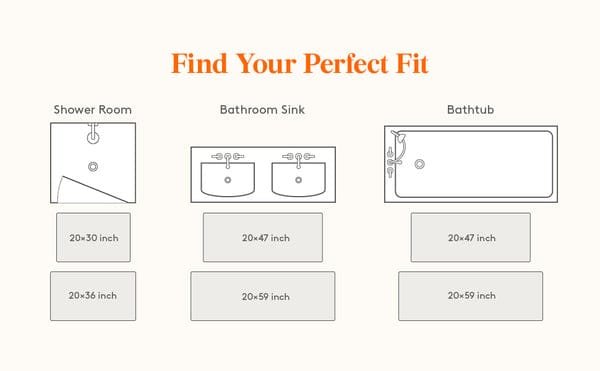
- Match your vanity width to a standard rug size: if your vanity is 24 to 36 inches wide, pick a 17×24 or 20×30 inch rug; if your vanity is 48 to 72 inches wide, choose a single 22×60 inch runner or two separate 17×24 inch mats. Careful: Never place a rug directly over an active in-floor heating vent, as covering metal registers restricts airflow and traps heat against the rug backing.
- Stand in front of your vanity and tub to confirm both feet land fully on the taped area during normal daily use.
Floor Layouts and Dimensions
Floor space, fixture spacing, and moisture levels change which mat profile works best in each space.
| Layout Type | Typical Size | Clearance Rule | What to Watch |
|---|---|---|---|
| Powder Room | 17×24 inches | 3 inches from vanity base and walls | Inward-swinging entry door clearing rug height |
| Single Vanity (36 in) | 20×30 inches | 4 inches bare floor on sides | Overlap with tub apron or toilet base |
| Double Vanity (60+ in) | 24×60 inches | Centered along full vanity width | Center seam catching on under-sink cabinet doors |
| Freestanding Tub | 24×40 inches | Parallel to tub, 4 inches out | Splashes soaking outer edges during tub entry |
| Walk-in Shower Base | 20×34 inches | 5 inches from drain threshold | Mat bunching against sliding glass door tracks |
It’s safer to buy a slightly smaller rug than to buy an oversized one that curls up against baseboards and creates a trip hazard.
How to tell you did it right
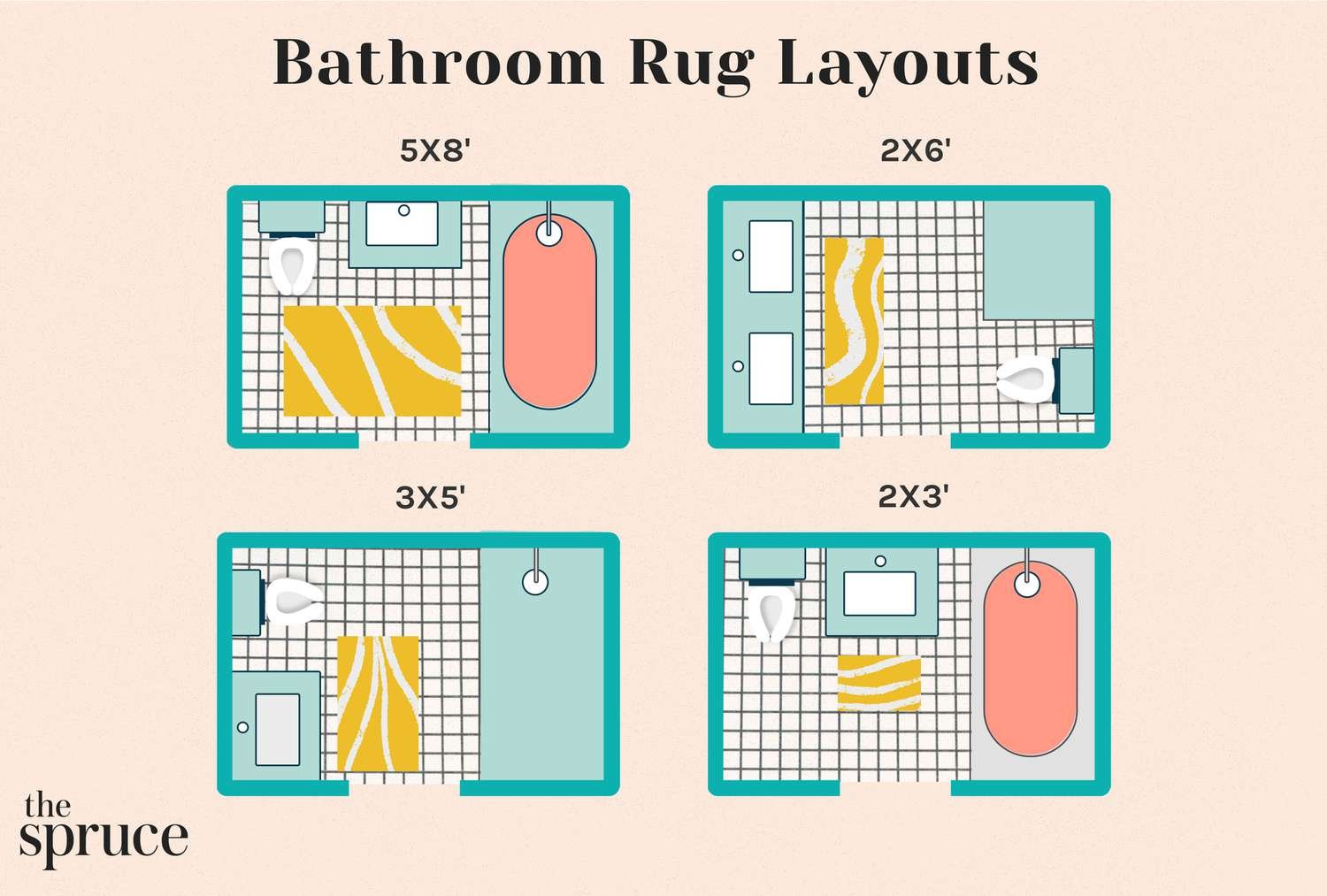
A correct setup displays an even frame of bare flooring around the entire rug perimeter, with all cabinet doors and room entry doors swinging shut without touching fabric edges. A poor result shows curled corners, folded fabric pressed against the toilet pedestal, or edges wedged beneath a door sweep. Rug edges bunch up and warp when people force oversized mats into tight wall-to-wall gaps. To prevent this, pick rugs with latex-free backings for damp spaces, maintain your perimeter gap to let air circulate across the tile, and hang wet mats over the tub rim after heavy baths.
Bathroom Safety and Maintenance Standards
The Consumer Product Safety Commission safety guidelines recommend using slip-resistant backings or non-skid pads under all household throw rugs to prevent serious fall injuries on wet, smooth surfaces. After laying down your rug, peel off the painter’s tape, sweep away residual grit, and ensure the backing grips the clean floor firmly. These measurements stay accurate until you remodel your vanity, add new storage cabinets, or replace swinging doors. This guide isn’t for commercial restrooms or ADA-compliant stalls; those spaces follow strict public building codes, and you must consult a licensed contractor or accessibility inspector for commercial installations.
Other ways to do it
Two Individual Accent Mats
Place one 17×24 inch mat at the vanity and another identical mat outside the shower. This keeps costs low and simplifies laundering, but it leaves open floor between fixtures that can get wet from dripping hands.
Wall-to-Wall Cut Bath Carpet
Cut custom washable carpeting to fit your entire bathroom shape around all fixtures. This provides maximum warmth underfoot on cold mornings, but the high installation cost and slow drying times make it vulnerable to mold.
Large Central Floor Runner
Run a single 2.5×8 foot flat-weave runner down the center aisle of a long, narrow bathroom. This unifies double sinks and walk-in tubs in one pass, though it requires hand-washing or commercial-sized laundry machines.
Frequently asked questions
Can a bathroom rug touch the bathtub?
No, keep your rug 2 to 4 inches away from the tub wall. Resting fabric directly against the tub apron traps trapped water pools underneath, which damages grout lines and rots the rug backing.
Is it safe to put a rug around a toilet base?
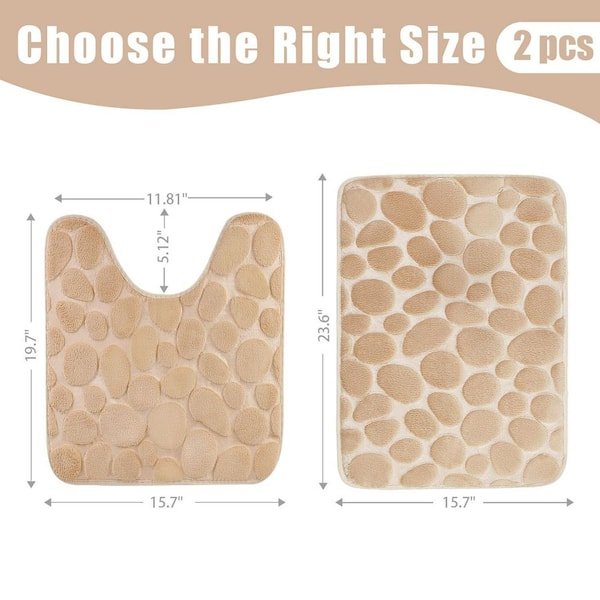
No, contour rugs that wrap around toilet bases trap germs and moisture, making them hard to keep sanitary. Place a standard rectangular 17×24 inch mat at least 4 inches away from the bowl instead.
What happens if a bathroom rug is too large?
An oversized rug curls up against wall moldings and catches under swinging doors. This curling ruins the rug shape, looks messy, and creates a serious trip hazard on slick bathroom tiles.
How long does a bathroom rug typically last?
Check the care label on your specific rug, because lifespan varies widely by pile material, wash frequency, and floor moisture. Most cotton and microfiber mats need replacement once the non-slip backing cracks or peels away.
Should I choose one long runner or two small mats for double sinks?
Choose a long runner if your vanity measures 60 inches or longer with uninterrupted floor space. Choose two separate 17×24 inch mats if an in-floor vent, laundry chute, or wall partition splits the floor between your sinks.
Can I wash bathroom rugs that have rubber backing?
Yes, wash them in cold water on a gentle cycle, but always air-dry them instead of using high heat. High dryer heat melts and cracks synthetic non-slip backings, which ruins floor grip.
Final Thoughts
Once you’ve measured your space, take a piece of painter’s tape and mark the dimensions on your floor. It’ll help you visualize the fit before you buy anything. You’ll find that seeing the shape in person makes it much easier to pick a style you’re truly happy with for years.






