Soaking paper towels in white distilled vinegar and pressing them against the dry porcelain for two hours is the most reliable way [how to remove limescale from toilet above waterline]. This method softens the crust directly without running down the bowl. It works best for renters and homeowners dealing with stubborn, chalky mineral rings above the water line.
Table of Contents
Gathering supplies to remove limescale
- Two cups of standard white vinegar (5% acidity).
- One roll of heavy-duty paper towels (cheap thin paper tears too easily).
- One pair of thick rubber cleaning gloves to protect your hands.
- One nylon toilet brush or non-scratch scouring pad.
- One pumice stone made specifically for porcelain (optional, for severe crust).
Lemon juice works well if you run out of vinegar, but bleach doesn’t dissolve mineral scale at all. If you plan to use industrial-grade muriatic acid for extreme cases, hire a licensed plumber instead, as those fumes pose severe health and ventilation hazards.
Step-by-step
- Shut off the water supply valve behind the toilet and flush once to drop the water level below your working area.
- Put on your rubber gloves and dry the crusty area above the waterline with an old rag so the acid doesn’t get diluted.
- Tear four to six sheets of paper towels into strips measuring about three inches wide.
- Pour two cups of white vinegar into a shallow bowl, dip the strips until saturated, and press them firmly against the crust under the rim and above the water.
- Leave the soaked towels in place for two hours; if the room is hot and dry, spray them with fresh vinegar every thirty minutes to keep them wet. Careful: Don’t let paper towels fall down into the drain hole, or you’ll cause a clog when flushing later.
- Peel away the towels, throw them directly into the trash can, and scrub the wet mineral line firmly with your nylon brush for two minutes. Tip: If X is light scale, a nylon brush removes it immediately; if Y is thick brown crust, switch to a wet pumice stone.
- Open the supply valve, let the tank refill, and flush the toilet twice to rinse the porcelain clean.
Matching the method to scale buildup
The thickness of the mineral crust decides how long you must soak the area and whether you need abrasive tools.
| Mineral crust severity | Time and tools required | Method adjustment | What to monitor |
|---|---|---|---|
| Thin white haze | 30 minutes; brush only | One cup vinegar; 2 towels | Fast drying on rim |
| Hard yellow ring | 2 hours; scouring pad | Two cups vinegar; full soak | Paper towels staying damp |
| Thick brown shelf | 4 to 8 hours; pumice stone | Citric acid paste overnight | Scratching the glossy glaze |
| Jet holes blocked | 1 hour; dental pick, spray | Direct vinegar spray into holes | Dripping onto bathroom floor |
Starting with a mild soak is far safer than attacking the porcelain with hard abrasives on the first try.
How to tell you did it right

A clean job leaves the porcelain feeling completely slick and smooth when you run a gloved finger over the rim. If you still see a dull band or feel a rough, sandpaper texture, mineral deposits remain. This method usually fails when the vinegar dries out before it can break down the calcium carbonate. If you rush the soaking time, the acid won’t dissolve the hard bond holding the minerals together. Keeping the paper towels fully wet the entire time, using full-strength acid, and scrubbing right after peeling the paper off prevents this problem every time.
Safety guidelines and clean-up
Clean tools thoroughly after use, rinse the nylon brush with warm water, and store acids away from children. Toss all used paper towels into the trash bin rather than flushing them down the pipe. A thorough descaling lasts until mineral deposits begin to accumulate again, which varies based on local water hardness and the frequency of water evaporation in the bowl.
Other ways to do it
Using a wet pumice stone
Rubbing a wet pumice stone against the dry deposit scrapes the scale off instantly without any soaking time. The stone must stay dripping wet, or it will permanently scratch the shiny porcelain glaze. It costs little effort, but you trade surface protection for speed.
Citric acid powder paste
Mixing equal parts citric acid powder and warm water creates a thick paste that clings to vertical porcelain. It works in about sixty minutes with less dripping than vinegar. This isn’t for homes with coloured vintage toilets, as strong acids can discolor old tints.
Commercial scale remover gel
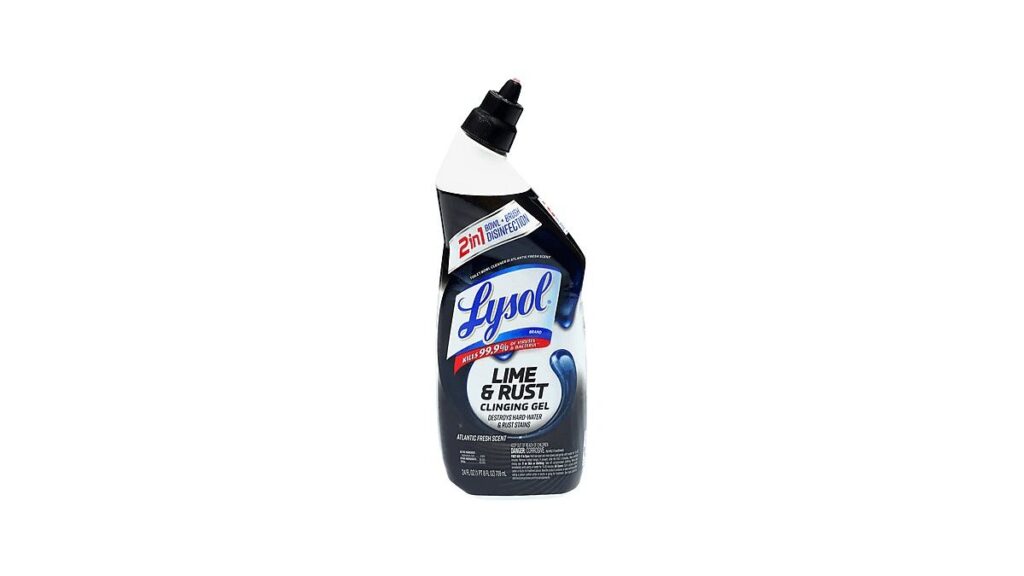
Thick commercial descaling gels stick directly onto vertical bowl sides without requiring paper towels. They work in fifteen minutes, saving time and mess. However, these concentrated chemical formulas release much stronger fumes and require open windows and bathroom exhaust fans while working.
Frequently asked questions

Can bleach remove hard water scale above the waterline?
No, bleach can’t dissolve hard water scale. Bleach is a disinfectant and an oxidizer, not an acid. It bleaches the dark stains within the mineral ring white so the crust becomes harder to see, but the full calcium layer remains completely stuck to the toilet bowl.
Why does limescale keep forming above the toilet water?
Small trickles of water run down the bowl from the fill valve or tank flapper between regular flushes. As this hard water slowly evaporates into the air, dissolved minerals like calcium and magnesium stay behind, forming solid crystalline layers on the exposed porcelain.
How long should vinegar sit on toilet limescale?
Two hours is the standard time for mild to medium mineral deposits above the waterline. For extremely thick, dark brown build-up, let the vinegar-soaked paper towels remain against the porcelain overnight, keeping them moist with a small spray bottle.
Is it safe to scrape toilet limescale with a metal razor?
No, metal razor blades usually scratch or strip the vitreous china glaze. Once you scratch this glossy protective seal, future mineral deposits stick deeper into the porous base material underneath, making the bowl far harder to keep clean in the future.
What happens if you flush paper towels down the toilet?
Paper towels will clog your home drain line because they don’t break down in water like regular toilet paper. Throw every soaked towel straight into a garbage bag, or you’ll risk paying high emergency plumbing bills to clear a blocked sewer line.
Final Thoughts
Once the surface looks clean, give the area a quick scrub with a nylon brush to clear away any remaining residue. You’ll find that keeping a spray bottle of vinegar nearby makes weekly maintenance much easier. It’s a simple habit that’ll keep your porcelain looking bright and fresh for months to come.
Related guides