
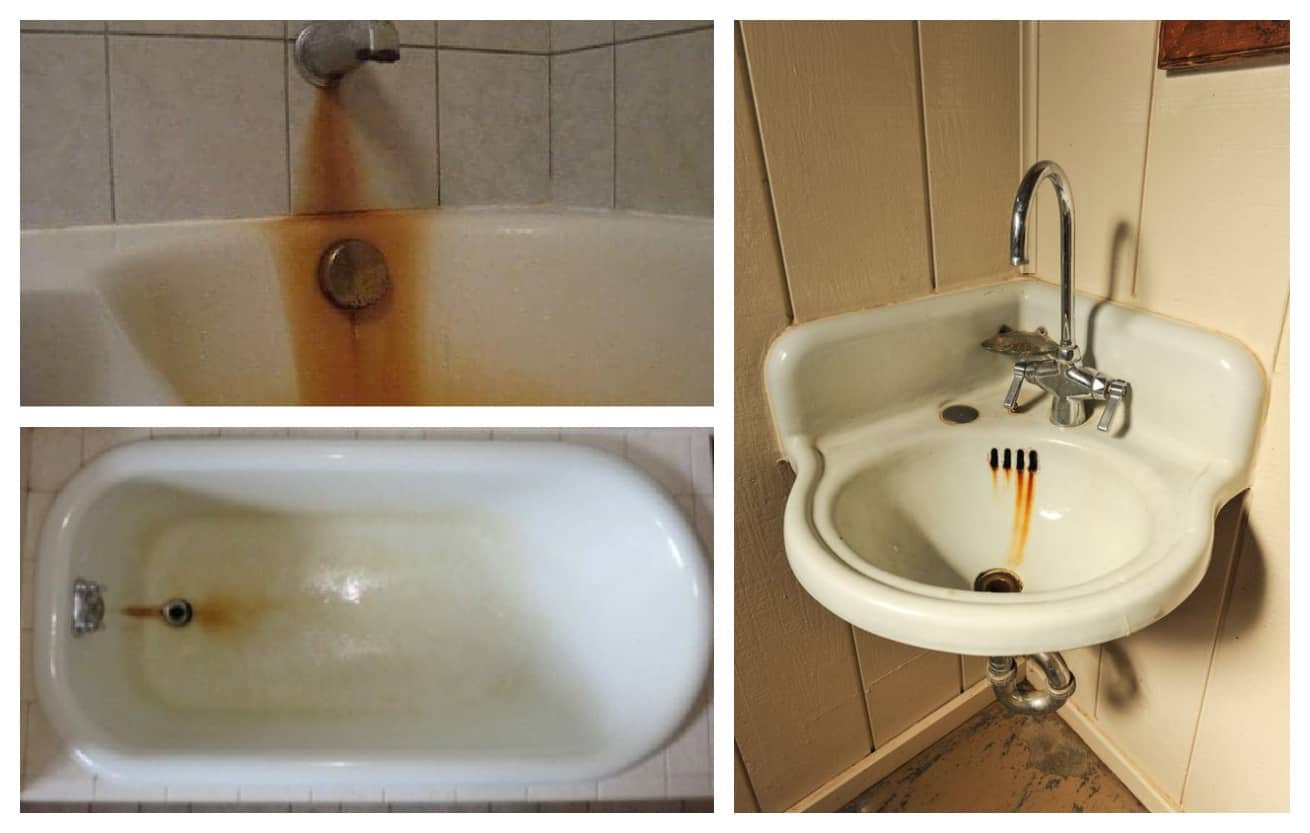
To remove rust stains from bathroom sink fixtures, apply an acid paste of baking soda and lemon juice and leave it for thirty minutes. The whole job takes about 45 minutes from start to cleanup, costs under five dollars using household items, and rates as easy on porcelain or ceramic surfaces. You don’t need special skills, but you must have a non-abrasive sponge before starting so you avoid scratching the smooth glaze.
Table of Contents
Supplies to remove rust stains

| Item | How much | Why it’s needed | A substitute |
|---|---|---|---|
| Baking soda | 2 tablespoons | Creates a thick cleaning paste base | none — don’t swap this |
| Lemon juice | 1 to 2 tablespoons | Acid dissolves oxidized iron deposits | Distilled white vinegar |
| Microfiber cloth | 2 clean cloths | Wipes surface dry without lint | Clean cotton rag |
| Soft sponge | 1 non-scratch pad | Lifts loosened rust without damage | none — don’t swap this |
| Rubber gloves | 1 pair | Shields hands from natural acids | Nitrile cleaning gloves |
| Small bowl | 1 bowl | Holds the mixed cleaning paste | Plastic cup |
Before you start
- Turn off the water supply under the basin so no drips thin your paste while it sits.
- Remove soap bars, bottles, and toothbrushes from the counter so acids don’t spill onto them.
- Wipe the basin completely dry with a towel, because standing water stops the paste from gripping the stain.
- Check your basin material: this method works on porcelain and ceramic, but natural stone needs neutral pH stone cleaners to prevent surface etching.
- If a rusted cast iron pipe beneath the drain is crumbling, stop immediately and call a licensed plumber instead of cleaning the surface.
Step by step
- Put on your cleaning gloves to keep the citric acid from drying out your skin during the job. The gloves are on properly when your fingers move freely and your skin stays covered.
- Pour 2 tablespoons of baking soda into your small mixing bowl. You know you have the right amount when it forms a small mound in the center.
- Add 1 tablespoon of fresh lemon juice into the bowl and stir gently with a spoon. You’ll know it worked when the initial bubbling settles into a spreadable, wet paste.
- Spoon the entire mixture directly over the rust stain, spreading it about one-quarter inch thick. The step worked when no orange rust peeks through the white paste.
- Leave the paste undisturbed on the stain for 30 minutes. You know the resting time worked when the edges of the paste turn dry and slightly crusty.
- Wet your soft sponge with warm tap water and squeeze out any excess liquid. The sponge is ready when it feels damp but doesn’t drip when held over the sink.
- Scrub the coated stain using firm, circular pressure for two full minutes. You’ll see the paste pick up a faint orange tint as the mineral lifts off.
- Rinse the basin thoroughly with warm water from a cup or faucet for 30 seconds. The rinse is done when every trace of white powder vanishes down the drain.
- Dry the entire treated area firmly with a clean microfiber cloth. You know this final step worked when the ceramic feels dry to the touch and shows no wet streaks.
How to know it worked

Check the basin under strong bathroom lighting once the surface is completely dry. Success shows up as a uniform, bright white or colored finish across the basin floor, matching the surrounding porcelain with zero orange tint remaining. Run your bare fingers across the treated area; it should feel completely smooth, without gritty mineral textures. If you still spot a faint orange halo, the iron penetrated deeper into old glaze pores, so the sink needs a second 30-minute round. A common mistake people actually make is grabbing chlorine bleach to lighten that leftover tint, which oxidizes the iron further and permanently sets the stain a dark brown. That mistake can ruin an antique basin and cost hundreds to replace.
If something goes wrong
| What happened | Why | What to do |
|---|---|---|
| Stain didn’t fade | Rust layer was too thick | Repeat paste and wait forty minutes |
| Surface looks dull | Abrasive scrubber scratched the glaze | Polish area with gel automotive wax |
| Paste slid away | Basin was wet before application | Dry sink and reapply thicker paste |
| Orange ring spread | Dripping faucet diluted the cleaner | Fix faucet washer before cleaning |
| Metal drain darkened | Acid stayed on chrome plating | Rinse instantly and wipe with water |
How often to do this
Treat your sink regularly if you live in an area with hard water containing high dissolved iron. According to the USGS page on hard water, dissolved minerals like calcium, magnesium, and iron settle on surfaces whenever moisture evaporates. If your water runs clear and contains low mineral levels, you’ll likely only need this cleaning whenever small rings form under metal soap tins. Two things alter this schedule quickly: an unresolved faucet drip that keeps the porcelain wet, and the mineral grains in your specific municipal or well supply.
Frequently asked questions
Can I use bleach on rust stains?
No, bleach makes rust stains worse. Chlorine bleach acts as an oxidizer, which reacts chemically with the iron particles in the stain. This reaction turns the iron into dark red rust that bonds permanently into the basin glaze.
Why does rust keep coming back to my sink?
Rust returns because your water contains high amounts of dissolved iron, or your steel pipes are corroding inside. As water sits around the drain and slowly evaporates, the exposed minerals oxidize in the air, creating a fresh orange ring whenever they accumulate.
How long can I leave lemon juice on the porcelain?
About 45 minutes at most. While mild acids like lemon juice dissolve iron, leaving them on porcelain or old enamel for hours can slowly erode the glossy topcoat. Always rinse the acid off within the hour to protect the shine.
Is it safe to use steel wool on porcelain sinks?
No, steel wool is too hard for glossy porcelain surfaces. The metal fibers gouge fine scratches across the protective finish, creating rough grooves that trap dirt. Even worse, tiny steel wool threads break off, lodge in the scratches, and rust quickly.
What happens if I use this method on marble?
The acid will permanently etch and ruin the marble surface. Acidic liquids like lemon juice or vinegar chemically dissolve calcium carbonate inside natural stone, leaving dull, rough spots. If your basin is porcelain, use this acid paste; if it’s marble, buy an alkaline stone cleaner instead.
Does a rusty stain mean my sink is ruined?
No, the rust is almost always an external layer sitting on top of the glaze rather than damage to the bowl itself. Unless the underlying iron of a vintage cast-iron basin has chipped and bubbled open, household mineral deposits wipe away with the right acid.
Final Thoughts
Once the surface is clean and dry, you’ll want to keep it that way. Wipe your fixtures down with a soft cloth after each use to prevent moisture from sitting on the metal. It’s a simple habit that’ll save you from having to scrub away those stubborn orange marks again.