
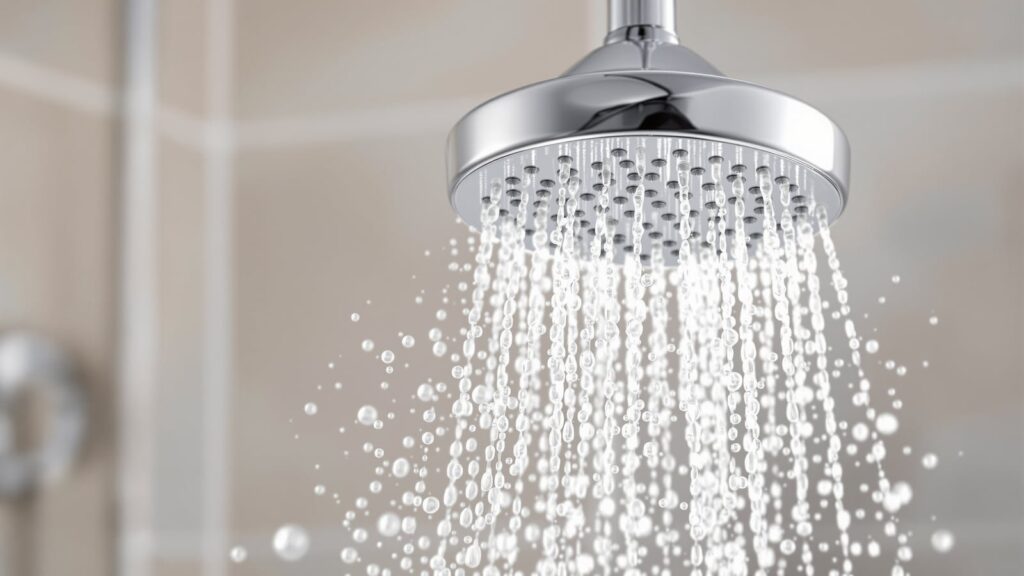
To save water with low flow showerheads that still feel great, pick an aerated or laminar fixture rated at 1.5 to 1.8 gallons per minute. Water enters from your home pipe under pressure, passes through a narrow restrictor plate, and mixes with air or splits into tight streams. The fixture pushes smaller droplets faster against your skin, so you rinse soap quickly while cutting your hot water volume by a third.
Table of Contents
How showerheads save water while flowing

| Part or input | What it does | What you notice when it goes wrong |
|---|---|---|
| Flow restrictor | Limits water passage to a set rate | Water trickles weakly if clogged with debris |
| Aerator chamber | Pulls air into water to boost spray bulk | Mist feels cold before touching your body |
| Laminar nozzles | Creates parallel streams without mixing room air | Spray pattern shoots sideways or splits unevenly |
| Mesh sediment screen | Catches pipe rust before it hits small holes | Total pressure drops sharply across all spray settings |
| Swivel ball joint | Lets the showerhead angle toward your body | Water drips from threaded collar onto the wall |
What happens, step by step
- You open the shower handle, which lets pressurized water leave your home supply lines and climb the vertical riser pipe inside the wall over 2 to 3 seconds.
- Water hits the mesh screen at the head inlet, where wire mesh traps loose mineral flakes and solder grit larger than a grain of sand within 1 second.
- The stream squeezes through the rubber or plastic restrictor disc, dropping the flow from 2.5 gallons per minute down to 1.8 or 1.5 gallons per minute immediately.
- In an aerating head, fast-moving water creates a vacuum that pulls bathroom air through tiny side vents, blending air into the liquid over a fraction of a second.
- In a non-aerated laminar model, water routes into dozens of narrow silicone nozzles that shape individual solid streams instead of drawing in room air.
- The pressurized droplets exit the faceplate at high velocity, traveling 2 to 3 feet through the air to hold their heat and hit your skin with firm rinsing force.
Why this matters when something goes wrong
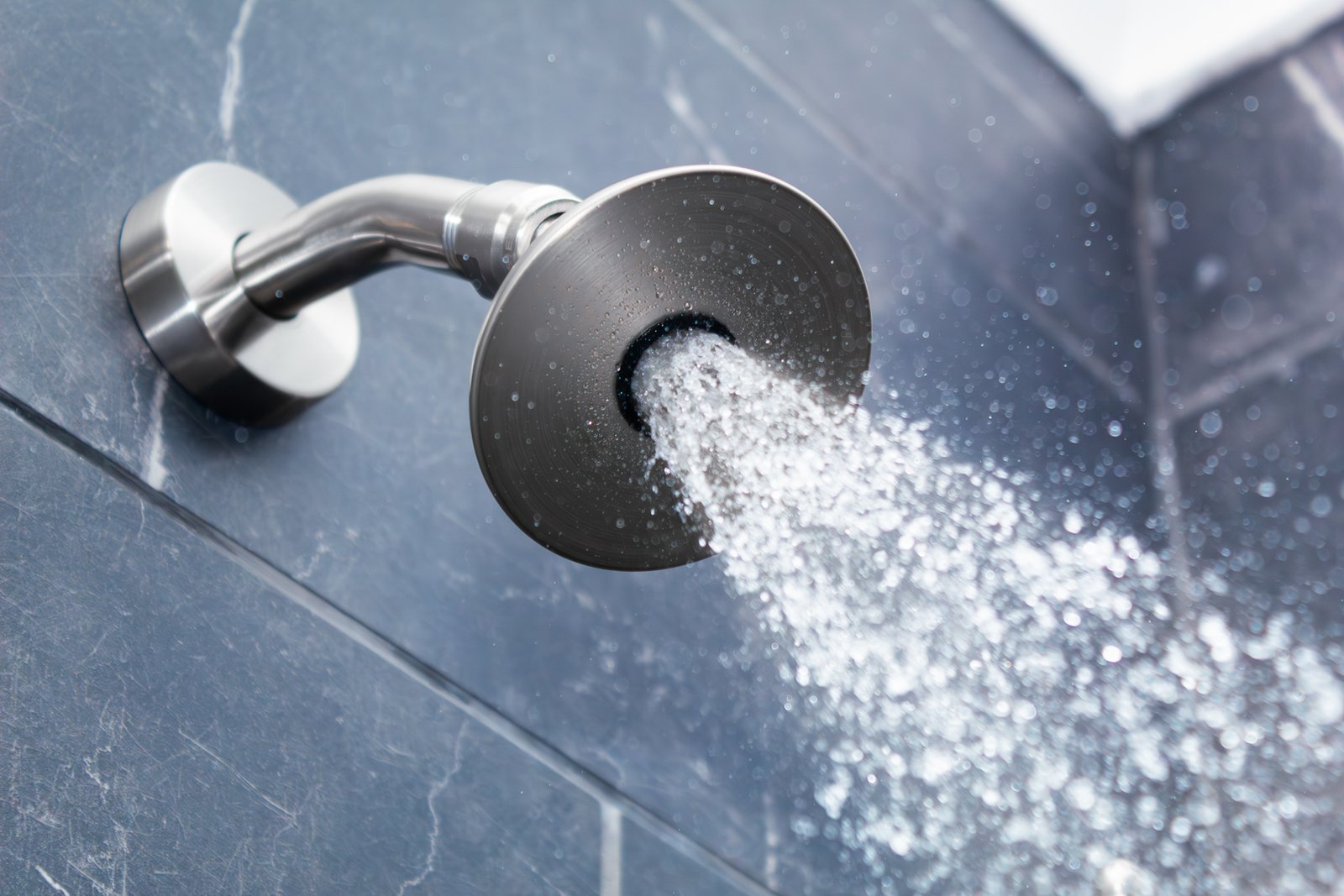
A weak spray usually points to a clogged inlet screen rather than a poor showerhead design. Mineral scale builds up inside tiny restrictor ports within 6 to 12 months in hard water areas. When that happens, flow drops below 1.0 gallon per minute, which leaves you with a cold, hollow mist that fails to wash shampoo from thick hair.
Mist feels cold because aerating models pull ambient bathroom air directly into the stream. If your bathroom stays chilly, those tiny droplets cool off before they reach your shoulders. Choosing laminar heads prevents this heat loss because they don’t draw in air. Check your certification label before buying: models meeting the EPA WaterSense showerhead specification deliver no more than 2.0 gallons per minute at 80 pounds per square inch while meeting strict spray force minimums.
If X shows full pressure in the bathroom sink, clean the showerhead screen; if Y shows weak flow at every tap, the fault sits in your main pressure regulator. Skipping thread seal tape during install is a frequent mistake people actually make, and it costs them ruined drywall from water running down behind the wall arm. Note that this varies by model — check the label for exact flow ratings.
What you can change, and what you cannot
What you control
- The spray pattern setting on multi-function faceplates to balance coverage area and stream punch.
- Clear mineral buildup on nozzles by wiping flexible silicone tips with your thumb regularly.
- The water temperature at the wall valve to compensate for breezy air drafts inside your shower stall.
- The angle of the head on its swivel joint to reduce the distance water flies through cold air.
What is fixed by design
- The maximum gallon-per-minute limit drilled into the internal flow restrictor plate.
- The home incoming water pressure supplied by your city main or private well pump.
- The internal diameter of the shower arm pipe coming out of the bathroom wall.
If pipe threads snap inside your wall or main supply pressure sits below 30 psi, stop work and hire a licensed plumber to avoid flooding your home framing.
Getting more out of it
Pick a smaller faceplate diameter, around 3 to 4 inches, if your home has lower water pressure. A wide 8-inch rain head spreads the same 1.5 gallons per minute across too many holes, turning a firm rinse into a weak drizzle.
Angle the shower face so the spray travels under 24 inches to your skin. Droplets shed heat rapidly once they hit the open air, so keeping the path short keeps you warm without cranking the hot tap higher.
Rinse long hair by switching the faceplate to a focused center pulse pattern for 30 seconds. This concentrates your 1.8 gallons per minute into a tight pattern that clears conditioner fast.
Soak the removed fixture in a bowl of 50/50 warm tap water and white vinegar as part of your usual clean to dissolve hidden calcium crystals inside the restrictor.
Frequently asked questions

Can a low flow showerhead damage my water heater?
No, it won’t hurt your water heater. It actually reduces wear on the tank because the burner runs for fewer minutes per shower. However, some tankless heaters need a flow rate above 0.5 gallons per minute to trigger their ignition switches, so check your heater’s manual before using extreme restrictors.
Why does my low flow shower feel cold?
Your fixture is likely an aerating design that mixes room-temperature air directly into the water stream. As those tiny, air-filled water droplets travel from the shower arm to your skin, they lose heat quickly. You can fix this by swapping to a non-aerating laminar showerhead or lowering the showerhead height.
Is it safe to remove the flow restrictor?
Yes, it’s physically safe, but it defeats your water savings and may violate local building codes. Tampering with the plastic valve inside the collar often damages the rubber O-ring seal. Once that seal tears, pressurized water sprays backward out of the swivel ball joint and runs down your tile.
How long does a low flow showerhead last?
About 5 to 10 years under normal indoor municipal water conditions. Heavy lime, iron, or calcium scale in untreated well water can clog the tiny internal nozzles much sooner. You’ll know it’s time to replace the unit when mineral crust cracks the plastic faceplate or strips the joint threads.
Does a low flow showerhead work with low pressure?
No, low flow heads need solid supply pressure to generate their rinsing speed. If your plumbing delivers under 30 pounds per square inch, a standard water-saving head will feel frustratingly limp. Look specifically for fixtures built for low-pressure homes, which use narrower nozzle channels to accelerate water without choking the flow.
What happens if I use thread tape incorrectly?
Water will seep through the pipe threads and run down the wall arm into your wall cavity. Always wrap the white PTFE tape clockwise around the male arm threads 3 to 4 times. Wrapping counterclockwise causes the tape to bunch up and peel off as you twist the new fixture into place.
Final Thoughts
Upgrading your bathroom doesn’t have to be a chore, and you’ll notice the difference during your very next rinse. Once you’ve installed your new fixture, take a moment to enjoy the steady, refreshing pressure. It’s a simple change that’ll make your daily routine feel better while helping the planet stay green.
Related guides
- Cheapest Place to Buy Toilet Paper Near Me: Where to Save
- Bathroom Sink Filling With Water By Itself: How to Fix It
- Clever Towel Rack Ideas That Save Space in Small Bathrooms






