Flushing the toilet before using it clears invisible biological film, lingering chemical cleaner, and trapped sewer gases from stagnant bowl water. This single flush protects your skin from splashing dirty water, but only when you shut the lid first to stop airborne particles from coating the seat.
Table of Contents
Why you should always flush first

- Flush before sitting whenever bowl water looks cloudy, smells stale, or has rested for over 8 hours.
- Lower the lid completely before pressing the handle so water drops don’t escape into the room.
- Check the water level right after flushing; an overflowing bowl means an active drain clog.
- Skip pre-flushing in severe drought regions or when local water authorities order emergency utility cuts.
- Wait about 60 seconds after the flush so the tank refills and the siphon jet can function properly.
Why standing bowl water gathers hazards
Standing toilet water isn’t clean water. Even when the porcelain looks clear, resting water breeds bacteria from the trapway below. When someone cleans the bathroom, harsh agents like bleach or hydrochloric acid settle in the water at the base; if you sit down and urine hits that chemical pool, it kicks up toxic vapors right beneath you.
Worse, sewer vents can fail or dry out, which lets sewer gas bubble through the water seal. A fast preliminary flush empties that old water and brings in a fresh barrier from the supply line. Research on bathroom air hygiene from the CDC guidelines for environmental infection control explains how contaminated surfaces and plumbing fixtures gather opportunistic pathogens that move through water and air.
There’s a clear trade-off here: you spend roughly 1.6 gallons of tap water on an extra flush, but you gain immediate safety from skin contact and noxious airborne fumes. A simple decision rule applies: if the toilet seat feels cold and has sat unused for hours, flush it once; if someone just exited the stall seconds ago, skip the pre-flush. Keep in mind, this varies by model — check the label inside your tank lid to see if your unit uses older, heavy-volume gallons or high-efficiency valves.
When the answer is different

Several common bathroom situations require changing or skipping this habit entirely.
| Situation | What changes | What to do instead |
|---|---|---|
| Bowl water is near the rim | The drain line is blocked | Stop and use a plunger |
| Drought emergency in your town | Municipal rules penalize heavy water waste | Skip pre-flush and wipe seat |
| Out-of-order tag on stall | Valve or fill mechanism broken | Find another working restroom stall |
| Toilet has no lid attached | Flushing launches water droplets outward | Wipe rim, use paper cover |
| Tank makes loud hissing noise | Flapper or fill valve failed | Turn off water shutoff valve |
| Pit latrine or outhouse | No water tank or flush valve exists | Check bench area for insects |
How to do it properly
- Look at the bowl line for 5 seconds to ensure the water level sits at normal depth, not near the rim.
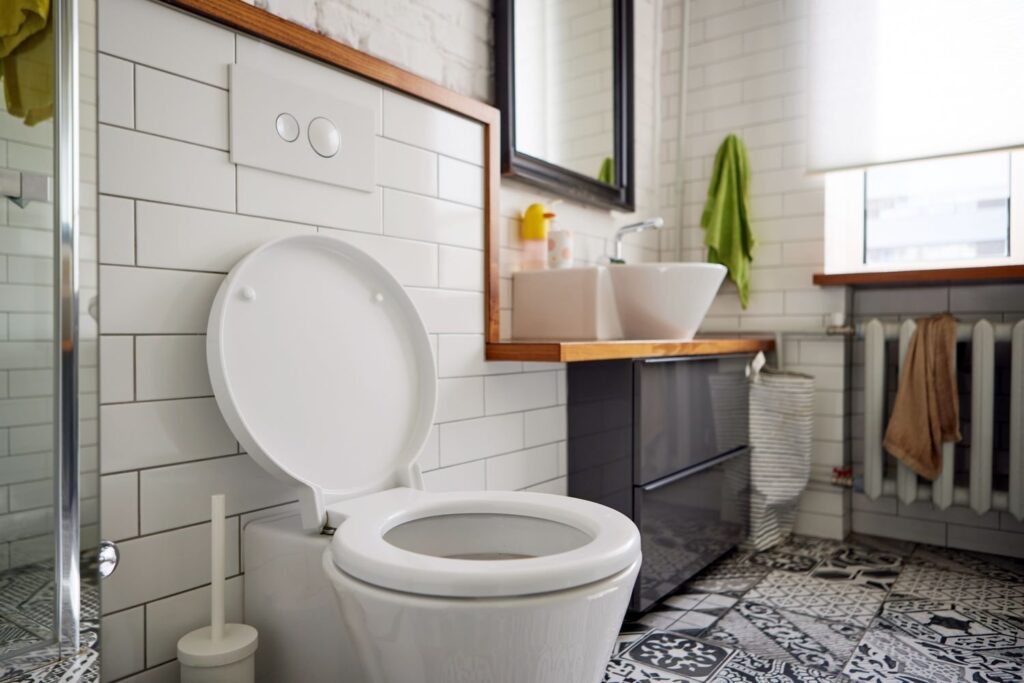
- Put the lid down flat over the rim so droplets can’t fly into the air when the valve trips.
- Push the flush lever down firmly for 2 seconds to release a full volume from the tank into the bowl.
- Listen for 15 seconds to confirm water drains out rapidly instead of backing up toward the rim.
- Lift the lid and inspect the bowl for 3 seconds to verify fresh, clear water filled the bottom.
- Wipe the plastic seat with one dry paper towel sheet if stray water drops settled on the top.
- Sit down to use the toilet only after the fill valve stops running and the tank goes quiet.
The mistakes that ruin it
- Flushing with the lid wide open lets microscopic aerosol droplets launch onto your clothes, nearby towels, and the seat surface.
- Pressing the lever when the water level is already high will push contaminated water onto the bathroom floor within 10 seconds.
- Ignoring a slow-draining bowl means the waste from the previous user stays trapped in the bottom bend right beneath your skin.
Frequently asked questions

Can flushing before using stop diseases?
Yes, it reduces your contact with germs resting on the bowl surface. Stagnant toilet water hosts bacteria from earlier users and drain lines. Flushing swaps that dirty fluid for clean water from your supply pipes, stopping dirty splashback from touching sensitive areas of your skin.
Why do public toilets lack lids?
No commercial code requires lids, mainly to keep stalls easy to sanitize and reduce broken hardware. Without a lid, pre-flushing blows fine spray into the stall air.
How long does a tank take to refill?
About 60 to 90 seconds under normal home water pressure. If you flush immediately before sitting, wait one full minute before flushing your own waste. Rushing the second flush gives a weak rinse because the tank hasn’t collected enough water to clear the bowl.
Is it safe to pre-flush with bowl cleaner inside?
No, never flush cleaner right before sitting down. Cleaning products contain concentrated bleaches or acids that splash upward during turbulence. Let the cleaning chemical sit, flush it with the lid closed, wait two minutes for fumes to clear out, and then use the toilet safely.
What happens if the toilet bubbles during the flush?
A bubbling bowl points to a blocked sewer vent or an obstruction in your waste pipe. Air gets trapped behind moving water and forces its way backward into the room. If bubbles appear, stop using that toilet and snake the drain line or call a licensed plumber.
Does it matter if I skip the pre-flush at home?
No, skipping it’s fine if you cleaned the bowl that morning and live alone. This habit matters most in guest restrooms, office buildings, or hotel rooms where strangers use the plumbing and you can’t tell what chemicals or germs linger in the trap.
Final Thoughts
Making this quick habit part of your routine keeps your bathroom feeling fresh and hygienic. You’ll feel much better knowing your space is truly clean every time you sit down. Give it a try tomorrow morning; you won’t want to go back to your old way of doing things once you start.