
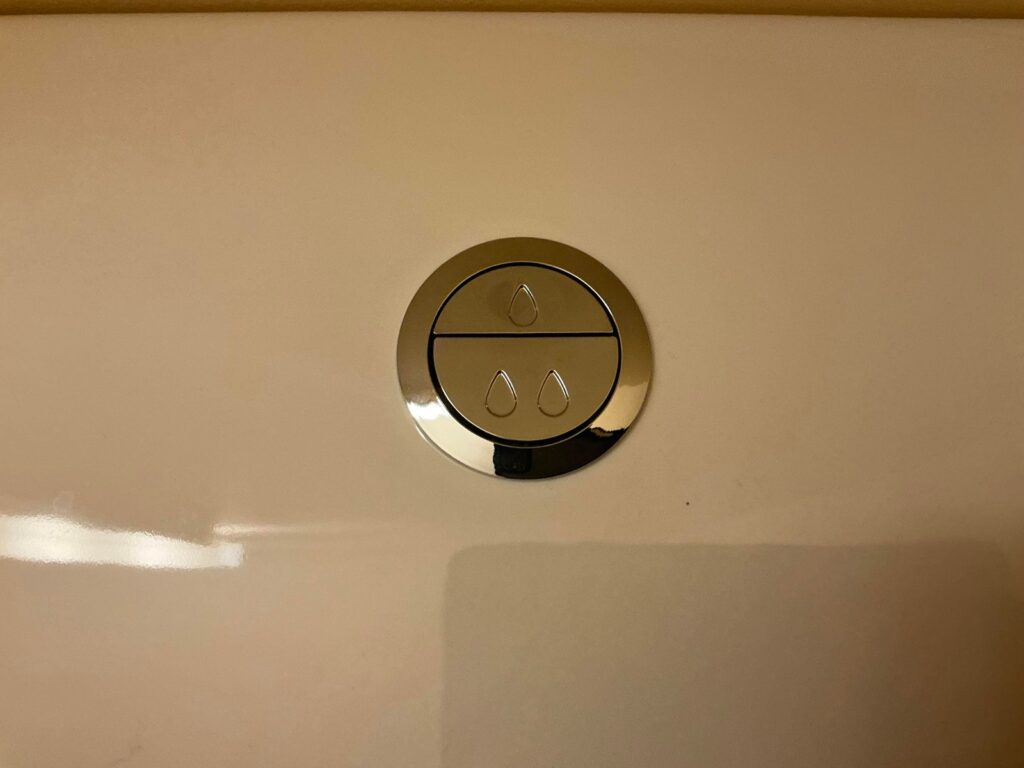
A full flush occurs when you push both buttons on a dual flush toilet, because the larger flush mechanism simply overrides the smaller half-flush setting. Pressing both down forces the central flush valve all the way open, which dumps the entire contents of the cistern into the bowl. No extra water comes out, nothing explodes, and the mechanism resets just like normal once the water level drops.
Table of Contents
How pushing both buttons works
| Part or input | What it does | What you notice when it goes wrong |
|---|---|---|
| Half-flush button | Triggers light rinse for liquid waste | Weak flow leaves waste behind in bowl |
| Full-flush button | Triggers complete empty for solid waste | Toilet clears slowly or fails to siphon |
| Flush valve rods | Push down on internal release levers | Buttons stick down or feel completely loose |
| Silicone seal washer | Keeps stored water inside the cistern | Water trickles constantly into the bowl |
| Dual-flush valve | Controls how long the flapper stays up | Cistern drains fully no matter which pressed |
| Fill valve | Refills the cistern to set line | Tank hisses constantly or refills too slowly |
What happens, step by step
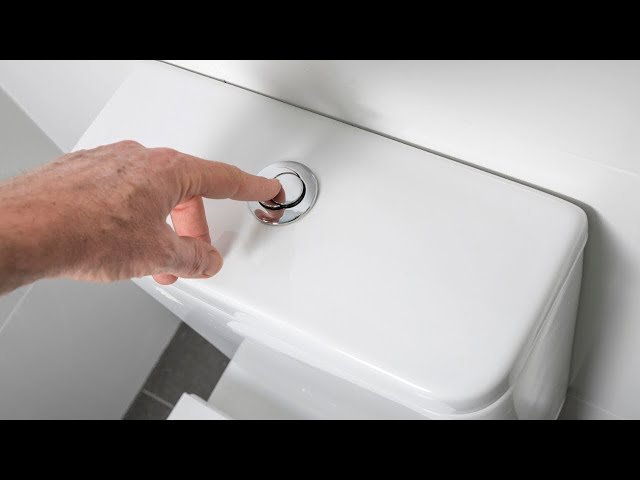
- Your fingers push both buttons down together against the lid, which takes about one second and forces both push-rods beneath the lid down at the exact same time.
- The rods push against the valve levers inside the tank, lifting the central seal completely off the bottom outlet in under half a second.
- The full-flush catch engages automatically because the deeper lever stroke overrides the shorter catch, holding the entire flush column up regardless of the half-flush position.
- Water empties rapidly through the outlet into the toilet bowl, taking two to three seconds to drop roughly 1.6 gallons under standard household water pressure.
- The internal float drops with the falling water line, which releases the flush valve column so the bottom seal falls shut against the base.
- The fill valve opens fully as its float hits the bottom, sending fresh water into the cistern over roughly 35 to 45 seconds until it reaches the preset fill line.
Why this matters when something goes wrong
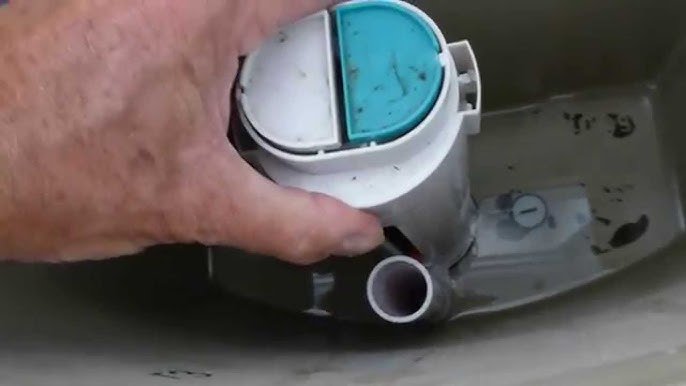
Pushing both buttons won’t break a toilet, but doing it regularly reveals mechanical wear that hides during normal use. The buttons connect to the internal valve using threaded plastic rods. A common mistake people make is jamming both buttons sideways when pressing with a flat palm, which snaps the thin plastic rocker pins underneath the lid and requires a cheap replacement button assembly. If the buttons fail to spring back up immediately, the rods are either set too long or they’re catching against the inner lid hole.
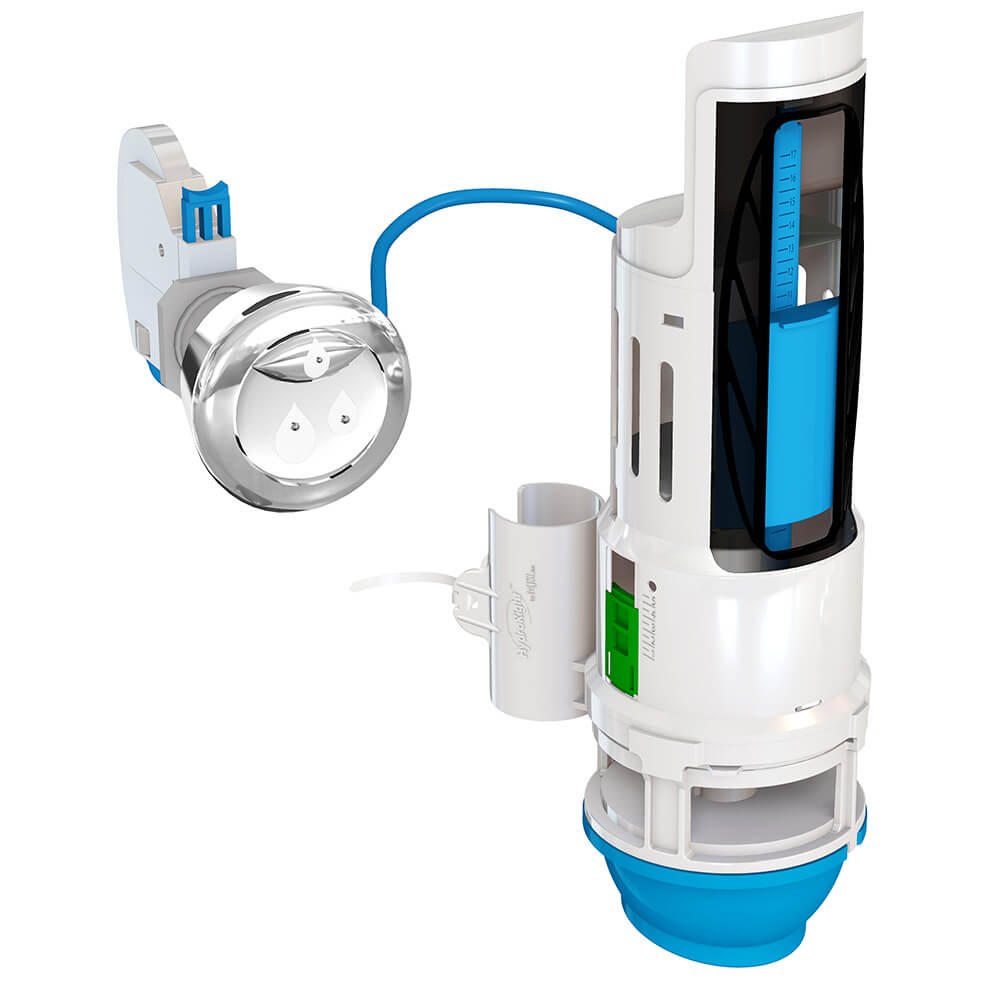
The dual-action mechanism also helps pinpoint internal leaks. A trade-off of having a complex dual-flush tower is that the silicone seal sits under varied mechanical pressure compared to a traditional rubber flapper. If you press both buttons and hear a constant hiss afterward, the seal didn’t drop squarely back into its groove. However, this varies by model — check the label inside the tank lid to find the exact brand clearance. If the valve fails to latch into a full flush when you press both sides, the plastic override tooth inside the canister has worn down, which means the whole center valve needs swapping.
What you can change, and what you cannot
What you can adjust yourself
- The length of the plastic push-rods by screwing them up or down.
- The resting water height by turning the fill valve adjustment screw.
- The half-flush discharge volume using the slider on the valve housing.
- The silicone base seal by twisting the valve body out by hand.
What is fixed by design
- The maximum tank capacity molded into the ceramic cistern walls.
- The internal trapway diameter built into the porcelain bowl.
- The override mechanism that forces a full flush when both sides activate.
Working past the shutoff valve requires a licensed plumber if your home’s main water stops won’t turn off completely or if supply lines show severe corrosion.
Getting more out of it
Pressing the smaller button for liquid waste saves roughly 0.8 gallons per flush compared to the larger button on a standard low-flow unit. Make sure to press buttons squarely in the center rather than pushing from an angle, which stops the plastic guide rods from binding inside their housing. Check your tank’s water line regularly against the stamped factory mark; if it rests more than half an inch below that ridge, you won’t get enough siphon power to clear solids. Clean the silicone seal washer as part of your usual clean if you live in an area with hard tap water, as mineral scale prevents a watertight seat and forces the fill valve to cycle constantly.
Frequently asked questions
Can pushing both buttons damage the toilet?
No, it won’t break the internal system because the dual-flush valve is designed to absorb simultaneous movement. The larger mechanical lever naturally catches the main lift tube first. You only risk physical damage if you hammer down on the buttons with enough force to snap the plastic threads underneath.
Does pushing both buttons give extra flush power?
No, it doesn’t increase flow speed or volume. The cistern only holds a set volume of water, typically around 1.28 to 1.6 gallons. Pushing both buttons simply triggers the standard full flush, releasing that same fixed amount of water into the bowl at standard gravitational speed.
Why do both buttons go down together sometimes?
Dirt or limescale has built up inside the gap between the two push surfaces. Remove the button housing from the tank lid, soak it in warm water with vinegar for thirty minutes, and rinse away the residue so the buttons slide independently without catching each other.
Is it safe to hold the buttons down longer?
Yes, but it won’t push out more water than what’s already sitting in the cistern. Holding the buttons down simply keeps the bottom seal open, which lets the tiny stream from the refilling valve run straight into the bowl, wasting tap water without helping the flush.
What happens if the buttons stay stuck down?
Water will run continuously from the supply line straight through the open valve into the toilet bowl. If this occurs, do this: pull the buttons upward with your fingertips to release the catch, then unscrew the push-rods slightly so they don’t press against the valve at rest.
How long should the cistern take to fill?
Between 30 and 60 seconds is normal for standard home water pressure between 40 and 60 psi. If the cistern takes over two minutes to fill after a full flush, the inlet valve filter is clogged with sediment or the wall angle stop is partially shut.
Final Thoughts
You don’t need to worry about damaging your plumbing by pressing both buttons at once. It’s a harmless mistake that won’t cause any long-term issues for your toilet. If you find yourself doing it accidentally quite often, you might want to check if your buttons are sticking and give them a quick clean.






