
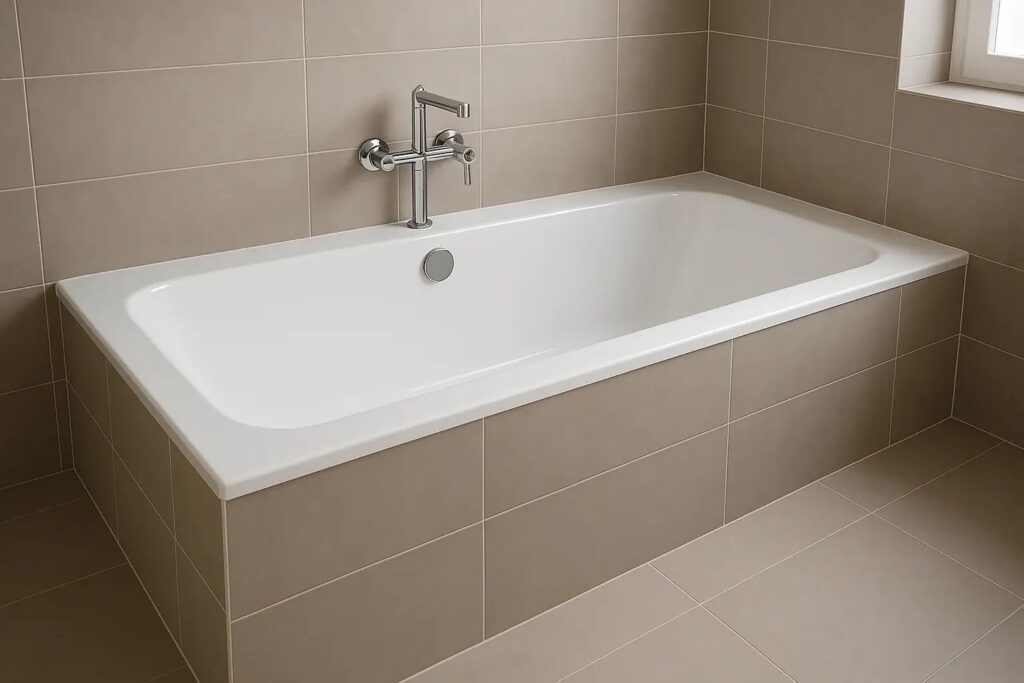
Porcelain tiles endure best in wet environments, and expert insights suggest they’re the longest-lasting option for modern homes. They withstand moisture better than regular ceramic because manufacturers bake them at higher temperatures with refined clays. This creates a dense body that stops water from seeping inside, provided you install them over a solid subfloor.
Table of Contents
Which bathroom tiles last the longest
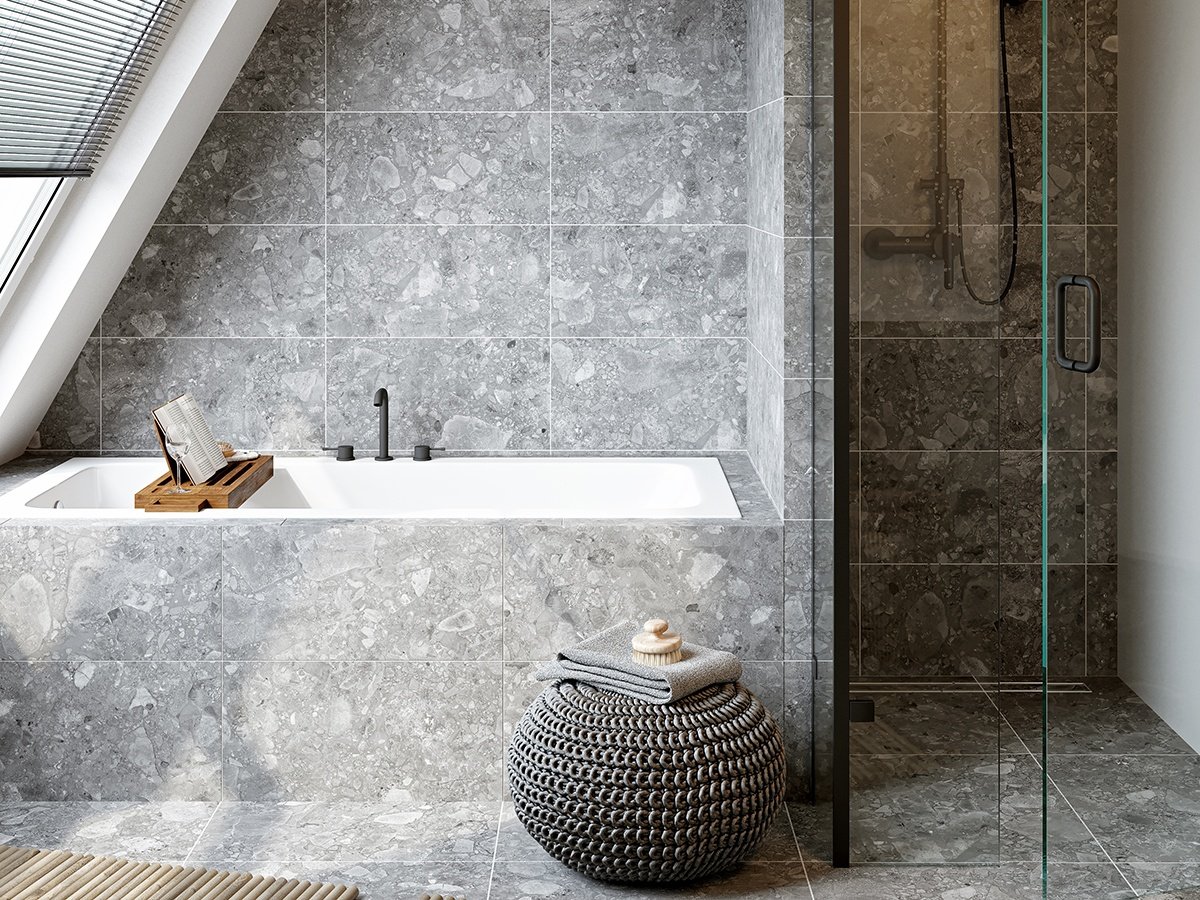
- Porcelain lasts longer than standard ceramic in wet areas because its water absorption rate stays at or below 0.5 percent.
- Natural granite tiles outlast softer stones, but they require fresh surface sealer every 12 to 24 months.
- Ceramic tiles work well on dry bathroom walls, yet they crack more easily when used under heavy foot traffic.
- Check the Porcelain Enamel Institute (PEI) rating printed on the box; select PEI 3, 4, or 5 for floor durability.
- Flexible polymer-modified thin-set mortar prevents tile popping, whereas premixed mastic paste fails quickly under standing shower water.
Why porcelain resists wear and moisture
Dense raw materials explain why porcelain survives decades of bathroom humidity without failing. Makers mix fine kaolin clay, feldspar, and quartz, then press the blend under heavy mechanical pressure before firing it past 2,200 degrees Fahrenheit. This intense heat causes vitrification, turning the minerals into a glass-like structure that shuts out moisture.
Standard ceramic tiles use coarser clays fired at lower heat, leaving microscopic voids that trap moisture. When water penetrates a tile body, minerals slowly leach out and repeated moisture cycles loosen the bond against the floor. As defined by the Tile Council of North America standards, certified porcelain must absorb 0.5 percent or less of its weight in water during immersion testing.
You trade installation ease for this toughness: porcelain is brittle and hard to cut, requiring a continuous-rim diamond wet blade instead of a basic snap cutter. This material isn’t for DIYers without power cutting tools, as manual scoring wheels often snap the edges unevenly.
When the answer is different
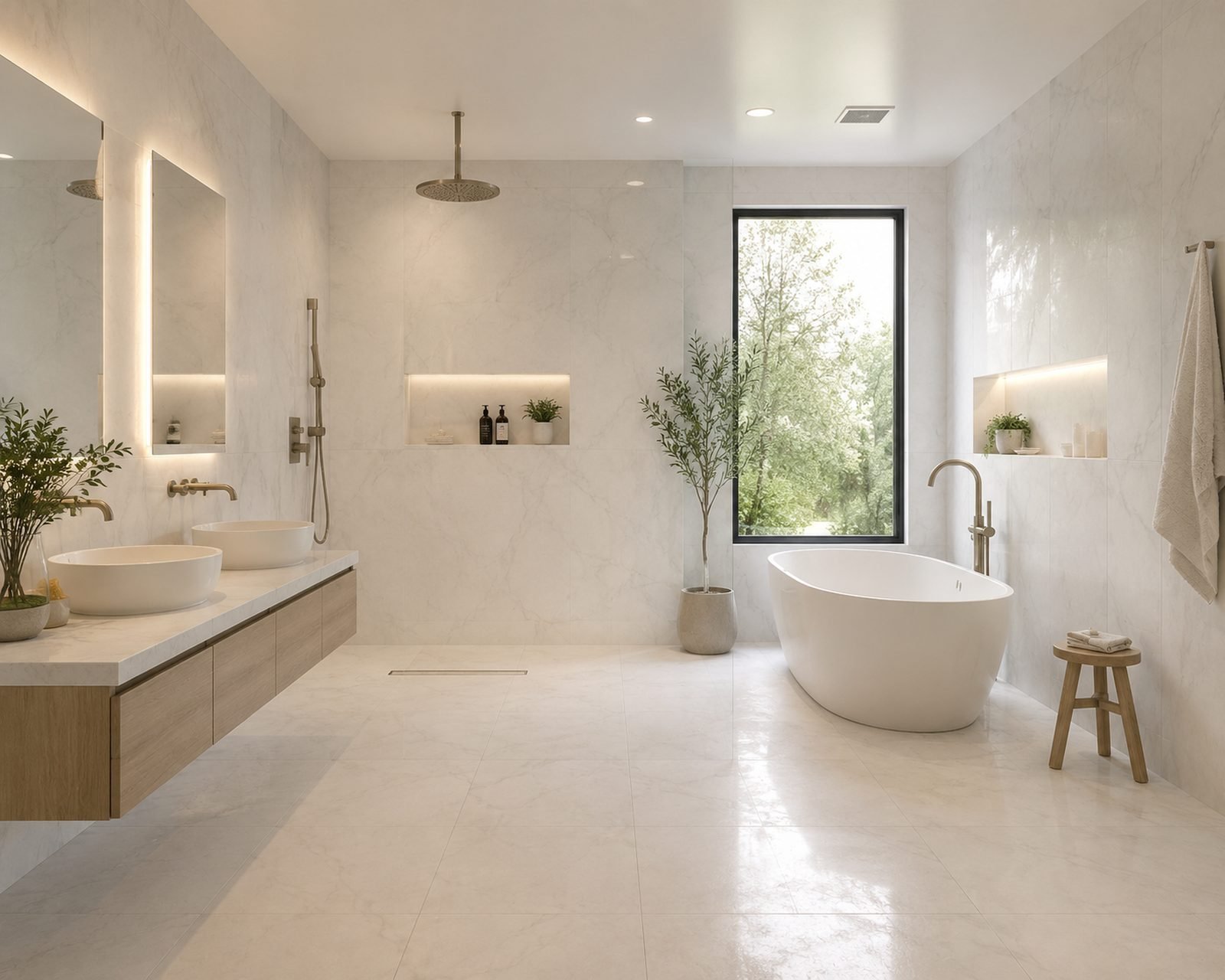
Certain structural situations change the tile choice from standard porcelain to alternative materials.
| Situation | What changes | What to do instead |
|---|---|---|
| Wooden subfloor flexes | Rigid porcelain cracks | Lay uncoupling membrane first |
| Walk-in shower pan | Large tiles cause slipping | Install two-inch mosaic sheets |
| Zero-maintenance rental property | Stone sealers get neglected | Use glazed porcelain throughout |
| Fast budget renovation | Porcelain cuts slowly | Use standard glazed ceramic |
| Historic home preservation | Modern porcelain looks wrong | Lay traditional cement tiles |
How to do it properly
- Paint two coats of liquid waterproofing membrane across shower walls, waiting for the manufacturer-specified cure time between coats until the film is fully dry.
- Mix polymer-modified thin-set mortar with clean water for 5 minutes until it matches smooth peanut butter, then let it rest for 10 minutes.
- Comb mortar across the floor using a quarter-inch square-notched trowel, keeping your ridge lines straight rather than swirling in circles.
- Back-butter tiles measuring 12 inches or larger by spreading a flat 1-millimeter skim coat of mortar across the backside before setting.
- Press the tile into the wet ridges with a firm twist, placing plastic leveling spacers to keep edges flat against adjacent tiles.
- Fill all joints after 24 hours with water-resistant epoxy grout, packing it deeply using a hard rubber float held at 45 degrees.
- Seal all interior corners using pure 100 percent silicone caulk rather than rigid grout to let movement happen without breaking the seal.
The mistakes that ruin it
- Using premixed organic adhesive mastic inside wet shower zones breaks down the glue, turning the mortar bed into mush within a year.
- Skipping an uncoupling membrane over a wood subfloor leads to cracked tiles, costing hundreds in replacement labor when joists expand.
- Grouting expansion joints where walls meet floors creates rigid corners, causing tile edges to buckle and pop loose as the house settles.
- Applying acidic bathroom cleaners like vinegar onto polished marble or limestone creates permanent dull spots that require expensive diamond re-polishing.
Frequently asked questions
Can porcelain tiles crack easily?
No, porcelain doesn’t crack under normal bathroom use unless the floor underneath moves. If an installer leaves hollow air pockets under the tile or lays it over a springy wood floor, stepping on the empty spot can crack it. A full mortar bed significantly reduces the risk of cracking.
Does tile thickness affect durability?
Yes, thicker tiles resist heavy impacts better than thin wall pieces. Floor tiles should measure at least 8 to 10 millimeters thick for residential bathrooms. Wall-grade ceramics measure thinner—often under 6 millimeters—and will shatter underfoot if you lay them on a bathroom floor.
How long does a sealed stone tile last?
Natural stone lasts over 50 years if you maintain its surface shield. Granite holds up best, while marble scratches easily from grit. You must wipe a penetrating chemical sealer across the stone regularly; this varies by stone type, so check the label on your sealer bottle.
What happens if you use wall tiles on the floor?
Wall tiles crack under foot pressure because their clay bodies are soft and thin. Their surfaces also lack slip resistance. Walking on wet, glazed wall tiles in a bathroom creates a serious fall risk, and dropped objects like glass bottles will easily punch holes through them.
Is epoxy grout better than cement grout?
Yes, epoxy grout resists stains and moisture penetration far better than standard cement blends. It cures into a hard plastic resin that never needs topical liquid sealers. It does cost twice as much and requires scrubbing residue within 30 minutes before it cures permanently onto surfaces.
Why do shower floor tiles come in small sheets?
Small mosaic tiles provide multiple grout lines that give your bare feet traction on wet slopes. They also bend easily over the compound slope leading toward a center drain. Large tiles can’t follow that sloped floor angle without requiring awkward diagonal cuts across the surface.
Final Thoughts
Choosing the right material is a smart investment that keeps your space looking fresh for years. Once you’ve picked a style you love, don’t forget to talk with a professional installer about the best grout for your specific floor. You’ll be glad you took that extra step to protect your home’s value.






