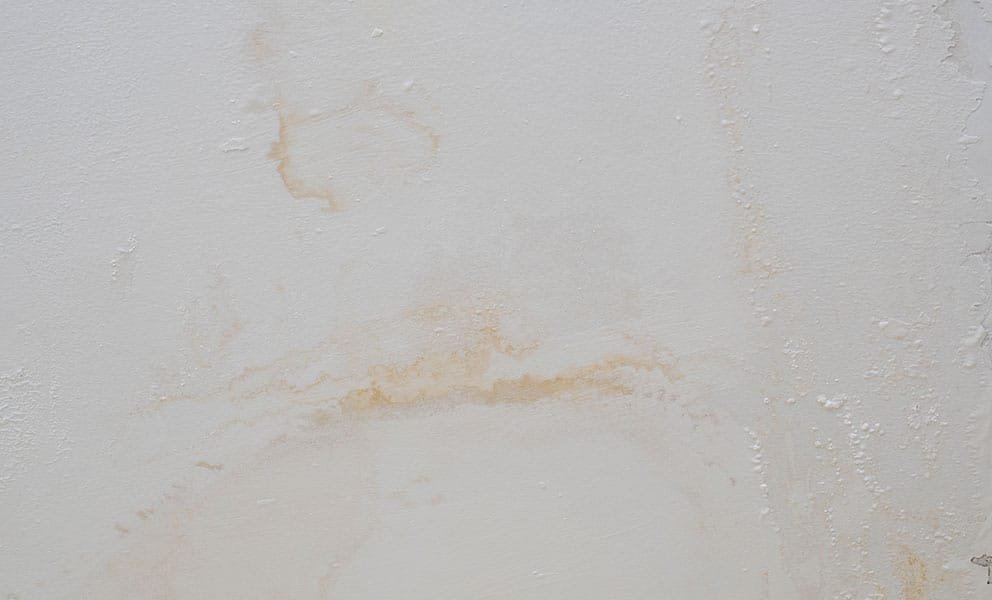
Trapped shower steam causing heavy condensation is the primary reason you see water stains on walls in bathroom surfaces. The room is safe to use right now as long as the wall stays firm and dry to the touch, with no electrical switches near the wet mark. To confirm steam caused it, rub your bare palm flat against the discolored drywall: if the surface is cold and dry rather than squishy or bulging, daily humidity left those marks.
Table of Contents
Identifying the cause of bathroom wall stains
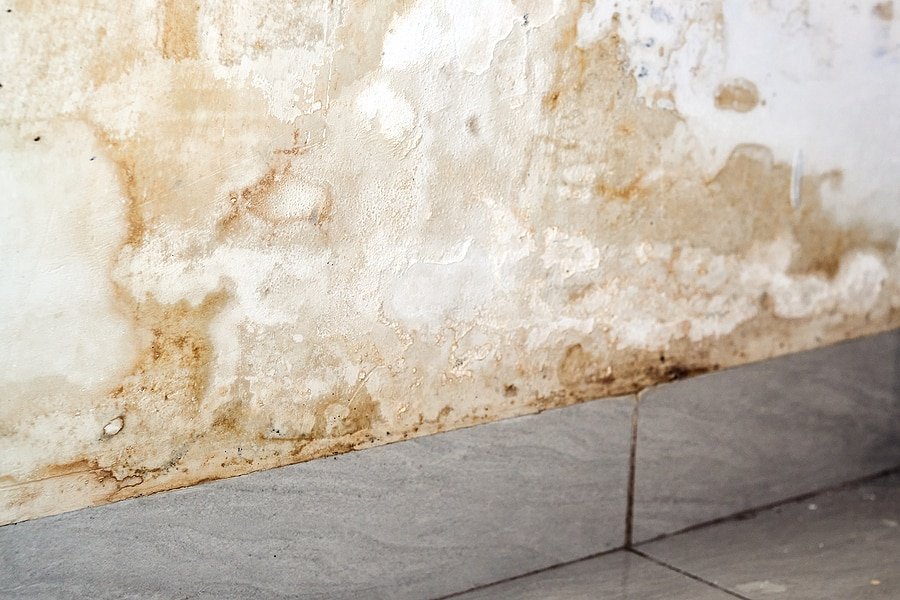
Matching the stain’s color and texture tells you where the moisture originates before you tear into any wall.
| What you notice | What it usually means | What to do first |
|---|---|---|
| Yellow or amber sticky drips | Leached surfactant from latex paint | Wipe with warm water and soap |
| Dark rings with crisp edges | Pipe leak behind drywall | Shut off main supply valve |
| Soft drywall that pushes in | Standing water soaked through gypsum | Stop shower use immediately |
| Chalky white crust on paint | Mineral deposits from evaporated water | Scrape lightly to check depth |
| Dark gray or fuzzy speckles | Mold colonies feeding on damp drywall | Clean with mild detergent solution |
| Stains growing only during downpours | Damaged roof flashing or siding failure | Inspect attic above bathroom ceiling |
| Rings directly around exhaust fan | Condensation pooling inside metal ductwork | Insulate the vent pipe run |
High humidity and poor ventilation
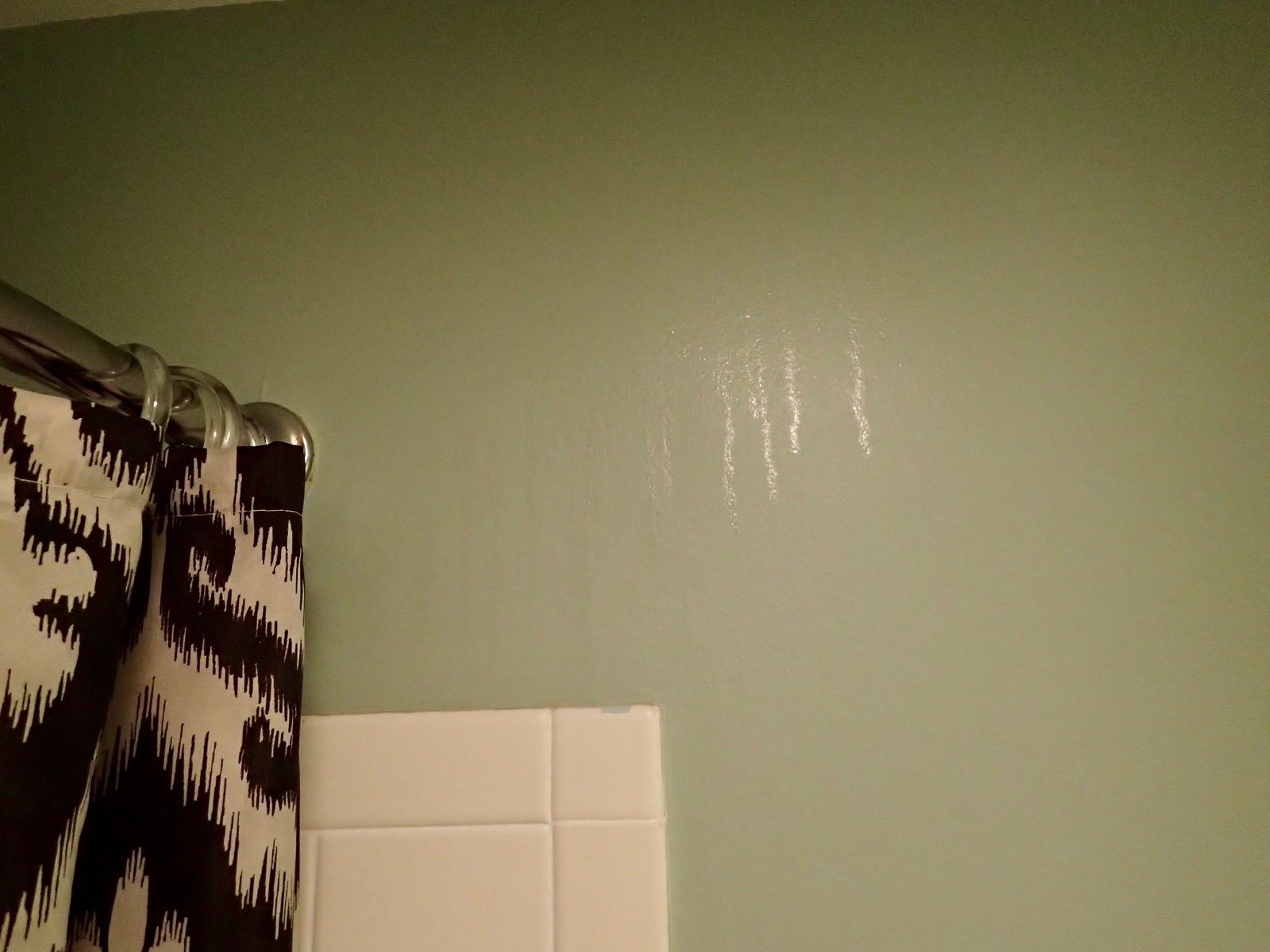
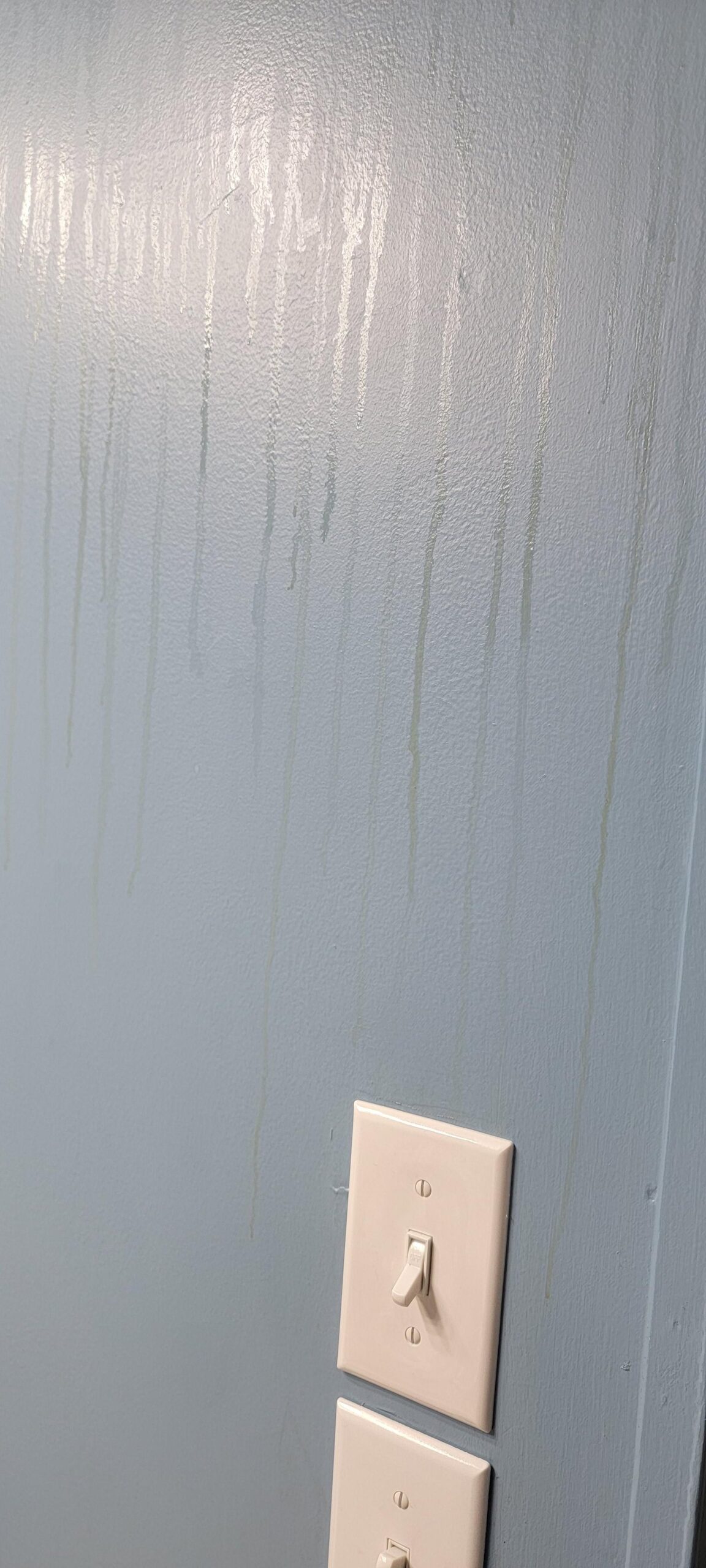
Warm shower vapor pulls water-soluble additives right out of fresh or low-sheen paint. When steam hits cold drywall, moisture collects into droplets that run down the surface, leaving sticky tan streaks known as surfactant leaching. Press a tissue to the colored streak; if it comes away slightly yellowed without tearing on rough crumbling wallboard, condensation is your culprit.
Wash the wall with a sponge soaked in clean water mixed with a few drops of dish soap, then dry it thoroughly with a towel. Run your exhaust fan during and after every shower until the mirror and walls are clear of condensation. The EPA’s mold cleanup guidance recommends keeping indoor humidity below 60 percent so moisture can’t feed surface growth. This cleaning method fixes surface moisture, but it isn’t for walls that stay wet for hours after showers finish. You know the fix worked when the paint looks uniform after your next hot shower without fresh yellow streaks forming beneath the mirror line.
Hidden plumbing leaks inside the wall cavity
Supply lines running to the showerhead or sink can develop pinhole failures that soak sheetrock from the inside out. A pressurized pipe leak drips non-stop, creating a circular watermark with dark, raised borders that expand even when nobody runs the shower. Hold a single ply of toilet paper against the center of the ring. If the paper instantly absorbs water and turns gray, moisture is feeding the wall from behind right now.
Turn off the fixture’s water shut-off valves beneath the sink or behind the access panel, and don’t use the fixtures until a technician checks the fittings. You’ll need to cut away damp sheetrock to access the fitting, which means replacing drywall rather than simply painting. The trade-off is clear: opening the wall creates mess and dust, but waiting allows rot to spread to wall studs. Painting over the ring without fixing the pipe costs hundreds extra in ruined framing. The repair worked when the area remains dry after subsequent use of the fixture.
Water pooling from cracked tile grout
Water seeps behind tile surrounds through microscopic cracks in aging cement grout or failed perimeter silicone caulk. This moisture travels along the horizontal wood plates of your framing until it wicks into the painted drywall beside the tub apron. Unlike pipe leaks that run constantly, these stains darken exclusively within two hours after a bath or shower. Trace the tile line adjacent to the stain with your fingernail; if bits of grout crumble away or the caulk pulls loose like rubber bands, water is entering that joint.
Scrape away damaged caulk using a razor scraper, let the cavity dry completely, and inject fresh silicone sealant rated for tub use. If you have solid acrylic shower surrounds instead of tile, check the tub flange instead. This repair isn’t for people dealing with completely detached, hollow-sounding tiles. When the caulk sets and the adjacent painted drywall remains dry after use, your seal holds.
When to stop and get help
- Drywall buckles, flexes inward under light finger pressure, or feels mushy, meaning structural strength is gone and ceiling panels may collapse.
- Water droplets seep directly out of light fixtures, ceiling heaters, or wall outlets, creating an active shock hazard.
- You turn off your plumbing valves but hear running water hissing continuously behind the wall.
Stop immediately if you reach any of these limits. Opening walls around live electrical circuits or dealing with compromised floor joists requires a licensed plumber or a certified general contractor.
Frequently asked questions
Can you just paint over bathroom water stains?
No. Standard latex paint contains water, so existing mineral deposits and surfactants will bleed straight through the fresh coat within days. You must wash the wall, wait until it dries completely, and apply a stain-blocking oil or shellac primer before using your finish paint.
Why do water marks look brown or yellow?
Surfactants and extracted wood minerals cause this color change. When water evaporates slowly off painted sheetrock, it leaves behind concentrated resins, salts, and dyes pulled from the paint film and paper drywall backing. These concentrated residues dry into dark yellow or brown rings.
How long does a bathroom wall take to dry?
About 24 to 48 hours under normal conditions. This assumes you open the bathroom door, keep windows cracked, and run an oscillating fan continuously at room temperature. Thick plaster walls or saturated drywall will take significantly longer to dry out completely.
Is it safe to shower if there are water marks on the wall?
Yes, as long as the drywall remains rigid and the mark stays away from electrical outlets. If the stain spreads during your shower, turn off the water immediately. That rapid growth means water is splashing behind cracked tile or leaking through a pressurized pipe fitting.
What happens if you leave water marks untreated?
Mildew and wood rot will develop behind the paint. Trapped moisture inside dark, warm wall cavities rots pine framing studs within months. Ignoring a five-inch stain often costs homeowners hundreds of dollars once hidden structural mold forces complete drywall tear-outs.
Does the wall stain mean I have toxic mold?
No, most stains consist entirely of dried soap film, paint surfactants, or harmless tap water minerals. Mold appears if the wall remains damp for an extended period. If the spot is hard, dry, and lacks fuzzy black or dark green growth, mold isn’t present.
Final Thoughts
If you keep seeing these spots, it’s time to upgrade your ventilation. Try running the exhaust fan for twenty minutes after you shower, or leave the door cracked open to let the air circulate. You’ll find that a little extra airflow goes a long way toward keeping your home fresh and dry.