
A toilet can work without a sewer connection, a septic tank, or even a flush. A composting toilet handles human waste in a different way: it collects it and supports its breakdown with air, moisture control, and often a dry carbon-rich material such as sawdust. That can make it useful in cabins, tiny homes, boats, and other places where conventional plumbing is difficult—but it still needs the right setup and regular care.
Table of Contents
What Is a Composting Toilet?
A composting toilet is a toilet designed to collect human waste and help it decompose, usually with little or no water. Instead of flushing waste through pipes, it stores waste in a chamber or container, where airflow and suitable conditions help microbes break it down.
Many models use materials such as coconut coir, peat, dry leaves, or sawdust. These materials add carbon, help absorb moisture, and create a less compact mixture that air can move through. Some toilets separate urine from solid waste, while others collect both together.
The word “composting” can be a little misleading. Waste does not become finished, garden-ready compost as soon as it enters the toilet. The process takes time, and the toilet’s design, temperature, moisture, airflow, and frequency of use all affect how well decomposition happens. In some cases, material needs extra treatment or disposal after it leaves the toilet.
How Does a Composting Toilet Work?
Although designs vary, most composting toilets rely on the same basic idea: collect waste, manage moisture, provide airflow, and give microorganisms time to break down organic material. The system is not simply a sealed bucket left to sit. If waste becomes too wet, compacted, or poorly ventilated, it can smell and decompose slowly.
1. Waste is collected
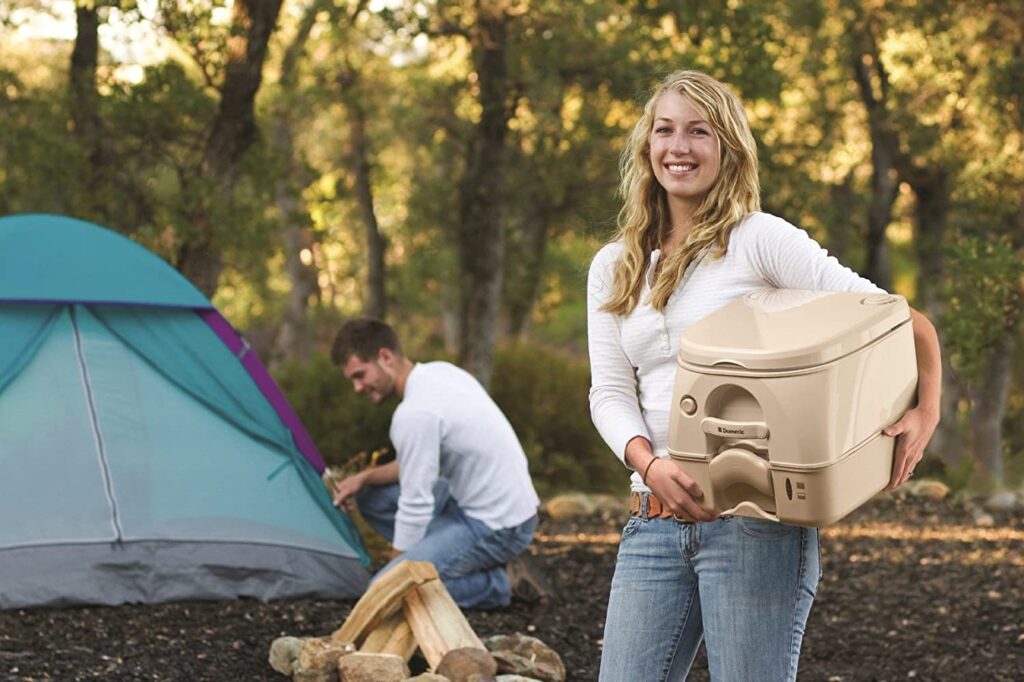
When you use the toilet, waste falls into a holding chamber or removable container. In a self-contained model, that chamber is often built beneath the toilet seat. In a central system, the toilet connects to a larger composting unit located elsewhere in the building, such as below the floor or outside.
2. Moisture is controlled
Moisture matters because microbes need water to work, but a saturated chamber can become oxygen-poor. That encourages unpleasant smells and slows the kind of decomposition most systems aim for. Dry cover material can absorb some moisture and help keep the mixture loose.
Urine-diverting toilets manage moisture in a different way. A specially shaped bowl sends urine into a separate bottle, tank, or drain, while solid waste falls into the main chamber. This can help keep the solids drier, though the urine container still needs to be emptied and cleaned according to the manufacturer’s instructions.
3. Air moves through the chamber
Many composting toilets use a vent pipe to carry air from the waste chamber to the outdoors. Some include a small fan to keep air moving in the right direction. That airflow helps support aerobic decomposition—the breakdown of organic material in the presence of oxygen—and can reduce odors inside the room.
A vent is only helpful when it is installed and maintained properly. A blocked pipe, failed fan, or poor seal can allow smells to escape indoors. That is why ventilation is part of the toilet system, not an optional extra to ignore.
4. The material breaks down over time
Microorganisms gradually break down organic matter. How quickly this happens depends on the toilet and its conditions. A lightly used cabin toilet in a warm, well-ventilated location will behave differently from a heavily used toilet in a cold building.
Even when the material looks dark and soil-like, appearance alone does not prove that it is safe to handle or use around food crops. Follow the product instructions and local rules for emptying, further treatment, and disposal.
Main Types of Composting Toilets
| Type | How it works | Common fit | What to consider |
|---|---|---|---|
| Self-contained | The toilet and waste chamber are in one unit. | Small cabins, boats, tiny homes, and occasional-use spaces. | Check chamber capacity, access for emptying, and the space needed for ventilation. |
| Central or remote | The toilet connects to a larger composting unit located separately. | Homes or buildings with room for a central chamber. | Installation is more involved, and the system needs a suitable route for pipes and ventilation. |
| Urine-diverting | A shaped bowl separates urine from solid waste. | Settings where keeping the solids drier is useful. | Urine needs its own approved storage or disposal plan, and users must sit or position themselves correctly. |
These categories can overlap. For example, a self-contained toilet may also divert urine, and some central systems separate liquids as well. Check the details of a specific model rather than relying only on its label.
Why Choose a Composting Toilet?
The main reason is often practical: a conventional toilet needs a way to move wastewater away, usually through a sewer connection or septic system. If your building is remote, mobile, or difficult to plumb, a composting toilet may offer another option.
- It can use little or no flush water. That may be helpful where water is scarce, hauled in, or supplied by a small tank.
- It can work without a sewer connection. This makes it worth considering for certain cabins, workshops, and off-grid buildings.
- It may reduce plumbing needs. Depending on the system, you may not need the same water supply and wastewater pipework as a flush toilet.
- It can support more flexible building locations. A suitable toilet system may make a remote site usable where connecting to a municipal sewer would be difficult or expensive.
Those benefits do not make every composting toilet a good choice for every home. You still need to plan for installation, ventilation, emptying, and legal disposal. A system that seems simple in a product photo can be awkward if the access panel is hard to reach or the waste chamber fills sooner than expected.
What Are the Drawbacks?
The biggest adjustment for many people is that the toilet needs routine attention. Depending on the model, you may need to add cover material, check a fan, clean the bowl, monitor liquid levels, or empty a container. That is different from flushing and forgetting about it.
Capacity is another practical concern. A toilet used by one person on occasional weekends has different demands from one used every day by a family. If the chamber is too small for your usage, you may need to empty it frequently. Always check the manufacturer’s capacity guidance and think about your busiest likely use, not just an average day.
Composting toilets can also cost more to install than a basic bucket-style setup, especially when a central unit, fan, vent, or building work is involved. And although many systems are designed to control odor, they are not automatically odor-free. Incorrect use, excess moisture, poor ventilation, or infrequent cleaning can cause problems.
How to Choose the Right System
Estimate how often it will be used
Count the people who will use the toilet and how long they will stay. A weekend cabin with two visitors has a very different workload from a full-time home. Choose a system with enough capacity for your realistic use, including guests, rather than selecting the smallest unit because it is cheaper or takes up less room.
Check the installation requirements
Look at the toilet’s footprint, access for removing the container, power needs, and vent route. Some fans need electricity; some systems may work without one, depending on their design and installation. If a model needs a vent pipe through a roof or wall, plan that route before buying it.
Understand the emptying and disposal steps
Read the manual before you purchase. Find out how often the unit needs attention, what protective equipment the manufacturer recommends, and where each waste stream can legally go. If the system separates urine, make a plan for that liquid too. “No sewer connection” does not mean “no disposal rules.”
Ask local authorities before installation
Building, plumbing, sanitation, and environmental requirements vary by location. Some places allow certain composting toilets under specific conditions; others may require permits, approved equipment, or a separate wastewater arrangement. Check with your local building or health authority before installing one, especially in a full-time residence or rental property.
Composting Toilet Maintenance
Good maintenance is mostly about following the design instead of improvising. Add the type and amount of cover material recommended by the manufacturer. Keep vents clear, check the fan if the model has one, and clean the seat and bowl with products that are compatible with the unit.
Pay attention to changes. A new odor, unusually wet contents, or a fan that has stopped working can be a sign that the system needs attention. The cause might be a blocked vent, an overfilled chamber, incorrect cover material, or a change in how the toilet is being used. Fixing a small issue early is usually easier than waiting until the system is unpleasant to manage.
Wear the protective gear specified in the manual when handling stored material, and wash your hands afterward. Keep children and pets away from waste and treatment areas. Most importantly, do not assume that material from the toilet is safe to use as garden compost just because it has been stored for a while. Use only disposal or further-treatment methods allowed by the manufacturer and local rules.
Composting Toilet vs. a Regular Flush Toilet
A flush toilet carries waste away using water and plumbing. A composting toilet collects waste on site and relies on the system’s design and maintenance to manage it. Neither option is automatically better; the right choice depends on your location, water supply, sewer access, budget, and willingness to manage the system.
| Feature | Composting toilet | Flush toilet |
|---|---|---|
| Water use | Usually little or none for flushing, though cleaning may use water. | Uses water to move waste through the plumbing. |
| Waste handling | Waste is collected on site and needs managed emptying or treatment. | Waste travels to a sewer or septic system. |
| Routine tasks | May include adding cover material, checking airflow, and emptying the unit. | Usually requires less direct handling when plumbing is working properly. |
| Best suited to | Some remote, mobile, or water-limited settings, subject to local rules. | Buildings with suitable water and sewer or septic connections. |
Read more related posts:
- Benefits of a Composting Toilet: Water Savings and Soil Health
- Natures Head Self Contained Composting Toilet Review and Guide
- 10 signs of subfloor rot around the toilet base You Shouldn’t Ignore
Frequently Asked Questions
Do composting toilets smell?
A properly installed and maintained system should manage odors, often with ventilation and moisture control. Smells can develop if airflow fails, the chamber gets too wet, or the toilet is overfilled or used incorrectly.
Does a composting toilet need electricity?
Some models use a small fan and therefore need power; others rely on passive ventilation or use a different design. Check the exact model’s requirements and consider what happens during a power outage.
Can I use the material as garden compost?
Not automatically. Material may need further treatment, and local rules may restrict how it can be handled or used. Follow the manufacturer’s instructions and local guidance, and never assume that finished-looking material is safe for food gardens.
Can a composting toilet be used in a normal house?
It can be suitable in some homes, but installation rules and practical needs vary. Confirm local requirements, check whether the system can handle daily household use, and plan for ventilation and waste management before you buy.
Conclusion
A composting toilet collects human waste and supports its gradual breakdown without relying on a conventional flush-and-sewer setup. Its success depends on the details: choosing a system with enough capacity, managing moisture and airflow, keeping up with maintenance, and following local disposal rules.
If you’re considering one, start with your actual use, installation space, and local requirements. With those questions answered, you can tell whether a composting toilet is a practical fit—or whether a conventional plumbing system will be easier for your situation.