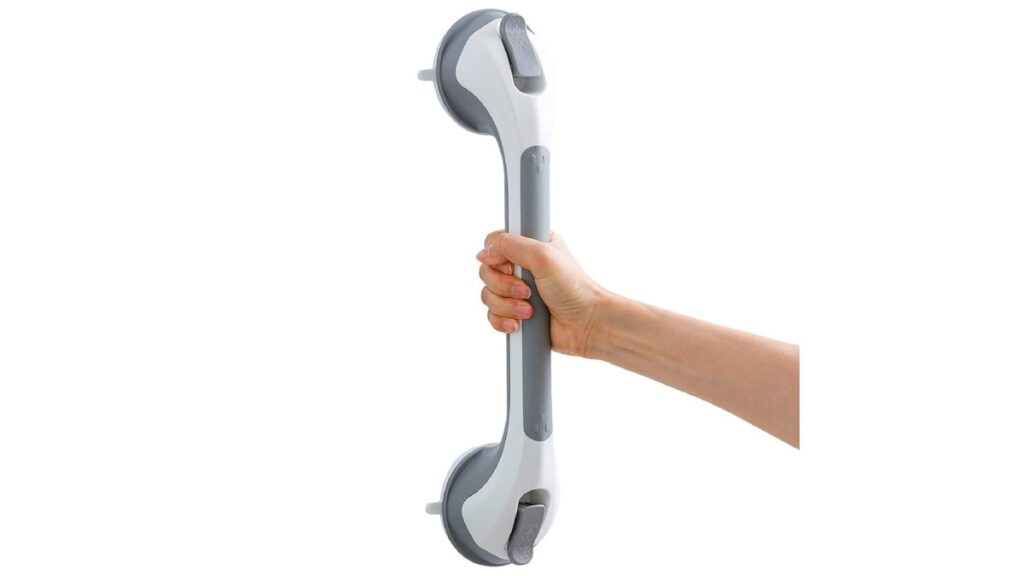
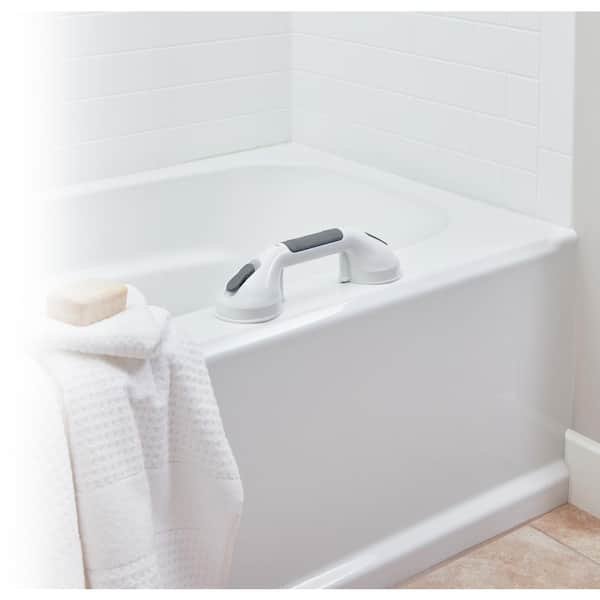
No, relying on a bathtub grab bar suction cup for full body weight is dangerous. A suction handle only helps with light balance on flat tile, and it fails suddenly without warning. The worst outcome is a heavy fall against hard porcelain or faucets when the seal releases. If you need full support, install wall-screwed bars instead.
Table of Contents
When suction grab bars fail
| Situation | Safe? | Why |
|---|---|---|
| Pulling up from seated | No | Sudden force breaks vacuum seal instantly |
| Steadying your balance | With care | Only holds gentle, lateral guide pressure |
| Dry, smooth glazed tile | With care | Requires clean, non-porous flat surface |
| Across grout lines | No | Air leaks through seams immediately |
| Textured or stone tile | No | Uneven surface prevents continuous airtight seal |
| Fiberglass shower wall | No | Wall flexes and pops suction off |
| Supporting a slip fall | No | Impact weight exceeds temporary suction limits |
What the risk actually is
Suction handles fail without any warning sound or slow loosening. When you lose your footing, your body puts sudden leverage against the handle that easily breaks the rubber seal. A falling adult can strike their head against the tub rim, break ribs, or crack hard glass doors.
According to bathroom fall injury statistics gathered by the CDC on nonfatal bathroom injuries, most bathroom injuries happen in or around the tub, with injury rates rising sharply after age sixty-five. The trade-off between an easy suction install and personal safety is severe: avoiding drill holes in tile saves you thirty minutes of labor, but it puts your physical safety on a temporary vacuum seal. This product isn’t for anyone who can’t stand up independently or who experiences dizzy spells. A common mistake people make is grabbing these bars when their feet actually slip; this instant downward yank tears the cups loose and costs them their balance completely. Weight limits on packaging also have an honest limit: this varies by model — check the label, but almost all brands state they’re balance-assist tools, not load-bearing safety devices.
The signs to stop immediately
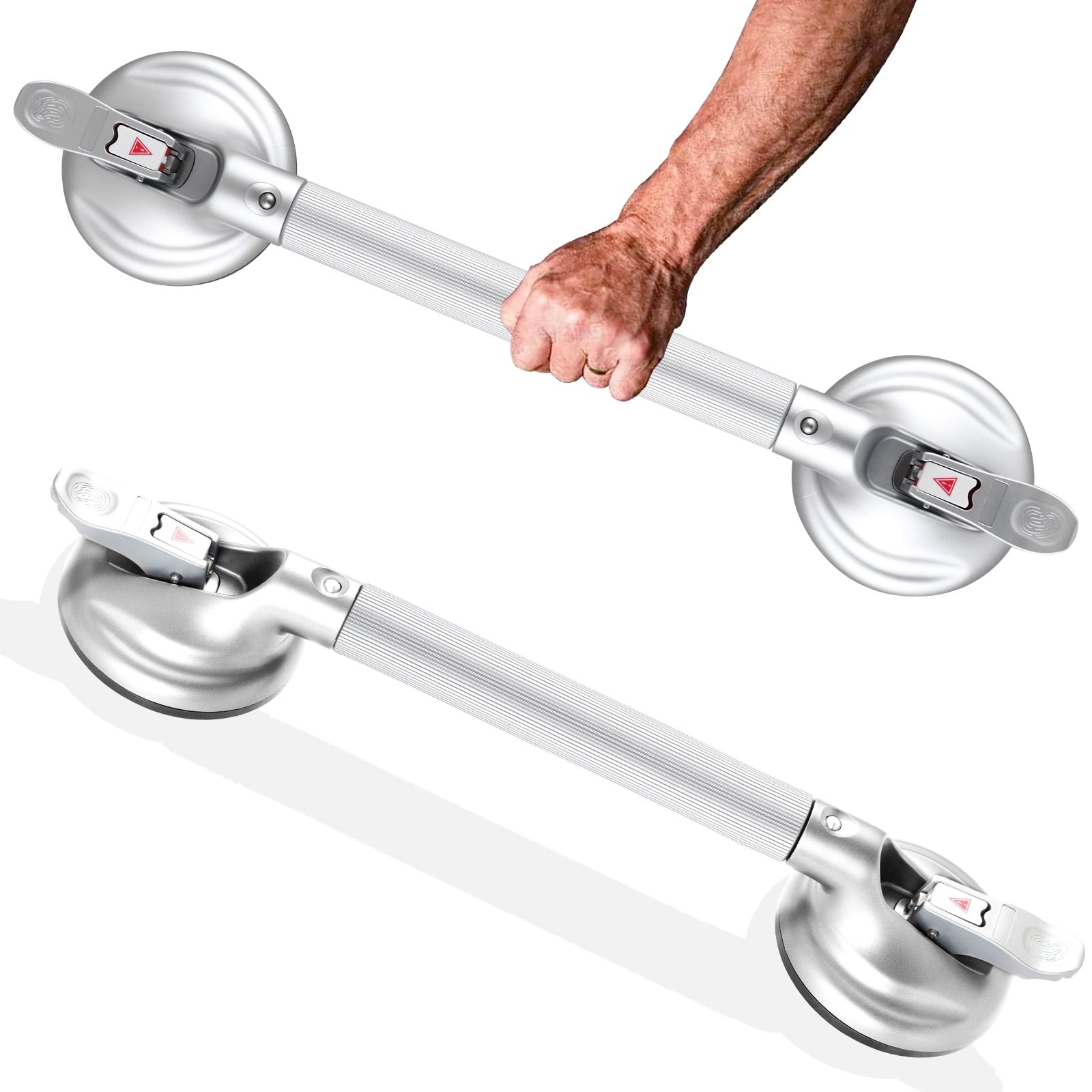
- The colored safety tab shows red instead of green, meaning the vacuum is gone.
- One edge of a rubber cup lifts visibly off the tile surface.
- The bar rocks or twists sideways when your fingers curl around it.
- You see moisture or soap scum trapped beneath the clear rubber pad.
- The wall flexes inward under your hand, popping the seal loose.
If your wall tile is cracked, loose, or can’t hold hardware safely, stop immediately. Call a licensed contractor or home modifier to install anchored backing plates rather than handling structural wall mounting yourself.
The safer way to do it
- Wash the glazed tile using isopropyl alcohol and dry it thoroughly with a lint-free cloth to remove soap scum.
- Clean both rubber suction discs with warm water, wiping off any dust or oils, and let them dry completely.
- Position the bar entirely inside a single tile so neither cup touches a grout line or seam.
- Press each suction base firmly against the wall with two hands to push out trapped air.
- Flip the locking levers down fully until you feel strong mechanical resistance and the indicator turns green.
- Test the grip by pulling firmly with one hand while keeping both feet flat on the floor.
- Unlatch, clean, and re-mount the suction unit regularly to reset the air seal.
If it has already happened
First, stay seated on the floor if the handle detached and caused a slip, checking your arms, hips, and head for pain before trying to stand. Use the sturdy edge of the tub or a toilet bowl to push upward slowly rather than reaching for nearby wall fixtures. If you hit your head, can’t bear weight on a leg, or notice severe swelling, call local emergency services immediately or use a wearable alert button. Don’t attempt to stand alone if you feel faint. Once you’re safe, remove the suction unit from the shower entirely so nobody else relies on it. For permanent safety, hire a professional handyman or occupational therapist to locate wall studs and screw in an ADA-compliant steel grab bar.
Frequently asked questions
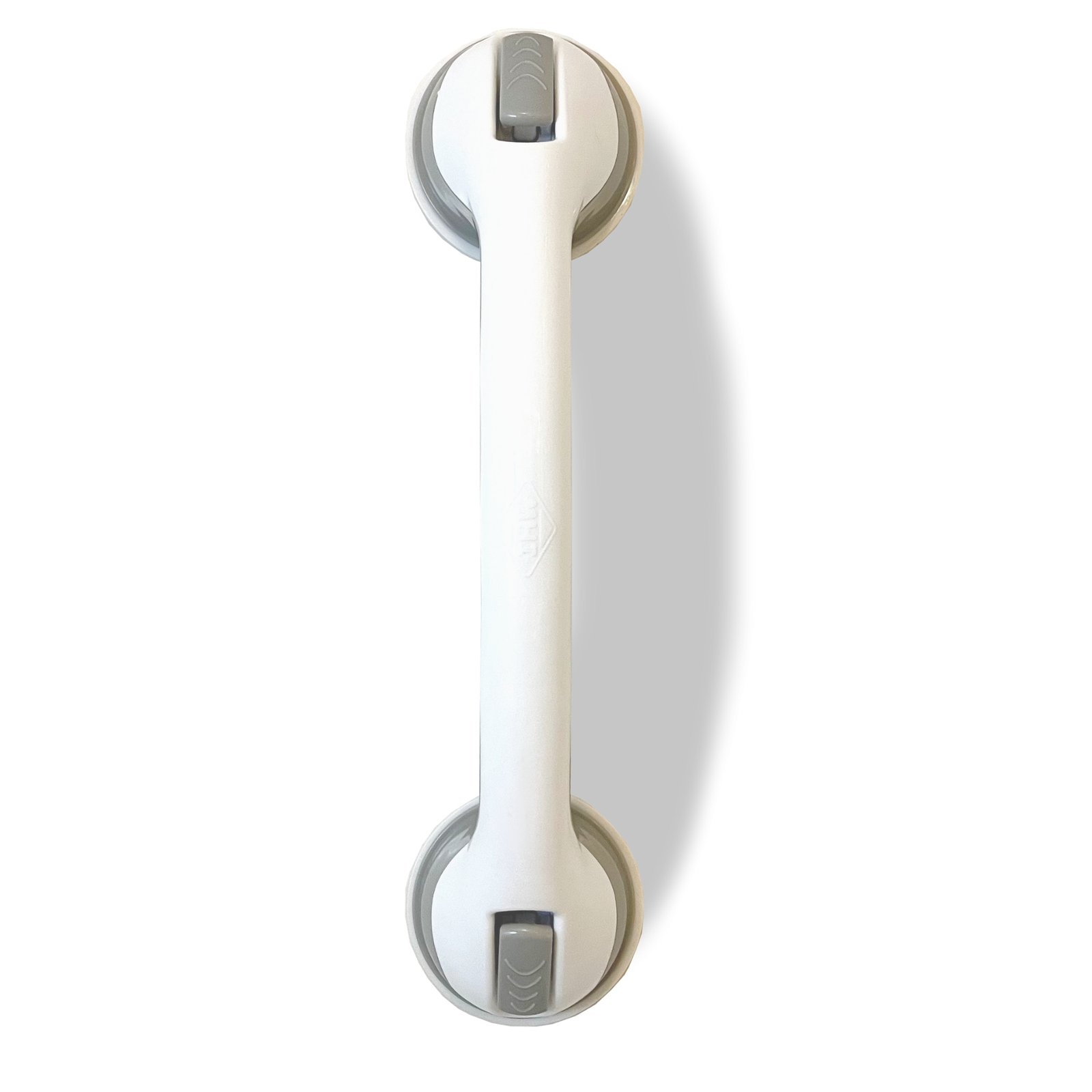
Can suction grab bars hold your weight?
No, suction grab bars can’t support your full body weight. They’re designed only to help you steady your balance while stepping over a tub ledge. If you drop your full body down on one during a slip, the vacuum latch pops off instantly.
Why do suction grab bars fall off?
Suction grab bars fall off because air slowly leaks past the rubber seal over time. Microscopic gaps in bathroom grout, textured porcelain, or mineral deposits from hard water break the airtight hold. Temperature swings from hot shower steam also expand trapped air, loosening the suction cups.
How long does a suction grab bar stay on the wall?
Even on perfectly smooth glass, temperature changes cause suction cups to lose their hold. Follow the manufacturer’s specific instructions for cleaning and re-securing the device.
Is it safe to put a suction bar over grout?
No, it’s never safe to place any part of the cup over a grout line. Grout is porous and sits lower than the tile surface, which allows air to rush under the rubber disc. The bar will lose its vacuum hold immediately or fail under the slightest touch.
What happens if the wall flexes under the bar?
The seal releases immediately when thin fiberglass or acrylic tub surrounds bend inward under pressure. Suction cups need a rigid, flat surface like thick ceramic tile. When the plastic wall bows under your hand, the flat seal breaks and the handle slips off completely.
Does surface moisture help suction grab bars stick better?
No, you should never wet the cups or tile before installing a suction handle. While water creates an initial fake stick, water and soap scum act as lubricants that cause the rubber to slide sideways under pressure. Always mount the unit on completely dry, clean walls.
Final Thoughts
Safety shouldn’t be left to chance in your bathroom. It’s a smart move to contact a professional handyman or a licensed contractor this week to discuss a permanent, wall-mounted installation. They’ll ensure your new supports are anchored securely into the studs, giving you the reliable stability you truly need every day.
Related guides