
Finding the best clear PVC roof panel takes more than checking whether a sheet is labeled “plastic roofing.” The options below vary in size, transparency, and material—and one product marketed with PVC-related terms is described as polycarbonate in its specifications. Compare the details carefully, especially if your project depends on daylight, before choosing.
Table of Contents
Quick Comparison
| Product | Material and transparency | Size or coverage | Best suited for |
|---|---|---|---|
| Hohuqeri Heavy-Duty Corrugated PVC Panels | PVC; clear finish not specified | 25 panels, each 60.83 x 22.05 inches | Larger shed, garage, or patio-cover projects |
| Ywie up 8-Pack PVC Roof Panels | PVC; clear finish not specified | 8 panels; listed coverage of 131 square feet | A project where the listed coverage fits your roof |
| Generic Clear Polycarbonate Roofing Panel | Polycarbonate; described as transparent | Panel dimensions not provided | Daylighting, if the product becomes available |
Our Picks: Best Clear Pvc Roof Panel reviews
Hohuqeri Heavy-Duty Corrugated PVC Panels: A Large Pack for Opaque Roofing

This 25-piece set is made for covering a sizable outdoor structure, such as a shed, garage, pergola, or carport. Each corrugated sheet measures 60.83 by 22.05 inches and is listed as 0.04 inch thick. The package also includes 200 screws and washers.
The product description calls the panels double-layered and says they are UV-stabilized and designed to reduce rain and hail noise. Those features may suit a project where weather protection and a quieter covered space matter. However, the listing does not specify a clear finish, so do not choose this set if your roof must let daylight through.
Panels can be joined side by side or end to end, but the required overlap reduces the final covered area. Plan your layout around the roof’s dimensions and follow the installation directions for fastening locations. The description makes claims about foot traffic, snow, and wind, but does not give load ratings or support-spacing guidance; check those details before relying on the panels for structural loads.
Pros:
- Large 25-panel set for substantial projects
- Includes matching screws and washers
- Corrugated design can be arranged side by side or end to end
- Listed UV protection and noise-reducing insulation
Cons:
- Clear or transparent finish is not specified
- Overlap affects usable coverage, and load ratings are not provided
Verdict: Choose this set for a larger covered structure if an opaque or light-blocking roof is acceptable, but look elsewhere when clear daylight is essential.
Ywie up 8-Pack PVC Roof Panels: Coverage-Focused Set
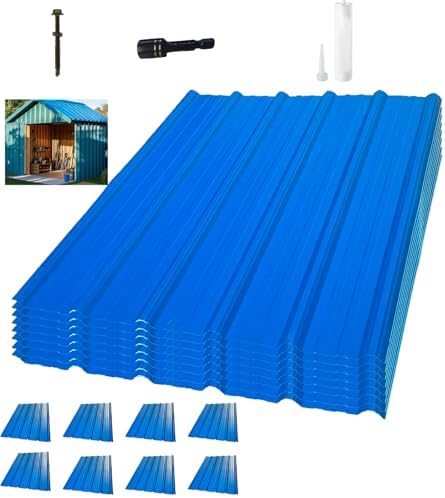
This set includes eight PVC sheets, each listed as 53 by 44.5 inches, with a stated total coverage of 131 square feet. That coverage figure gives you a useful starting point when planning a roof, though the product details do not explain how much the required overlaps reduce the finished area.
The listing describes the panels as weather-resistant and says they help limit heat transfer and sound. It also claims flame-retardant properties, but does not provide supporting test details in the supplied information. If fire performance is important for your project, confirm the product documentation and local requirements rather than relying on a brief listing claim.
As with the Hohuqeri set, the description does not identify these panels as clear or transparent. The pack may work for a shed or other roof where daylight transmission is not a requirement, but it is not a dependable choice for a greenhouse or bright patio cover without confirmation of the finish.
Pros:
- Lists dimensions for each of the eight panels
- Provides a stated total coverage figure for project planning
- Product description highlights weather and corrosion resistance
- Claims heat- and sound-reducing properties
Cons:
- Clear finish is not specified
- Overlap details and documentation for the flame-retardant claim are not provided
Verdict: Consider this pack if its listed coverage suits your project and transparency is not needed; confirm overlap and material details before ordering.
Generic Clear Polycarbonate Panel: Transparent Option, but Currently Unavailable

This is the only option in the supplied product information that is explicitly described as transparent. Its detailed description identifies the material as polycarbonate and highlights daylight transmission, impact resistance, and outdoor use for places such as greenhouses, patios, pergolas, and sunrooms.
That material distinction matters: the product title includes PVC-related wording, but its description says polycarbonate. Treat it as a polycarbonate option, not a confirmed clear PVC panel. Polycarbonate may suit a project where light transmission is a priority, but the supplied details do not give panel dimensions, thickness, or a specific installation layout, making it harder to calculate coverage or compare strength.
The product is listed as unavailable, so it is not a practical immediate purchase. If it returns to stock, check the material, dimensions, thickness, and installation guidance on the listing before deciding whether it fits your roof.
Pros:
- Described as transparent for natural daylight
- Listing highlights impact resistance and UV-resistant performance
- Named uses include greenhouses, patios, pergolas, and sunrooms
Cons:
- Described as polycarbonate, not PVC
- Currently unavailable, with no panel dimensions or thickness supplied
Verdict: This is the closest match for a clear roof in the supplied options, but it is polycarbonate rather than confirmed PVC and is currently unavailable.
How to Choose a Clear Roof Panel
Confirm the Material and Transparency
“Plastic roofing” can refer to different materials, and product titles do not always make the distinction clear. Check the detailed specifications for both the material and whether the panel is transparent, translucent, or opaque. If keeping a greenhouse or patio bright is your priority, do not assume a PVC panel is clear unless the listing says so.
Measure the Roof and Account for Overlap
Measure the roof surface before comparing pack sizes. Corrugated sheets usually need to overlap, which means the installed coverage can be smaller than the total area suggested by the panel dimensions. Look for clear guidance on side and end overlaps, then leave room in your estimate for those seams and roof edges.
Check Thickness, Support Spacing, and Load Guidance
Panel thickness alone does not tell you how much weight a roof can safely support. Look for the manufacturer’s guidance on support spacing, fastening, and expected loads. The product information here does not provide detailed load ratings, so do not treat broad claims about snow, wind, or foot traffic as a substitute for project-specific instructions.
Review the Installation Details
Check how the panels should be cut and fastened, which side faces outward, and whether the included screws and washers suit your roof structure. The Hohuqeri description specifies different fastening locations for roofs and walls, while the other listings provide less installation detail. Follow the product directions and use appropriate safety equipment when cutting or installing panels.
Think About Heat, Light, and Noise
A clear roof can bring daylight into a space, but the amount of light and heat it lets through depends on the panel and its finish. Opaque or insulated sheets may be a better fit when shading or reducing heat transfer is more important than brightness. If rain noise matters, look for specific product information about sound reduction rather than assuming all plastic panels perform the same way.
Verify Availability and Missing Specifications
Before choosing, confirm that the product is available and that its current listing still matches the details you need. Missing dimensions, thickness, overlap guidance, and material information can make it difficult to estimate cost and coverage. When a specification matters to safety or fit, verify it with the manufacturer instead of guessing.
Frequently Asked Questions
Are the PVC panels in this comparison clear?
The supplied descriptions for the Hohuqeri and Ywie up PVC panels do not specify that they are clear. Do not count on either one to transmit daylight unless the product listing confirms its finish.
Which option is explicitly described as transparent?
The Generic panel is described as transparent, but its detailed specifications identify it as polycarbonate rather than PVC. It is also listed as unavailable.
Can I use these panels for a greenhouse?
The polycarbonate option names greenhouses as a suitable use, but it is unavailable and lacks dimensions in the supplied details. The PVC options do not specify transparency, so verify the finish before using them where plant light is important.
How much coverage does the Ywie up set provide?
The listing states that the eight-panel set covers 131 square feet. Since the supplied details do not explain how overlap changes the installed area, confirm the layout and required overlap before purchasing.
Do the product descriptions provide snow or wind ratings?
The Hohuqeri description makes general claims about holding shape under snow and wind, but the supplied information does not include specific load ratings or installation limits. Ask for detailed manufacturer guidance before relying on a panel system for demanding conditions.
Are screws included with the panels?
The Hohuqeri set lists 200 screws and washers. The supplied description for the Ywie up set does not specify included fasteners, and the Generic panel information does not provide enough detail to confirm its package contents.
Conclusion
Of the three options, the Generic polycarbonate panel is the only one explicitly described as transparent, but it is unavailable and is not confirmed PVC. The two available PVC sets may suit covered structures where daylight is not essential, but their descriptions do not establish that they are clear. If you specifically need a clear PVC roof, verify the material and transparency on the product listing before ordering; if you are open to polycarbonate, compare its full dimensions and installation details first.
