
Clear roof sealants can help protect shingles, metal, flashing, and other roof details, but they are not all meant for the same job. Some are paint-like coatings for broad areas, while others work best for sealing a seam or patching a leak. Our picks include options for both types of repair, with key differences in surface compatibility, application, coverage, and cure time.
Table of Contents
Quick Comparison
| Product | Best for | Notable feature | Format |
|---|---|---|---|
| Sashco 14004 Clear Roof Sealant | Repairs on mixed roofing materials | Can bond to wet surfaces | Brush-grade, 1 gallon |
| Liquid Rubber Color Roof Sealant | Flat, low-slope, and metal roofs | Flexible membrane coating | Liquid coating |
| Titebond WeatherMaster Metal Roof Sealant | Metal roof seams and details | Flexible, crystal-clear seal | 9.5-ounce cartridge |
| Jetcoat Shingle Seal Clear Drying Coating | Broad coating of compatible shingles | Dries clear | 4.75 gallons |
| DAP Ultra Clear Roof Waterproof Sealant | Small roof repairs and leak details | Rain-ready and tack-free in 10 minutes | 32 ounces |
Our Picks: Best Clear Roof Sealant Paint reviews
Best All-Around Repair Sealant: Sashco 14004 Clear Roof Sealant

Sashco 14004 is a brush-grade co-polymer rubber sealant for repairs on shingles, metal, brick, tile, and other listed surfaces. Its standout feature is that it can bond to wet roofing materials, flashing, and gutters, so it may suit a repair that cannot wait for a dry day. Always follow the label directions and use care when working on a wet roof.
Once cured, the sealant is designed to handle temperatures from -30°F to 200°F. It can be applied down to 0°F, and it does not require primer on the surfaces named in the product information. The finish is paintable: latex paint can be applied in as little as one to two days, while oil-based paint requires a longer wait. The listed coverage is about 12.8 square feet per gallon at an eighth-inch thickness, so it is better suited to repairs than to coating a whole roof.
Compared with the cartridge-style choices below, this gallon container is more practical for spreading sealant across a larger repair area. Its main trade-off is cure time: the product information says it takes about a week to cure fully. Consider that before choosing it for a repair that needs a quick return to service.
Pros:
- Can bond to wet shingles, flashing, and gutters
- Works across several listed roofing and building materials
- Paintable after the specified waiting period
- Wide cured service-temperature range
Cons:
- Full cure takes about a week
- Listed coverage is limited at the specified application thickness
Verdict: Choose Sashco for a substantial, mixed-surface repair where wet-surface bonding and a paintable finish matter more than fast full curing.
Best Flexible Coating for Flat and Metal Roofs: Liquid Rubber Color Roof Sealant
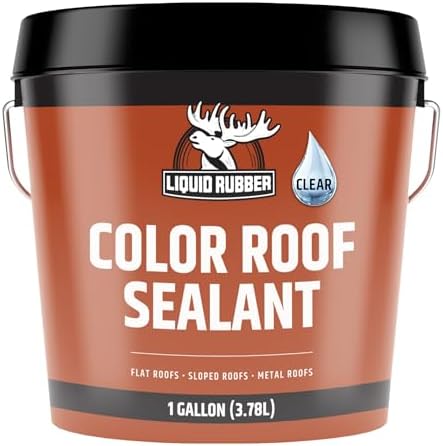
Liquid Rubber is a water-based elastomeric coating intended for flat, low-slope, and metal roofs. Rather than acting like a small-area caulk, it builds a flexible, seamless membrane when applied in multiple heavy coats. The product information lists up to 900% elongation, a feature intended to let the cured layer flex with roof movement.
Apply it to clean, dry surfaces with a brush, roller, or airless sprayer. Coverage depends on the finished membrane thickness: the listed estimate for a five-gallon pail is about 75 square feet on flat roofs or up to 150 square feet on sloped or metal roofs. The coating typically reaches full cure within 24–48 hours. It is not intended for surfaces that people walk on, and the product may remain tacky, so it is not a fit for every roof area.
This is the broad-area option in the lineup, unlike Titebond or DAP, which are better suited to joints and smaller repairs. The listing describes it as clear, but because roof coatings may have variants, check the selected product and label before ordering if a transparent finish is essential. For seams, vents, and other penetrations, the manufacturer recommends reinforcement with seam tape or geotextile and suggests primer for challenging surfaces.
Pros:
- Designed for flat, low-slope, and metal roofs
- Forms a flexible membrane with multiple coats
- Can be applied by brush, roller, or airless sprayer
- Water-based formula with low odor and no harsh solvents, according to the product description
Cons:
- Requires multiple heavy coats and careful coverage planning
- Not intended for walking or traffic-bearing areas
Verdict: Pick Liquid Rubber when you need a coating for a suitable broad roof area and can follow its dry-surface, multi-coat application requirements.
Best for Metal Roof Joints: Titebond WeatherMaster Crystal Clear Sealant

Titebond WeatherMaster is a crystal-clear elastomeric sealant supplied in a 9.5-ounce cartridge. It is made for targeted sealing work rather than painting a large roof surface. The product description lists adhesion to aluminum, copper, galvanized steel, Kynar-coated metals, and most building materials, making it a focused option for metal roof joints and details.
The sealant is described as permanently flexible, with ±50% joint movement and zero shrinkage. It is also designed to resist water, wind, dust, and dirt, and can adhere to wet or damp surfaces. The product information says it can be extruded in hot or cold conditions and is UV-resistant. These qualities make it a useful contrast to the gallon-size coatings: it is easier to direct into a seam, but its cartridge format is not practical for covering a broad roof area.
Its listed uses include metal roofs, windows, doors, siding, gutters, and vents. If the job is mainly a leaky joint or connection, a cartridge can offer more control than a brush-grade coating. For broad shingle protection or a continuous roof membrane, choose a product designed for coating instead.
Pros:
- Crystal-clear finish for visible joints and details
- Designed to stay flexible and accommodate joint movement
- Adheres to several common roofing metals
- Can adhere to wet or damp surfaces, according to the product description
Cons:
- Cartridge size is intended for targeted sealing, not broad coverage
- Best suited to joints and details rather than coating shingles
Verdict: Choose Titebond for clear, flexible sealing around metal roof seams and related exterior details, not for painting an entire roof.
Best Clear-Drying Shingle Coating: Jetcoat Shingle Seal

Jetcoat Shingle Seal is a clear-drying acrylic coating intended for asphalt, fiberglass, and slate shingles. The stated goal is to help protect the existing roof surface without changing its original color or appearance. It can also be used on listed wall materials such as concrete, brick, stucco, and wood, which gives it uses beyond shingles.
The coating can be applied by brush, roller, or sprayer. The listed coverage is about 100–200 square feet per gallon, depending on how porous the surface is. That range makes it important to estimate based on your roof’s condition rather than assuming the highest figure. The product description says it helps shield surfaces from sun, rain, ice, and snow, but it should not be treated as a substitute for repairing damaged shingles or correcting a roof problem that needs professional attention.
This is the most directly paint-like choice here for a broad shingle surface, while Sashco, Titebond, and DAP focus more on repairs and seams. The supplied listing is marked unavailable, so check whether it can be purchased before planning a project around it.
Pros:
- Designed to dry clear on listed shingle types
- Suitable for asphalt, fiberglass, and slate shingles
- Can be applied with a brush, roller, or sprayer
- Listed coverage varies by surface porosity, allowing for different roof conditions
Cons:
- Supplied listing is marked unavailable
- Coverage can vary widely with surface porosity
Verdict: Jetcoat is worth considering for a clear-drying coating over compatible shingles, provided the listing is available and the roof surface is in suitable condition.
Best for Small, Fast Roof Repairs: DAP Ultra Clear Rubberized Sealant

DAP Ultra Clear is a synthetic rubber roof sealant in a 32-ounce container. It is intended for smaller repair jobs on shingles, roof tiles, flashing, gutters, skylights, vents, and similar areas. The clear formula is described as more transparent than silicone and designed not to yellow, crack, crumble, or break down over time.
The product is described as rain-ready immediately and able to adhere to wet or damp surfaces. It dries tack-free in 10 minutes and is designed to remain flexible in cold weather. Its application temperature range is 0°F to 120°F. Those features make it a practical choice for a focused repair, but a 32-ounce container is not the right format for coating a large roof area.
Compared with Titebond’s cartridge, DAP comes in a larger container; compared with Sashco’s gallon, it is easier to reserve for a smaller patch. Check the label for application details and use it only on compatible surfaces. If you need a continuous membrane or a clear coating over many shingles, a roof coating is a better match.
Pros:
- Rain-ready immediately, according to the product description
- Adheres to wet and damp surfaces
- Dries tack-free in 10 minutes
- Designed to stay flexible in cold weather
Cons:
- Small container is not suited to broad roof coverage
- Application temperature range is limited to 0°F–120°F
Verdict: Choose DAP for a small, clear roof repair where quick rain readiness and a flexible seal are priorities.
How to Choose a Clear Roof Sealant or Coating
Match the product to the size of the repair
A roof coating and a repair sealant do different jobs. A brushable or rollable coating is meant to cover a broader surface, while a cartridge or small container is easier to use around joints, vents, flashing, and isolated leaks. For a large area, check the stated coverage and the number of coats needed. For one seam or patch, a targeted sealant can be more practical and easier to control.
Check the roof material
Look for your exact roof material in the product information. The options here list different compatible surfaces: Sashco covers several materials, Titebond emphasizes metal and exterior joints, Jetcoat names asphalt, fiberglass, and slate shingles, and Liquid Rubber is aimed at flat, low-slope, and metal roofs. Do not assume that a product suitable for metal will also work on every shingle or membrane.
Decide whether you need a clear finish
“Clear” can describe a sealant’s appearance, but it does not automatically mean the product is intended to coat a full roof without changing its look. If appearance is important, confirm that the product is clear-drying and intended for your roof type. Also check whether it is paintable and how long you must wait before painting; Sashco lists different wait times for latex and oil-based paint.
Consider surface moisture and weather
Some products in this guide are described as adhering to wet or damp surfaces, while Liquid Rubber calls for a clean, dry surface. Application temperature limits also differ. Check the label before starting, and do not treat a wet-surface claim as permission to work on a slippery roof. Roof work can be dangerous, especially in rain, wind, or cold conditions.
Plan for application and curing
Brush, roller, sprayer, and cartridge application suit different jobs. A broad coating may need several coats and enough time to dry fully. A repair sealant may be ready for rain sooner, but still require longer to cure. Follow the product’s instructions for thickness, preparation, recoat timing, and cure time rather than applying a thin coat just to stretch coverage.
Check whether the roof needs repair first
Sealant can help with a suitable leak or surface protection task, but it cannot fix every roofing problem. Loose, missing, or badly damaged shingles, failing roof structure, and persistent leaks may need a proper repair rather than another coating. If you cannot identify the source of a leak or safely reach the area, consider getting help from a qualified roofing professional.
FAQs
Is clear roof sealant the same as clear roof paint?
Not always. Some products are coatings designed to cover broader roof areas, while others are flexible sealants intended for seams and small repairs. Check the product’s intended use and surface compatibility before buying.
Which option is best for a wet-surface repair?
Sashco, Titebond, and DAP are described as able to bond to wet or damp surfaces, though their uses and application details differ. Liquid Rubber, by contrast, calls for a clean, dry surface. Always follow the label and avoid working on a slippery roof.
Which product is better for a metal roof?
Titebond is designed for metal roof joints and details, with listed adhesion to several roofing metals. Liquid Rubber is intended as a broader coating for metal roofs. The better choice depends on whether you need to seal a seam or coat an area.
Can I use a clear sealant to coat my whole roof?
Only if the product is specifically intended for broad-area roof coating and is compatible with your roof material. Cartridge sealants and small repair products are not designed for whole-roof coverage. Check the coverage rate and coat requirements before estimating how much you need.
How long does roof sealant take to cure?
Cure time depends on the product. The supplied information says Sashco takes about a week to cure fully, Liquid Rubber typically cures within 24–48 hours, and DAP dries tack-free in 10 minutes. Tack-free, rain-ready, and fully cured are different conditions, so check the product directions.
Can roof sealant be painted?
Sashco is described as paintable, with latex paint listed after one to two days and oil-based paint after a week. The other product descriptions do not provide the same paint-over timing, so check their labels before applying paint.
What should I do if a roof leak keeps returning?
A recurring leak may point to a damaged area or a problem that sealant alone cannot solve. Recheck the source, inspect the roof only if you can do so safely, and consider a roofing professional if the leak persists or the damage is difficult to identify.
Final Recommendation
For a versatile repair across several roof materials, Sashco 14004 is the strongest all-around fit in this group, especially when wet-surface bonding and a paintable finish are useful. Choose Jetcoat for a clear-drying shingle coating if it is available, Liquid Rubber for a broad membrane-style application on a compatible roof, Titebond for metal joints, or DAP for a smaller repair that needs quick rain readiness. The right pick depends on the repair area, roof material, and application conditions—not simply whether the product is labeled clear.
