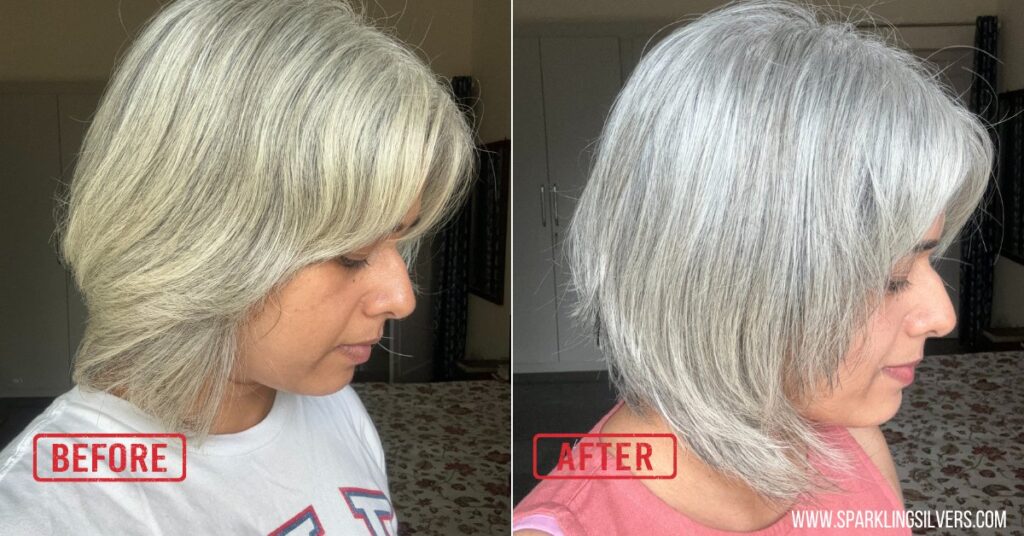
Using a shampoo for gray hair purple formula neutralizes yellow brassiness in one to three minutes using a quarter-sized amount once weekly. It cools warm tones by depositing violet pigment onto the hair shaft. This routine suits natural silver strands and bleached gray hair best when mineral deposits or sun exposure turn them dull.
Table of Contents
Supplies for your purple shampoo routine

- Violet toning shampoo formulated specifically for gray, silver, or white hair without heavy sodium lauryl sulfate.
- Hydrating conditioner or a deep conditioning mask to restore moisture after toning.
- Plastic hair clip to section thick strands during application.
- Old towel that you don’t mind staining with violet pigment.
- Nitrile or latex gloves if you have dry cuticles that absorb color easily.
A blue shampoo isn’t a workable substitute because orange undertones need blue, while yellow gray tones require purple; however, a purple hair mask works well instead of shampoo if your hair is severely dry.
Step-by-step
- Wet your hair thoroughly with lukewarm water.
- Pour a quarter-sized amount of purple shampoo into your hands for short hair, or double that amount for hair past your shoulders.
- Lather the shampoo across your wet palms first before touching your head.
- Apply the lather directly to the yellowest areas first, which are usually the crown and the ends around your face.
- Massage gently through the rest of your hair for two minutes, keeping the pressure light so you don’t irritate the scalp.
- Leave the suds in place for one to three minutes; if your hair is fine or porous, rinse after just 60 seconds.
- Rinse completely with cool water until the stream runs totally clear and no violet bubbles remain.
- Coat your hair from mid-lengths to ends with two tablespoons of deep moisturizing conditioner, then wait three minutes before washing it out.
Tip: If your strands look dull, lather with regular clear shampoo first to lift scalp oil, then apply your purple wash on the second pass.
Careful: Leaving purple pigment on dry ends for longer than five minutes turns porous silver hair into an unnatural pastel lavender.
If you want an all-over platinum toner with high-volume chemical developer rather than a surface wash, book a licensed cosmetologist who can test your hair strength safely.
Tone adjustments across hair types
Your hair texture changes how fast the violet dye binds to each strand.
| Situation | Time or product cost | Difference in application | What to watch closely |
|---|---|---|---|
| Coarse natural gray hair | 3 to 5 minutes contact time | Needs more shampoo volume to coat dry, wire-like strands fully | Watch for uneven tone near the roots |
| Fine silver strands | 1 to 2 minutes contact time | Absorbs pigment rapidly; use half a quarter-sized dollop | Watch for lavender tinting on the ends |
| Bleached gray or platinum | 1 minute maximum | Highest porosity; dilute with equal parts regular shampoo | Watch for instant purple staining on pale spots |
| Salt-and-pepper mix | 3 minutes contact time | Dark strands remain unchanged while white strands brighten | Watch the contrast between dark and light patches |
It’s safer to rinse after two minutes on your first try and repeat next week than to leave it on too long and scrub out purple stains.
How to tell you did it right

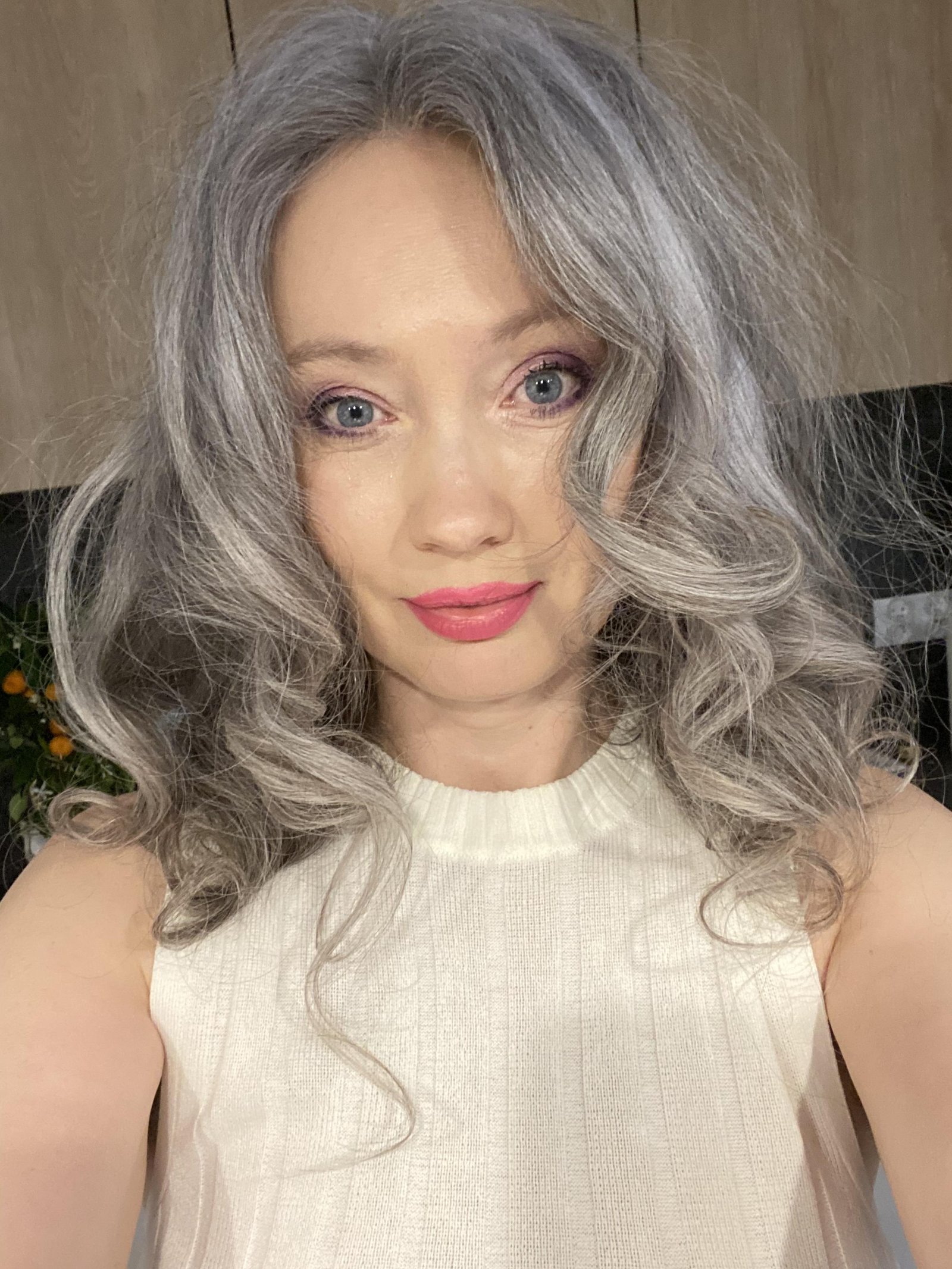
A good result shows clean, bright silver strands with a clear, reflective shine under natural daylight. A poor result leaves gray hair looking dusty, overly dark, or stained with faint lilac spots along porous ends.
This tinting problem happens because damaged, dry gray hair absorbs violet direct dyes much faster than healthy hair cuticles can reflect them. Leaving the lather on your hair for too long or using it daily will strip away moisture and cause pigment build-up. To prevent this, rotate your purple formula with a regular sulfate-free shampoo, always finish with a rich conditioner, and rinse with cool water to seal the hair shaft flat.
Product safety and hair care habits
Cosmetic color additives in shampoos are regulated under the U.S. Food and Drug Administration cosmetics guidance, which advises testing any tinted product on a small patch of skin behind your ear 48 hours before full use.
Wipe down your shower walls, clear off porcelain surfaces immediately to stop dyes from staining your tile grout, and store the bottle tightly closed away from direct heat. A single wash keeps yellow tones away for a period, depending on how often you shower. This routine isn’t for people with dark brown or red hair who want ash tones, because purple pigment has no visible effect on dark hair. A common mistake is using purple shampoo every day; this dries out aging hair cuticles and leaves locks looking brittle and flat.
Alternative brassiness solutions
In-salon gloss treatments
A salon gloss uses a professional demi-permanent glaze applied by a stylist. This route costs more money than an at-home bottle, but the balanced tone lasts between four and six weeks without drying your ends.
Tinted violet conditioners
A purple conditioner replaces your regular moisture step instead of your wash step. It deposits slightly less pigment than a purple shampoo, which lowers the risk of dark staining while giving fragile, brittle gray hair much better hydration.
Shower head hard water filters
An attachable shower filter may reduce chlorine levels in tap water. This hardware upgrade stops hair from turning yellow at the physical source, reducing how often you need any purple toner at all.
Frequently asked questions
Can purple shampoo ruin gray hair?
No, purple shampoo won’t ruin your hair permanently, but leaving it on too long stains porous strands lavender. Wash with a clarifying shampoo once or twice to strip out the excess dye if your hair turns purple.
Why did my gray hair turn yellow?
Gray hair can appear yellow due to the accumulation of environmental pollutants, minerals, or styling products on the hair shaft. These elements oxidize on the hair shaft and create a brassy, dull tint.
How often should you use it?
Use it regularly under normal conditions. If you wash your hair every day, use your standard moisture shampoo for most days and swap in the purple bottle occasionally to prevent pigment buildup.
What happens if you apply it to dry hair?
Applying purple shampoo to dry hair causes deep, uneven purple staining because dry cuticles soak up dye like a sponge. Always wet your hair completely with warm water first so the violet pigment spreads evenly across every strand.
Is purple shampoo safe for daily use?
No, it isn’t formulated for daily washing because the toning pigments build up quickly and make gray hair look dark and muddy. Most formulas also contain fewer conditioning agents, which leaves your hair dry if used without a break.
Final Thoughts
Consistency is key to keeping your silver strands looking vibrant and bright. If you notice your hair still feels a bit dry, try adding a deep conditioning mask to your routine next weekend. You’ll find that a little extra moisture makes your beautiful, cool-toned color shine even more than before.