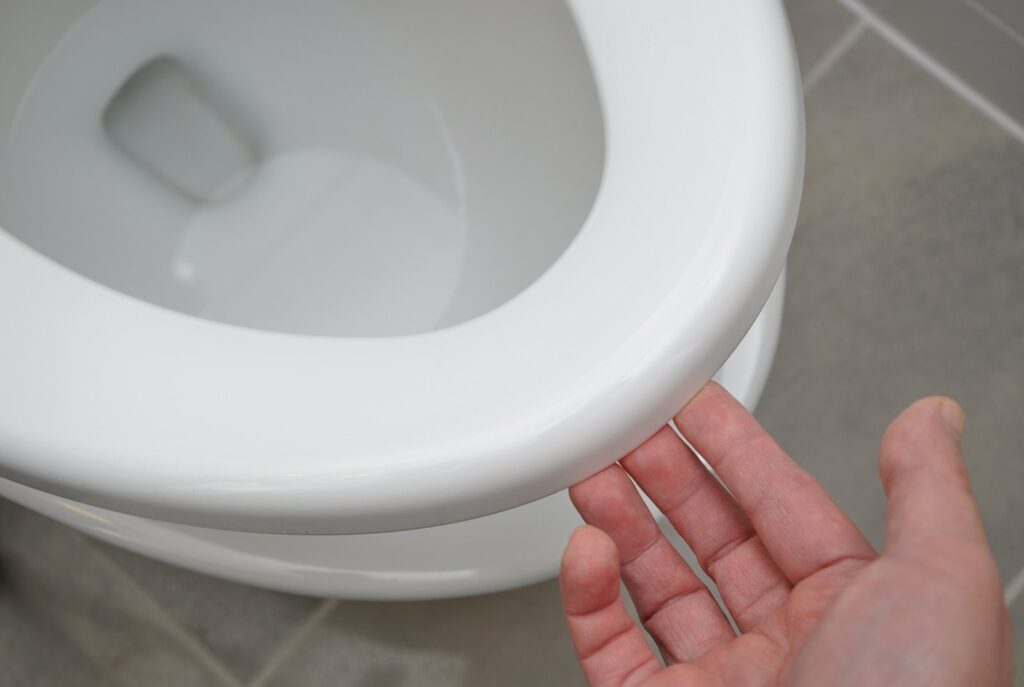
Down is the correct answer. Closing the lid before you flush is the single best practice because science favors keeping it shut. Push the lid fully down right now before you hit the flush handle.
Table of Contents
When to leave the toilet lid down
Your living space and bathroom layout determine how strictly you must enforce this habit.
| Your situation | Answer | Why |
|---|---|---|
| Toothbrush sits near bowl | Down | Stops airborne droplets from landing |
| Pets drink from bowl | Down | Prevents poisoning from chemical bowl cleaners |
| Small children in house | Down | Avoids head-first drowning hazard |
| Commercial stall with no lid | Up | Lid doesn’t exist on fixture |
| Airing out bleach fumes | Up | Trapped gas damages metal hinge screws |
| Showing home for sale | Down | Looks neat and smells cleaner |
Toilet plume and airborne droplets
Flushing with the lid up throws tiny drops of dirty water directly into your room. When water rushes into the bowl, turbulence breaks the liquid into an aerosol spray called a toilet plume. Research by the CDC on infection control tracks how droplet spread can coat nearby bathroom surfaces. These invisible drops settle on towels, counters, and sink fixtures within five feet of the bowl.
The trade-off is simple: keeping the lid down traps moisture inside the bowl, which means you must scrub the plastic underside more often to prevent yellow mildew rings. But shutting it keeps bacteria off items you touch with your face. A simple honest limit applies here: this varies by model — check the label on dual-flush or pressure-assisted units, since high-power flush mechanisms generate significantly stronger spray velocity than standard gravity valves. If your counter sits within arm’s reach of the bowl, shut the lid every single time; if your toilet sits alone inside its own separate water-closet room without a vanity, keeping it up is harmless to hygiene.
Better hygiene habits around the bowl
Follow these five practical steps to lower contamination in your bathroom.
- Lower both seat and lid before touching the handle to block the initial upward burst of fine water mist.
- Hit the flush lever firmly while standing completely upright to stay clear of any edge gaps. The bowl empties completely and fills with fresh water quietly.
- Wait ten seconds before lifting the lid to let any trapped suspended mist fall back into the fresh bowl water. Lifting it immediately releases the mist you just trapped.
- Move toothbrushes away by at least four feet from the rim, or place them inside a closed medicine chest. The brush head stays dry and free of room dust.
- Wipe the lid underside regularly using an EPA-registered disinfectant spray to strip trapped residue. The plastic surface looks clean and loses that stale restroom odor.
This routine isn’t for people using public commercial restrooms that use lidless commercial flush valves.
The common cleaning mistake
People often spray strong toilet bowl cleaner, immediately slam the lid shut, and walk away. That mistake costs you the price of a brand-new toilet seat, usually within six months. Concentrated acid or bleach cleansers release caustic vapors as they sit in the standing water. You can avoid this expense with one simple check: look at the liquid in the bowl; leave the seat and lid raised for ten minutes while the cleaner works, scrub the porcelain, flush the cleaner away, and only then shut the lid.
When to stop and get help
Some toilet problems go beyond personal habits and need professional tools:
- Water rises near the rim when flushed, which means a main sewer line clog needs an auger.
- The porcelain base rocks sideways, because a broken wax ring leaks sewer gas into your floor.
- A deep hairline crack appears in the tank or bowl, which risks sudden shattering under water pressure.
Call a licensed plumber right away when you see water pooling around the floor bolts. Working on cracked porcelain carries a severe laceration risk that no homeowner should handle alone.
Frequently asked questions
Does closing the lid stop germs?
Yes, it stops the large droplets from spraying out. While microscopic air particles might still slip past the side rim cracks, shutting the cover prevents water from splashing onto counters, hand towels, and nearby brush heads.
Why do public toilets have no lids?
Public toilets skip lids because high-traffic restrooms can’t rely on visitors to touch them cleanly. Lids in busy venues break quickly under heavy wear, collect dirt, and slow down maintenance crews who clean stalls rapidly.
Is it safe to leave the lid up with cats?
No, leaving it up is dangerous for pets. Cats can slip head-first into the water, and drinking stagnant water coated with chemical toilet cakes or chlorine cleaners poisons them quickly.
What happens if you never close the toilet lid?
Your entire bathroom collects a thin film of dried flush droplets over time. Walls, cabinet handles, and vanity items within five feet will gather aerosol residue every single time someone flushes waste.
How long do toilet germs stay in the air?
A functioning bathroom exhaust fan pulls this air outside much faster, clearing the room within five to ten minutes.
Does it matter if the seat is left up?
Yes, leaving the seat up exposes bare porcelain edges to moisture and dirt. It also creates a fall risk at night for household members who sit down without looking in the dark.
What to do next
Make a strict house habit to close the cover completely before you touch the flush valve. You’ll notice cleaner counters and no stray droplets on your nearby vanity mirror after a few days. If the bowl ever bubbles backward or drains slow while the lid is shut, stop flushing and clear the drain pipe immediately.