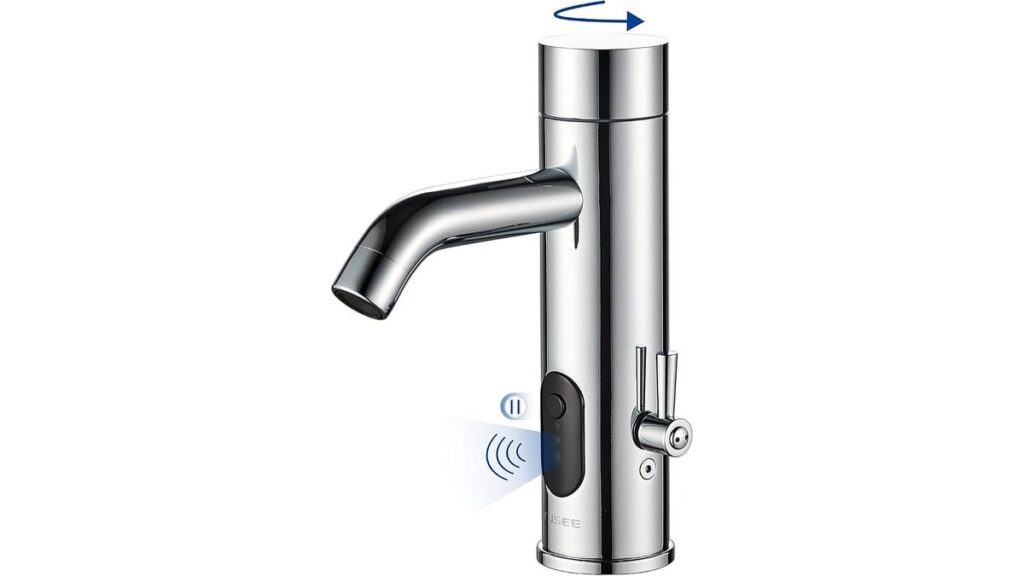
A top-mount mixer lever provides the most practical setup for touchless bathroom faucets with temperature control because it lets you adjust heat instantly above the sink deck without touching the spout. Under-sink mechanical mixing valves work better only if you have small children and need a locked, tamper-proof temperature that prevents accidental burns.
Table of Contents
Comparing touchless faucet temperature control
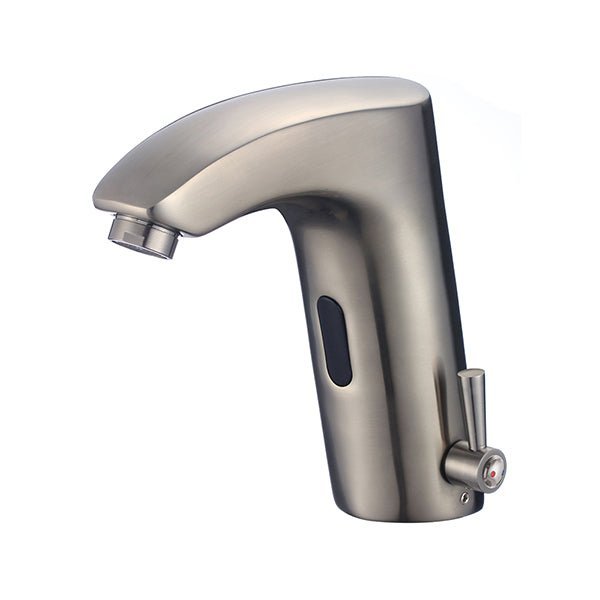
Choosing how your hands-free faucet blends hot and cold water depends on whether you prefer quick adjustments or set-and-forget safety.
Above-deck manual mixing handles
This setup places a small rotating lever on the side or base of the spout body.
- Shut off both hot and cold supply stops under your sink by turning the oval handles fully clockwise.
- Insert the faucet threaded shank through the center basin hole and secure the mounting nut from below.
- Thread the hot and cold supply lines directly to the mixing base inlets using an adjustable wrench until snug, plus one-quarter turn.
- Mount the battery pack to the back wall and connect the sensor wire to the solenoid valve clip.
This design gives you fast temperature changes for washing your face or brushing your teeth without reaching under the cabinet. The main trade-off is surface clutter, since the handle collects water droplets that dry into mineral spots. If your vanity has non-standard pre-drilled holes, you’ll need an adapter plate to cover open gaps.
Under-sink thermostatic mixing valves
This option hides a mechanical brass blending valve out of sight beneath the counter.
- Turn off your main water supplies and open your old faucet to relieve remaining water pressure.
- Screw the mixing valve’s two intake ports directly onto the wall shut-off stops using fresh plumber’s tape.
- Connect the valve’s single blended outlet hose to the inlet of your touchless solenoid unit.
- Rotate the valve’s plastic adjustment cap clockwise for cooler water or counter-clockwise for warmer water.
This method completely prevents scalding because visitors can’t accidentally shift a hot lever while washing hands. It also keeps your sink rim clear and minimal. The main drawback is inconvenience: if you want colder water to drink, you must open the vanity cabinet and turn the valve cap by hand. For homes where people share a single guest powder room, this fixed setting avoids unexpected hot surprises.
Digital electronic control modules

A powered wall module regulates your hot and cold lines using internal motorized valves and a digital display.
- Fasten the electronic control box to the cabinet wall within three feet of an unswitched electrical outlet.
- Plumb the dedicated hot and cold lines into the labeled electronic box intakes using compression nuts.
- Run the low-voltage power and data cords from the box to the sink-mounted spout and touch screen.
- Plug in the transformer, initiate the device’s automatic calibration cycle, and pick your target warmth.
These units let you set an exact water temperature by degree using an illuminated screen or remote dial. They also maintain that warmth evenly during system-wide pressure changes elsewhere in the plumbing. The weakness is electrical reliance: if your power goes out and the unit lacks backup cells, you can’t use the sink.
A four-pipe dual-solenoid setup exists in some commercial spaces, but its complex wiring and industrial cost make it impractical for normal residences.
Which one should you use?
If you’re in a hurry, pick an under-sink mechanical valve because it threads into standard shut-off stops with few tools and requires no complex wiring.
If you’re doing this for the first time, install an above-deck manual lever faucet. It connects just like a conventional bathroom fixture, so you won’t need to balance water pressures inside a separate junction box.
If you want the best possible result whatever it takes, choose a digital thermostatic box. It holds target heat levels steadily and provides real-time digital readouts.
The central trade-off is between convenience and reach: above-deck handles allow instant warmth adjustments but need frequent wiping, while under-counter valves keep counters clean but require opening cabinets to change the warmth.
The rules that apply whichever way you choose
Always verify that your equipment complies with CPSC hot water safety guidance by setting domestic water heaters to a maximum of 120°F (49°C) to prevent severe scalds.
Before loosening any fittings, place a bucket beneath the shut-off stops to catch trapped line water. Check for leaks at every threaded joint fifteen minutes after turning the supply back on, wiping connections with a dry paper towel to spot small seeps. Finally, flush the lines for two minutes without the aerator attached to purge construction debris.
If your home lacks a grounded outlet under the vanity for a wired controller, hire a licensed electrician to run the circuit safely.
Frequently asked questions
Can touchless bathroom faucets work without electricity?
Yes, most touchless bathroom faucets operate on standard AA or AAA alkaline batteries stored in a waterproof casing under the counter. Models built with internal battery packs don’t require wall outlets or professional electrical work. If the batteries drain completely, the internal solenoid remains closed, stopping water flow.
Why does my sensor faucet run hot then cold?
Your water pressure is uneven between the hot and cold supply lines. When supply pressures don’t match, one line overpowers the other inside the mixing chamber. You can fix this by turning down the shut-off stop on the side that has noticeably higher flow.
How long do the batteries last in these faucets?
About one to two years under normal residential use of twenty activations daily. Battery life depends heavily on your sensor’s detection range settings and the brand of alkaline cells used. High-traffic guest bathrooms drain battery packs faster than low-use private bathrooms.
Is it safe to leave the temperature valve fully open?
No, leaving the valve turned to maximum hot risks immediate skin burns, especially for young children. Household water heaters often store water at higher temperatures to fight bacteria. Always blend in cold water at the valve so sink output never exceeds 120°F.
What happens if the infrared sensor fails?
The internal solenoid valve defaults to the closed position, shutting off the water. This safety mechanism prevents unexpected room flooding if the electronics get damaged. You must replace the sensor lens assembly or the solenoid pack to restore water service.
Can you adjust the water flow volume on touchless faucets?
Yes, you can regulate the volume by adjusting your under-sink supply stops. Closing the oval valves slightly reduces water velocity without affecting the motion detector. Many models also feature small flow-control screws located directly on the solenoid body.
Final Thoughts
Choosing the right setup makes your daily routine feel effortless and much cleaner. Once you’ve picked the best style for your home, don’t hesitate to check the plumbing under your vanity before you buy. You’ll be glad you did, as it’s the easiest way to ensure a smooth, stress-free installation.
Related guides
- 3 Handle Tub and Shower Faucet Guide for Bathroom Upgrades
- Boosting Water Pressure With the Right Bathroom Faucet Guide
- Title How to Choose Furniture for a Bathroom