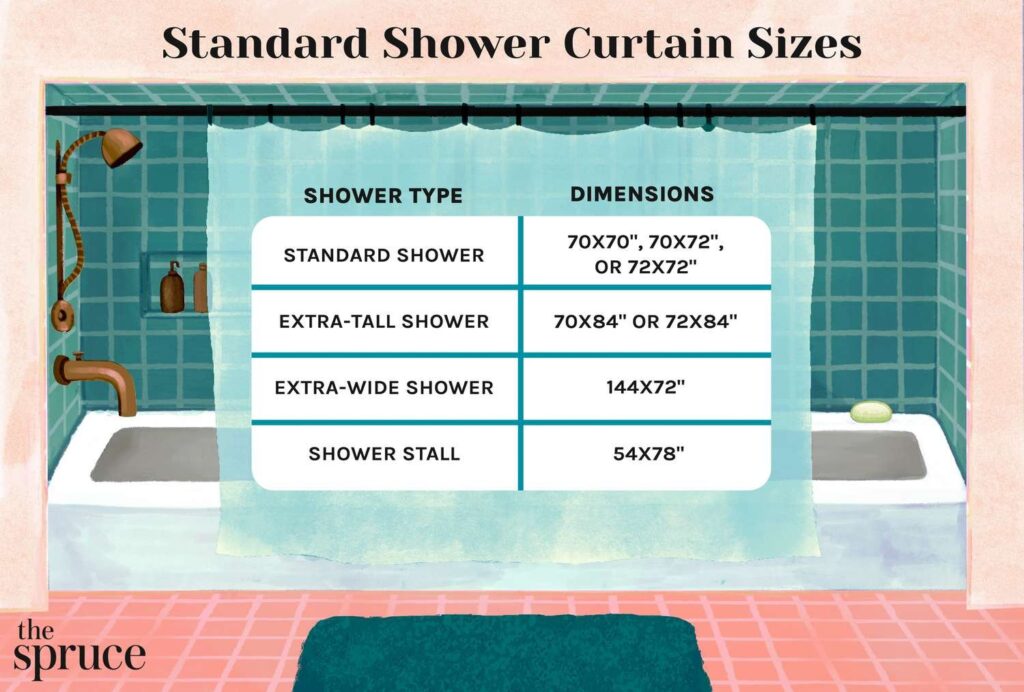
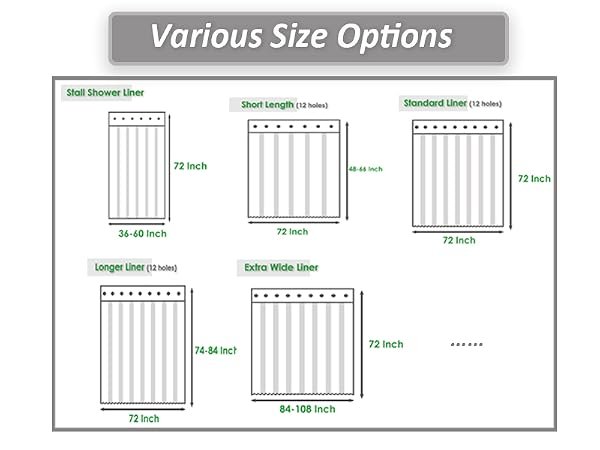
When sizing a bathroom tub, the standard shower curtain is 70 inches wide by 72 inches long, or 72 inches wide by 72 inches long depending on the brand.
A standard 60-inch tub needs extra curtain width to create folds that seal against the walls. If your curtain is too flat, water easily escapes past the sides.
The biggest mistake is buying based on tub width alone. Forgetting to account for the curtain rings drops the fabric too low, which bunches material onto the tub floor and traps standing water.
Table of Contents
Standard shower curtain measurements

- Measure the width of your shower opening from wall to wall using a metal tape measure. Add 8 to 12 inches to that number so the fabric folds naturally instead of pulling flat.
- Determine your rod position by measuring from the floor up to your chosen mounting height, which is usually between 75 and 77 inches for a standard rod.
- Measure from the top of the tub ledge up to the rod line to verify your vertical drop. Tip: If you use large decorative curtain rings, subtract 1 to 2 inches from your total curtain length to keep it from dragging.
- Calculate the needed fabric drop so the curtain hangs 1 to 2 inches below the inner tub ledge. This trade-off means you get great water containment, but you’ll need to tuck the liner carefully each time.
- Check your space for specialty needs; this layout isn’t for walk-in, curb-free showers that require weighted, floor-length designs.
How long it takes
Measuring and mounting a shower curtain takes very little time if your rod hardware is ready.
| Situation | How long | What changes it | What to watch for |
|---|---|---|---|
| Standard tub replacement | 5 to 10 minutes | Using hookless curtains versus clip rings | Ring drop length |
| Tension rod installation | 10 to 15 minutes | Spring tension strength and wall grip | Rod slipping on smooth tile |
| Permanent screw-mounted rod | 25 to 40 minutes | Wall material like ceramic tile or drywall | Level rod alignment across walls |
If your tension rod installation takes longer than 20 minutes, check your wall surfaces for built-up soap residue or uneven tile lines that prevent a clean grip.
How to tell when it’s done
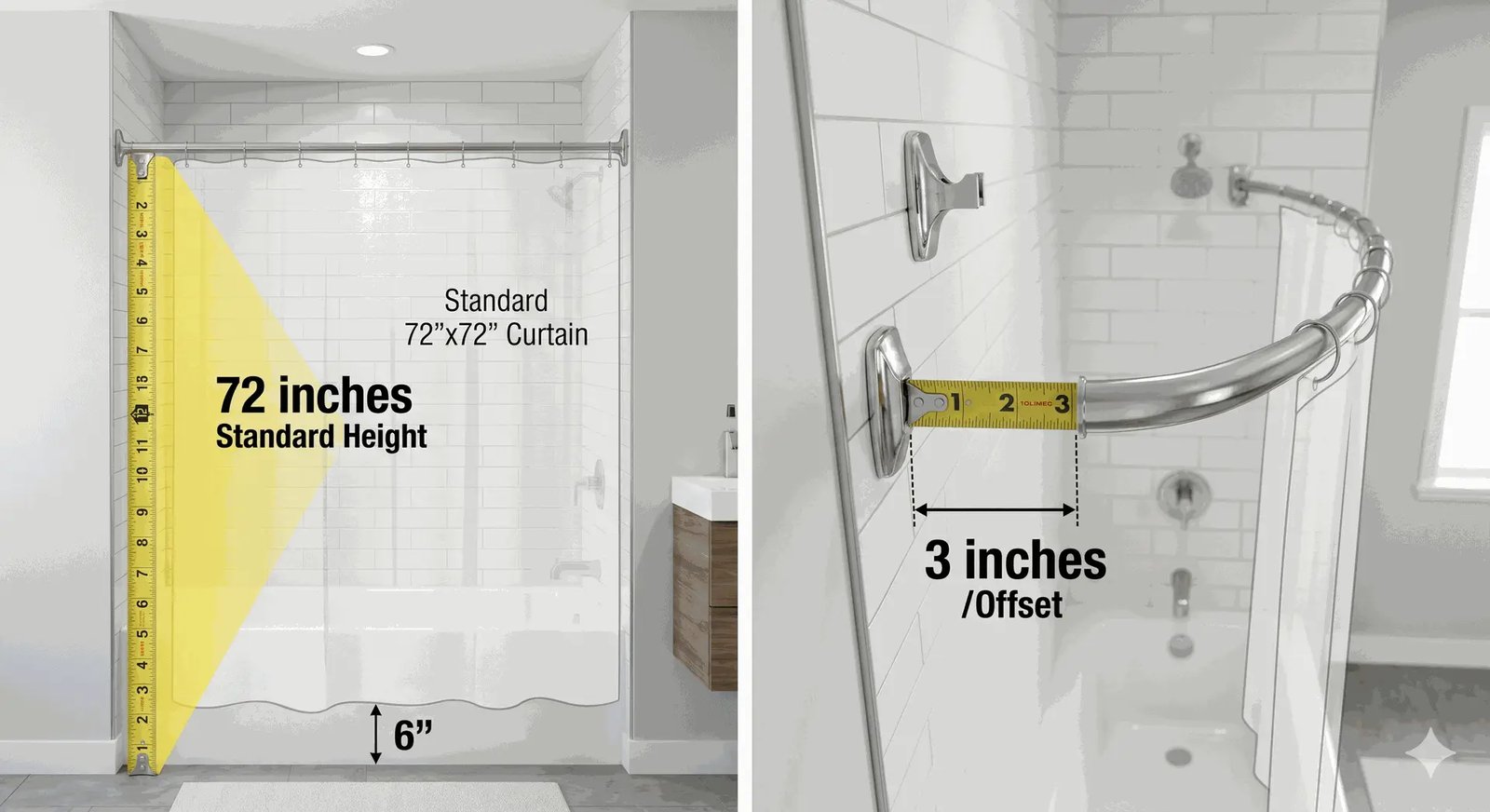
A correctly sized curtain hangs straight with smooth, even folds across the full length of the tub. The bottom edge of the outer decorative curtain should hang roughly 2 to 3 inches below the outer tub rim, completely hiding the tub’s top edge. Inside, your waterproof liner must reach at least 2 inches below the inner ledge without pooling on the basin floor.
To test it, turn the shower head on full blast toward the wall for 30 seconds. If no water splashes onto your floorboards, your drop and width work. Keeping water contained is critical because the EPA guide on mold cleanup warns that wet surfaces can grow mold within 24 to 48 hours.
Mistakes that ruin it
- Ignoring the hanging rings: Rings add 1 to 2 inches of length, which causes standard curtains to pool on the floor and gather dirty soap scum; measure your rod height with your rings attached to find your true fabric length.
- Buying the exact width of the opening: A curtain that matches your wall width exactly will pull completely flat and leave side gaps where water escapes; always buy fabric at least 8 inches wider than the stall.
- Letting the liner bunch at the bottom: A liner resting on the tub floor traps stagnant water and grows pink bacteria; if it touches the floor, raise your rod or trim an inexpensive plastic liner.
- Skipping the decision rule on curtain type: If your tub gets daily heavy use, do choose a separate inner liner and outer curtain; if it’s a rarely used guest bath, do choose a simple single-layer fabric combo. Note that fabric drop varies by model — check the label before you drill any holes.
What are the dimensions of a stall shower curtain?
A standard stall shower curtain measures 54 inches wide by 78 inches long. Stall showers are narrower than standard bathtubs, but they feature taller openings that need extra length to catch high splashing water from the shower head.
Why does a shower curtain blow inward during a shower?
Temperature differences create an air pressure imbalance known as the Bernoulli effect. Warm shower air rises rapidly toward the ceiling, which pulls cooler, heavier room air from the floor underneath your curtain. This inward airflow pushes the lightweight liner right against your legs.
Can you wash a fabric shower curtain in a machine?
Yes, most fabric curtains survive a gentle cycle using warm water and regular laundry detergent. Hang the curtain back up on its rod immediately after washing so it dries smooth without setting heavy wrinkles.
How high should a shower curtain rod be hung?
A standard rod should be mounted 75 to 77 inches from the finished bathroom floor. This height allows a 72-inch curtain on typical rings to hang slightly below the tub rim without dragging across the bottom surface.
What happens if your shower curtain liner is too long?
A liner that’s too long pools on the floor and traps water along the folds. Standing moisture prevents the plastic from drying, which causes mildew, slime, and black spots to form along the bottom seams.
Final Thoughts
Before you head to the store, grab a tape measure and check your rod’s height. You’ll want to ensure the fabric hangs just above the floor to avoid any mildew buildup. It’s a simple step that’ll keep your bathroom looking fresh and feeling clean for a long time to come.