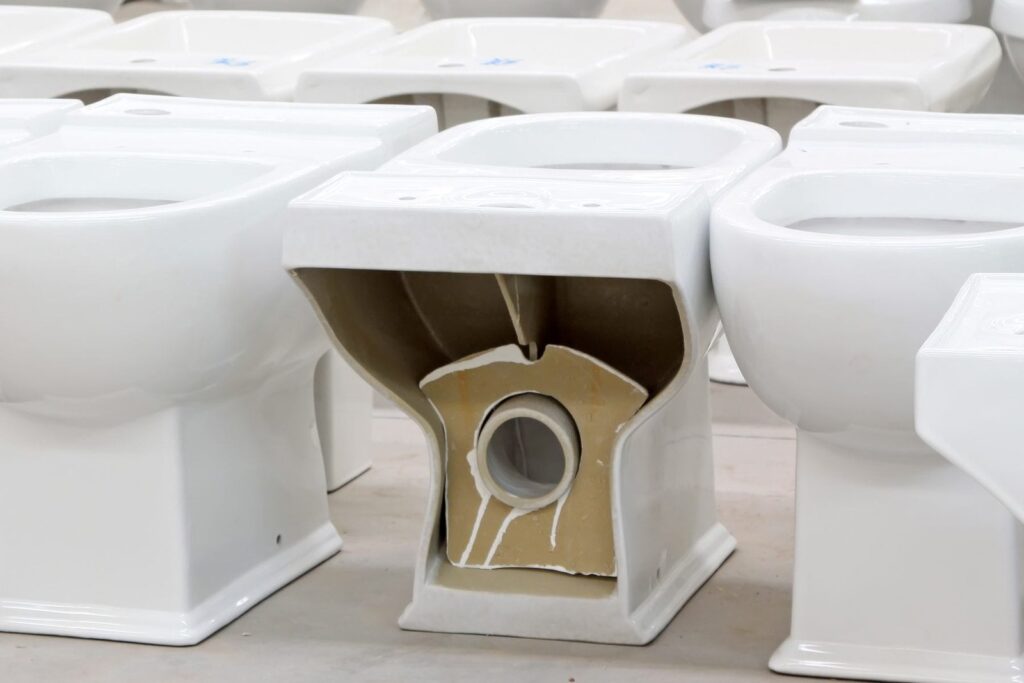
Most residential bathroom fixtures reveal the answer to what are toilets made of through their smooth finish: vitreous china, a glazed blend of clay, feldspar, quartz, and silica fired at high heat. Commercial models often use stainless steel instead, while residential seats rely on molded plastic or enameled wood.
The glazing and firing steps decide whether the bowl holds water or leaks across the bathroom floor. Unfired ceramic remains porous, so manufacturers coat the dry clay with liquid glass before baking it solid.
Using unglazed or poorly fired clay creates an immediate sanitation failure. Moisture seeps into open ceramic pores, trapping bacteria and foul odors that household cleaners can’t wash away.
Table of Contents
How toilets are made

- Mix ball clay, china clay, silica, and water into a thick liquid slurry called slip. Pour the mixture directly into plaster molds shaped like the bowl and tank.
- Allow the plaster mold to absorb moisture from the slip for about one hour until a firm clay shell forms inside. Drain the excess liquid clay back into storage tanks. Tip: Check the clay thickness at the rim before draining, because thin walls crack during drying.
- Remove the damp clay pieces from their molds and dry them slowly in heated rooms for roughly 24 hours. The pieces must reach less than two percent moisture before coating.
- Spray a glass-forming glaze over every surface of the dried piece to a thickness of roughly one millimeter.
- Fire the glazed fixture inside a tunnel kiln heated between 2,200°F and 2,300°F for 18 to 24 hours to vitrify the ceramic. Heating must rise gradually, or trapped moisture turns to steam and shatters the fixture. Tip: Look for small pinholes in the glaze before shipping, since unsealed spots absorb dirty water.
- Test each finished unit by mounting it on a test bench and flushing water through the trapway. If the bowl leaks from internal cracks or fails plumbing codes, scrap the fixture because structural ceramic cracks can’t be safely repaired.
How long it takes
The complete manufacturing cycle runs on strict drying and firing schedules to prevent structural faults.
| Situation | How long | What changes it | What to watch for |
|---|---|---|---|
| Slip casting in molds | 1 to 2 hours | Plaster dryness and factory humidity | Uneven wall thickness |
| Ambient clay drying | 24 to 36 hours | Room airflow and seasonal temperature | Surface shrinking cracks |
| Kiln firing and cooling | 18 to 24 hours | Kiln length and peak temperature settings | Glaze bubbling or warping |
If the ceramic casting takes far longer than normal to stiffen, check whether the plaster mold has become waterlogged from repeated use.
How to tell when it’s done

A completed toilet shows a continuous, glass-like shine with zero rough patches along the water channel. Tap the fired ceramic gently with a light wooden dowel; a fully vitrified piece rings with a clear, high pitch, while an underfired or cracked bowl produces a dull thud. For water efficiency and flush performance, the EPA WaterSense program requires certified models to clear solid waste using no more than 1.28 gallons per flush. If the surface feels chalky or water darkens the clay inside the bowl, the vitreous glaze failed to fuse properly.
Mistakes that ruin it
- Overtightening the floor bolts: The ceramic base snaps instantly under uneven mechanical pressure. Tighten mounting nuts by hand first, then turn them just half a turn past snug with a wrench.
- Cleaning with harsh abrasive pads: Wire brushes and coarse scrubbing powders scratch the vitreous glaze permanently. These fine grooves trap mineral scale and dark mold, so wipe the bowl with soft nylon brushes instead.
- Dropping heavy tools into the bowl: Metal wrenches crack the brittle china, causing hidden leaks that rot bathroom subfloors. Lay thick towels over the bowl rim whenever you repair nearby valves or walls.
Frequently asked questions

Can a cracked toilet bowl be repaired?
No, you can’t safely repair a cracked bowl. Fired vitreous china holds substantial water weight, and epoxy adhesives fail under the physical stress of someone sitting down. A cracked fixture risks sudden structural collapse and water damage, so replace the entire porcelain bowl immediately.
Why are prison toilets made of stainless steel?
Stainless steel resists heavy impact and vandalism that easily shatters vitreous china. Metal fixtures don’t break into sharp, dangerous ceramic shards when struck, and they handle harsh industrial cleaning chemicals without surface degradation. While metal costs more, it eliminates replacement costs in institutional settings.
What happens if you pour boiling water into a toilet?
Boiling water creates sudden thermal shock that cracks cold porcelain instantly. The sudden temperature difference makes the ceramic expand unevenly, splitting the trapway or the bottom of the bowl. This damage causes hundreds of dollars in water damage to subfloors, so use warm tap water instead.
Is porcelain the same as vitreous china?
Vitreous china is a specific type of ceramic body formulated to be low-porosity, which is then coated with a glass glaze and fired. Vitreous china absorbs almost zero surface moisture, making it ideal for wet plumbing. Standard unglazed ceramic may absorb water and stain, but porcelain is inherently non-porous.
Can you recycle an old ceramic toilet?
Yes, crushed ceramic toilets become valuable raw material for commercial construction projects. Recyclers grind the dense vitreous china into aggregate used for road beds, concrete mixtures, and drainage gravel. Contact your city waste department to locate a specialized masonry recycling drop-off site near your home.
Final Thoughts
When you’re shopping for a new fixture, pay close attention to the finish rather than just the shape. High-quality glazing resists stains and keeps your bathroom looking fresh for years. You’ll find that choosing a durable material today saves you a lot of scrubbing and maintenance down the road.