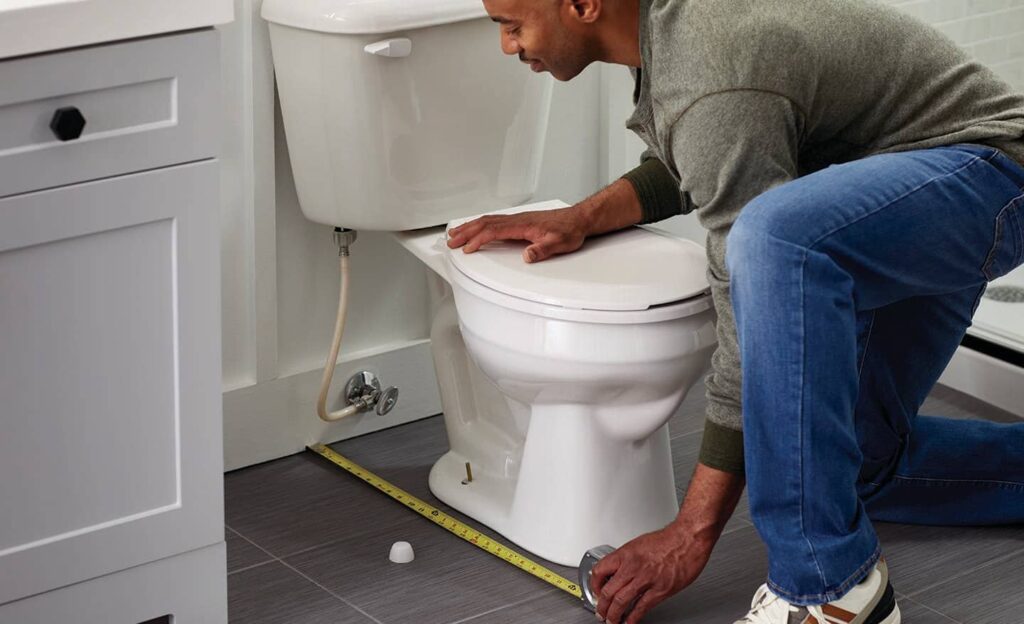
The rough-in distance from your finished wall to the floor bolts is the central measurement you need to know when replacing a toilet. A standard swap takes 2 to 3 hours, demands medium physical effort, and costs mainly for materials like a new wax ring, closet bolts, and a braided supply line. Before starting, you’ll need the exact rough-in size—typically 12 inches in modern homes—to ensure your new bowl fits the space.
Table of Contents
Things to know before replacing your toilet
| Item | How much | Why it’s needed | A substitute |
|---|---|---|---|
| Wax ring | 1 unit | Seals the horn to the drain flange | Rubber toilet gasket |
| Closet bolts | 2 brass bolts | Secures toilet base to the floor flange | none — don’t swap this |
| Adjustable wrench | 1 tool | Tightens water line and floor nuts | Open-end wrench set |
| Braided supply line | 1 flexible hose | Carries water from shutoff to the fill valve | none — don’t swap this |
| Sponge and bucket | 1 set | Removes residual water from tank and bowl | Wet-dry utility vacuum |
| Putty knife | 1 blade | Scrapes old wax off the metal flange | Stiff plastic scraper |
| Torpedo level | 1 tool | Ensures bowl sits flat without rocking | Small spirit level |
Before you start
- Turn off the water supply valve completely by turning it clockwise until it stops moving.
- Flush the toilet and hold the handle down to drain out most of the water.
- Soak up all leftover water in the tank and bowl using a large sponge and a bucket.
- Lay old towels across the floor path to catch dirty water and protect your bathroom tiles.
- Skipping the removal of old wax from the flange is the mistake people actually make, and it costs them a reliable watertight seal.
This guide isn’t for anyone dealing with a rotted subfloor or a cracked cast-iron flange below floor level. When the pipe collar beneath the toilet is broken or the wood subfloor feels soft, stop immediately and hire a licensed plumber.
Step by step
- Disconnect the flexible water supply line from the base of the toilet tank using your adjustable wrench.
- Pop off the plastic bolt caps on the floor base, then loosen and remove both brass hex nuts from the closet bolts.
- Rock the toilet gently side to side to break the wax seal, then lift the bowl straight up and off the floor.
- Stuff an old rag into the open drain pipe immediately to stop dangerous sewer gases from entering your bathroom.
- Scrape every trace of the old wax ring off the floor flange using a putty knife until the surface is completely clean.
- Install two new brass closet bolts upright into the side slots of the flange, holding them steady with plastic retainers.
- Remove the drain rag, press a new wax ring directly onto the bottom horn of the new bowl, and lower the toilet over the bolts.
- Press down firmly on the center of the rim with your body weight to seat the wax ring flat against the flange.
- Hand-tighten the washers and nuts onto the bolts, then snug them with a wrench without over-tightening the brittle porcelain.
- Attach the new supply line to the tank inlet, open the shutoff valve counter-clockwise, and check for leaks.
How to know it worked
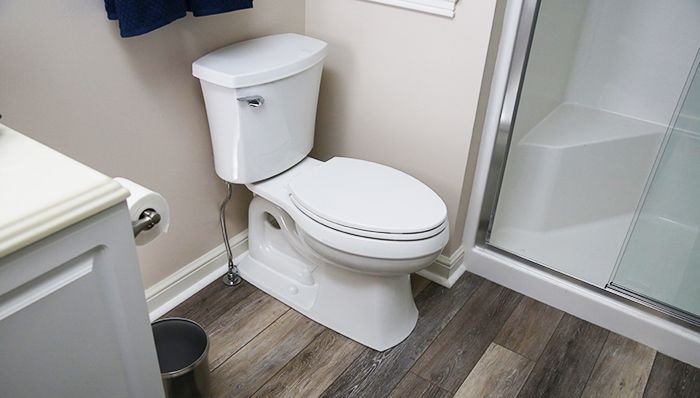
Turn the shutoff valve fully counter-clockwise and watch the tank fill. The fill valve should shut off cleanly once water reaches the fill line marked inside the tank. Flush the toilet three times in a row. Take a dry sheet of paper towel and wipe it along the floor base and around the water valve fittings. The paper must stay entirely bone-dry.
If you choose a low-flow model, you can verify performance using the EPA WaterSense product specifications, which certify models using 1.28 gallons per flush or less. A subtle trade-off exists between water savings and flushing power: high-efficiency gravity toilets save water, but they may need occasional double-flushing for bulky waste.
If something goes wrong
| What happened | Why | What to do |
|---|---|---|
| Water pools around base | Wax ring didn’t compress properly | Remove bowl and install a thicker wax ring |
| Porcelain base cracks | Closet bolts were tightened too much | Replace the entire broken bowl immediately |
| Toilet rocks when sat on | Floor surface underneath is uneven | Insert plastic toilet shims beneath the base |
| Tank keeps running slowly | Flapper doesn’t seal the flush hole | Adjust lift chain slack or replace flapper |
| Water drips from valve | Old supply line gasket is hardened | Replace line with new braided stainless hose |
How often to do this
A toilet replacement happens as the unit ages. Vitreous china itself can last indefinitely without degrading, but styling choices, persistent clogs, and worn mounting assemblies prompt replacements. The two factors that change this timeline most are your local water hardness and flange condition. Hard well water degrades the glazed trapway with heavy mineral scale over time, reducing flushing velocity. Movement in an unstable subfloor can also warp the drain connection, breaking the wax seal long before the porcelain wears out.
Frequently asked questions
Can you reuse the old wax ring?
No. A wax ring is designed for a single compression, meaning it reshapes permanently when the bowl presses down. If you lift or shift the toilet during installation, the wax won’t spring back. Reusing an old ring guarantees sewer smells and hidden leaks into your subfloor.
What happens if you tighten the floor bolts too hard?
The porcelain base will crack instantly. Vitreous china is brittle and can’t handle uneven tension. If the flange sits slightly high, don’t force the toilet down using the nuts. Tighten them by hand first, then turn them one-half turn with a wrench until snug.
Does rough-in size matter when buying a replacement?
Yes. If your wall-to-bolt distance measures 10 inches, a standard 12-inch toilet won’t fit against the wall. Measure from the finished wallboard—not the baseboard—to the center of the closet bolts. If it measures 12 inches, buy a 12-inch rough-in; if 10 or 14, buy those specific sizes.
Why does the new toilet rock on the floor?
Tile floors are rarely completely flat. An uneven floor leaves a small gap beneath the porcelain rim, causing the bowl to wobble when you sit down. Don’t tighten the closet bolts to fix rocking; instead, slide firm plastic shims under the low edges, then caulk the base.
How long does a toilet replacement take?
About 2 hours for a standard replacement if the floor flange is in good shape. If you run into a corroded flange or a rusted shutoff valve that won’t turn, the job can take an extra hour or two while you install repair rings or fit a new valve.
Is it safe to leave the drain hole open while working?
No. Sewer gas contains methane and hydrogen sulfide, which smell bad and can be dangerous to breathe in an enclosed room. Push an old rag or towel into the drain opening as soon as the old bowl comes off, but don’t drop it down the pipe.
Final Thoughts
Once everything is tightened and the water is back on, keep a close watch for any dampness around the base over the next few days. If you don’t see any leaks, you’ve done a great job. You’ll feel much more confident tackling your next home improvement project after this success.