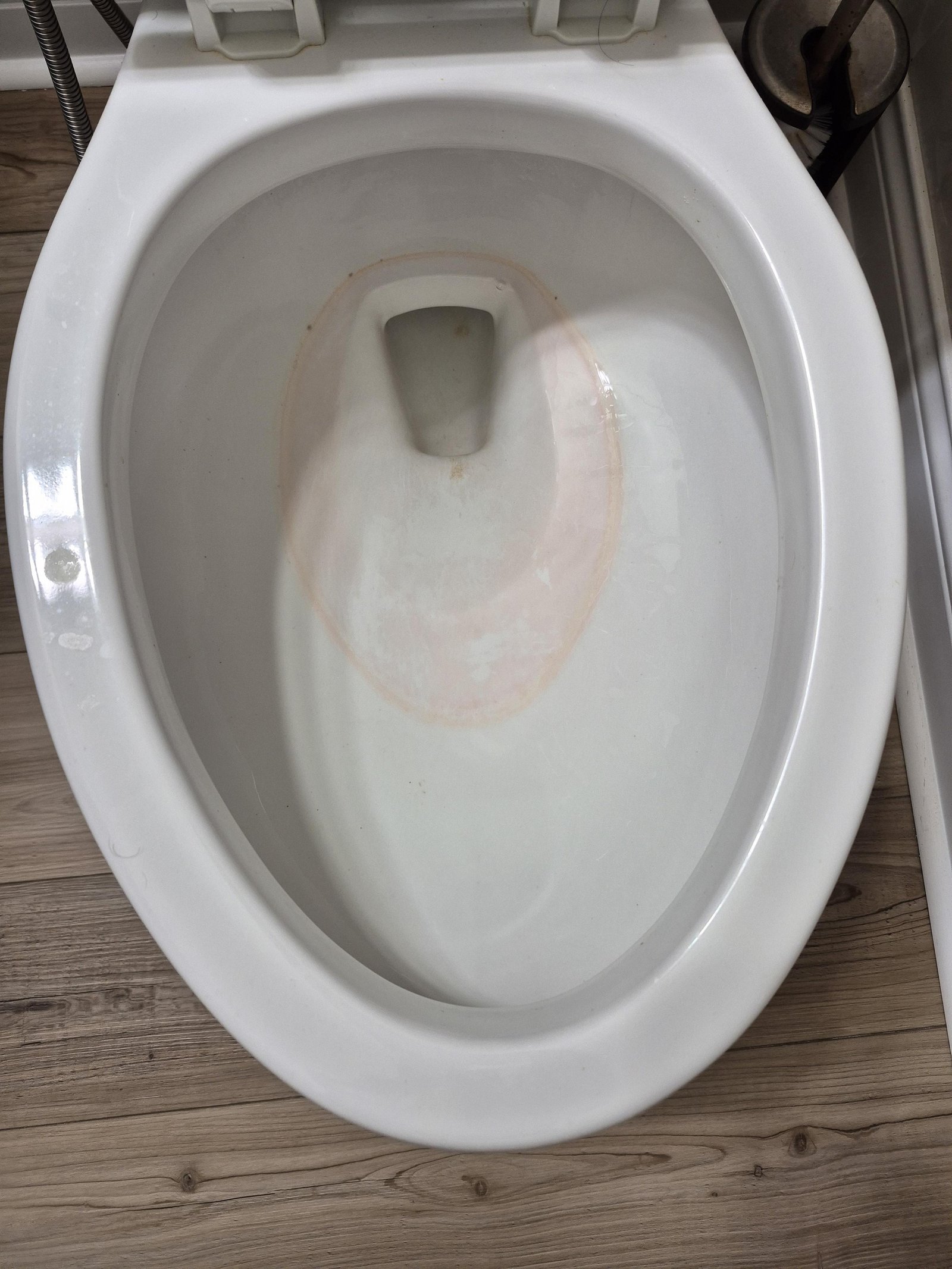
Serratia marcescens, an airborne bacterium, causes pink rings in toilet bowl waterlines when moisture and soap residue feed its growth.
Table of Contents
Why this pink ring causes concern
Bathroom stains take different colors and textures depending on the organisms or minerals in your plumbing.
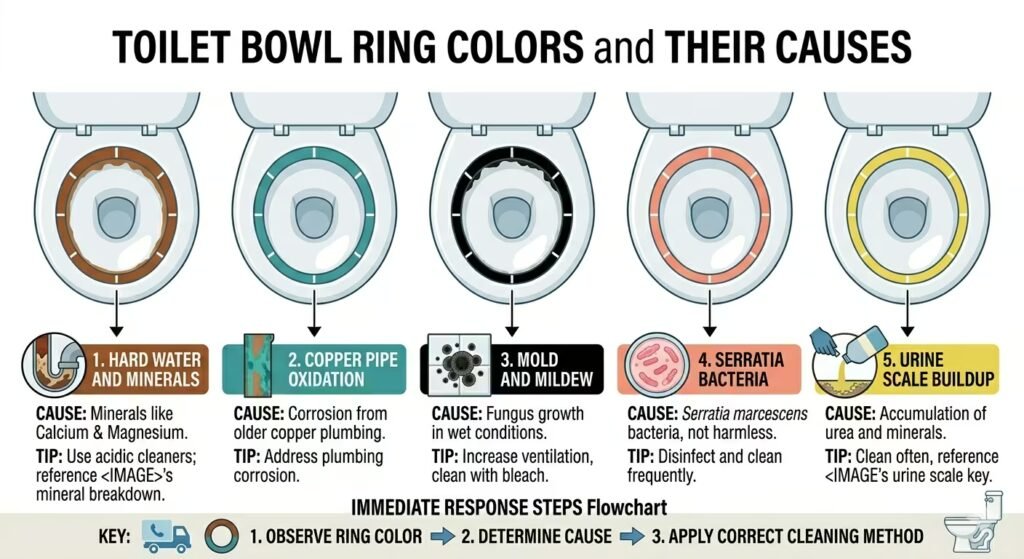
| What you notice | What it usually means | What to do first |
|---|---|---|
| Slimy pink ring at waterline | Airborne bacteria feeding on moisture | Scrub with bleach and flush |
| Hard reddish-brown crust | High dissolved iron in water | Apply oxalic acid cleaner |
| Black spots above waterline | Mold spores growing on porcelain | Spray with diluted chlorine bleach |
| Bluish-green solid streaks | Acidic water corroding copper pipes | Test water pH level |
| Dull yellow rough band | Hard water calcium carbonate scale | Dissolve with warm white vinegar |
| Fuzzy orange raised patches | Mixed bacterial and fungal colony | Disinfect bowl and tank walls |
Airborne bacteria feeding on minerals
A moist porcelain bowl collects dust and airborne bacteria every time the bathroom door opens. Serratia marcescens thrives in damp environments where phosphorus, fatty substances, and stagnant water sit together. Check the ring by rubbing it with a gloved finger; it will feel slippery and lift immediately without any abrasive pressure.
Pour 1/2 cup of liquid chlorine bleach directly into the bowl water, wait 20 minutes, and brush the porcelain thoroughly before flushing. Bleach kills the active colony immediately. The trade-off is that bleach fumes irritate airways, so you must run the exhaust fan while using it. This fix isn’t for people with septic systems who can’t pour chlorine into their drains. You know the treatment worked when the porcelain stays bright white for at least 7 days under normal daily flushes. If the ring reappears within 48 hours, treat the toilet tank next, but don’t drop solid bleach pucks inside it. A common mistake is using tank drop-in tablets, which rot the rubber flapper valve within months and cause costly phantom leaks.
Iron and manganese in tap water
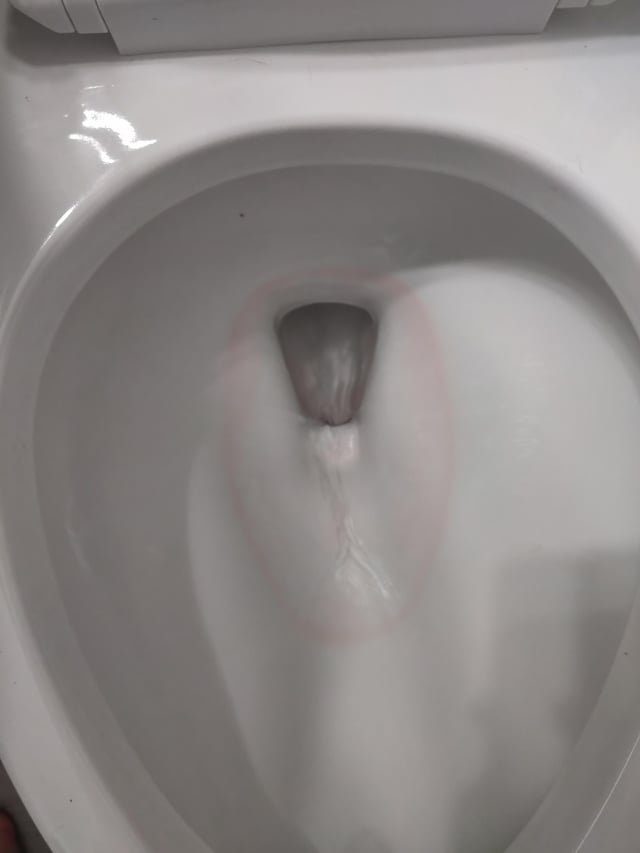
Dissolved iron oxidized by air turns into a rusty red or pink film that bonds to vitreous china. Ground water pulls these minerals from soil and old municipal cast-iron delivery pipes. You can confirm this cause by running a white paper towel inside an electric kettle or across a sink basin; if dry fixtures show the exact same discoloration, the culprit enters through your water supply pipes rather than floating through the air.
This mineral build-up requires an acid-based cleaner rather than a disinfectant like bleach. Pour 8 fluid ounces of a liquid cleaner containing phosphoric or oxalic acid onto the stain, let it sit for 15 minutes, then wipe it away. To distinguish this from bacterial growth, scrape the edge of the mark with a plastic fingernail; minerals feel gritty and hard, while bacteria feel soft and slick. You’ll know the acid worked when the roughness disappears and the porcelain feels as smooth as glass.
Pink yeast colonies in standing water
Rhodotorula is an environmental yeast that floats through household air and settles onto wet surfaces. It produces a distinct salmon-pink or reddish pigment that looks nearly identical to bacterial growth. You can tell this yeast apart from bacteria by checking its location and texture: yeast creates a thicker, pastier ring that often creeps upward past the waterline onto dry porcelain.
Pour 1 cup of plain 5% white distilled vinegar into the bowl water and leave it undisturbed for 60 minutes before scrubbing. The natural acidity breaks down the fungal cell membranes without harsh fumes.
When to stop and get help
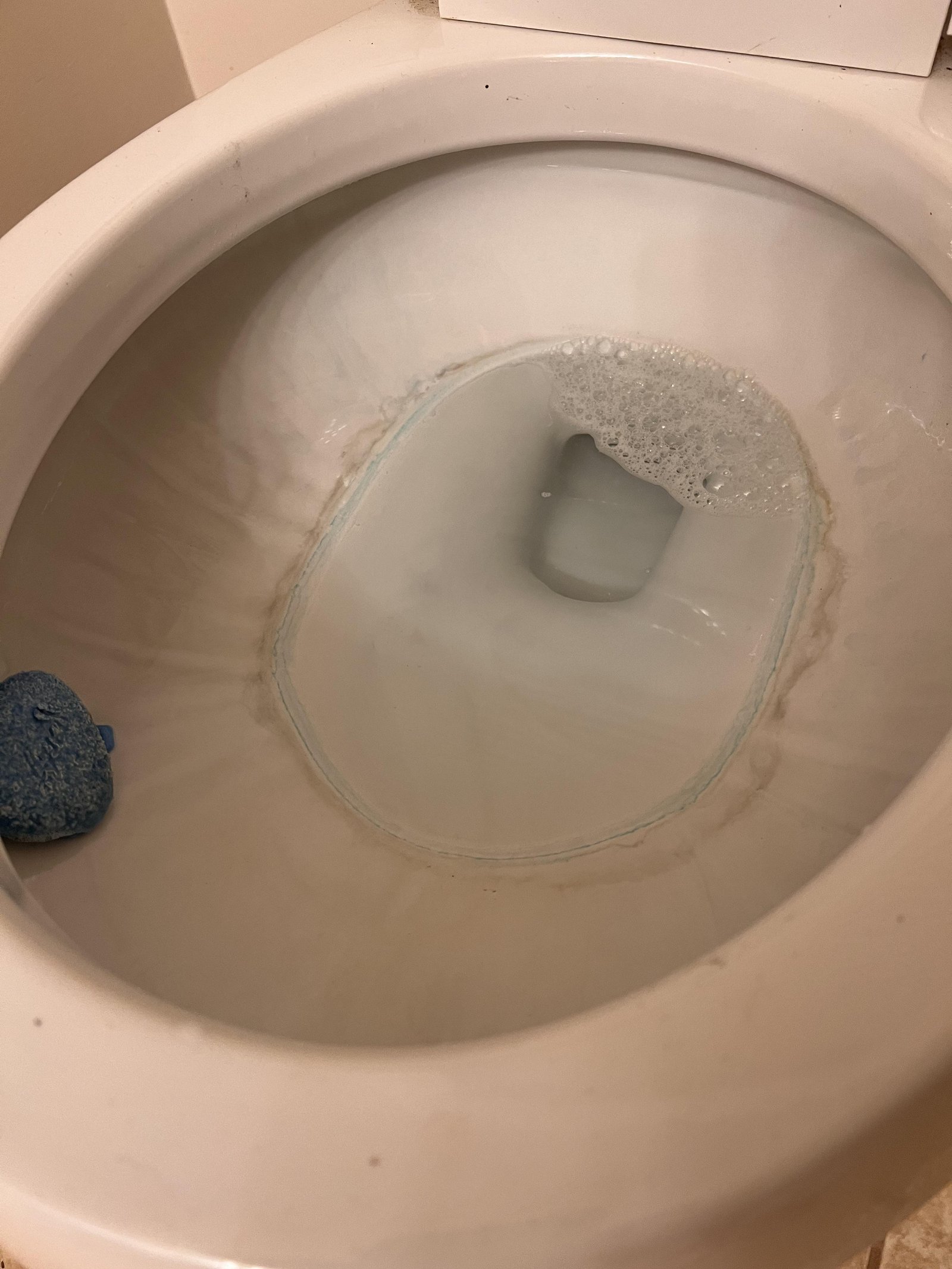
- Water leaves deep brown sediment in every sink, which points to broken municipal supply lines.
- Acidic cleaners fail to lift hard green stains, meaning copper pipes are thinning and need a licensed plumber.
- The pink film spreads into your sealed drinking water bottles, which requires certified lab testing.
- Strong sewage odors accompany the ring, signaling a broken wax ring seal beneath the base.
Plumbing repairs that involve cutting supply lines or pulling toilets off floor flanges carry real flooding risks. Stop your DIY work and call a licensed plumber once tools are needed below the floor.
Can the pink ring make my family sick?
No, healthy people won’t get sick from normal skin contact with a toilet ring. The bacteria only cause trouble if they enter an open surgical wound or reach the bladder through medical tubing. Keep basic bathroom hygiene and wash your hands after scrubbing.
Why does the pink stain come back so fast?
If spores remain inside the toilet tank, every flush washes fresh microbes down the bowl sides. Clean both the tank and bowl on the same afternoon.
How long does bleach take to kill the ring?
About 20 minutes of contact time is enough for standard household chlorine bleach to destroy the cells. Pouring 1/2 cup into the standing water gives it the strength to sanitize porcelain thoroughly. Flush twice afterward to rinse the bowl clean.
Is it safe to mix vinegar and bleach for tough stains?
No, you must never mix chlorine bleach with vinegar under any condition. Combining them produces toxic chlorine gas that burns eyes and lungs immediately. If X is a mineral ring, use vinegar; if Y is a slippery bacterial film, use bleach on a separate day.
Does the pink ring mean my water is contaminated?
No, the bacteria almost never come out of your municipal water tap. They travel through common indoor air and land on the water after it fills the bowl. Your municipal drinking water remains clean and safe to drink.
What happens if I ignore the pink waterline?
The ring darkens into a deep orange or gray layer that clings tightly to old mineral scale. While it won’t break the porcelain, it becomes much harder to scrub away once calcium builds over the dead cells. Clean it weekly to prevent hard crusts.
Final Thoughts
Keeping your bathroom fresh doesn’t have to be a constant battle. Since these airborne bacteria thrive in damp environments, simply running your exhaust fan after every shower helps dry out the air. You’ll find that a little extra ventilation goes a long way toward preventing those stubborn spots from returning for good.
Related guides
- How to Remove a Pivot Shower Door Safely in 45 Minutes
- How to Remove Limescale From Toilet Above Waterline: Vinegar Fix