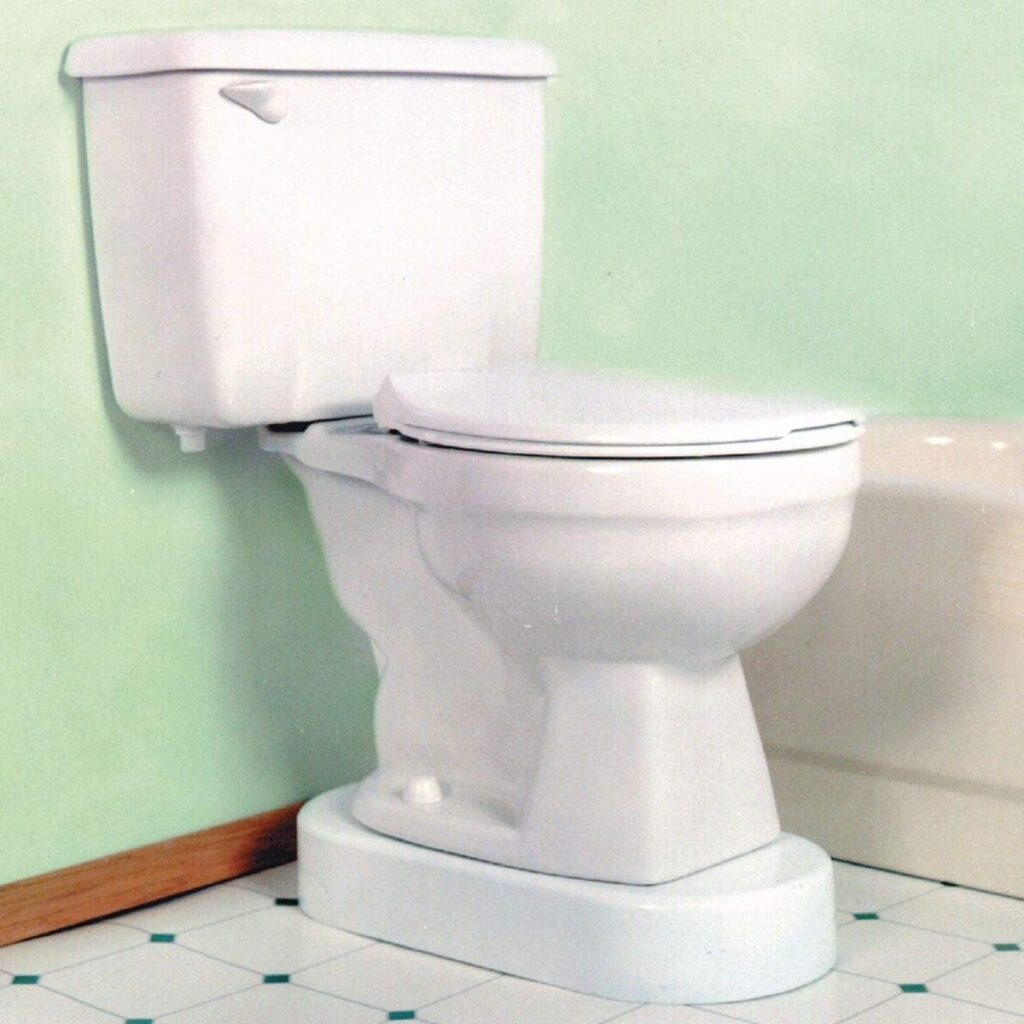
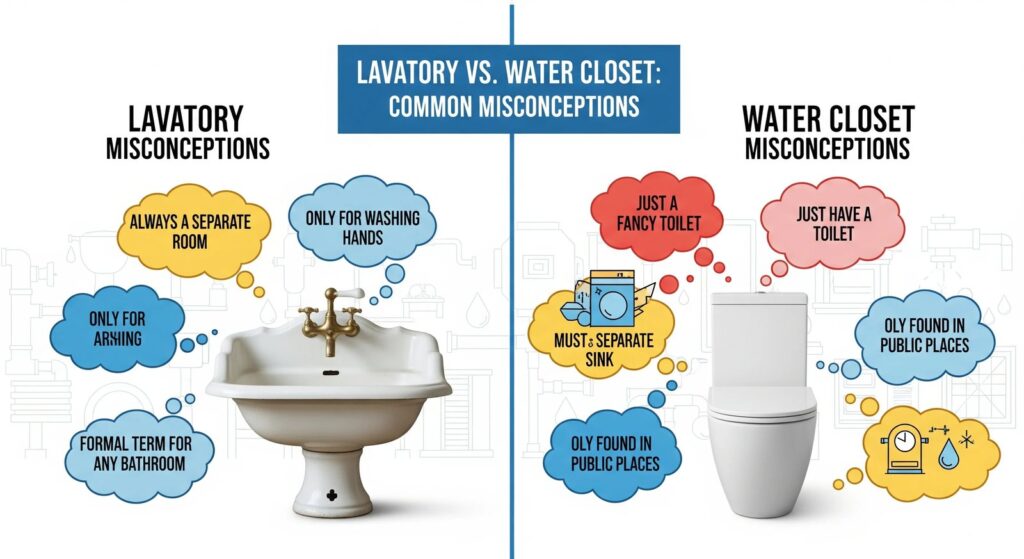
A toilet is the actual plumbing fixture you sit on to pass waste, while a lavatory is the entire room containing that fixture or, in US plumbing codes, a hand-washing washbasin; understanding the difference between a toilet and a lavatory helps you buy the right hardware and follow building codes without costly mix-ups.
Region and context decide which meaning applies. In everyday American homes, people say bathroom or restroom, but commercial airplanes and trains label the entire small room a lavatory. In architectural blueprints and technical plumbing supply catalogs, the terms refer to two completely separate physical fixtures that need different pipe connections.
The most common mistake happens before ordering parts or drawing plans: mixing up a washbasin with a commode bowl. This confusion causes people to purchase the wrong drainage hookups or order improper fixtures for building permits.
Table of Contents
The difference between a toilet and lavatory

- Check your local plumbing code definitions before drawing floor plans or ordering rough-in pipes. If the document specifies a lavatory fixture, install a dedicated hand-washing sink, not a commode.
- Measure your drain line diameter at the floor or wall rough-in point. A standard water closet requires a 3-inch or 4-inch waste pipe, whereas a residential bathroom sink connects to a smaller 1-1/4-inch or 1-1/2-inch drain pipe. Tip: Never try to vent a waste commode into a 1-1/2-inch sink drain, as waste lines will instantly clog and fail your inspection.
- Select your fixtures according to water efficiency standards set by regional regulators. The US EPA WaterSense program specification requires certified high-efficiency flush commodes to use no more than 1.28 gallons per flush.
- Verify accessibility requirements if you’re outfitting a commercial public restroom rather than a private residential home. The trade-off between standard bowls and accessible units is space: accessible stalls require wider doors and higher mounting points.
- If you’re working with complex commercial drainage venting, hire a licensed master plumber because unvented sewer gases pose serious health hazards.
How long it takes
Installation times vary depending on whether you’re fitting a hand-washing basin or a waste commode into prepared wall and floor spaces.
| Situation | How long | What changes it | What to watch for |
|---|---|---|---|
| Replacing an existing toilet | 1 to 2 hours | Condition of the floor flange and shutoff valve | Leaking wax rings or cracked porcelain bases |
| Replacing a drop-in lavatory sink | 2 to 3 hours | Countertop cut-out size and faucet configuration | Proper clearance for the water supply lines |
| Roughing in plumbing for both fixtures | 1 to 2 days | Accessibility of floor joists and vent stack locations | Correct pipe pitch toward the main stack |
How to tell when it’s done

A finished installation shows no water seepage, no wobbling, and no sewer odors. When you test a commode, the bowl fills to the marked water line within 60 seconds and evacuates cleanly on a single flush. For a lavatory washbasin, open the faucets fully for 2 minutes while watching the P-trap beneath the basin for moisture. The International Code Council publishes the International Plumbing Code, which provides the technical standards for drainage and venting installations. If water pools around the base bolts of the seat or drops from the trap slip joints, tighten the hardware a quarter turn with a wrench to complete the seal.
Mistakes that ruin it
- Calling a commode a lavatory on commercial permit forms: Inspectors will reject your permit plans because they assume you drew a hand sink instead of a commode. Write “water closet” or “toilet” for the waste fixture and reserve “lavatory” strictly for the washbasin.
- Using sink sealant to set a commode base: Silicone glues the bowl permanently to the tile and conceals dangerous wax ring failures underneath. Use an approved wax ring or foam gasket for the waste horn, and caulk only the front perimeter.
- Confusing room labels on travel signage: Putting the wrong label on a facility door confuses international travelers who expect a private wash stall. Label public multi-stall spaces as restrooms and reserve lavatory for single-occupant travel cabins or aircraft.
Frequently asked questions

Can a lavatory mean just a sink?
Yes, in the American plumbing and architectural trades, a lavatory refers specifically to a bathroom hand sink. It never refers to a kitchen sink, which the industry designates simply as a sink.
Is toilet considered a rude word in Britain?
Yes, many British speakers consider toilet mildly vulgar in polite social settings. Upper-class and formal British English favors the word loo, lavatory, or bathroom when asking for the room in someone’s home.
Why do airplanes call the bathroom a lavatory?
Airlines adopted the word lavatory because commercial aviation borrowed formal maritime terms. Early passenger planes offered a modest washbasin for washing up during long flights, which fit the classic definition of a wash station.
What happens if I connect a commode to a lavatory drain pipe?
The drain will back up immediately with raw sewage. A hand sink uses small 1-1/2-inch pipes, while human waste and toilet paper require at least a 3-inch interior diameter pipe to prevent blockages.
Is a washroom the same as a lavatory?
No, a washroom is a Canadian and regional American term for the room itself, containing multiple amenities. A lavatory can refer to the physical sink basin or a very small, enclosed airplane stall.
Final Thoughts
Next time you’re planning a home renovation or browsing a hardware catalog, check the specific technical labels carefully. It’ll save you a headache when you’re ordering parts or talking to a plumber. You’ll feel much more confident once you’ve cleared up these terms, so don’t hesitate to ask for clarification.
Related guides
- How to Remove Urine Scale from Toilet Bowls Quickly
- How to Make the Toilet Flush Better: Easy DIY Fixes
- Toilet Seat Turns Blue Causes and Solutions Explained