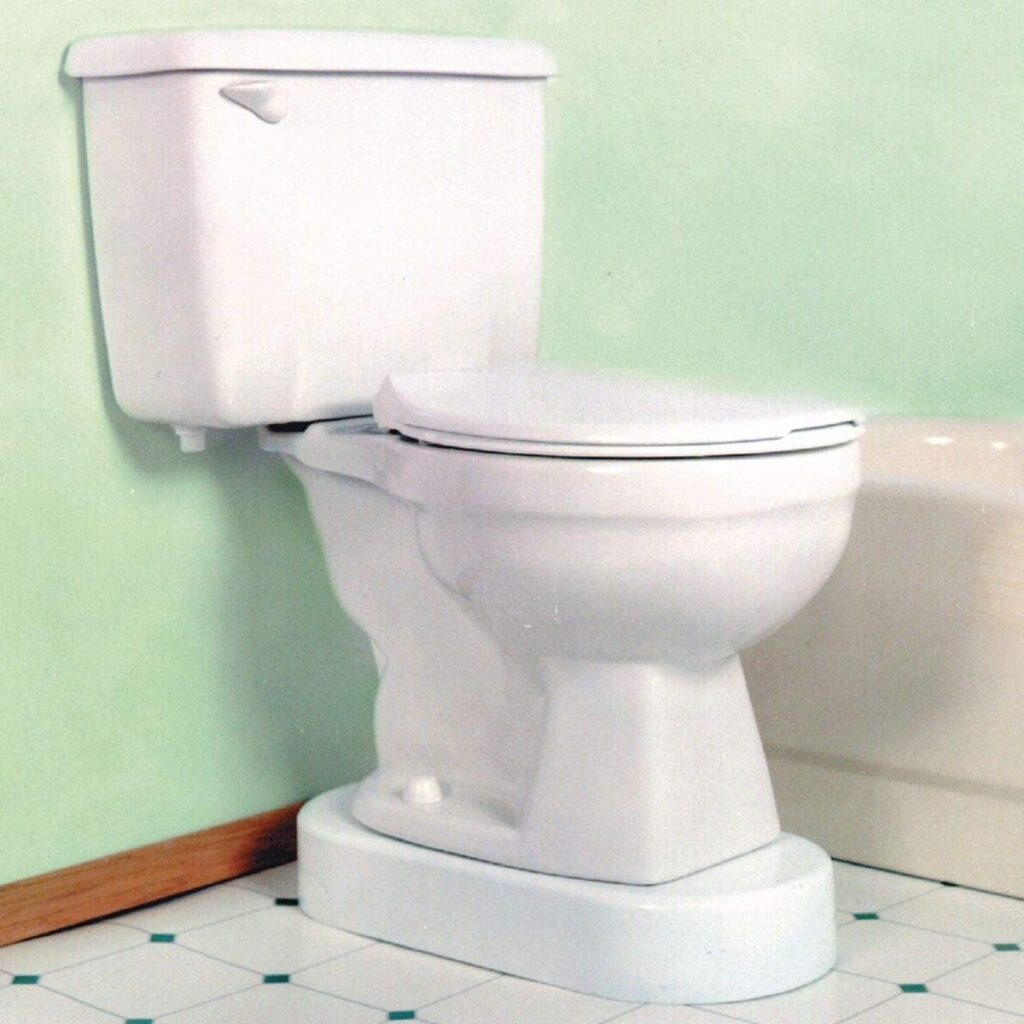

What to do if toilet is in north direction is to keep the commode lid closed, paint the space light blue or off-white, and place a bronze or copper wire remedy strip around the base. This layout creates an imbalance only if water drainage sits directly on the true magnetic north line.
Table of Contents
Quick fix for a north facing toilet

- Close the toilet lid after every flush to block airflow drafts from moving downward sewer gases into the living area.
- Paint the walls light blue, white, or pale gray; avoid red and bright yellow surfaces completely.
- Fix a 3-millimeter copper or brass metal strip into the floor grout around the commode base to balance the zone.
- Keep 250 grams of unrefined sea salt in an open glass bowl on a shelf, replacing it regularly.
- Run an exhaust fan rated for at least 50 CFM continuously for 20 minutes after using the space to clear moisture.
- Keep the bathroom door shut at all times using a spring hinge set to full closure.
Why north placement causes trouble
In traditional Vastu Shastra systems, the north zone belongs to the water element and represents career growth and wealth flow, guarded by Kubera. A toilet discharges waste and heavy contaminated water, which damages this sensitive inflow sector. Beyond belief systems, indoor air quality science shows that bathrooms in colder, sunless northern zones of a building face real structural challenges. Because the north face of a building receives the least direct sunlight across the Northern Hemisphere, north-facing bathrooms retain elevated relative humidity levels.
Persistent moisture creates rapid mold spore formation if ventilation falls below standard air exchange targets. According to the U.S. Environmental Protection Agency’s mold cleanup guidelines, indoor relative humidity must stay below 60%—and ideally between 30% and 50%—to prevent microbial growth. Leaving moisture unchecked rots framing drywall and spreads damp air into adjacent bedrooms. The architectural compromise means accepting minor aesthetic shifts; adding metal trim or repainting overrides your preferred decor choices to fix moisture and air balance.
When the answer is different
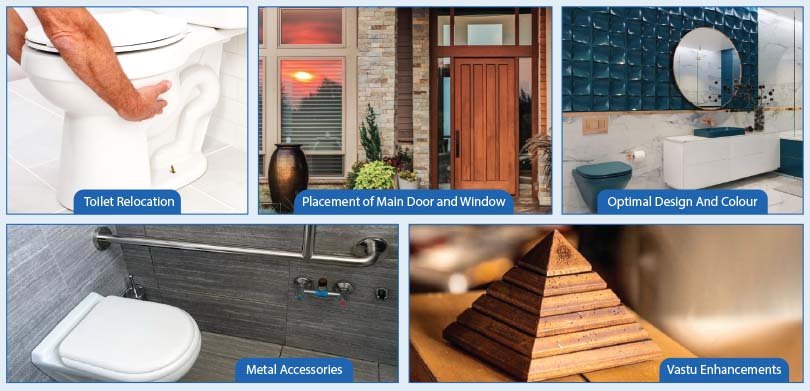
If your floor plan shifts or structural walls prevent simple changes, adjust your approach using these cases:
| Situation | What changes | What to do instead |
|---|---|---|
| Commode sits in north-east | Extreme energy conflict | Shift seat to north-west wall |
| Commode sits in north-west | Favorable waste disposal zone | Use no metal remedies |
| Attached north bathroom | Bedroom shares moisture load | Seal doorway with threshold strip |
| Rented flat with fixed tiles | Can’t cut floor grout | Place brass strip on baseboard |
| Bathroom has direct exterior window | Natural airflow clears dampness | Open sash 2 inches daily |
| Solid concrete floor slab | Drilling ruins moisture membrane | Apply metallic tape over surface |
How to do it properly
- Measure your room alignment with an analog magnetic compass held at chest height away from steel pipes to find true zero degrees north.
- If your toilet sits squarely on the north grid line, use a rotary tool to cut a shallow 3-millimeter groove into the tile grout around the commode base. If you can’t cut the tiles, use a heavy self-adhesive metallic strip instead.
- Insert a 3-millimeter wide, 1-millimeter thick pure brass or copper strip into the groove so it surrounds three sides of the commode footprint, leaving the back wall open.
- Fill the cut groove with matching waterproof grout or clear silicone caulk to seal the metal flush with the tile surface.
- Fill a clean, uncolored clear glass bowl with 250 grams of dry sea salt chunks and rest it on a raised ledge at least 3 feet above floor level.
- Check the salt daily; if the crystals dissolve or turn grayish from absorbed ambient moisture, dump them down the drain and refill with a fresh 250-gram batch.
- Replace dark, bright red, or yellow floor mats with a plain light-blue or slate-gray cotton bath mat measuring 20 by 30 inches.
- Install an automatic spring hinge on the bathroom frame, tightening the tension pin until the door swings shut without manual assistance.
The mistakes that ruin it
- Using bright red floor rugs or deep orange wall paint, which brings fire energy into direct conflict with a water zone and accelerates visual tension.
- Leaving sea salt sitting in damp corners for 3 months or more; the crust liquefies and leaves sticky brine puddles that erode grout and tile sealant.
- Keeping the toilet lid up during flushes, which allows airborne aerosolized water droplets to travel up to 6 feet through the doorway into living spaces.
- Mounting large mirrors directly opposite the commode fixture, which bounces and repeats views of plumbing drains from the main corridor.
- Relying on cheap stick-on mirrors over the plumbing stack, which fall off within weeks due to constant shower steam and cost extra tile repair money.
Frequently asked questions

Can I fix a north toilet without breaking tiles?
Yes. You can paste a 1-inch-wide copper or brass adhesive tape along the tile joints around the toilet perimeter. This method bypasses tile cutting entirely, though the tape requires replacement every 12 to 18 months as floor mopping gradually wears away the adhesive backing.
Why is sea salt used in a north bathroom?
Salt attracts atmospheric moisture and absorbs sewer smells through natural hygroscopic action. In traditional spatial remedies, it neutralizes low-frequency negative energies. Always dump used salt into running water rather than garden soil, which ruins plant roots instantly.
Is north-west better for a toilet than north?
Yes. North-west is the zone of wind and movement, making it the proper location for household waste elimination according to basic design rules. If you remodel, moving the commode roughly 4 feet toward the north-west wall permanently fixes the directional issue without ongoing strip remedies.
Does a north toilet cause money loss?
Yes, according to traditional principles, because north rules income opportunities and financial accumulation. When clean water mixes continuously with sewage in this sector, resources drain unexpectedly. Sealing the commode properly keeps your living environment organized and functional.
What color should I paint a north-facing bathroom?
Light blue, off-white, soft cream, or pale gray works best. Avoid dark shades of red, crimson, and harsh yellow. Dark warm tones activate heavy fire elements that clash directly with water pipes, while light cool shades balance the low daylight levels common to north-facing spaces.
Does keeping the bathroom door closed matter?
Yes. Leaving the door open allows damp drafts and heavy sewer air to migrate directly into adjacent rooms. A closed door keeps high relative humidity inside the extraction zone of your exhaust fan, protecting adjoining bedroom walls from peeling paint and hidden drywall mildew.
Final Thoughts
If you’re worried about your home’s energy, don’t stress too much about moving walls. You can easily balance the space by keeping the door closed and adding a small, healthy green plant to freshen the air. It’s a simple shift that’ll help your home feel much more peaceful and balanced.