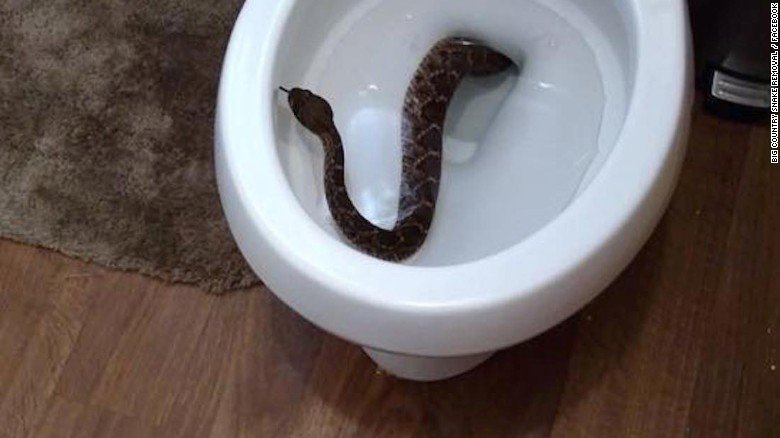
If you find a snake in your toilet, close the lid immediately and step out of the bathroom. It isn’t safe to use the toilet or reach toward the bowl right now. Confirm the reptile is still inside by placing a heavy container of liquid on the closed lid, then shut the bathroom door to isolate the room completely.
Table of Contents
How the snake found your toilet
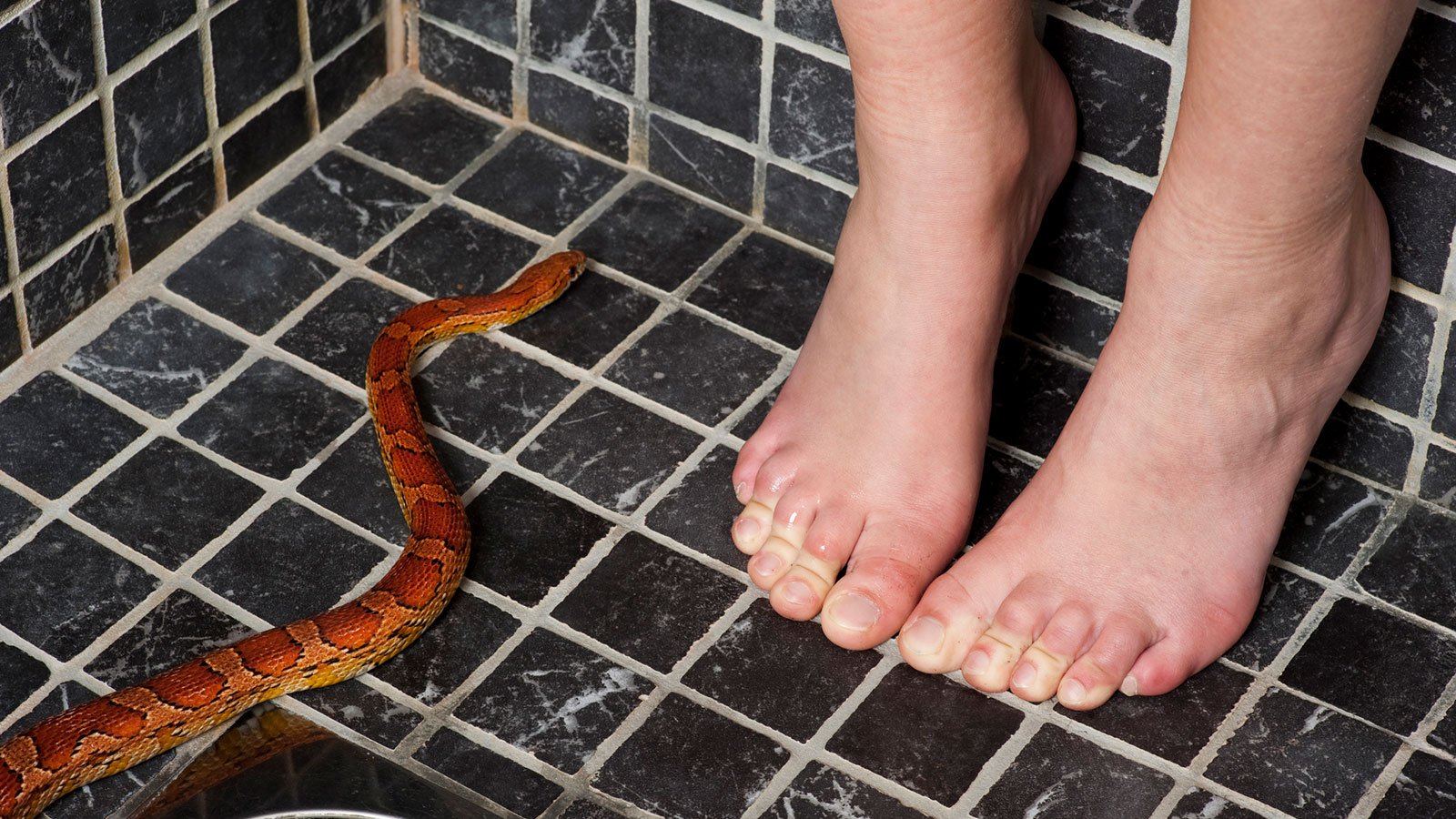
Look closely at the bathroom setup to spot how the animal got inside.
Slithering down the roof plumbing vent
Plumbing vents sit open on home roofs to balance air pressure in your drain pipes, and animals use them as entry points. A snake hunts tree frogs or rodents along your roofline, slips inside the uncovered pipe, and falls straight downward. It navigates the dry pipe sections until it hits water in the toilet trap. If the floor and baseboard are completely dry while the snake sits inside the water, it dropped through the pipe system from above. Fix this by calling a roofer or handyman to install a wire vent cover made of stainless steel mesh measuring one-quarter inch over every roof stack pipe. You’ll know the fix worked when the roof stack stays clear of leaves and debris while preventing any wild animal from dropping into the waste lines again.
Crawling through gaps under the door
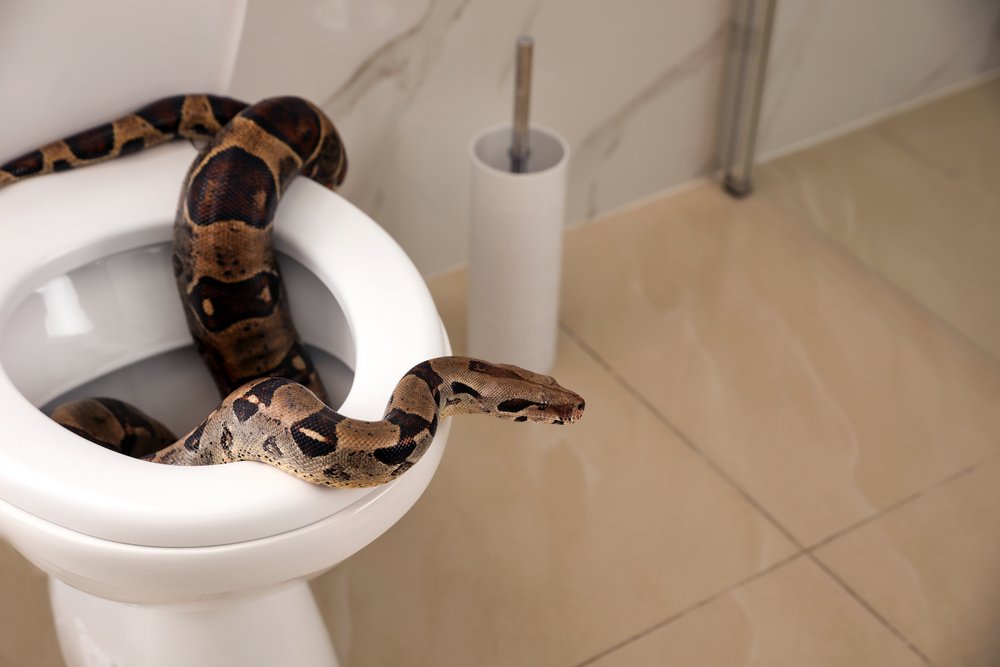
The animal often slithers under an exterior door or open garage threshold before finding the bathroom. Snakes seek cool, damp hiding spots during warm summer afternoons, and bathroom tiles offer cold surfaces. You can confirm this ground entry within thirty seconds by inspecting the gap beneath your bathroom and external doors. If a standard pencil slides under the door sweeps without sticking, a young rat snake or garter snake can slide underneath effortlessly. Fix the entry point right away by screwing heavy-duty rubber sweeps to the bottom of all exterior doors and replacing worn weatherstripping around ground-floor frames. The trade-off is that tight sweeps make doors slightly harder to pull open, but they block pests completely. You’ll know it worked when daylight no longer shines under closed exterior doors. Unlike plumbing entrants, a snake using this route leaves dry dust trails or smudges across the floor tile.
Following rodents through damaged sewer mains
A broken lateral sewer pipe underground allows snakes to enter municipal drain systems directly from the soil. The reptile chases rats through the sewer lines, swims upward through the fixture trap, and emerges into your toilet bowl. You can tell this apart from a roof fall because an underground sewer break usually brings foul sewer gas smells, slow drains, or gurgling sounds in the bathroom sink. Check the sink drain by running water for thirty seconds; if foul air pushes back into the room, your drain main has an opening. If you have older cast iron pipes, this risk is higher than it’s with modern glued PVC lines. Call a licensed plumber to run a sewer camera inspection down the cleanout. Installing a one-way backwater check valve stops pests from swimming past the main line. You’ll know the system is secure when the drain flows freely without bubbling sounds or odd smells.
When to stop and get help
- You hear a buzzing rattle or loud hiss, which signals an agitated venomous animal that will strike.
- The snake’s head is distinctly wider than its neck with vertical slit pupils, because handling venomous snakes requires professional training and snake tongs.
- The reptile hides inside the inner rim where you can’t see it, making blind reaching dangerous.
- You don’t have heavy work gloves and a locking transport container ready, which means capture will fail.
A common mistake is trying to catch the snake with a wire coat hanger, which injures the animal, causes it to lash out defensively, and leads to costly emergency room visits. This guide isn’t for anyone dealing with confirmed venomous species like copperheads or cottonmouths. Stop now and call local animal control or a licensed wildlife removal service to safely extract the animal.
Frequently asked questions
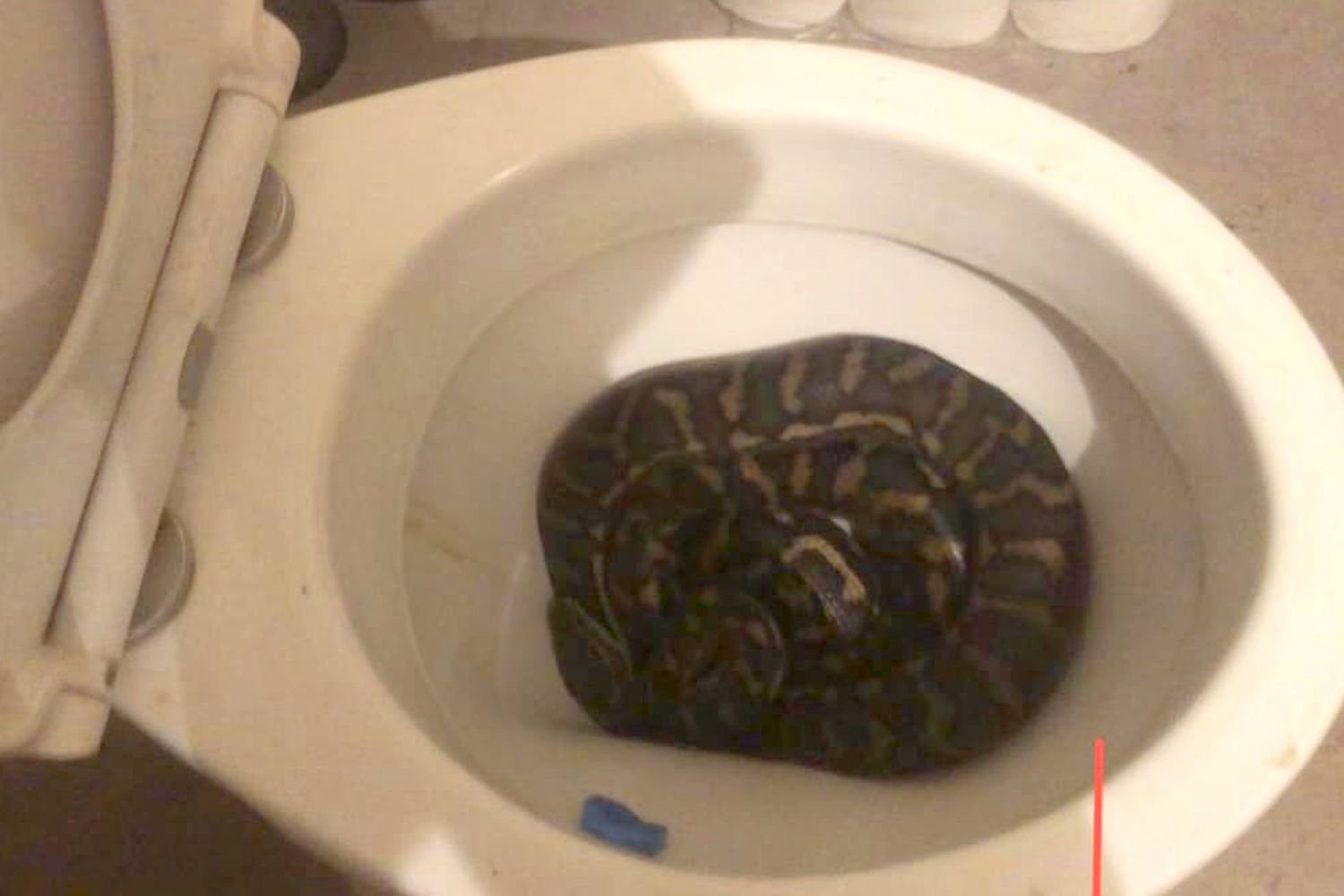
Can flushing the toilet push the snake away?
No. Snakes are strong swimmers and hold their breath underwater for long periods, so running water simply swirls them around the bowl. Flushing might also push the animal backward into the trap, where it gets wedged tightly and dies, creating severe plumbing blockages and bad odors.
Why do snakes end up in toilets?
Snakes search for water and food during hot or dry weather periods. They trail scents left behind by mice or frogs inside sewer lines, or they fall down roof vents accidentally. The toilet bowl provides a cool resting pool after navigating dark, dry vent pipes inside the walls.
How long can a snake survive inside a toilet?
Several hours to a couple of days, depending on room temperature and water freshness. Snakes have slow metabolic rates and can stay submerged under water for over thirty minutes at a stretch. They float near the surface to breathe air until starvation or cold water drains their energy.
Is it safe to pour bleach on the snake?
No. Bleach emits harsh chlorine fumes that harm both you and the animal, without killing the snake fast enough to prevent a defensive strike. Pouring chemicals also splashes contaminated water onto your bathroom walls, destroying floor finishes and exposing your skin to dangerous chemical burns during the commotion.
What happens if I close the lid and wait?
The snake stays inside the bowl if you place a heavy weight on top. A standard three-gallon bucket of water weighs about twenty-five pounds, which keeps the lid firmly down. The snake can’t lift that weight, keeping your household safe until wildlife services arrive to remove it.
Does a snake in the toilet mean I have an infestation?
No. A snake in the toilet is almost always a single, isolated animal that lost its way hunting rodents. Finding one reptile doesn’t indicate a nest inside your home’s walls. However, this varies by sewer condition, so check the main sewer pipe for cracks if it happens twice.
Final Thoughts
Once the professionals have cleared the area, you’ll want to contact a local plumber to inspect your pipes for any gaps. They can install a specialized one-way valve that prevents future visitors from swimming up. It’s a simple fix that’ll give you peace of mind whenever you use your bathroom again.