
What to do if you find a frog in your toilet starts with trapping it gently under a plastic container to keep it from jumping.
Table of Contents
Why you found a frog in the toilet

Here is how to identify where the creature came from and what action to take right away.
| What you notice | What it usually means | What to do first |
|---|---|---|
| Green frog on the rim | Tree frog hopped through window | Place cup over it |
| Brown frog deep in water | Climbed through sewer pipe | Scoop out with container |
| Multiple frogs in bowl | Open vent stack on roof | Check your roof pipe |
| Frog sitting in dry tank | Squeezed past loose lid | Lift lid and remove |
| Toad on the bathroom floor | Crawled under exterior door | Sweep gently outside |
| Smells like sewer gas | Cracked pipe or dry trap | Ventilate the room |
| Debris floating with frog | Storm washed animal down | Clean bowl after removal |
Hopping through open doors and ground windows
Small tree frogs easily crawl under exterior doors with worn weatherstripping, through torn window screens, or directly into an open patio slider during warm, humid evenings. Once inside, they follow the scent of standing water and humidity directly to your bathroom fixtures.
You can confirm this path in under a minute: check the window screens in that bathroom and look for any gap wider than a quarter-inch under the nearest outside door. If you find an open gap, that’s your entry point.
To remove the animal safely, put on a pair of rubber cleaning gloves. Place an open plastic food container over the frog, slide a thin piece of rigid cardboard underneath the rim, and flip the container right-side up. Carry the animal outside and release it near garden bushes at least twenty feet away from your foundation. You’ll know the problem is resolved once you replace torn window mesh or install a door sweep, leaving no gaps along the baseboards.
Climbing down an open plumbing vent pipe
Most plumbing systems feature an open exhaust vent pipe that extends through your home’s roof to regulate air pressure. Tree frogs naturally climb trees and exterior walls. When they reach your shingles, they seek cool, moist air and drop directly into this open pipe. From there, they slide down into the main drain line and swim upward through the toilet trap.
To confirm this cause, inspect your roofline from the ground with binoculars. Look for a plain white plastic or black cast-iron pipe sticking out of the roof above your bathroom without a wire mesh cover.
This setup keeps frogs, birds, and leaves out of your pipes permanently. You’ll know the fix worked when no new wildlife appears in the bowl following heavy rainstorms.
Swimming up from cracked underground sewer lines
Subterranean sewer pipes sometimes develop cracks or loose joints, allowing ground-dwelling frogs to enter the line directly from damp soil. Once inside the municipal sewer or your septic line, they follow airflow upward until they hit the standing water in your toilet trap.
You can tell this cause apart from the first two because it usually happens on the lowest level of the home—such as a basement or ground-floor half-bath—and often comes with a faint odor of sewer gas or slow-draining water. A second-story bathroom almost never gets frogs through cracked ground pipes.
Flushing the frog is a mistake people actually make, and it costs them an expensive plumbing emergency when the animal gets wedged sideways inside the curved trap. You’ll know this fix worked when your drains flow freely and the bowl stays clear of debris.
When to stop and get help
Call a licensed professional immediately if you encounter any of these warning signs:
- The creature in the bowl is an unfamiliar or venomous species, such as a cane toad with large poison glands behind its eyes.
- You hear bubbling noises in the bowl alongside a persistent sewer gas odor, which points to a broken drain line.
- Frogs reappear in multiple ground-floor toilets simultaneously, indicating a breached septic tank or broken municipal lateral pipe.
- The animal is dead and wedged deep inside the curved trap where basic plastic containers can’t reach.
Don’t attempt to snake sewer lines yourself if you suspect pipe collapse. That requires specialized sewer camera equipment and municipal permits; hire a licensed master plumber instead. This guide isn’t for homes with dry, abandoned outhouses or active commercial drain systems.
Frequently asked questions
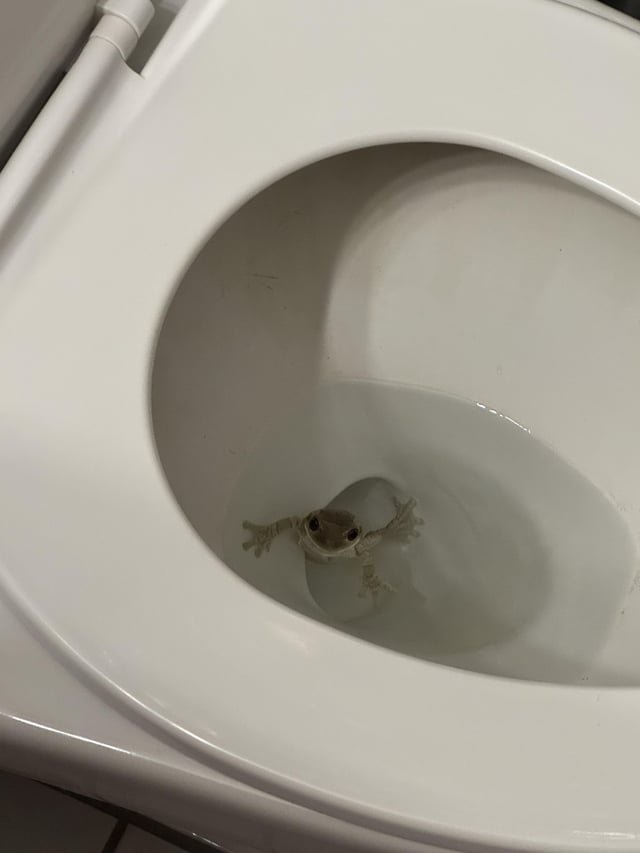
Can a frog survive being flushed down the toilet?
No. Flushing forces the frog into narrow plumbing bends filled with toxic sewer gases and lack of oxygen, which quickly suffocates or crushes the animal. Always scoop the frog out using a container and release it into outdoor vegetation instead of hitting the flush handle.
Is it safe to touch a frog with bare hands?
No. Frogs carry bacteria like Salmonella on their skin, and your natural skin oils and soaps can harm their permeable membrane. If you must handle the animal, wear waterproof rubber gloves; if you touch it by accident, wash your hands with warm water and soap for twenty seconds.
Why do frogs like toilet bowls?
Moisture and cool shelter attract them. Frogs breathe partly through their skin and require constant humidity to stay alive. When a bathroom door stays open or a roof vent lets them fall inside, the clean water inside the bowl provides an ideal, cool refuge from dry indoor air.
How long can a frog stay underwater in a toilet?
About several hours, depending on the water’s oxygen levels and the frog’s stress. While aquatic frogs can stay submerged for long periods by absorbing oxygen through skin, small tree frogs exhaust themselves quickly and will eventually drown if they can’t rest on the porcelain rim.
What happens if you leave the frog in the bowl?
The animal will die and decay, contaminating your bathroom water and creating strong odors. A dead frog can also drift backward into the trap, creating an organic blockage that catches toilet paper and causes future flushes to overflow onto your floor.
Does bleach kill frogs in the toilet?
Yes, and you must never use it. Pouring harsh chemicals like bleach or drain cleaner burns the frog’s sensitive skin and causes an agonizing death, while also failing to solve your entry-point problem. Always safely capture and remove the living animal before sanitizing the bowl.
Final Thoughts
Once you’ve safely released your visitor back into the wild, take a moment to inspect your bathroom’s exterior vents or pipes. Sealing these small entry points will help ensure your home stays frog-free. It’s a simple project that’ll give you peace of mind whenever you head to the bathroom at night.
Related guides






