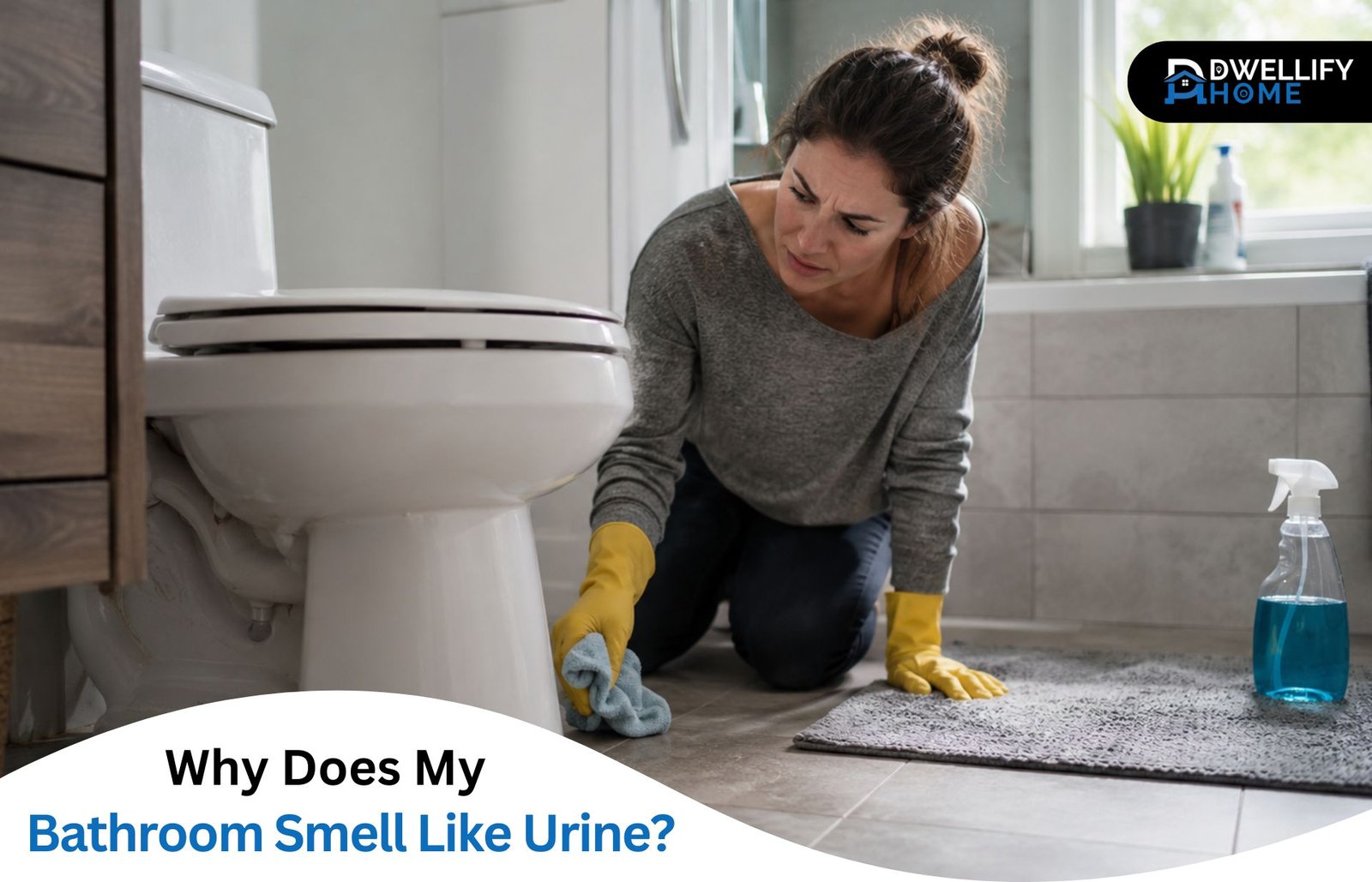
Why does my bathroom smell like urine most of the time? Hidden urine splash dried around the toilet base is often the culprit. Urine contains urea, which bacteria break down into smelly ammonia gas. If your floor looks spotless, the liquid has likely seeped under the porcelain bowl or soaked into unsealed grout. You can confirm this within two minutes by shining an ultraviolet blacklight flashlight around the base bolts and floor seams with the room lights turned off.
Table of Contents
Why your bathroom smells like urine
| Cause | How common | How to confirm it | Fix it yourself? |
|---|---|---|---|
| Urine dried under base | Most common | Yellow glow under UV flashlight | Yes |
| Broken wax ring seal | Common | Water pooling or rocking bowl | Yes with care |
| Dried-out drain P-trap | Somewhat common | Smell rises from unused drain | Yes |
| Bacteria inside bowl rim | Less common | Smell worsens right after flushing | Yes |
| Saturated subfloor wood | Rare | Soft floor around the toilet | No |
| Clogged plumbing vent stack | Very rare | Gurgling drains when toilet flushes | No |
Dried splash around the toilet base
Urine often misses the bowl, runs down the outside porcelain, and wicks underneath the toilet base where a mop can’t reach. The moisture evaporates, but uric acid crystals and organic salts stay behind. Every time someone takes a hot shower, the high humidity increases the rate at which the trapped uric acid crystals release ammonia gas. Standard floor cleaners only wipe the exterior porcelain, leaving the trapped puddle intact.
To confirm this cause, turn off the bathroom lights and shine a 395nm ultraviolet blacklight around the base bolts, floor joints, and hinge caps. Dried urine deposits will glow a dull yellow or neon green.
Fixing this takes about 30 minutes. Spray an enzymatic cleaner specifically formulated for biological waste heavily along the bottom seam of the bowl. Enzymatic formulas use biological enzymes to break down uric acid crystals rather than just masking them with perfume. Let the liquid sit for 15 minutes so it wicks beneath the porcelain edge, then wipe it clean with paper towels. You can apply a thin bead of silicone caulk around the front and sides of the base afterward to block future spills, but leave the back open so leaks remain visible.
A degraded wax ring seal
A broken wax gasket under the toilet lets sewer gas and wastewater escape across the bathroom floor. The distinction between this problem and simple splash mess is clear: splash odors smell like sharp, stale ammonia, whereas a failed wax ring smells like sulfur, sewer gas, and damp rot combined.
The wax ring sits directly between the bottom toilet horn and the sewer pipe flange. Over time, loose closet bolts let the toilet rock slightly when people sit down. This movement squishes and tears the wax, breaking the airtight seal. Even if dirty water doesn’t flood your floor tiles, contaminated air and small trickles seep out under the toilet footprint during every flush cycle.
Check for this issue by straddling the bowl and gently shifting your weight from side to side. If the porcelain moves or clicks against the floor, the seal has failed. Next, run a clean white paper towel along the back floor seam right after flushing. If the towel comes away with brown or yellow moisture, you must pull the toilet off the floor and mount a fresh seal.
Evaporated water in an unused P-trap

Every sink, tub, and floor drain relies on a curved pipe segment called a P-trap to block odors. According to the Uniform Plumbing Code guidelines on trap seals, a plumbing trap must maintain a standing water barrier to keep hazardous sewer gases from entering living spaces. When a guest bathroom or basement shower goes unused for four to eight weeks, that standing water barrier evaporates into dry room air.
Without liquid in the bend, sewer gas drifts up through the open pipe grate. This gas mixture carries traces of ammonia and methane from municipal waste lines, which closely mimics the smell of standing urine. The confirming test takes seconds: lean down and take a direct sniff an inch above each drain opening in the room. If the odor is strongest right at the metal grate, an empty trap is your issue.
Resolving this requires no tools and takes under two minutes. Pour about one quart of clean tap water down the dry drain to fill the curve. Follow that with two tablespoons of standard mineral oil if the fixture sits empty for long seasons; the oil floats on top of the water and stops evaporation.
The less likely causes
- Bacteria colonies living under the bowl rim emit bad odors whenever incoming flush water disturbs their film.
- A cracked vent pipe inside the wall lets sewer odors leak directly into room cavities without any visible water puddle.
- Rotted wooden subflooring can hold years of soaked waste beneath damaged tile, requiring complete floor demolition by a licensed carpenter.
- A blocked roof vent stack draws water out of nearby traps when fixtures drain; clearing this vent requires a professional plumber working on your roof.
What a fix usually involves
Fixing surface urine requires basic household supplies: an enzymatic spray bottle and a pack of microfiber cloths. This DIY work takes under an hour and costs only a tiny fraction of a single service visit.
Replacing a damaged wax ring requires a few hand tools, such as an adjustable wrench, a putty knife, and a small bucket. The physical part is inexpensive, but lifting a heavy porcelain toilet demands careful back support and two people.
If soft, spongy flooring points to a saturated subfloor, the repair becomes a multi-day construction job that demands professional tools. Structural wood repairs cost substantially more, often reaching most of the price of an entire bathroom remodel. You can get accurate estimates by calling two or three licensed local plumbing contractors for diagnostic quotes.
Frequently asked questions

Can bleach remove urine smell from bathroom tiles?
No, bleach won’t permanently remove the smell. Bleach sanitizes the top surface, but it can’t dissolve stubborn uric acid crystals trapped deep inside porous tile grout. Bleach can also react with concentrated ammonia fumes to create irritating chloramine gas. Use an enzymatic cleaner instead to digest the uric salts.
Why does the smell get stronger after a shower?
High humidity and warm air increase the rate at which dried uric acid crystals release ammonia gas. As hot steam fills the room, the increased humidity and temperature accelerate the release of ammonia gas from the dried deposits. Running your bathroom exhaust fan for 20 minutes after bathing reduces the humidity that triggers this reaction.
How long does an enzymatic cleaner take to work?
About 15 to 30 minutes for standard surface spills. The liquid must remain wet on the contaminated surface to allow the biological enzymes enough time to break down the organic uric salts. For heavy build-up under toilet edges, apply a damp towel over the area to slow down evaporation.
Is smelling urine in the bathroom harmful to breathe?
No, trace urine odors from dry floor splash won’t harm your health, though the smell is unpleasant. However, if the odor comes from raw sewer gas leaking through a broken pipe seal, it can contain methane and hydrogen sulfide. Those gases cause headaches and nausea if they build up over time.
What happens if I caulk all the way around the toilet base?
Water from an internal wax ring leak gets trapped beneath the toilet bowl where you can’t see it. That hidden moisture rots the wooden subfloor and rusts the metal closet bolts over several months. Always leave an uncaulked two-inch gap at the back edge so leaking water escapes visibly onto tile.
Does shaving cream actually get rid of the urine odor?
Yes, but only as a temporary fix on accessible surfaces. Shaving cream contains surfactants and alcohol that loosen fresh urine oils, while the heavy fragrance masks remaining smells. It can’t soak deep under porcelain bases or penetrate sealed grout lines where the actual source of old uric acid crystals lives.
Final Thoughts
If you still notice a lingering odor after a deep scrub, it’s time to check your wax ring. A damaged seal beneath the toilet often lets sewer gases escape into your home. Don’t hesitate to replace it yourself or call a plumber; you’ll be surprised how quickly the air clears up.
Related guides
- Natural Air Fresheners That Keep Bathrooms Smelling Clean
- How to Keep Bathroom Smelling Fresh Without Windows: 3 Steps
- Tiny Black Bugs in Bathroom No Wings: Causes and Removal Tips