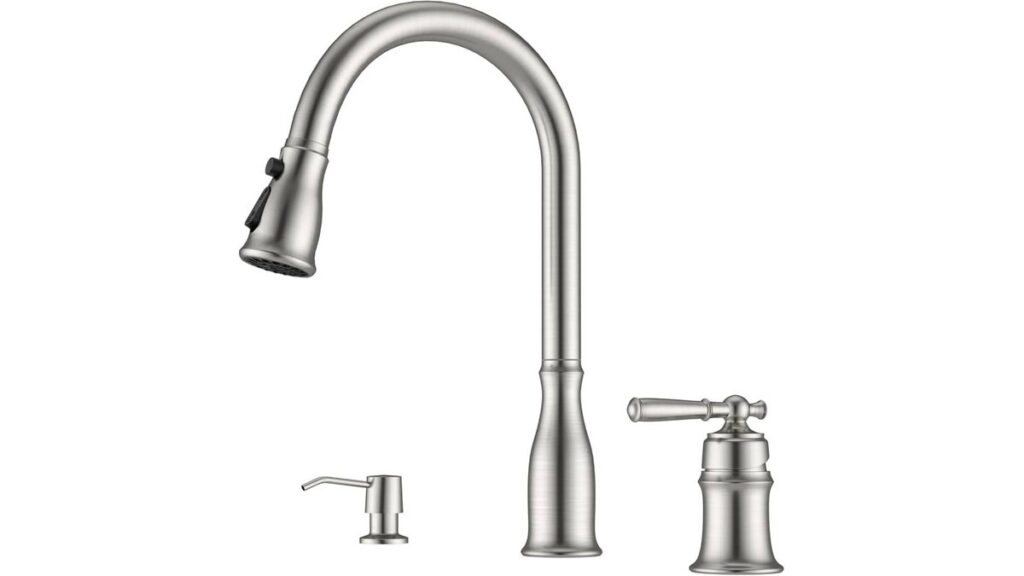
A deck-plate setup is the best choice for 3 hole kitchen faucets because it lets you mount a modern single-handle mixer while cleanly hiding the unused outer drillings. A two-handle bridge style wins instead if your sink has a vintage apron-front look that needs separate hot and cold valves for balance.
Table of Contents
Comparing different three hole kitchen faucets

Your sink layout determines how you fill those three standard openings, which sit spaced across eight inches on center.
| Method | How long | Effort | Cost | Best for |
|---|---|---|---|---|
| Escutcheon Deck Plate | 45–60 minutes | Low | Low | Quick replacements |
| Two-Handle Centerset | 60–90 minutes | Medium | Medium | Traditional looks |
| Single Mixer with Accessories | 75–100 minutes | High | High | Custom functionality |
| Blank Hole Plugs | 30–40 minutes | Low | Low | Tight budgets |
Installing an escutcheon deck plate
- Turn off the two shutoff valves under your sink and open the faucet handles to vent remaining line pressure.
- Place the foam or rubber gasket onto the base of the wide metal deck plate, then slide the plate over all three sink holes.
- Drop the single-handle faucet body through the center hole, ensuring supply lines drop freely underneath.
- Thread the large mounting washer and nut from below, tightening them against the sink underside until the plate sits flat.
This approach lets you buy modern pull-down spray heads without altering your existing countertop drilling. It creates a sleek, sealed base that stops water puddles from running into your under-sink cabinetry. The main drawback is that dirt and dried minerals collect along the wide metal edges, requiring frequent wiping. If your under-sink shutoff valves fail to close completely, stop work immediately and hire a licensed plumber to replace the main stops before proceeding.
Mounting a two-handle bridge design
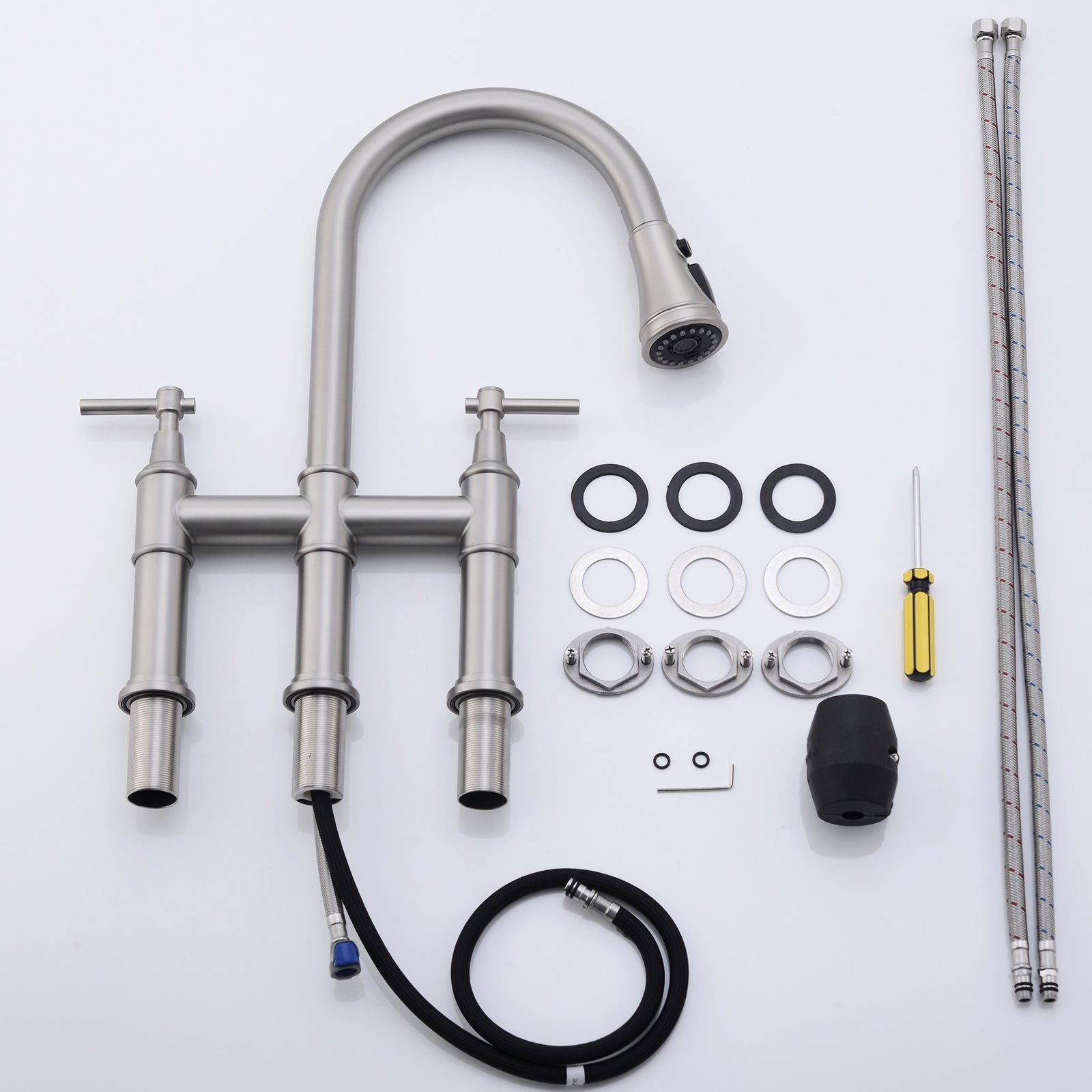
- Measure your sink deck to confirm the two outer holes sit exactly eight inches apart from center to center.
- Thread the hot and cold valve shanks through the two outer openings, leaving the middle sink hole untouched.
- Hand-tighten the lower mounting nuts underneath the basin, then snug them with a basin wrench using a quarter turn past tight.
- Fasten a matching side spray or soap dispenser through the empty middle opening to complete the seal.
This setup offers classic symmetry that matches farmhouse sinks and gives you separate, precise control over hot and cold water feeds. It provides heavy, all-brass durability that stands up to heavy daily cooking routines. However, you sacrifice the convenience of a modern pull-down hose, forcing you to wash bulky pots around a rigid, stationary spout.
Adding independent deck accessories

- Feed the single-hole faucet shanks through the center cutout, clamping it securely underneath with the maker’s mounting bracket.
- Insert a built-in soap dispenser shank into the leftmost opening and thread its plastic container bottle on from below.
- Place an air gap or a push-button garbage disposal switch into the rightmost hole, securing its locknut with channel-lock pliers.
- Hook up the hot, cold, and secondary supply lines to their shutoff valves, tightening brass nuts just past hand-tight.
This design gives every opening a real job, eliminating blank metal caps while adding convenient daily tools directly to your basin edge. It maximizes utility without requiring you to drill new holes into expensive granite or quartz counters. Its primary weakness is the dense cluster of hoses and plastic bottles under the counter, which crowds your storage space. If you want zero extra hardware, snap-in blank sink plugs fill the spare openings in minutes, though they look cheap and collect grime.
Which one should you use?
If you’re in a hurry, pick the escutcheon deck plate because you only need to secure a single mounting nut beneath the sink deck.
If you’re doing this for the first time, choose the two-handle centerset because its rigid, fixed tubes make alignment obvious without loose accessory hoses tangling underneath.
If you want the best possible result whatever it takes, choose the single mixer paired with independent accessories to gain maximum cleaning utility across the entire sink rim.
The core trade-off balances easy cleaning against flexible function: a solid deck plate leaves you with fewer parts to seal below, but installing individual accessories turns dead sink space into useful soap and spray stations.
The rules that apply whichever way you choose
Sink configurations vary by model — check the label on your basin before buying hardware to confirm your hole diameter measures the standard 1-3/8 inches. Under federal guidelines set by the EPA WaterSense program, residential fixtures must control flow rates to prevent excessive water waste.
Before starting, clear out all cleaning products from the cabinet so you have space to move your wrench without cracking drain pipes. While installing, check the top deck visually from above before final tightening so the spout doesn’t twist crooked against the backsplash.
Once connected, run hot and cold water for two full minutes to flush debris out of the lines, then inspect every brass joint with a dry paper towel. If you notice persistent leaks from corroded copper supply stubs, stop immediately and contact a licensed plumber to solder new fittings safely.
Frequently asked questions
Can you put a single-hole faucet in a 3-hole sink?
Yes, you can install one easily by placing an escutcheon deck plate over the three openings first. The wide metal base completely conceals the unused outer holes, allowing the single-post faucet to mount securely through the central cutout without water dripping underneath your kitchen sink.
What is the standard spacing for 3-hole sinks?
Eight inches is the standard distance between the center of the far-left opening and the center of the far-right opening. Most manufacturers refer to this common configuration as an eight-inch centerset layout, though you should measure your sink with a ruler before buying parts.
What happens if you skip the rubber gasket?
Water from your wet hands will run beneath the metal base and rot your wooden cabinet floor below. The gasket forms a waterproof seal against the counter surface; skipping it causes hidden mold, loose mounting hardware, and costly cabinet repairs down the road.
Is plumbers putty safe for granite sinks?
No, standard plumbers putty contains natural oils that soak directly into porous natural stones like marble and granite. This causes permanent dark oil rings around your faucet base; you should use a manufacturer-supplied silicone gasket or 100% neutral-cure silicone sealant instead.
Why do some faucets include a separate side spray?
Separate side sprays allow homeowners with traditional two-handle setups to rinse dishes easily without needing a modern pull-down spout. They run off a dedicated diverter valve inside the faucet body and use the spare outer opening on your sink deck.
Final Thoughts
Before you pick your final design, double-check your sink’s measurements to ensure the spout height won’t hit your cabinets. It’s worth taking a moment to measure your space now, so you won’t have any surprises during installation. You’ll love how a fresh fixture makes your daily cleanup feel much easier.
Related guides