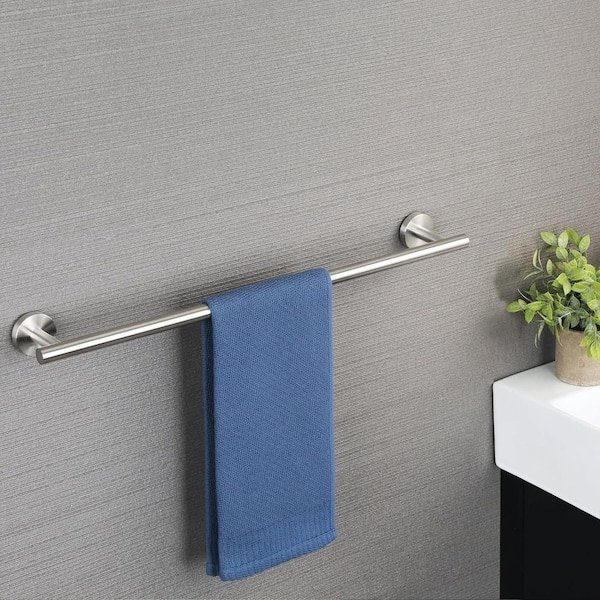
A standard 30 inch towel rack brushed nickel holds two standard folded bath towels side by side and takes about 20 minutes to install with a drill and a level. You mount it 48 inches above the finished floor using two wall brackets set exactly 30 inches apart from center to center. This width works best for shared master bathrooms with open drywall space.
Table of Contents
Tools for your brushed nickel towel rack

- One 30-inch brushed nickel towel bar with its two mounting brackets and set screws
- A tape measure marked in 1/16-inch increments
- A 9-inch magnetic torpedo level
- A power drill with a 1/4-inch masonry or drywall bit, depending on the wall surface
- Two heavy-duty toggle bolts or threaded wall anchors rated for at least 30 pounds
- A painter’s tape roll and a sharp pencil
- A 2-millimeter hex key, usually provided in the hardware box
Metal toggle anchors work well as a replacement for standard plastic sleeves, but plastic push-in anchors don’t hold safely on hollow drywall for this length.
Step-by-step
- Measure up from your finished bathroom floor and mark the wall at 48 inches with a pencil dot.
- Place a strip of painter’s tape across your mark to protect the wall finish during marking.
- Hold the first mounting bracket on the mark, align its center hole, and mark the screw placement.
- Measure horizontally 30 inches from your first mark to locate the second bracket point.
- Place your level across both marks to confirm the line sits completely flat.
- Drill your mounting holes directly into the drywall using a 1/4-inch drill bit; this varies by model — check the label on your hardware packet for the exact hole diameter required.
Careful: If your drill hits metal plumbing plates or plastic pipes inside the cavity, stop immediately and hire a licensed plumber.
- Press your drywall anchors flush into the drilled holes using light taps from a rubber mallet.
- Screw the mounting plates securely into the anchors with a hand screwdriver until they sit flat against the wall without turning.
Tip: Never use a power drill on the bracket screws, as the high torque quickly strips out drywall anchor threads and ruins the grip.
- Slide the towel bar onto the brackets and tighten the tiny bottom set screws using your 2-millimeter hex key.
Mounting over different bathroom surfaces
Wall type changes the mounting method, hardware needs, and installation time.
| Wall surface type | Average time required | Mounting hardware needed | What to watch closely |
|---|---|---|---|
| Bare drywall without studs | 20 minutes | 30-pound hollow wall toggles | Anchor pulling through soft board |
| Drywall directly over wood studs | 15 minutes | 2-inch wood screws | Missing the stud edge off-center |
| Glazed ceramic wall tile | 45 minutes | 1/4-inch diamond-tipped bit | Cracking the surrounding tile face |
| Solid plaster and wood lath | 35 minutes | Threaded metal anchor sleeves | Plaster crumbling around hole edges |
It’s safer to drill a smaller pilot hole first and enlarge it slowly than to punch an oversized hole you can’t easily repair.
How to tell you did it right

A correct installation produces two bracket posts that sit flush against the wall with zero visible gap. The bar doesn’t spin, rattle, or tilt when you pull a heavy, wet bath sheet off it. A failed installation wobbles sideways or pulls away from the wall at the top edge. This looseness happens because hollow-wall anchors expand inside soft gypsum without enough tension against the rear face. You prevent it by checking that the anchors lock firmly behind the drywall before you hang the bar weight, and by keeping bracket set screws completely tight on both ends.
Clearance standards and maintenance
The Americans with Disabilities Act standards require accessible towel bars to sit between 18 and 48 inches above the floor for an unobstructed side reach. When the installation finishes, vacuum up gypsum dust immediately so moisture doesn’t turn it into a paste. Wipe the metal bar with a clean microfiber cloth dampened with warm water. Avoid chemical bleach or acid cleaners because they strip the factory clear coat off brushed nickel finishes. A standard installation lasts indefinitely until the drywall takes hard impact. If your wall contains older wiring or metal conduits near the mounting area, call a licensed electrician before drilling.
Alternative hanging setups
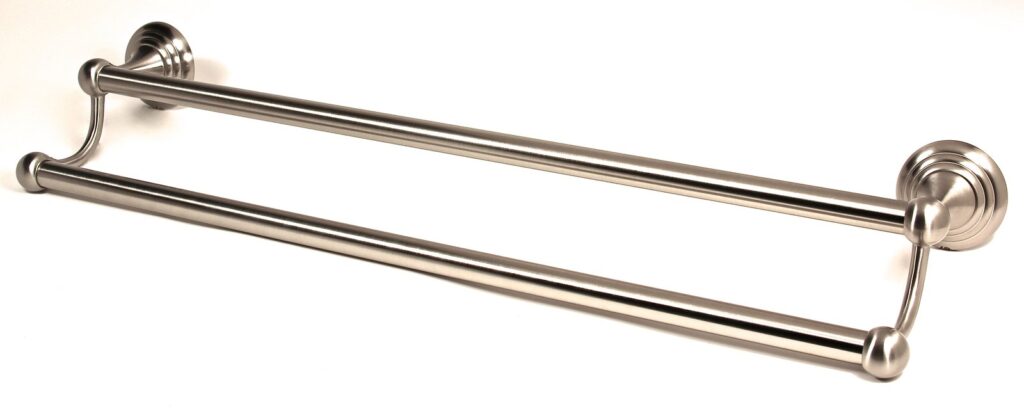
Double towel bar
A double rack holds twice as many towels in the same 30-inch horizontal wall space. It sticks out an extra two inches into the room, which creates an obstacle in tight walkways.
Vertical towel hook tree
Hooks take up only six inches of horizontal space instead of thirty. Wet towels dry slower on hooks because the fabric gathers into folds rather than hanging flat.
Over-the-door rack frame
This choice requires zero wall drilling and installs in two minutes. The trade-off is frequent door rattling and occasional marks on your top door jamb.
Frequently asked questions
Can you install a towel bar without finding studs?
Yes. You can mount it safely using heavy-duty toggle bolts rated for hollow drywall. Standard plastic expansion plugs often pull out under wet towel weight, but metal flip toggles lock against the rear drywall face securely.
How high off the floor should a towel rack be?
The standard height is 48 inches above the finished floor. This distance keeps long bath towels from touching the baseboard while remaining comfortable to reach. For children’s bathrooms, lowering the bar to 36 inches works better.
Why does my towel bar keep coming loose?
The set screws underneath the bracket posts have loosened from regular pulling. Vibrations from lifting damp towels shake small screws free over time. Tightening them with a 2-millimeter hex key restores firm contact against the mounting plate.
Is brushed nickel easy to keep clean?
Yes. Brushed nickel hides water spots and fingerprint smudges much better than polished chrome does. You only need a weekly wipe with a damp microfiber cloth to keep the protective factory clear-coat looking clean.
What happens if you drill into a bathroom pipe?
Water will spray through the hole or leak slowly behind the drywall, causing serious structural rot. If your drill hits unexpected resistance or water appears, shut off your main home water valve instantly and call a licensed plumber.
Final Thoughts
Once you’ve finished securing the screws, hang your fluffiest towels to see how they look against the wall. If the metal finish feels a bit plain, try adding a matching robe hook nearby. It’s an easy way to make your bathroom feel more organized and put together for the long haul.
Related guides