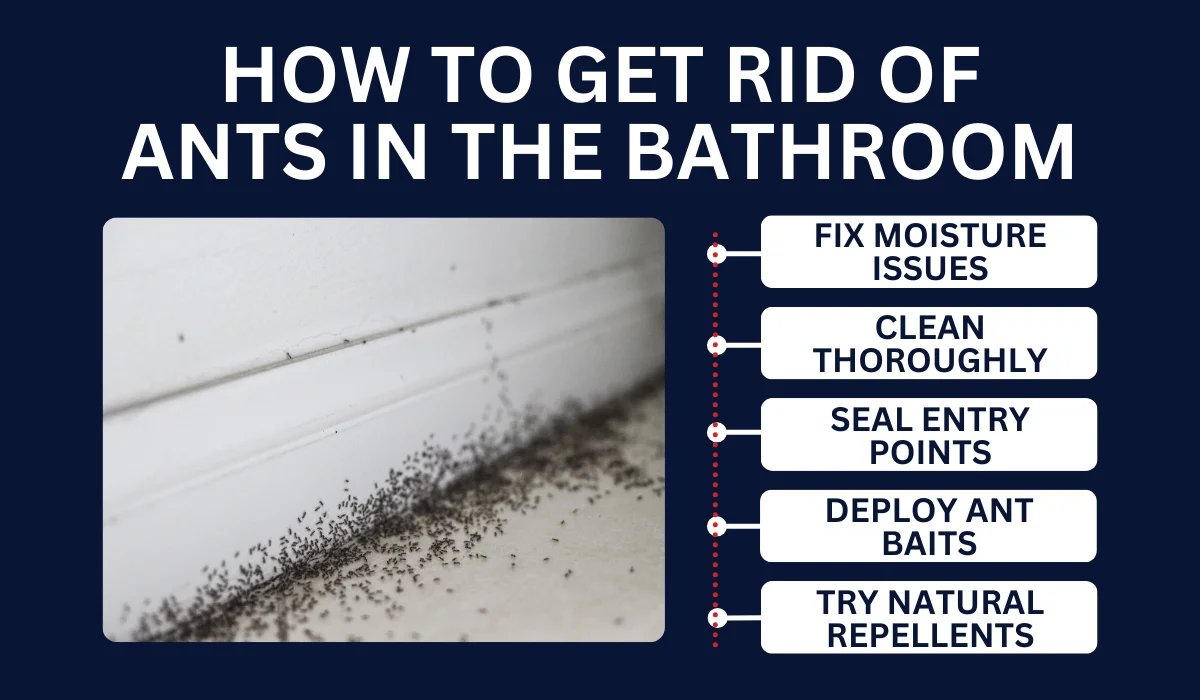
To solve the problem, get rid of ants in the bathroom by wiping away their invisible scent trails and setting slow-acting liquid bait stations near their entry points. The single most common cause is standing moisture around sink drains, leaky pipe fittings, or damp bath mats that draws thirsty worker ants indoors.
Table of Contents
Why ants are in your bathroom
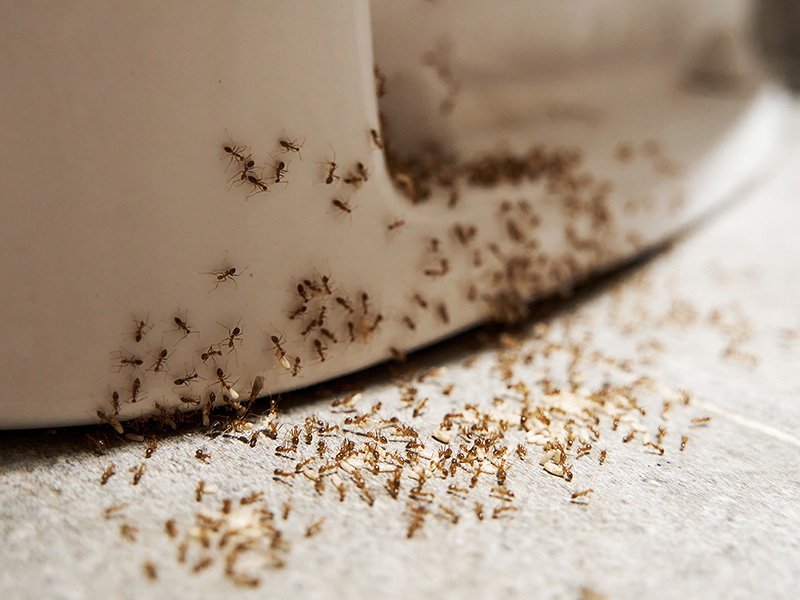
Ants enter bathrooms searching for water, not just sugary food scraps. Leaky faucets, puddles behind the toilet, and damp shower stalls create the humid environment they need to survive. Odorous house ants and carpenter ants often nest inside wall voids where plumbing pipes run, because pipe condensation gives them an endless water supply.
These pests also follow chemical trails called pheromones. Once a single scout ant discovers a wet sink or a sticky drop of body wash, it walks back to the colony while laying down this scent. Other workers smell the trail and follow it in a straight line. If you only kill the insects you see crawling, dozens more will continue using that same hidden scent path.
Place liquid bait stations near active trails
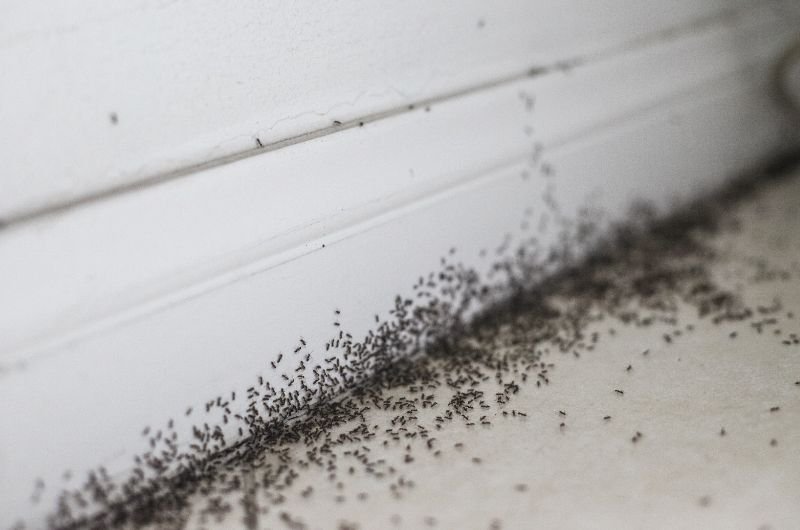
This fix is for homes where you see trails of small ants along the baseboards, counter edges, or behind the toilet. Set 2 or 3 pre-filled liquid borax bait stations directly on the floor touching the baseboards where ants walk. Worker ants drink the liquid, carry it back to the hidden nest, and feed it to the queen.
Don’t spray insect killer around the stations. Sprays kill the workers too quickly, which stops them from carrying the bait to the colony. You’ll know the treatment worked when heavy ant activity spikes around the stations for two days and then drops to zero within a week. Keep these baits away from pets and small children. According to the EPA’s pesticide safety guidelines, always place baits in areas protected from unintended contact.
Erase scent trails with white vinegar
This method removes the chemical guides that lead new pests into your home. Mix 1 cup of plain white vinegar with 1 cup of tap water in a clean spray bottle. Spray the mixture directly over tile edges, baseboards, mirror frames, and bathtub ledges where you saw trails.
Wipe the surface firmly with a clean microfiber cloth to lift the pheromones off the hard surface. Unlike commercial chemical cleaners, vinegar breaks down the invisible scent wax naturally without leaving toxic residues in enclosed shower spaces. The trade-off is the sharp smell, but it fades once dry. If you wipe down the trails every evening, you’ll break the marching line within 48 hours.
Seal pipe gaps and wall cracks
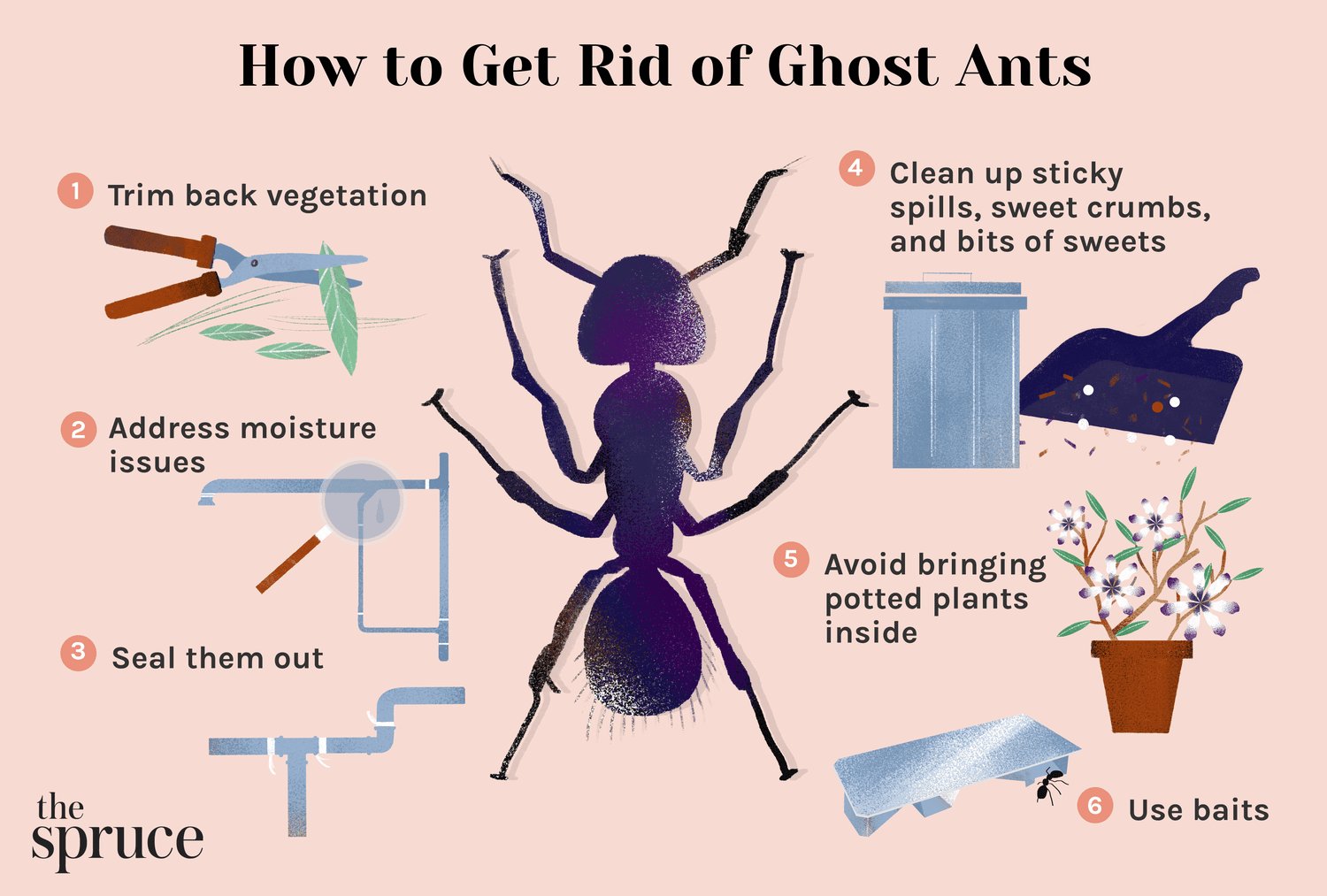
This fix targets older homes or severe infestations where ants climb through wall openings behind bathroom fixtures. Inspect the wall where water supply lines enter beneath the sink. Buy a tube of 100% silicone bathroom caulk and a can of expanding foam sealant.
Fill holes wider than half an inch around plumbing pipes with the expanding foam. For fine cracks along baseboards, window trim, or the edge of the shower base, apply a smooth, continuous line of silicone caulk. This stops outside nests from entering your bathroom walls. This job isn’t for people with active plumbing leaks inside the wall; call a licensed plumber first if you hear water dripping or feel soft drywall.
What not to do
- Don’t use repellant aerosol sprays on indoor trails. Aerosol bug sprays kill only the few foraging ants you see, which panics the colony and causes it to split into several new nests throughout your walls.
- Don’t scatter loose dry borax powder across bathroom surfaces. Walking through open borax exposes pets to toxic dust and fails because ants simply walk around dry piles instead of eating them.
- Don’t pour boiling water down sink drains to kill them. Boiling water cools down too fast inside cold metal traps to kill a deep nest, and the extreme heat can crack porcelain sinks or melt PVC pipe joints.
How to stop it happening again
Taking away standing water keeps scout ants from returning to your bathroom.
| If you’re doing this | Do this instead | Why |
|---|---|---|
| Leaving wet bath mats on the floor | Hang mats over the tub rail after every shower | Wet fabric creates a dark, damp refuge where pests drink |
| Ignoring dripping sink or tub faucets | Replace the worn faucet cartridge or rubber washer | Constant water drips provide an easy drinking source for scout ants |
| Storing open, sweet-scented soap bars on counters | Keep soaps in sealed pumps or lidded containers | Sweet fragrances contain plant oils and sugars that attract pests |
| Leaving open gaps around floor pipes | Fill gaps with silicone caulk or foam | Open pipe collars give wall-dwelling colonies a direct doorway into the room |
Frequently asked questions
Can ants live inside bathroom sink drains?
No, ants don’t build nests inside working drain traps because rushing water drowns them. They crawl down into drains only to feed on hair buildup, soap scum, or sitting moisture. A slow-draining pipe simply gives them an easy place to drink between your sink uses.
Why do ants appear in clean bathrooms with no food?
Ants visit clean bathrooms mainly to find water. Moisture from shower walls, leaking supply valves, and condensation on cold porcelain supplies everything a thirsty colony needs to survive. Some ant species also feed on oily soap residue, toothpaste splatters, and dead skin cells caught in drain rims.
How long does it take liquid bait to eliminate them?
Liquid baits usually stop an infestation within 5 to 7 days. Workers must locate the liquid, feed on it, and transport it to the queen inside the wall. If you still see ants after two weeks, check the product label for instructions on bait replacement or placement.
Is it safe to leave vinegar spray on bathroom tiles?
No, you should avoid leaving vinegar on unsealed natural stone tiles like marble, granite, or slate. The natural acid in vinegar reacts with the minerals in stone, causing dull spots and permanent etching. If your bathroom has ceramic or porcelain tiles, vinegar is completely safe to use.
What happens if I step on ants in the bathroom?
Stepping on ants crushes their bodies and releases a pungent chemical scent that warns the rest of the colony. For species like odorous house ants, this releases a strong, rotten-coconut odor. The surviving worker ants detect this chemical signal and immediately scatter to hide inside your walls.
Final Thoughts
Keep your bathroom surfaces dry and wipe up spills immediately to prevent new scouts from returning. If you don’t see an improvement within a few days, it’s a good idea to check your home’s exterior for gaps. You’ll find that staying consistent with these small habits makes a big difference.
Related guides
- Bathroom Sink Stopper Replacement: A Simple DIY Guide
- Can a Bathroom Scale Help You Lose Weight? Here Is How
- Bathroom Light Fixtures Over Mirror: The Complete Guide